Auto Rickshaw Parking Lot — Organized Three Wheeler Parking Area Design
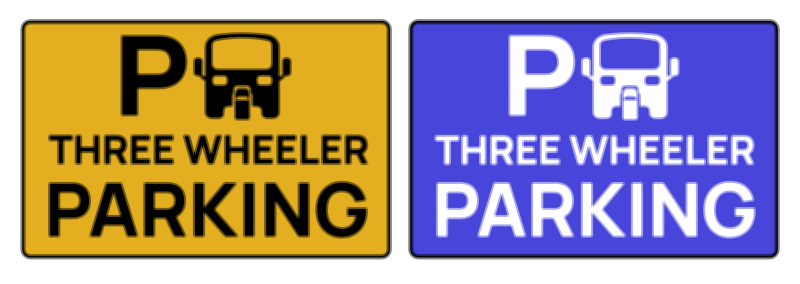
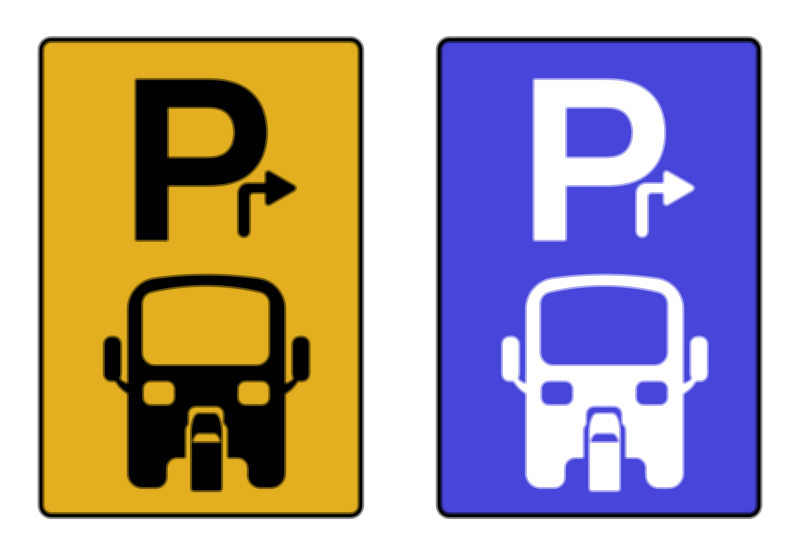
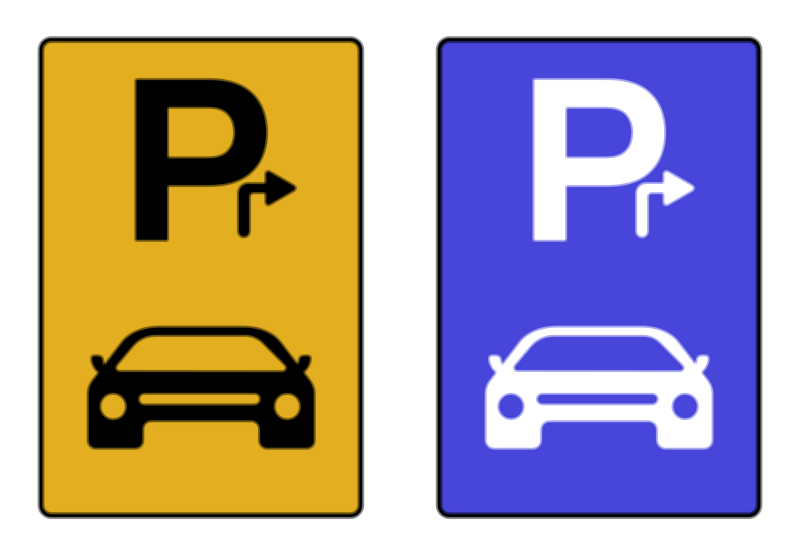
A designated auto rickshaw parking lot is far more than a simple place for three-wheelers to stand while waiting for passengers; it is an intentional structural element of transportation planning that can dramatically influence safety, pedestrian comfort, commercial flow, accessibility, and the overall rhythm of public space. In a vector illustration, this sign is usually represented with the silhouette of an auto rickshaw paired with a bold “P” or a parking-zone frame, rendered with clean lines that encode permission rather than prohibition. The simplicity of the image allows immediate recognition in busy environments where drivers must make quick decisions and passengers must orient themselves rapidly. Although the graphic seems minimal, placing a three-wheeler into a strategically planned parking area transforms what might otherwise become crowding, honking, unsafe waiting, and vehicle clustering into a predictable and balanced mobility system. The icon does not merely identify a spot; it communicates that this location has been deliberately selected to absorb the presence of auto rickshaws without interfering with building entrances, walking paths, medical access, or dynamic vehicular flow. In this sense, the vector illustration becomes a visual foundation for a much broader system of organized urban life.
Impact on Pedestrian Safety and Movement
Without a designated auto rickshaw parking lot, drivers typically wait wherever passengers are likely to appear—particularly near school gates, railway stations, hospitals, marketplaces, temples, residential buildings, and office entrances. Although this instinct makes sense from a driver’s economic perspective, it conflicts sharply with the reality of pedestrian movement. When rickshaws gather in front of footpaths and entrances, children crossing the road to meet their parents become hidden from the view of approaching cars. Elderly people, individuals with mobility impairments, pregnant women, and people carrying heavy bags struggle to navigate around parked autos and are often pushed dangerously close to moving traffic. Sidewalks lose their protected function and turn into informal parking extensions, forcing pedestrians to walk on the road rather than beside it. The presence of a dedicated auto rickshaw parking lot prevents this chain of hazards by pulling the waiting vehicles away from the pedestrian priority zone and toward a controlled space where approaching people remain visible and safe and where walking does not require detours, hesitation, or risk. The sign therefore acts as a gatekeeper of pedestrian dignity and safety.
Protection of Building Entrances and Drop-Off Zones
Entrances to schools, hospitals, commercial complexes, and residential buildings are designed to manage heavy volumes of people, and their efficiency depends on open approach corridors. When auto rickshaws crowd such entry points, the transition from exterior to interior space becomes stressful rather than comfortable. Patients arriving at a hospital are forced to navigate through a cluster of idling vehicles before reaching the doors. Students exiting a school must weave between parked rickshaws before reaching the sidewalk. Customers entering a market face an obstacle course of parked autos instead of a clear and welcoming storefront environment. A designated auto rickshaw parking lot preserves the comfort of arrival by ensuring that the building’s frontage continues to serve its intended purpose. It avoids transforming the entrance into an unintended waiting bay for vehicles, protecting the spatial experience of visitors and maintaining the architectural and functional clarity of the access point.
Support for Commercial Ecosystems and Urban Business Flow
Commercial activity depends on foot traffic, visibility, and unblocked access. When auto rickshaws queue in front of shop windows and restaurant entrances, they inadvertently limit visibility and convenience for customers. A store’s signage cannot perform its purpose if obscured by parked three-wheelers, and customers may avoid entering a business that requires squeezing past a line of idling vehicles. When signage directs drivers to a designated parking lot for autos, the business corridor benefits from improved walkability, customer comfort, and uninterrupted access. At the same time, drivers benefit from fair access to passengers because waiting becomes organized rather than competitive and chaotic. Delivery workers, vendors, and commercial suppliers also gain predictable access to storefronts without navigating through clusters of vehicles. In this way, the parking sign becomes an enabler of economic efficiency and improved customer experience.
Accessibility and Inclusivity
Universal access is a key value of modern public design, yet that access becomes fragile if it can be blocked by even a single vehicle. The approach space to buildings—containing ramps, tactile floor paths, stair access, push-chair routes, and widened doorways—is crucial for those who depend on it. A single auto rickshaw parked across a wheelchair ramp renders it unusable, putting the burden of adaptation on the very individuals the ramp was designed to empower. Tactile floor paths for visually impaired persons lose meaning if they are interrupted by parked vehicles. The auto rickshaw parking lot sign defends the physical and emotional independence of individuals who rely on accessibility infrastructure by removing the temptation and convenience of informal parking in those spaces. A vehicle parked responsibly in the designated lot gives dignity to people who should not have to request others to move simply to continue their movement.
Emergency Access and Urban Safety Infrastructure
Emergency systems depend on predictability. Ambulance bays, building rescue entrances, fire hydrants, and evacuation gates must remain clear at all times. An auto rickshaw parked at the wrong spot may appear less obstructive than a car, but a few extra seconds spent rerouting a stretcher or adjusting a firefighting hose can be the difference between life and loss. Designated auto parking clusters lower the chance of accidental obstruction by attracting vehicles to sanctioned areas rather than leaving their positioning to chance. The sign acts as a silent but crucial element of public safety—ensuring that the pathways used for emergency interventions remain accessible for the moments when urgency and clarity mean everything.
Traffic Stability and Predictable Driver Behaviour
Traffic becomes unsafe when driver decisions become unpredictable. When auto drivers circle, slow abruptly, turn into narrow spaces, or wait on the roadside searching for informal parking, the flow of vehicles becomes jagged and erratic. Dedicated parking areas reduce impulsive road behaviour by giving drivers a fixed point to head toward. The presence of a sign removes the mental uncertainty that sparks sudden manoeuvers and lane weaving, making the street calmer for surrounding motorists and motorcyclists. With fewer improvised stops and less honking competition, fuel waste declines, air and noise pollution decrease, and road users begin to behave according to recognizable spatial patterns rather than situational improvisation.
Integration with Smart Mobility and Digital Navigation
Modern transportation now blends physical and digital layers. Navigation apps and ride-hailing platforms integrate auto rickshaw stands into pickup algorithms so that passengers are directed to organized spots instead of random roadside corners. Parking-management systems collect occupancy data for these zones to predict availability. Municipal computer-vision tools depend on clear signage for automated monitoring systems that identify where vehicles belong and where they do not. Electric auto charging stations are increasingly attached to such organized parking clusters as cities modernize. The clarity of the vector illustration is essential not only for the human eye but also for machine interpretation, allowing the sign to function in both traditional and technology-enhanced transit ecosystems.
Social Value and Public-Space Harmony
At its deepest level, the auto rickshaw parking lot sign represents a principle of shared responsibility. A driver who waits in an unauthorized task-oriented place may gain convenience but transfers disruption to others: pedestrians lose safe space, businesses lose access, disabled individuals lose independence, families lose comfort, and emergency workers lose time. Parking inside the designated lot rather than blocking an entrance, walkway, or hydrant is an unseen act of respect that benefits countless strangers. The sign therefore becomes a cultural mechanism through which mobility coexists with dignity, cooperation, and mutual awareness.
In essence, the Auto Rickshaw Parking Lot — Organized Three Wheeler Parking Area Design vector illustration is a visual shorthand for an entire system of order in public spaces. Its clean shape contains a philosophy of movement that protects pedestrians without limiting mobility, improves commercial life without restricting drivers, reinforces accessibility without creating tension, supports emergency access without requiring intervention, and allows the life of the city to unfold smoothly. Through responsible placement and proper use, it ensures that auto rickshaws retain their role as accessible public transport while coexisting harmoniously with the needs of pedestrians, buildings, businesses, emergency systems, and the surrounding community.