Car Parking Here — Designated Four Wheeler Parking Area
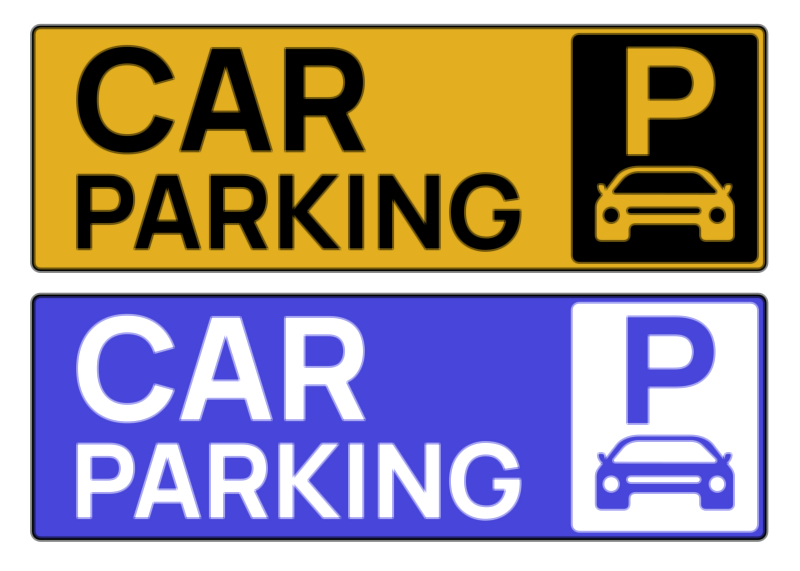
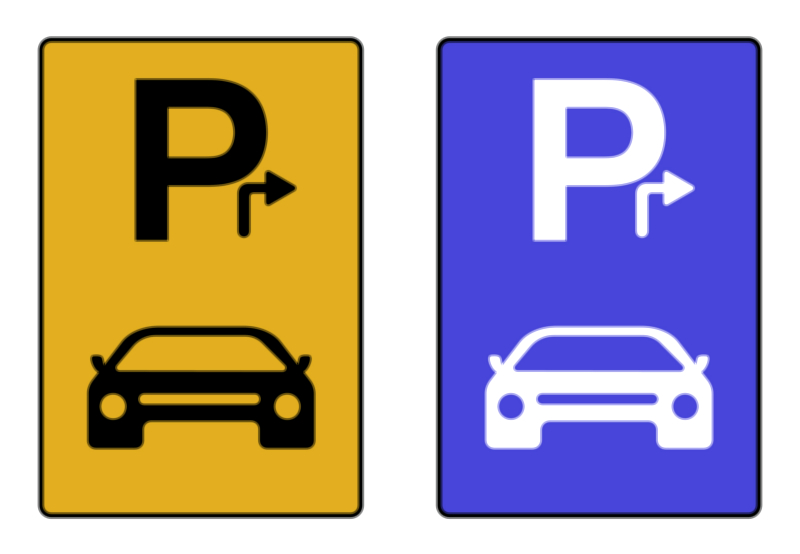
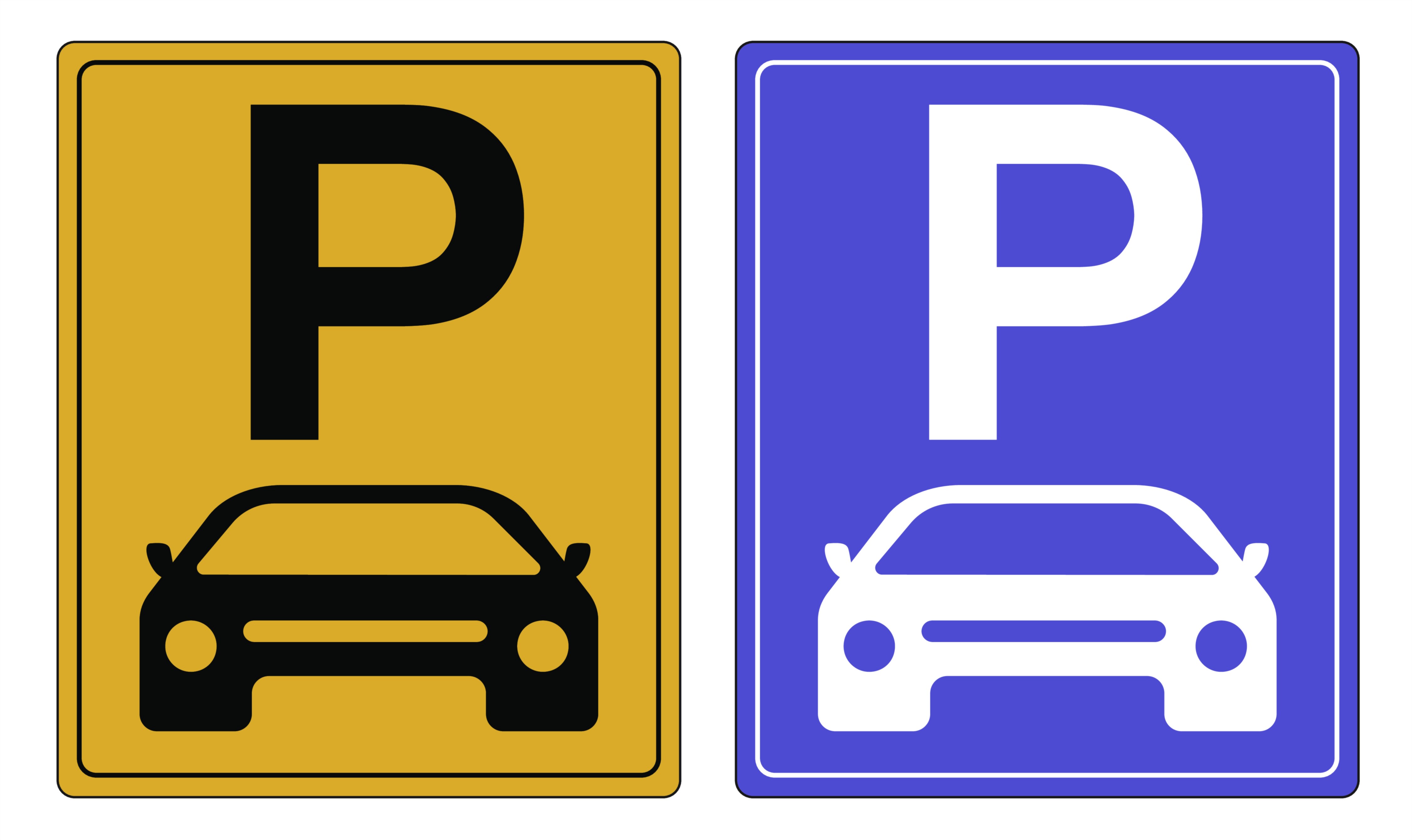
A Car Parking Here sign, expressed through a vector illustration featuring a bold “P” symbol combined with the silhouette of a car or a directional indicator, may initially appear to be a simple graphic guide telling drivers that it is an appropriate place to leave their vehicle. However, beneath that minimal appearance lies a deeply intentional design choice that acts as an architectural tool, an urban-planning mechanism, and a behavioral guide for the harmonious use of shared public space. Cars, jeeps, vans, and SUVs take up considerable horizontal and visual space, and when their placement is left to driver convenience rather than to thoughtful organization, they become disruptive rather than beneficial. A designated car parking sign does not simply permit parking; it directs four-wheelers toward the precise location where their stationary presence benefits the surrounding environment rather than complicating it. The vector illustration — clear, sharp, scalable, and instantly recognizable — ensures that every driver receives a fast and unambiguous message about where to park safely, legally, and responsibly without obstructing pedestrians, entrances, businesses, emergency access, or flowing traffic. The phrase “Car Parking Here” works not as a suggestion but as a promise of a space intentionally engineered for vehicles in a way that protects the comfort and mobility of every other user of that environment.
The sign becomes particularly meaningful when considering how parking decisions unfold in real environments without such guidance. Drivers naturally gravitate toward convenience: close to doorways, next to commercial entrances, beside school gates, in front of hospitals, near staircases, or adjacent to sidewalks. These locations feel ideal for the individual behind the wheel, yet they are the exact spaces where obstruction does the most damage. A car left near the entrance of a school obstructs the safe point of transition for children, who already require heightened safety conditions due to their unpredictability and vulnerability. A four-wheeler left across the frontage of a hospital or clinic makes patient movement, stretcher access, and wheelchair assistance significantly more difficult. A car positioned in front of a store hides the storefront, blocks the main entrance pathway, and disrupts commercial foot traffic. A vehicle parked along a sidewalk squeezes pedestrians into the roadway, endangering them unnecessarily. The Car Parking Here sign prevents this chain reaction before it begins by channeling four-wheelers into spaces that have been evaluated to withstand the demand of stationary vehicles without deteriorating the quality of mobility and safety for others. It ensures that parking does not overwhelm architectural entrances or limit the rights and comfort of the people who move past the vehicle.
The sign also shapes the emotional atmosphere of arrival, not just the mechanics of parking. The entrance to a building — whether a school, office, shop, hospital, or residential complex — is the first moment of human experience in that space, and that moment determines whether the environment feels organized or chaotic. A neat, well-structured lot with a Car Parking Here sign placed strategically creates clarity from the beginning: drivers know exactly where to stop, pedestrians feel safe approaching the structure, and the area visually communicates professionalism and care. Without such guidance, the arrival space becomes a contested zone where drivers compete for the closest possible position and pedestrians struggle to navigate around metal frames and bumpers. Children returning from school, elderly people walking slowly, and families arriving with luggage or groceries all experience the difference between a blocked entrance and one that remains open because drivers have followed a designated sign. In this way, the sign carries a deeply human purpose — it protects the comfort and dignity of arrival.
On the commercial front, the sign facilitates business success by preserving visibility and accessibility. Retail storefronts and hospitality venues rely on being visually and physically easy to approach. When cars cluster immediately outside shops, signage becomes hidden, customers hesitate to step into partially obstructed spaces, and the visual appeal of the business deteriorates. Delivery staff also suffer disruptions when cars dominate loading zones and prevent smooth entry into service corridors. A Car Parking Here sign provides a structured alternative that keeps four-wheelers close enough for customer convenience while preventing them from blocking the lifelines of the business. Customers feel encouraged to step into the storefront rather than repelled by disorganized patterns of parking. Delivery schedules become smooth, shop employees move freely, and commercial engagement becomes efficient and welcoming rather than congested and inconvenient. The sign therefore supports economic vitality as much as it supports traffic order.
Equally significant is the sign’s role in supporting accessibility for people with disabilities. Universal-design infrastructure — wheelchair ramps, lowered curbs, tactile pathways, widened doors, and approach lanes — is engineered so that individuals with mobility or visual challenges can navigate independently. Yet these carefully crafted pathways lose their purpose completely the moment a car is parked across them. A person using a wheelchair cannot “go around” a parked vehicle blocking a ramp, and visually impaired pedestrians lose orientation when tactile tiles are covered by tires. A Car Parking Here sign keeps vehicles away from these spaces by directing drivers toward the correct parking area before they ever approach access-critical zones. When a driver follows the sign rather than improvising parking, they protect the independence of someone who depends on that infrastructure every day. Thus, accessibility is not simply a matter of design; it is a matter of respecting it — something the parking sign makes easier for every person behind the wheel.
Emergency readiness represents another deeply important function that the sign protects. Emergency systems — from ambulances to fire engines to disaster-response teams — rely on unblocked access. A four-wheeler left in front of a hydrant, a fire lane, a hospital emergency entrance, or an evacuation gate can delay responders in moments where seconds determine outcomes. The Car Parking Here sign reduces the chances of such accidental, life-threatening obstruction by providing drivers with a clear alternative location that satisfies their parking needs without compromising emergency workflows. In everyday situations, this might be a small detail that goes unnoticed; in times of urgency, it becomes a lifesaving principle anchored by a small illustrated symbol.
The benefits of the sign also extend to the predictability and safety of layered mobility systems. Roads operate smoothly when everyone behaves in expected ways. Searching for uncertain parking dramatically increases erratic movements: sudden braking, lane shifting, mid-road stopping, U-turns, or pulling into pedestrian areas without warning. These movements generate collision risks, traffic slowdowns, and disproportionate stress for other road users. A well-positioned Car Parking Here sign eliminates the indecision that causes drivers to behave unpredictably. The driver knows where to park before reaching the entrance or point of interest, which reduces hesitation and helps maintain a calm, structured rhythm of mobility. Cars no longer circle unnecessarily, engines idle less, horns reduce, and tensions between pedestrians and vehicles decline.
In today’s world of smart mobility and digital navigation, the sign also functions beyond its physical placement. Modern route-planning apps integrate parking locations into their guidance systems; drivers can be directed by GPS straight to the designated area rather than improvising roadside stops. Logistics fleets locate safe parking automatically through map overlays. Parking-management software monitors occupancy of lots and uses designated signs to guide drivers where space is available. Even computer-vision enforcement systems use vector signage to verify legal parking boundaries. The precision of the Car Parking Here symbol makes it readable both to humans and to automated mobility systems, reinforcing traffic order in both physical and digital dimensions.
Most importantly, the sign stands as a small but powerful symbol of social cooperation. Parking legally is not simply about following a rule — it reflects a choice not to disrupt the safety, comfort, and dignity of strangers. The people protected by a driver following the Car Parking Here sign include children who should never be forced to cross between parked cars, elderly pedestrians who need a clear path to walk slowly and safely, patients who require an accessible approach to medical care, business owners who depend on visible and clear entrances, residents who deserve comfort in their living spaces, and emergency responders who need unblocked access when lives depend on timing. When a driver follows the sign instead of parking where it is most personally convenient, they contribute silently to the smooth and humane functioning of the environment around them.
Therefore, the Car Parking Here — Designated Four Wheeler Parking Area vector illustration may look visually simple, consisting only of a stylized vehicle and an iconic parking symbol, but it represents a comprehensive philosophy of organized public life. It ensures that four-wheeled vehicles coexist with pedestrians rather than overpower them, that buildings welcome people rather than contend with automotive clutter, that businesses remain accessible rather than hidden, that accessibility features remain reliable rather than vulnerable, and that emergency readiness remains intact rather than compromised. Beneath its calm and minimal geometry, the sign safeguards safety, mobility, clarity, and fairness in shared environments. It does not merely show where cars should park — it shows how shared spaces can function respectfully, predictably, and harmoniously for everyone who depends on them.