Three Wheeler Parking Lot — Auto Rickshaw Parking Zone Design
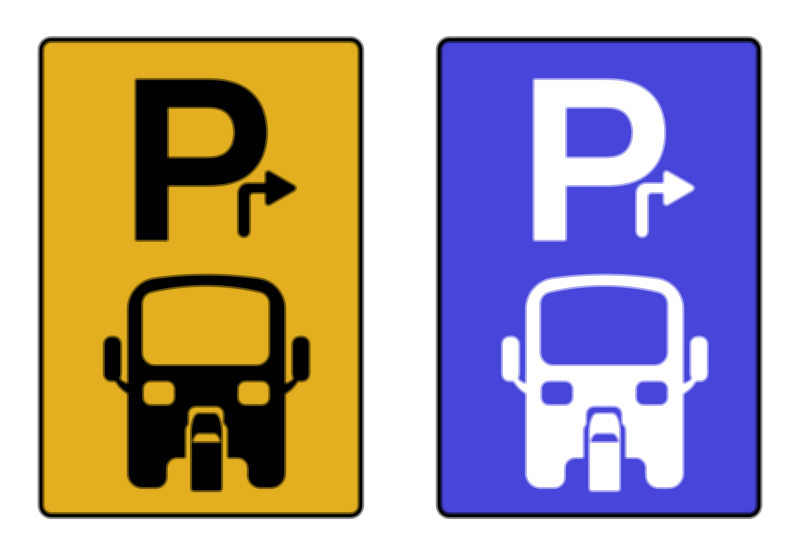
A Three Wheeler Parking Lot sign, often depicted in vector illustration form with the silhouette of an auto-rickshaw paired with a bold “P” or a boxed parking symbol, may seem visually simple, yet it plays a crucial spatial and social role in the functioning of urban environments. Auto-rickshaws and other three-wheel vehicles are vital modes of transportation in many cities because of their affordability, maneuverability, and ability to navigate dense neighborhoods. However, the same characteristics that make three-wheelers efficient on the road can lead to disorder when parking is not clearly guided. Drivers waiting for passengers or resting between trips often cluster in front of shop entrances, hospital gates, school drop-off zones, railway stations, market exits, narrow public roads, and building frontages, turning spaces meant for movement into areas of congestion and conflict. A Three Wheeler Parking Lot sign prevents this chaos by giving drivers an authorized, intentional place to park—one designed to absorb demand without obstructing pedestrians, blockading entrances, or creating bottlenecks for other vehicles. Although its vector illustration appears minimal, the sign functions as a structural element of safety, comfort, and balance in shared public space.
When placed correctly, this sign shapes how people and vehicles interact around high-footfall zones. Instead of gathering unpredictably at busy building entrances, three-wheeler drivers gravitate toward the designated parking lot, creating a clear and safe pickup point for passengers. Students leaving school do not need to weave between idling vehicles. Patients approaching medical facilities encounter uninterrupted access rather than a wall of rickshaws at the entry gates. Shoppers walking between stores experience smooth pedestrian flow rather than stepping off the footpath into moving traffic because auto-rickshaws have consumed the walkway. Children crossing the road are visible to drivers rather than emerging suddenly from behind parked autos. The Three Wheeler Parking Lot sign ensures that pedestrian space remains truly pedestrian in nature and that the building frontage performs its intended role—welcoming people rather than storing vehicles.
The sign also silently supports commercial efficiency. Urban markets, retail districts, restaurants, and commercial complexes lose customers and shop visibility when three-wheelers crowd entrances. When signage clearly directs auto drivers to a dedicated lot, storefronts remain visible, walkways stay unobstructed, and customer access improves. Delivery workers and suppliers no longer need to maneuver around clusters of rickshaws blocking loading paths. A designated parking area helps regulate the riding queue as well, ensuring that each auto receives passengers fairly rather than through unstructured competition or honking-driven attention-seeking. In this way, the sign not only improves public safety but strengthens the business environment around it.
Another key purpose of this sign is to protect accessibility and inclusivity. Ramps, tactile guidance pathways, curb cuts, and widened approach zones exist to support people with mobility challenges—wheelchair users, visually impaired pedestrians, elderly citizens, individuals recovering from injury, parents with strollers, and children who require safe space to move freely. When auto-rickshaws park across these features, the barrier becomes total: someone relying on them cannot simply “walk around” the obstruction. A clearly marked Three Wheeler Parking Lot protects those access-critical zones by giving auto drivers an alternative space that meets their needs without compromising the rights of others. Accessibility is not passive; it must be defended through planning, infrastructure, and clear signage.
Beyond pedestrian and accessibility benefits, the sign also safeguards emergency readiness. Ambulance bays, fire hydrant lanes, disaster evacuation points, and rescue passages must remain accessible around the clock. Auto-rickshaws parked in these spaces may not seem as obstructive as cars, but they can still delay stretchers from entering hospitals, narrow fire-engine approach paths, restrict police access, or slow the flow of evacuees during crises. By directing three-wheelers to designated parking lots, the sign strengthens public safety infrastructure—preventing high-risk obstruction before it occurs rather than punishing it after the damage is done.
From a traffic-engineering standpoint, designated three-wheeler parking lots reduce unpredictable driving behavior. Searching for improvised parking leads to abrupt braking, sudden curb maneuvers, illegal U-turns, and lane weaving—movements that elevate accident risk for surrounding motorists and motorcyclists. Once drivers know where they are expected to stop, they behave more predictably, and roadway flow becomes smoother, calmer, and more fuel-efficient. Honking decreases, idling reduces, and traffic around stations and market zones becomes more structured.
The influence of this sign extends into today’s smart mobility and digital ecosystems. Navigation apps, map services, and ride-hailing platforms incorporate designated auto parking stands into their route plans, guiding both drivers and passengers toward organized pickup zones rather than chaotic curbside clustering. Municipal monitoring systems and parking-enforcement tools recognize the sign in both physical and digital formats. Shared-mobility pilots for electric rickshaw fleets also rely on such lots for charging stations and orderly dispatching. The vector precision of the icon ensures that both humans and software systems can interpret the sign instantly, allowing it to function in physical, digital, and automated mobility networks.
At its core, the Three Wheeler Parking Lot — Auto Rickshaw Parking Zone Design sign represents more than infrastructure management—it represents social cooperation. A driver who uses the designated parking lot rather than blocking a building entrance protects the time, comfort, and safety of strangers who may never know their contribution. Parents walking children, patients arriving at clinics, shop owners depending on storefront visibility, elderly people navigating footpaths, and emergency responders racing to save lives all benefit from that simple act of parking responsibly. The sign is therefore not just a directive for auto drivers—it is a mechanism that transforms crowded streets into humane shared spaces where everyone’s needs are respected.
Beneath its clean lines and bold vector geometry, this parking sign acts as a crucial stabilizing tool for modern cities. It prevents friction before it begins, replacing contested territory with organized flow. It ensures that mobility remains an asset rather than a hazard. And it allows three-wheelers to perform their essential public-transportation role without disrupting the comfort, safety, accessibility, and walkability of the surrounding environment.