Calcium Carbonate — Understanding the Nature and Behavior of an Inorganic Mineral Compound
The Fundamental Identity of Calcium Carbonate in Nature and Chemistry
Calcium carbonate is one of the most abundant and important inorganic compounds found on Earth, forming the structural backbone of countless natural formations and serving as a critical material in numerous human industries. Appearing in forms such as limestone, chalk, and marble, it originates from geological processes as well as biological activity from organisms that build shells or skeletons. Its composition reflects a stable arrangement of calcium ions bonded to complex carbonate groups, creating a solid that is durable, consistent, and resistant to many environmental influences. Whether present in towering mountain ranges or in fine powder used in everyday products, calcium carbonate exemplifies how mineral compounds can shape both natural landscapes and manufactured materials.
How Calcium Carbonate Forms Through Geological and Biological Processes
Calcium carbonate develops through pathways that span millions of years. In geological settings, it forms as minerals precipitate from groundwater or seawater, gradually accumulating into large deposits. Over long periods, these deposits compress into limestone and transform into marble under higher pressures and temperatures. At the same time, living organisms such as mollusks, corals, and certain plankton extract dissolved ions from water to build shells, exoskeletons, or protective layers composed primarily of calcium carbonate. When these organisms die, their remains settle and contribute to new layers of carbonate-rich material, linking biological activity with geological formation. This dual origin demonstrates how the compound connects the slow processes of Earth’s crust with the continuous cycles of life in oceans and freshwater environments.
Internal Structure and Crystal Forms of Calcium Carbonate
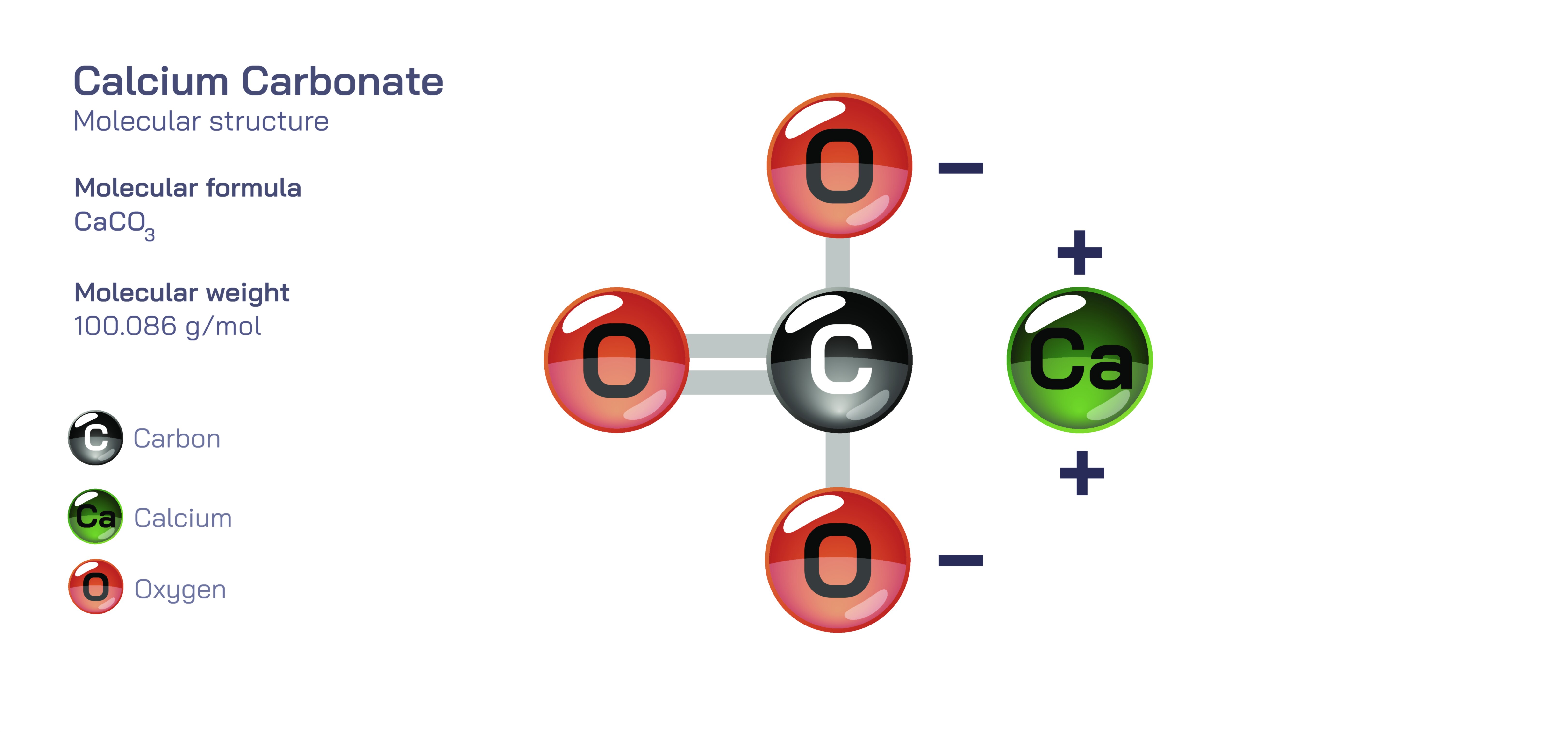
The internal structure of calcium carbonate gives rise to its various mineral forms, each with distinct visual and physical characteristics. The carbonate group forms a rigid triangular arrangement that creates stability, while the calcium ions fit into this framework to generate different crystalline structures. The most common forms—calcite, aragonite, and vaterite—differ in how their ions are arranged, influencing properties such as hardness, solubility, and appearance. Calcite forms perfect rhombohedral crystals and is the most stable variety, commonly found in limestone and marble. Aragonite, often formed in warm marine environments, is denser and more fragile. Vaterite is the least common and least stable but appears in specialized environments or biological systems. These variations show how small differences in atomic arrangement produce materials with noticeably different characteristics.
Physical Properties and Their Influence on Behavior
Calcium carbonate’s physical traits reflect its strong internal bonding and mineral nature. It typically appears as a white or pale solid that can be soft and powdery, as in chalk, or dense and polished, as in marble. Its hardness, durability, and resistance to weathering make it ideal for construction, sculpture, and architectural applications. Although relatively insoluble in pure water, calcium carbonate dissolves more readily in environments containing dissolved carbon dioxide, which helps shape caves, stalactites, and other geological features. Its ability to react with natural conditions explains why it plays such a central role in shaping landscapes, marine structures, and even soil chemistry.
Biological Importance in Shells, Skeletons, and Ecosystems
In the natural world, calcium carbonate is essential for countless organisms that rely on it to create protective shells, structural frameworks, and hardened tissues. Marine creatures such as clams, oysters, snails, and coral polyps extract dissolved ions from seawater to construct shells and reefs. These structures offer not only protection to individual organisms but also create entire ecosystems that support diverse marine life. Coral reefs, composed largely of calcium carbonate, form some of the most productive environments on the planet. Even microscopic plankton build delicate calcium carbonate casings that play a significant role in the global carbon cycle when they sink to the ocean floor. This mineral therefore acts as both a protective material and an environmental regulator, influencing ocean chemistry, sediment formation, and climate patterns.
Industrial and Commercial Applications Across Many Fields
Calcium carbonate’s stability, availability, and versatility make it one of the most widely used materials in modern industry. In construction, it forms a primary component of cement, concrete, and building stone. In manufacturing, it serves as a filler in plastics, paints, papers, and rubber products, improving texture, strength, and brightness. The pharmaceutical industry uses it as a dietary calcium supplement and as an ingredient in antacids, where it gently neutralizes acidity. In agriculture, it is applied to soil to reduce acidity, improve nutrient uptake, and support healthy crop growth. Water treatment facilities use calcium carbonate to adjust pH levels and reduce corrosion in pipelines. These diverse applications highlight its remarkable adaptability and usefulness.
Role in Environmental and Geological Processes
Calcium carbonate is deeply involved in several large-scale environmental processes. It plays a key role in buffering natural waters, helping maintain balanced conditions for aquatic life. Its sensitivity to acidic environments makes it an indicator of changes in atmospheric or ocean chemistry. When environmental acidity rises, calcium carbonate dissolves more easily, affecting coral reefs, shell formation, and sediment stability. At the same time, deposits of calcium carbonate help store carbon over geological timescales, influencing climate patterns and global carbon cycles. Its geological presence in mountains, cave systems, and coastal formations reflects Earth’s deep history, while its biological formation connects it to modern ecological dynamics.
Handling, Safety, and Practical Considerations
Calcium carbonate is generally safe and non-toxic, making it easy to handle in industrial, agricultural, and household environments. Its widespread use in food, health products, and water purification reflects its safety profile. However, fine powders can cause irritation when inhaled, and excessive buildup in pipelines or industrial systems may require maintenance. In environmental contexts, managing acidity levels helps protect natural calcium carbonate structures from erosion or dissolution. Understanding its sensitivities ensures that this mineral compound remains stable and effective in all the settings where it is utilized.
Why Calcium Carbonate Remains an Essential Mineral Compound
Calcium carbonate’s significance stems from its abundance, structural stability, and unparalleled versatility. It shapes landscapes, supports ecosystems, strengthens buildings, improves soils, enhances consumer products, and contributes to global environmental cycles. Its dual role in nature and industry demonstrates how a single mineral compound can influence both ancient geology and modern technology. Whether forming towering mountains, microscopic shells, or essential building materials, calcium carbonate remains central to the physical structure and functioning of both Earth and human society.