Mach Number — Understanding Speed Relative to Sound, Aerodynamic Behaviour, Shock Waves, and the Transition Between Subsonic, Sonic, Transonic, Supersonic, and Hypersonic Flight
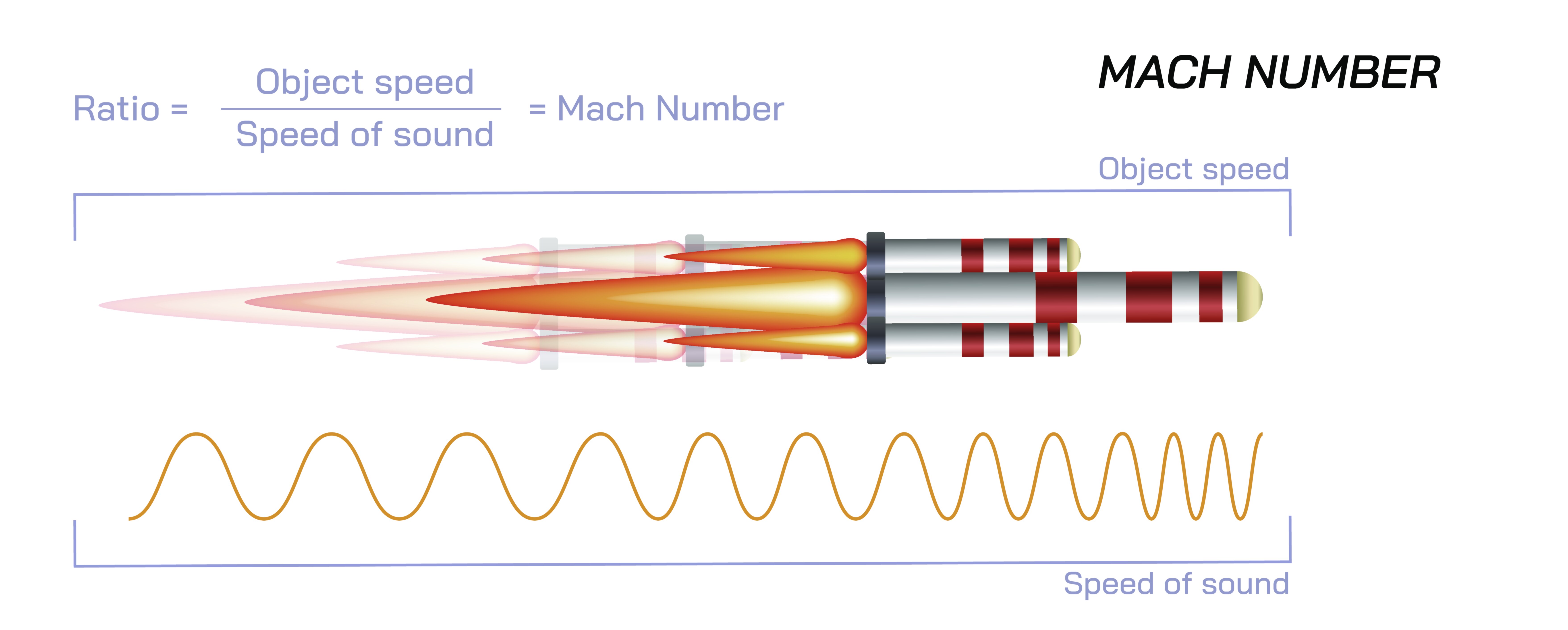
The Mach number is a dimensionless quantity used to compare the speed of an object to the speed of sound in the surrounding medium, and it plays one of the most crucial roles in aerodynamics, aerospace engineering, high-speed flight, and gas dynamics. Named after Austrian physicist Ernst Mach, the concept expresses whether an object is moving slower than, equal to, or faster than sound, not by a fixed speed but by a ratio that adapts to the physical environment. Sound does not travel at the same speed everywhere; it depends heavily on temperature, density, humidity, and the physical properties of the gas or fluid it travels through. In dry air at sea level and at room temperature, sound travels at roughly 343 meters per second (about 1,235 km/h). However, at high altitudes where the air becomes thinner and colder, the speed of sound decreases significantly. Because the Mach number scales with the local speed of sound, it correctly reflects the aerodynamic and thermodynamic conditions an aircraft or projectile experiences, regardless of altitude or atmospheric variation. This makes Mach number a universal descriptor of flow regimes rather than a simple measure of raw velocity.
The meaning of Mach number becomes clear through its classification into flow regimes, each representing distinct aerodynamic behaviour. A Mach number less than 1 (subsonic) means the object is travelling slower than sound, and pressure waves can propagate ahead of it, allowing the surrounding air to “prepare” for the object’s passage. As speed increases toward Mach 1, the object approaches the speed of sound, and airflow begins to compress. At exactly Mach 1, the object is travelling at the speed of sound, and the pressure waves generated by the moving object can no longer escape ahead—they become compressed and pile up into a shock front. This marks the sonic condition and is associated with a sharp jumping of pressure around the object. Slightly below and above Mach 1 lies the most aerodynamically challenging regime: the transonic range, typically between Mach 0.8 and Mach 1.2, where portions of the airflow become supersonic while others remain subsonic. This mixed flow produces tremendous instability, buffeting, drag rise, and shock formation on the wing and fuselage. Once an object exceeds Mach 1, it enters the supersonic regime, where a fully developed shock wave forms and flows separate differently around aerodynamic surfaces. Still higher speeds—Mach 5 and beyond—are classified as hypersonic, where intense heating, air dissociation, and extreme pressure gradients dominate.
Why these sudden aerodynamic changes occur becomes clear when examining how sound behaves in a moving fluid. Sound is a pressure wave travelling through air, expanding outward at the speed of sound. At subsonic speeds, the object pushes on the air ahead, and disturbances can travel outward faster than the incoming body. This provides the airflow time to smoothly adjust its density and pressure as the object approaches. As the object speeds up toward Mach 1, the time for air to react shrinks, and it begins to build up in front of the object like water in front of a fast-moving boat. At Mach 1, the air molecules cannot move out of the way in time, and the pressure pulse becomes a shock wave—a sudden jump in pressure, density, and temperature across an extremely thin region. After passing shock formation, in the supersonic regime, the air no longer adjusts gradually; disturbances are confined inside cone-shaped shock regions trailing behind the object. The region outside the shock cone remains unaffected by the body’s motion. These cones, called Mach cones, define the zone in which information about the object’s presence can propagate.
A dramatic consequence of supersonic flight is the sonic boom, a loud explosive sound heard on the ground when shock waves sweep across the listener. The boom does not occur at the exact moment a craft “breaks the sound barrier,” but is continuously produced as long as the aircraft travels faster than sound. The reason sonic booms are rare in commercial aviation is not only technological difficulty but also regulatory restrictions—overland supersonic flight is severely controlled to prevent structural and environmental impact from repetitive shock-wave noise. Engineers working on future supersonic and hypersonic transport designs devote great effort to reshaping aircraft noses and fuselages to redistribute pressure waves so that the resulting shock waves form lower-intensity booms.
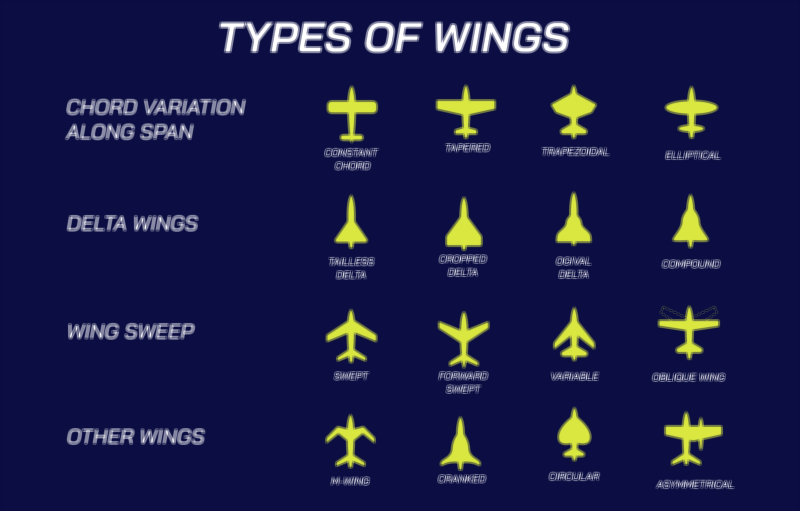
Another essential aspect of Mach number lies in compressibility effects. At subsonic speeds far below Mach 1, air behaves approximately like an incompressible fluid, meaning its density changes negligibly as pressure changes. Near Mach 0.3 and above, however, compressibility becomes significant. Air density begins to change in response to pressure changes, affecting lift, drag, and thermal conditions. As the Mach number increases further, compressibility becomes the dominant driver of aerodynamic performance. In the transonic regime, drag rises sharply due to shock wave formation on wings, tail surfaces, and engine intakes. Aircraft designed to cruise near the speed of sound use swept wings, area-ruled fuselages, and transonic airfoil shapes to delay shock formation, reduce buffeting, and improve fuel efficiency. The aerodynamic design shifts dramatically compared with slower aircraft.
Supersonic and hypersonic flow introduce yet more extreme behaviour. At Mach numbers beyond roughly 5, aerodynamic heating becomes severe, not just from friction but from shock-induced temperature increases that can heat the air to thousands of degrees. Air molecules may partially dissociate and ionize, creating a plasma sheath that can interfere with radio communications—a phenomenon famously observed during spacecraft re-entry. At hypersonic speed, traditional aerodynamic assumptions collapse; engineers must consider chemical reactions of atmospheric gases, heat-resistant materials, ablative shielding, and cooling techniques to prevent melting or structural failure. In this region, Mach number is a governing concept for both aerodynamics and thermodynamics, determining whether an aircraft’s materials, propulsion system, and control surfaces can survive the intense environment.
Mach number influences not only aircraft, rockets, and spacecraft but also fluid dynamics beyond aviation. High-velocity bullets, explosions, volcanic eruptions, jet engines, compressor blade design, gas-pipe flow, and shock-tube experiments all use Mach scaling to understand how pressure disturbances propagate. In internal combustion engines and gas turbines, air accelerates to transonic and supersonic speeds within nozzles and blade passages, and Mach-dependent shock waves affect efficiency and performance. The same principles guide the design of convergent–divergent nozzles, where the flow accelerates to Mach 1 at the throat and reaches supersonic speeds in the diverging section, forming the foundation of rocket propulsion.
Although Mach number is defined mathematically as the ratio of an object’s speed to the speed of sound, its meaning in physical terms is far deeper: it describes the fundamental shift in how matter and energy behave when motion approaches sound propagation limits. It marks the boundary between gentle aerodynamic flow and shock-dominated compression, between incompressible airflow and plasma-forming thermal extremes, between ordinary flight and the physics of high-energy gas dynamics. Understanding Mach number therefore means understanding why flight becomes more difficult as speeds climb, why aircraft must change shape as they approach the sound barrier, why hypersonic travel demands exotic materials and cooling systems, and why sound itself—something we take for granted at everyday speeds—becomes the key determinant of aerodynamic possibility when velocity rises.
In essence, Mach number is not merely a measurement of speed; it is a threshold marker of physics. Below Mach 1, flow adaptation ensures smooth aerodynamics; near Mach 1, shocks erupt and drag spikes; beyond Mach 1, the world of flight changes completely. For engineers, researchers, and pilots, Mach number defines the aerodynamic regime and determines whether wings can lift, whether engines can breathe, whether structural materials can withstand heat, and whether an object can slice through the atmosphere safely. It is through this lens that Mach number continues to guide technological innovation from high-speed aircraft and spacecraft to the future of hypersonic travel and beyond.