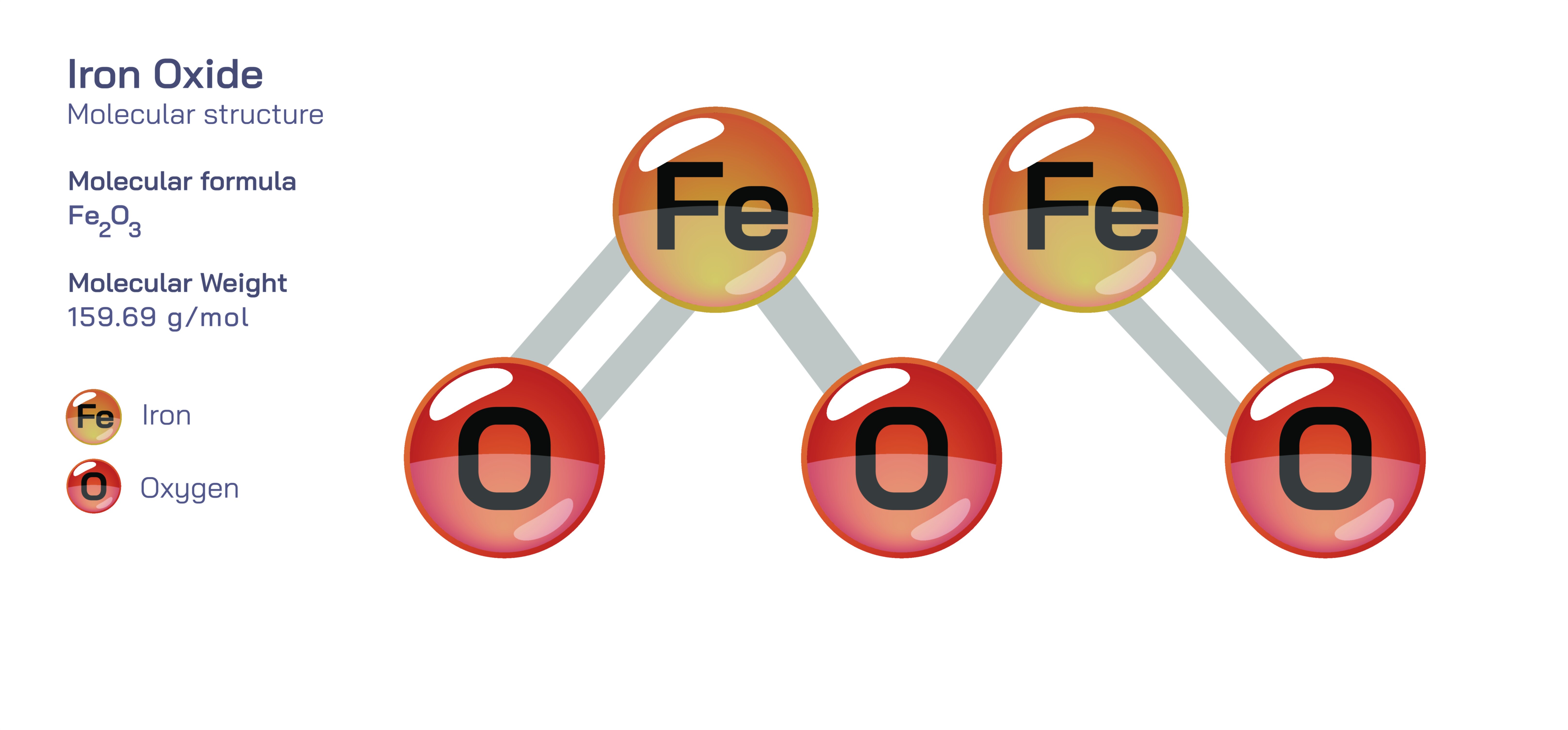
Iron Oxide — Chemical Structure, Oxidation Reaction, and Rust Formation Process for Science Learning
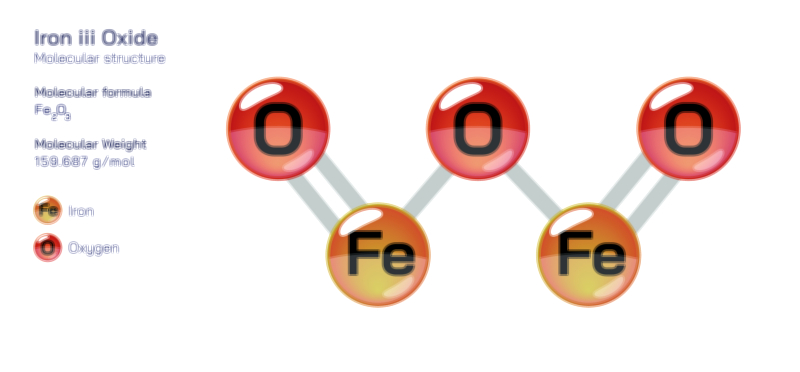
Iron oxide is one of the most widely recognized chemical compounds in the world, not because people encounter it in a laboratory but because it appears in everyday life in the form of rust. The transformation of solid metallic iron into reddish-brown iron oxide is a striking example of how matter evolves when exposed to environmental conditions. Although rust formation seems like a simple change on the surface of a metal object, it represents a complex oxidation process that alters the atomic structure of iron and produces a new compound with very different properties. When students see iron oxide represented in scientific illustrations or vector diagrams, they are not just looking at a color shift on metal — they are looking at evidence of chemical change, electron transfer, environmental interaction, and material degradation. The study of iron oxide becomes an ideal gateway into understanding why matter is not static, how the elements of the periodic table respond to surrounding gases and moisture, and why even the strongest engineered structures require protective strategies against corrosion.
When iron is freshly exposed, it appears bright, metallic, and strong, making it valuable for construction, tools, automotive frames, machinery, and countless structural applications. However, metallic iron is not in its most stable form under atmospheric conditions. The presence of oxygen in the air and moisture in the environment gradually pulls iron atoms away from their metallic arrangement and drives them into a new form. This process unfolds slowly at first, but continues without stopping once it begins, especially when humidity remains high or when exposure to saltwater accelerates the rate of surface reaction. Over time, the atomic identity of iron changes from tightly packed, cohesive metallic bonding into a brittle, porous compound known as iron oxide. Because the new material does not adhere tightly to the underlying metal, it flakes away, exposing fresh iron to oxygen and moisture. This explains why rust does not form once and stop, but spreads deeper and deeper until the structural integrity of the metal is compromised.
In educational illustrations, this evolution is often shown step by step: an unreacted metal surface first reacts with the surrounding air, then with moisture, and eventually with water that contains dissolved oxygen and salts. Each of these stages increases the rate at which iron changes into iron oxide. Such images help students visualize the transition from a shiny metallic grid into a more loosely packed and porous structure. The transformation is not simply cosmetic; it replaces strength with fragility. Iron oxide lacks the tensile properties that make pure iron and steel reliable building materials. The once-rigid metal softens into a flaky compound that cannot hold weight or support stress. In bridges, pipelines, machinery, and automobiles, this transformation from iron to iron oxide can lead to structural failure over time if not managed. Because of this, the study of iron oxide becomes a real-world application of chemical concepts that are vital both for academic learning and for industrial maintenance.
The link between chemical structure and practical consequence is especially clear when explaining why certain metals resist rust and others do not. When aluminum oxidizes, for example, the oxide layer remains tightly bonded to the surface and seals the metal beneath from further reaction, providing natural protection. Iron oxide behaves very differently. Its loose, brittle structure allows continuous peeling, meaning oxygen and water constantly reach the fresh metal. Educational illustrations that compare oxide layers across metals communicate this essential difference more memorably than text alone. Students quickly recognize that not all oxidation reactions behave the same, and that the rusting of iron is an example of a self-reinforcing corrosion cycle rather than a protective coating process.
The role of electrolytes, environmental factors, and temperature also contributes to the story of iron oxide. Rust develops slowly in dry climates but rapidly in coastal regions because saltwater accelerates oxidation. Factory areas, polluted cities, and rainy regions all create atmospheric conditions that hasten corrosion. The rusting of iron is therefore not just chemistry but environmental science, geography, and engineering combined. Science learners looking at vector diagrams that show droplet reactions, salt effects, or high-humidity exposure begin to understand that oxidation is a universal natural force that responds to multiple variables. Materials scientists and engineers must design coatings, paints, galvanization layers, cathodic protection systems, and alloy compositions to slow down this chemical inevitability and prevent the dangerous consequences of unchecked iron oxide formation.
Iron oxide is not only a destructive compound, however. In its mineral forms, such as hematite and magnetite, it plays essential roles in geology, industrial production, and technology. Pure iron oxide pigments give ceramics, bricks, paints, and industrial coatings their deep red, yellow, and brown tones. Magnetic iron oxide compounds are used in data storage, electronics, and specialty manufacturing. These dual identities — rust as degradation and iron oxide as a functional material — demonstrate to students that the same compound can be positive or negative depending on context. A rusting ship hull illustrates structural decline, while an iron oxide pigment in artistic paint represents value and utility. Educational graphics showing these contrasting uses help communicate the broader scientific principle that compounds are not inherently good or bad; their usefulness depends on purpose and environment.
In classrooms, the rusting of iron becomes a powerful teaching demonstration because it is visible, relatable, and predictable. A steel nail immersed partly in water and partly exposed to air shows rust at the interface where oxygen and moisture coexist, teaching that both are required for rapid oxidation. A nail completely submerged in water without dissolved oxygen rusts slowly. A nail in salty water rusts quickly. These outcomes show that chemistry is a rule-driven science where reactions follow patterns that can be learned, anticipated, and controlled. Alongside diagrams that depict how atoms reorganize during oxidation, visual experiments deepen the understanding that iron oxide formation is not accidental — it is a direct consequence of the environment acting consistently upon matter.
Rusting ultimately demonstrates one of the deepest themes in chemistry: materials change to reach more stable configurations. Metallic iron is strong and useful to humans, but the chemical world does not preserve materials based on usefulness. It shifts matter toward equilibrium. For iron, that equilibrium under atmospheric conditions exists not as a shining metal but as iron oxide. Once students learn this, they begin to understand that studying compounds like iron oxide is not just about learning facts but about recognizing the hidden forces guiding the transformation of matter around us.
The value of a vector illustration showing iron oxide, whether in textbooks, posters, or digital learning platforms, lies in its ability to make this invisible world visible. It helps learners realize that rust on a bicycle, corrosion on a gate, and the reddish texture on an abandoned ship are expressions of atoms reorganizing into new forms. It connects daily observation with scientific reasoning. By examining iron oxide closely, science education transforms the ordinary into the meaningful and reveals that even everyday metal objects are in constant conversation with air, water, and time — a conversation written in the language of chemistry.