Sound Traveling from Source to Ear — Wave Propagation and Hearing Process
Sound is one of the most familiar sensations in the human experience, yet the journey it takes from a vibrating source to the receptive structures of the ear forms a remarkably intricate and elegant sequence of physical and biological events. Although it is often described in simple terms as a wave moving through air, the true process extends far beyond that description. It includes how an initial vibration begins, how that vibration spreads through a medium, how it interacts with surrounding matter, and how the sophisticated mechanisms of the ear convert these mechanical disturbances into meaningful perceptions. Exploring the phenomenon in descriptive detail reveals the seamless connection between the physics of wave propagation and the biology of hearing, illustrating how the two work together to produce the rich auditory world humans rely on for communication, environmental awareness, emotional expression, and countless aspects of daily life.
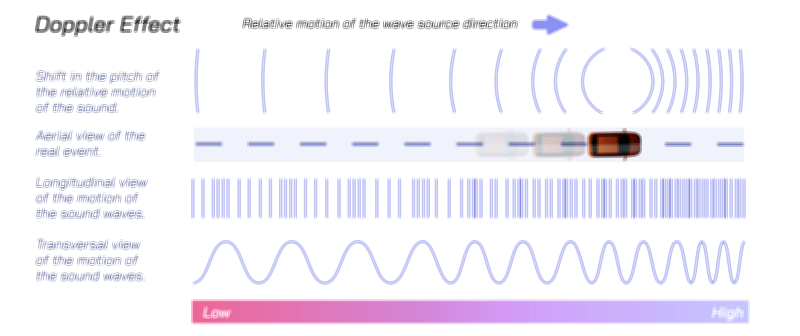
Sound begins with a source that vibrates. This source can be virtually anything capable of oscillation—vocal cords, a guitar string, a drum surface, a loudspeaker membrane, or the mechanical parts within a machine. When an object vibrates, it pushes and pulls on the molecules surrounding it, creating a rhythmic series of compressions and rarefactions in the medium. These alternating regions of higher and lower density propagate outward from the source in all directions. Unlike light, which can travel through empty space, sound requires a medium composed of particles that can collide and transfer energy. This medium can be air, water, metal, or any substance with enough elasticity to allow coordinated motion between its particles. Although humans most often encounter sound through air, each medium shapes the nature of sound differently, affecting its speed, clarity, and intensity.
As these compressions and rarefactions move outward, they form a wave—a coordinated disturbance advancing through the medium. The particles themselves do not travel the full distance; instead, they oscillate back and forth around their resting positions, transferring energy to neighbouring particles in a continuous chain reaction. This distinction is important because it explains how sound can travel great distances without requiring a physical mass of matter to move from one place to another. The wave is a pattern of motion, not a transport of material. In air, molecules are spaced relatively far apart, allowing sound to travel at a moderate speed. In water, where particles are more tightly packed, the transmission is faster. In solids, where particles are even more closely bound, sound travels faster still. These differences arise from how quickly vibrational energy can pass from one particle to the next, demonstrating that the nature of the medium plays a central role in the behaviour of sound.
As sound spreads out from its source, its intensity gradually decreases. This occurs because the energy of the wave disperses over a larger and larger area. Just as ripples on a pond become fainter as they expand, sound waves grow weaker as they travel farther. Surrounding surfaces also influence how sound moves through space. Some surfaces reflect sound, creating echoes or reverberation, while others absorb it, softening the overall auditory environment. Enclosed spaces such as rooms amplify certain features of sound while diminishing others, depending on their shape and the materials they contain. This shaping of sound by the environment explains why the same voice or musical tone can sound full and resonant in one setting but muted or sharp in another.
When a sound wave eventually reaches the ear, it does not simply strike a passive receiver; instead, it encounters a finely tuned biological system designed to convert mechanical vibrations into neural signals. The outer portion of the ear begins this process. The visible structure on the sides of the head, known as the auricle, acts like a funnel. Its curves and folds help capture incoming sound waves and direct them toward the entrance of the ear canal. Far from being decorative, the shape of the auricle assists in determining the direction of sound, helping humans identify whether a sound originates from above, below, in front, or behind. The ear canal then guides the sound waves inward, concentrating them toward the sensitive structures deeper within the ear.
At the end of the ear canal sits the eardrum, a thin, flexible membrane capable of responding to even the smallest pressure variations. As the wave reaches the eardrum, each compression and rarefaction causes it to vibrate back and forth. These vibrations replicate the pattern carried by the original wave, preserving its features such as pitch, intensity, and rhythm. The eardrum acts as a crucial translator, converting the broad movement of air into mechanical motion that can be effectively transmitted to the structures beyond it.
Behind the eardrum lies a chain of three tiny bones collectively known as the middle ear ossicles. These bones—the malleus, incus, and stapes—form a mechanical linkage that amplifies the vibrations received from the eardrum. Their arrangement and lever-like action increase the force of the vibrations while reducing their displacement, enabling the transfer of sound from the air-filled outer ear to the fluid-filled inner ear. This transition is essential because sound waves behave differently in air than they do in liquid. Without amplification, much of the vibrational energy would be reflected rather than transmitted. The middle ear solves this mismatch by adjusting the movement of the eardrum to the different physical requirements of the inner ear environment.
Once the amplified vibrations reach the inner ear, they enter one of the most extraordinary structures in the human body: the cochlea. This spiral-shaped organ is filled with fluid and lined with thousands of specialized sensory cells. When vibrations from the stapes are passed into the cochlea, they create waves within the fluid, causing different regions to move in distinctive ways. These movements stimulate microscopic hair-like structures attached to sensory cells. Each sensory cell is tuned to respond to specific characteristics of the wave. Some respond to lower-frequency vibrations associated with deeper tones, while others respond to higher-frequency vibrations linked to higher-pitched sounds. This arrangement creates a map of sound frequencies along the length of the cochlea, allowing the auditory system to distinguish among the vast range of sounds encountered in daily life.
When these sensory cells are activated, they convert the mechanical movement into electrical impulses that travel along the auditory nerve toward the brain. The brain receives these impulses and interprets them as meaningful sound, recreating qualities such as tone, loudness, direction, and even texture. The brain also integrates sound with memory, emotion, and context, allowing the listener not merely to detect a noise but to understand it—recognizing a familiar voice, appreciating music, perceiving danger in the environment, or following the subtle fluctuations of spoken language. This interpretive power transforms waves in the air into rich, meaningful experiences.
The process continues beyond this mechanical and neural pathway, influencing behaviour, communication, and perception. In conversation, the sound waves generated by one person’s voice reach another’s ear and activate the same sequence of events, allowing language to be transmitted effortlessly over distance. In music, the carefully arranged vibrations of instruments or voices evoke emotional responses, memories, or sensations, demonstrating how the physical structure of sound connects directly with human thought and feeling. In nature, the ability to hear allows humans and animals to remain aware of surroundings, detecting movement, assessing threats, locating individuals, and navigating environments even without visual cues.
Though the ear is often associated with the passive act of hearing, it also plays an active role in maintaining balance. Structures adjacent to the cochlea contain fluid and sensory cells that detect changes in head position and motion. These work together with visual and muscular signals to help maintain equilibrium. This dual function illustrates how closely linked sound perception and body movement are within the same biological framework.
The journey of sound from source to ear also highlights how fragile and delicate the auditory system can be. Excessive noise can damage the sensory cells of the cochlea, which do not regenerate. Diseases, infections, or blockages in the middle ear can impair the transmission of vibrations, leading to hearing difficulties. Age-related changes can also reduce hearing sensitivity. These vulnerabilities underscore the need to protect the auditory system and appreciate the subtlety with which it operates.
Understanding the process also helps explain why hearing technologies such as hearing aids and cochlear implants work. Hearing aids amplify incoming sound waves so the middle and inner ear can process them more effectively. Cochlear implants bypass damaged structures by delivering electrical signals directly to the auditory nerve, demonstrating humanity’s ability to replicate parts of this natural system using modern technology. These innovations are possible only because scientists understand the detailed pathway that sound follows from its origin to its perception.
Ultimately, the movement of sound from a vibrating source to the human ear represents one of the most elegant examples of how physical and biological systems intertwine. A simple vibration expands outward, interacts with matter, enters a carefully designed anatomical pathway, and becomes transformed into a complex sensory experience. This journey underscores how the natural world communicates through motion and how the human body is equipped to understand it. The process may begin with a disturbance in air, but it culminates in perception, meaning, and connection—revealing the profound bridge between physics and the human experience of sound.