Wave and Particles — Dual Nature in Quantum Physics
Foundational Understanding of Duality in Modern Physics
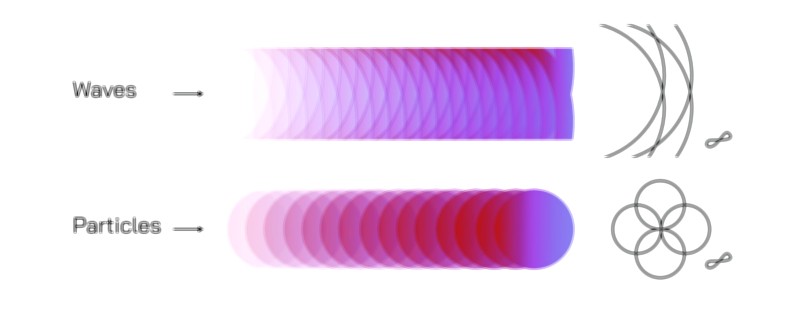
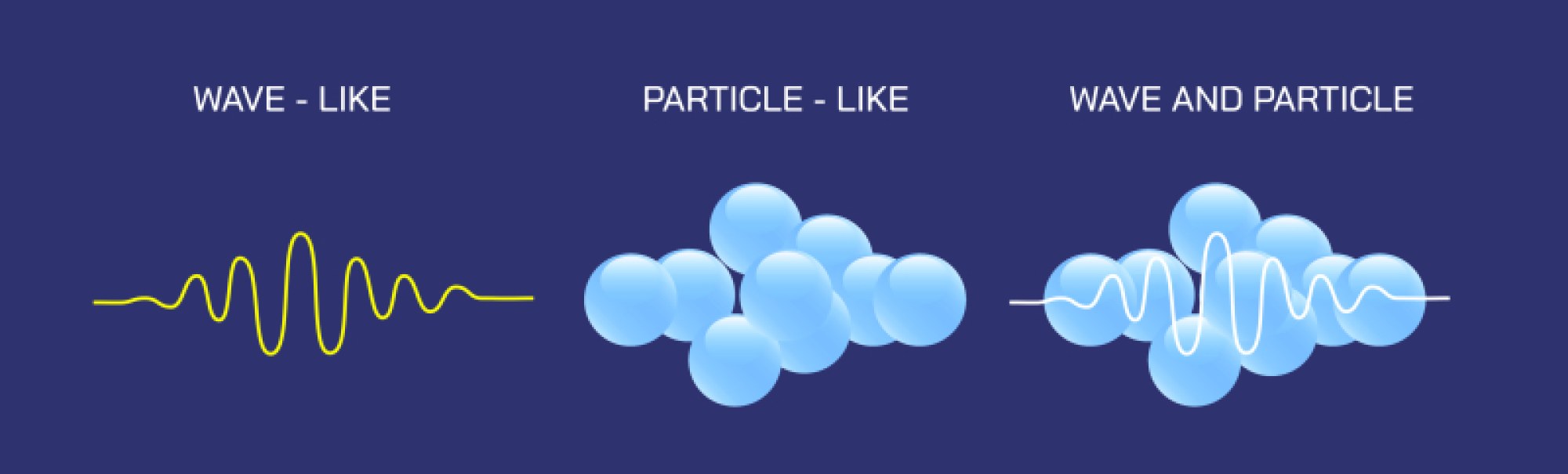
The concept of waves and particles representing a unified physical reality stands at the heart of quantum physics, revealing a world where classical intuition breaks down and microscopic phenomena follow rules that defy everyday experience. In traditional physics, waves and particles were understood as mutually exclusive categories: waves spread out, interfere, and carry energy through oscillations, while particles exist as localized units with defined mass and position. Yet early twentieth-century experiments exposed profound contradictions in these assumptions. Light showed interference patterns characteristic of waves, yet also emitted and absorbed energy in discrete packets, behaving like particles. Electrons, long thought to be solid particles, displayed diffraction and interference when passed through narrow slits—behaviors that could only be explained through wave-like properties. These discoveries led physicists to abandon the strict separation between waves and particles in favor of a quantum framework where entities such as photons and electrons possess a dual nature. This duality does not imply that they switch between states but rather that their full identity can only be described by mathematically rich wavefunctions whose physical manifestations appear wave-like or particle-like depending on how they are observed.
Wave Behavior: Interference, Diffraction, and Extended Probability Fields
The wave side of quantum systems emerges most clearly in experiments involving interference and diffraction, where the spread and overlap of probability amplitudes reveal the underlying structure of the quantum world. When a stream of electrons is directed through a pair of narrow slits, the resulting detection pattern forms alternating bands of high and low intensity—an unmistakable interference pattern that defies any purely particle-based interpretation. Each electron seems to behave as a wave capable of passing through both slits simultaneously, creating a self-interference effect. In quantum mechanics, this behavior corresponds to the evolution of a wavefunction, a mathematical representation of the system that describes the probability distribution of possible outcomes. Instead of assigning a single trajectory or path to the particle, the wavefunction spreads out, evolves in time, and interacts with itself in ways that resemble classical wave phenomena. This wave-like behavior is universal: atoms, molecules, and even large molecular clusters exhibit diffraction and interference under the right conditions. The wave component of duality thus captures the delocalized, continuous, and probabilistic aspects of quantum systems, demonstrating how the spread of possibilities is just as real as the eventual particle-like outcomes registered on detectors.
Particle Behavior: Localization, Discrete Energies, and Quantum Impacts
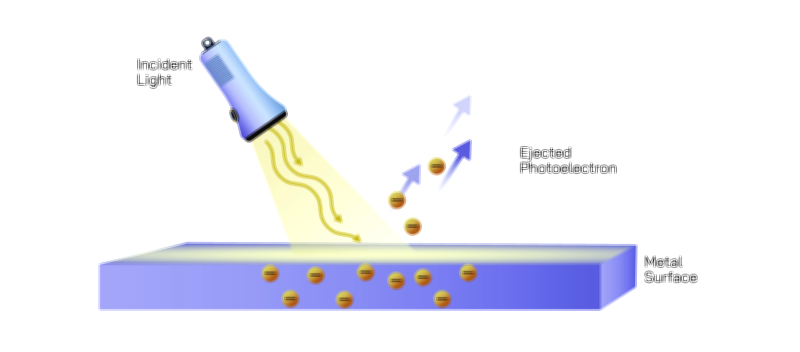
Despite their ability to behave as waves, quantum entities also demonstrate characteristics that are undeniably particle-like. When an electron or photon strikes a detector, it interacts as a localized unit rather than as a diffuse wave spread over space. Detectors record sharp impacts—single events where energy is delivered at a specific point, consistent with the existence of particles carrying discrete quantities of energy and momentum. This localization does not contradict the wave description but instead complements it: the wavefunction governs probabilities, while the measurement process collapses those probabilities into a single realized outcome. In the early days of quantum physics, the photoelectric effect provided compelling evidence of particle-like behavior for light. In this phenomenon, light striking a metal surface ejects electrons only if the light possesses a minimum frequency, regardless of intensity. This behavior could only be explained by light existing as individual photons, each carrying quantized energy determined by its frequency. Similarly, Compton scattering—the collision between high-energy photons and electrons—reveals momentum transfer that behaves exactly like particle collisions. These phenomena confirm that quantum entities carry particle-like attributes such as quantized energy, momentum, localized interactions, and discrete detection events, forming the second half of duality’s essential nature.
Quantum Theory’s Resolution: Complementarity and Wavefunction Reality
Quantum physics resolves the apparent contradiction between wave and particle behavior through the principle of complementarity, which states that waves and particles are not competing descriptions but mutually necessary perspectives on quantum systems. A quantum object is not a wave in the classical sense nor a particle in the traditional sense; instead, it is described fully only by its wavefunction, a mathematical entity that encodes both the continuity of waves and the discreteness of particles. The wavefunction evolves smoothly and deterministically according to the Schrödinger equation, exhibiting interference, spreading, and wave-like behavior. Yet when measured, the wavefunction yields discrete outcomes that resemble particle impacts. This dual behavior reflects the fact that quantum entities possess potentialities that evolve continuously and actualize as specific outcomes only during interactions with measuring devices. The collapse of the wavefunction—whether understood literally or as an update of information—marks the transition from wave-like probability distribution to a particle-like result. Complementarity teaches that asking whether an electron “really is” a wave or a particle misses the deeper reality: it is inherently quantum, expressing aspects of both classical categories but reducible to neither.
Duality Beyond Light: Matter Waves, Electrons, and Large Quantum Systems
Wave–particle duality applies not only to photons but to all matter, a discovery that radically expanded the scope of quantum theory. Louis de Broglie proposed that particles possess wavelengths proportional to their momentum, allowing matter to exhibit wave-like behavior under appropriate conditions. This idea was spectacularly confirmed when electrons produced interference patterns in double-slit experiments, behaving just like light waves. The wave behavior of electrons now forms the basis of electron microscopy, where the short wavelengths of accelerated electrons enable imaging at atomic resolutions far beyond optical limits. Even larger entities—atoms, molecules, and artificial nanostructures—have demonstrated interference effects, proving that duality persists across many scales. These results emphasize that duality is a fundamental feature of nature, not an isolated curiosity limited to light. The transition from distinctly quantum to seemingly classical behavior arises gradually as objects become larger, interact more strongly with their environments, or undergo decoherence, which suppresses interference effects. Understanding this continuum from quantum to classical deepens our knowledge of reality and guides the development of advanced technologies based on quantum behavior.
Scientific and Technological Applications of Duality
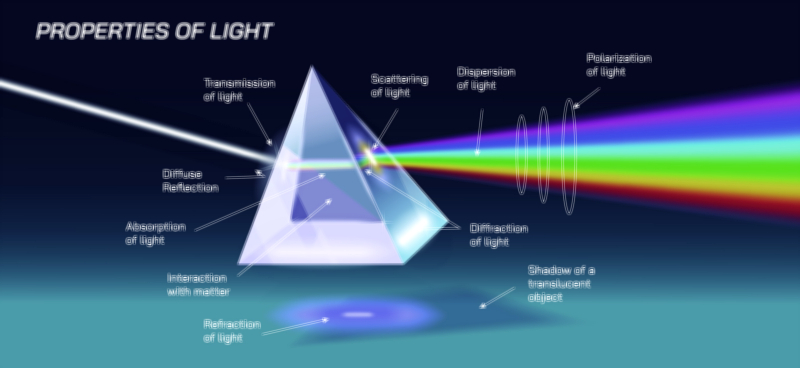
Wave–particle duality has shaped countless modern technologies that rely on the quantum behavior of light and matter. Lasers depend on the quantized emission of photons, while optical fibers rely on wave-based propagation of light to transmit information across global networks. Quantum computing depends directly on superposition—an extension of wave-like behavior—while measurement of qubit states involves particle-like detection. Semiconductor devices such as transistors, diodes, and solar cells rely on quantum principles governed by duality. Electron diffraction, X-ray crystallography, and neutron scattering exploit wave properties of matter to unveil atomic structures, enabling breakthroughs in chemistry, biology, and materials science. In medical imaging, PET scans detect particle-like interactions of photons, while MRI relies on wave-based resonance. Even astrophysics depends on duality to interpret cosmic radiation, blackbody spectra, and the quantum processes inside stars. These applications demonstrate that wave–particle duality is not merely a philosophical concept but an operational foundation for modern scientific and technological progress.
Illustrating Wave–Particle Duality in Quantum Physics
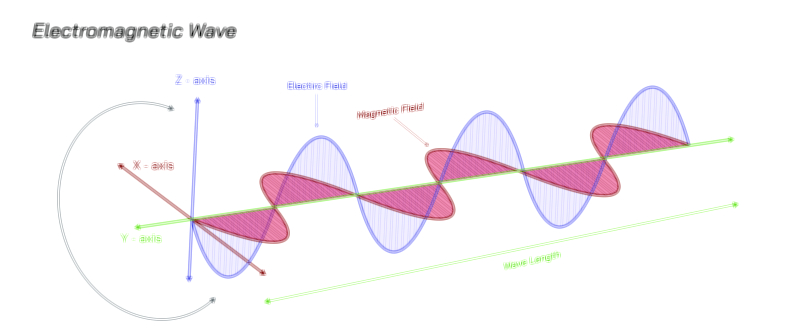
Illustrations of wave–particle duality frequently show light or electrons represented as wavefronts producing interference patterns before collapsing into localized particle-like points on a detection screen. The double-slit experiment is a central visual element, often depicted with a wave entering two slits and producing an interference pattern composed of bright and dark regions, followed by particle impacts accumulating to recreate the same pattern over time. Diagrams may also show the wavefunction as a probability cloud, spreading across space and collapsing upon measurement. Representations of photons as quantized energy packets alongside smooth electromagnetic waves help bridge the conceptual gap between particle and wave descriptions. These visuals provide clarity in understanding how a single quantum entity can exhibit behaviors once thought mutually incompatible, making the abstract logic of quantum mechanics more intuitive and illustrating the elegant dual nature of reality at the smallest scales.