Types of Pitch — Sound Frequency and Musical Tone
Pitch is one of the most fundamental and perceptually powerful dimensions of sound, allowing the human ear to distinguish high tones from low ones and enabling the full expressive range of speech, music, and environmental listening. When we examine the types of pitch in the context of sound frequency and musical tone, we step into a domain where physics, physiology, psychoacoustics, language, and art intersect. Pitch is not merely a physical phenomenon; it is a subjective experience shaped by the brain’s interpretation of vibrational energy. Every musical system, every vocal expression, and every acoustic environment depends on the ability to perceive and manipulate pitch. At its core, pitch arises from frequency—the number of vibrations per second of a sound wave. But the relationship between frequency and perceived pitch is not linear, nor is it purely mechanical. It is shaped by the structure of the inner ear, the organization of neural pathways, cultural expectations, musical training, and the acoustic context in which a sound is produced. Understanding the types of pitch therefore requires exploring both the physical properties of sound waves and the perceptual processes that transform these vibrations into meaningful auditory experiences.
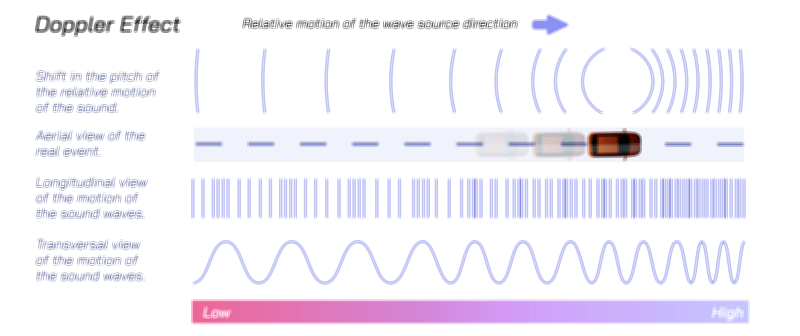
The simplest way to think about pitch is to consider the difference between high and low tones. High pitches correspond to sound waves vibrating rapidly, producing short wavelengths that the ear interprets as sharp, bright, or piercing. Low pitches arise from slow vibrations with longer wavelengths, producing deep, rich, or rumbling tones. This relationship between frequency and pitch forms the basis of musical scales, tuning systems, and harmonic structures. Yet pitch perception extends far beyond simple high–low categorization. Within the realm of acoustic science, pitch is understood to include absolute pitch, relative pitch, fundamental pitch, perceived pitch, missing fundamental pitch, and microtonal variations. In music, pitch takes on additional layers of meaning, from melodic contour to harmonic function, tonal center, tuning standards, and expressive modulation. The types of pitch reveal not only how the brain decodes frequency but how humans organize sound into systems of meaning.
One of the primary types of pitch is absolute pitch, which refers to the ability to identify or produce a specific pitch without relying on external reference points. Individuals with absolute pitch can hear a note and label it instantly, knowing it is an A, G-sharp, or C without comparison. This rare ability highlights the brain’s capacity to internalize pitch categories as stable perceptual anchors. Although often mythologized, absolute pitch is not necessary for musical excellence. Most musical activity relies instead on relative pitch, the ability to recognize intervals, compare tones, and understand pitch relationships rather than isolated frequencies. Relative pitch allows musicians to identify a melody in any key, harmonize, tune instruments, and perceive musical patterns regardless of starting note. This relational approach to pitch reflects how music is structured: melodies are recognized through intervals, harmonies through relationships, and tonal centers through patterns of tension and resolution. Relative pitch is a learned skill shaped by exposure, practice, and cultural environment.
Another important category is perceived pitch, which is not always equivalent to the physical frequency of the stimulus. The ear and brain work together to interpret complex sound waves, and the experience of pitch arises from this combined processing. For example, when a sound contains multiple harmonics, the brain tends to perceive a single dominant pitch associated with the lowest-frequency component, known as the fundamental frequency. But even when the fundamental is absent, the brain reconstructs the pitch through the interaction of overtones. This phenomenon—known as the missing fundamental pitch—shows how deeply pitch depends on neural interpretation rather than direct physical input. Instruments such as telephones, speakers, or small devices often cannot reproduce low frequencies, yet listeners still perceive the correct pitch because the brain uses the structure of the harmonics to infer it. This reconstructive ability illustrates how pitch is an emergent property rather than a simple reflection of raw vibration.
Pitch also varies in intonation, the subtle adjustments of frequency within performance. Perfectly tuned pitches are seldom rigidly fixed; singers, violinists, and wind players constantly modify pitch for expressive, contextual, and acoustic reasons. Intonation depends on musical scale systems, cultural norms, instrument design, harmonic contexts, and even the acoustics of the performance space. Western equal temperament divides the octave into twelve equal steps, but many other musical cultures use microtones—intervals smaller than a semitone. These microtonal pitches form an essential part of Indian classical music, Middle Eastern maqam traditions, Indonesian gamelan tuning, and modern experimental compositions. Such systems demonstrate that pitch is not only a physical reality but a cultural construct shaped by tradition, aesthetics, and philosophical views on sound.
Pitch also includes phenomena such as harmonic pitch, where tones occur at integer multiples of a fundamental frequency. These harmonics are central to timbre, the quality that distinguishes one instrument from another. A flute, violin, and human voice may produce the same pitch, but each has a unique timbre because the balance of harmonic pitches differs. The harmonic structure determines the richness, clarity, brightness, or warmth of a tone and influences how well pitches blend in chords and ensembles. Harmonics also play a crucial role in tuning systems, since scales often evolve from the mathematical relationships between harmonic frequencies.
In the context of melodic pitch, pitch functions as a sequence of tones perceived over time. Melodic pitch shapes musical phrases, emotional expression, and the identity of songs. The contour of a melody—the rising and falling of pitch—communicates intention, motion, tension, and release. Even without rhythm or harmony, melody conveys meaning through changes in pitch alone. Speech uses melodic pitch in prosody, where rising and falling tones signal emphasis, emotion, or questioning.
Another important category is tonal pitch, which refers to pitch functioning within a key or tonal center. In tonal music, certain pitches acquire hierarchical roles: the tonic as the home pitch, the dominant as a point of tension, the leading tone as a directional force. These relationships allow pitch to guide listeners through harmonic progressions and musical narratives. Tonal pitch differs from atonal pitch, where pitches lack hierarchical center and are treated with equality, as in many twentieth- and twenty-first-century avant-garde compositions.
Pitch can also be understood in terms of register, the broad range in which pitches are grouped: low, middle, and high. Registers shape timbre, energy, and expressiveness. Low pitches feel heavy, grounded, or ominous; high pitches feel bright, delicate, or tense. Instruments and voices have characteristic registers that influence how pitch is expressed.
Psychoacoustics introduces another important pitch category: subjective pitch, which may vary among listeners and depends on age, hearing health, sound pressure level, and neural processing. As humans age, the sensitivity to higher frequencies diminishes, altering pitch perception. Loudness also influences perceived pitch due to nonlinearities in inner ear mechanics. These effects show that pitch is not fixed but dependent on biological and perceptual conditions.
Pitch can also be encoded through frequency modulation, essential in electronic music and digital communication. Frequency modulation synthesizers create complex sounds by varying one frequency with another, producing evolving pitch textures beyond traditional musical tones. These technologies illustrate how pitch can be manipulated not only through physical vibration but through computational algorithms and electronic modulation.
Voice science introduces another dimension: pitch production, the mechanism by which the vocal folds vibrate to create frequency. The tension, length, and mass of the vocal folds determine vocal pitch, and skilled singers develop fine motor control over these factors to navigate wide pitch ranges. Speech uses rapid pitch changes to convey questions, emphasis, or emotional nuance, showing that pitch is an essential feature not only of music but of language itself.
The contextual pitch concept describes how surrounding tones influence the perception of an individual pitch. A note heard in isolation may seem neutral, but when preceded or followed by related tones, it acquires expressive character. The brain interprets pitch relationally, meaning that context can shift the meaning of a tone even when its physical frequency remains constant.
Ultimately, exploring the types of pitch reveals that pitch is not a single phenomenon but a complex spectrum of physical frequencies, perceptual constructs, cultural frameworks, and expressive functions. It arises from the vibration of air molecules yet reaches far beyond physics into the realms of art, communication, identity, memory, and emotion. Pitch allows music to form coherent melodies, harmonies, and tonal landscapes. It allows speech to convey emotion, intention, and nuance. It enables technological systems to encode data and produce electronic tones. It interacts with the physiology of the ear, the psychology of the brain, and the creativity of human culture.
The study of pitch therefore represents not just the measurement of frequency but the understanding of how humans organize and make meaning from sound. It reflects how deeply the auditory system is attuned to vibration and how much expressive power lies within subtle variations of tone. Through pitch, sound becomes structure, emotion, language, and art.