Types of Pitch — High and Low Sound Frequency
Pitch is one of the most fundamental qualities of sound, shaping how humans interpret, organize, and respond to the acoustic world around them. When you hear a bird chirping, a bass drum rumbling, a violin singing, or a voice rising in excitement, what you are truly perceiving is variation in pitch. At the most basic level, pitch refers to how “high” or “low” a sound feels. This perception arises from the frequency of the sound wave, which is the rate at which vibrations reach the ear. High-frequency waves produce high-pitched sounds, while low-frequency waves create low-pitched sounds. Yet the experience of pitch goes far beyond a simple measurement of vibration. It is shaped by intricate auditory mechanisms, the physics of sound propagation, cultural influences, musical systems, emotional expression, and biological factors that influence how different individuals perceive sound. Understanding pitch by categorizing it into high and low frequencies opens the doorway to exploring its deeper significance in nature, speech, music, and technology.
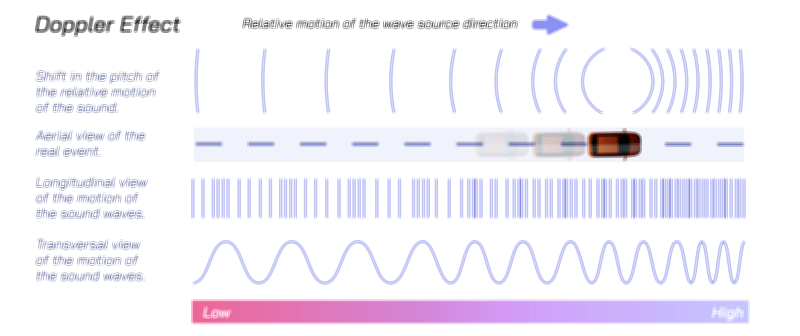
High pitch corresponds to sound waves vibrating rapidly, meaning they complete many cycles per second. These sounds often feel sharp, light, bright, or penetrating. Everyday examples include whistles, alarms, small animal calls, children’s voices, flutes, and the high registers of many musical instruments. The human ear is naturally more sensitive to high frequencies, especially those between 2,000 and 5,000 hertz, which coincidentally align with the frequencies most important for speech clarity. Because of this sensitivity, high-pitched sounds often cut through background noise and attract attention quickly. From an evolutionary viewpoint, high-pitched sounds help alert organisms to dangers such as predators, falling objects, or environmental threats. They travel differently through air than low frequencies, often losing energy faster but being more directional. The mechanics of the inner ear show why high pitches are perceived as they are: the region of the cochlea responsible for detecting high frequencies lies near the base, where the structure is narrower and stiffer, perfectly tuned for rapid vibrations.
Low pitch, on the other hand, arises from slower vibrations with fewer cycles per second. These sounds feel deep, heavy, mellow, or resonant. They include thunder, large drums, adult male voices, ocean waves, and the lower ranges of instruments like the tuba, cello, and bass guitar. Low frequencies travel farther and penetrate solid objects more easily than high frequencies. This is why you can often hear the thump of bass from a distant concert or feel the rumble of a truck approaching from far away even when the higher harmonics are not audible. The cochlea’s apex, which is wider and more flexible, processes these slower oscillations. Low-pitched sounds often evoke groundedness or seriousness because of their association with large objects, deep resonances, and slow vibrational energy. Their long wavelengths fill space differently, creating sensations that can be felt physically rather than heard alone. This tactile sensation is partly why low frequencies add depth and emotional weight in music, cinema, and speech.
The division between high and low pitch is not absolute but part of a continuous spectrum. However, categorizing sounds into these two broad types helps explain how humans navigate and interpret their acoustic environment. High-pitched sounds often carry detail and brightness. For instance, in speech, the difference between consonants such as “s” and “sh” lies largely in high-frequency energy. Without high-pitched components, speech becomes muddy and difficult to understand. In music, high pitches provide melodic clarity, sparkle, and definition, cutting through the harmonic texture and drawing attention to important musical lines. Low pitches serve as the structural foundation of music, outlining harmony, creating rhythmic power, and guiding the listener’s perception of stability or resolution. The balance between high and low pitches is essential in every musical style—too many high tones feel harsh or thin, while too many low tones feel muddy or overwhelming.
Pitch perception is shaped not only by frequency but also by the ear’s ability to decode complex sound patterns. Most natural sounds, including musical tones and speech, contain a blend of high and low frequencies called overtones or harmonics. Even when two instruments play the same pitch, their harmonic structure differs, leading the brain to distinguish between them. High-pitched harmonics add brilliance, while low-frequency fundamentals provide body and warmth. The brain integrates these components to form a single perceived pitch. This interaction explains why pitch remains stable even when certain frequencies are missing—an auditory illusion known as the missing fundamental phenomenon. The brain reconstructs pitch from patterns in the higher harmonics, demonstrating that pitch perception is both sensory and cognitive.
The experience of high and low pitch also intersects with emotion and psychological interpretation. High-pitched sounds tend to signal urgency, alertness, or excitement. A rising pitch in speech may indicate a question, curiosity, or emphasis. In music, ascending pitch often conveys energy, tension, hope, or brightness. Conversely, low-pitched sounds evoke calmness, power, seriousness, or threat. A descending pitch may signal completion, sadness, or relaxation. These associations are not entirely arbitrary; they reflect biological and cultural shaping. For example, larger animals naturally produce lower-pitched sounds, and humans instinctively interpret lower pitches as signs of strength or dominance. Higher-pitched sounds often come from smaller sources and may be linked to vulnerability or agility. These innate associations shape emotional responses in music, film sound design, and everyday communication.
High and low pitches also play critical roles in speech patterns, helping convey meaning beyond the literal words spoken. Intonation—the rise and fall of pitch in speech—guides listeners through questions, statements, emphasis, sarcasm, and emotional expression. Languages like Mandarin, Thai, and Yoruba are tonal, meaning that pitch changes within syllables alter word meaning entirely. In such linguistic systems, high and low pitch distinctions carry lexical importance. Even in non-tonal languages, pitch variation plays an essential role in prosody, shaping rhythm, emotion, and social cues.
Musical instruments are designed around the production and control of pitch. String instruments raise pitch through tighter tension or shorter string length. Wind instruments vary pitch by changing air column length. Percussion instruments produce pitch based on surface tension, cavity size, or material resonance. Electronic instruments manipulate pitch through oscillators, filters, and modulation, often exploring extremes of the high–low spectrum. The ability to tune instruments demonstrates how pitch serves as a unifying parameter in musical systems. Humans intuitively understand pitch relationships, even without formal training. A melody remains recognizable whether played high or low because pitch patterns—the intervals—carry identity more strongly than absolute frequencies.
Pitch perception varies across individuals due to age, hearing health, and biological differences. High-frequency sensitivity declines with age, a condition known as presbycusis. Exposure to loud noise can damage hair cells in the cochlea responsible for high-frequency detection, leading to difficulty hearing consonants or detecting high-pitched details. Some people experience pitch-related disorders, such as diplacusis or pitch distortion, where each ear perceives different frequencies. Musicians often develop finer pitch discrimination through training, allowing them to detect smaller variations between tones. Cultural exposure also shapes pitch perception—listeners accustomed to microtonal music perceive high and low distinctions differently than those raised in equal-tempered systems.
The division into high and low pitch also reflects how sound interacts with physical spaces. High frequencies bounce off surfaces more directly but are absorbed quickly by soft materials. Low frequencies travel around obstacles, penetrate walls, and accumulate in corners. Acoustic design must manage how these pitches behave to create balanced listening environments. Recording studios use bass traps to control low-frequency buildup, while concert halls are designed to enhance clarity and blend across the entire pitch spectrum. This acoustic behavior demonstrates that pitch is not simply an auditory phenomenon but a spatial and architectural consideration.
Technological systems—from telecommunication to audio engineering—encode, manipulate, and reproduce pitch with precision. Telephones compress audio by prioritizing mid to high frequencies, ensuring intelligibility but sacrificing lower pitches. Musical recordings use equalization to fine-tune high and low frequencies for desired emotional impact. Radar, sonar, and medical imaging technologies use high-frequency waves for precision scanning. Subwoofers and tweeters are engineered specifically for low and high pitches respectively, reflecting the need to handle different frequency ranges separately. Even digital assistants recognize spoken commands through pitch contours and spectral patterns.
Ultimately, the classification of pitch into high and low frequencies reveals the profound connection between physical vibration and human perception. It demonstrates how sound waves shape communication, music, emotion, environment, and technological design. High and low pitches serve as the basic coordinates of auditory experience—every melody, every spoken sentence, every environmental sound exists somewhere along this frequency spectrum. Through pitch, humans organize sound into patterns that guide navigation, learning, creativity, and emotional understanding. High and low frequencies form the foundation of how we hear the world, how we make sense of it, and how we give it meaning.