Chess Blocks — Board Game Pattern
The concept of chess blocks refers to the iconic pattern that defines the chessboard, a grid composed of alternating light and dark squares arranged in an eight-by-eight matrix. This pattern is far more than decorative design; it is the foundational structure upon which every movement, strategy, interaction, and tactical idea in the game of chess is built. Without the precise arrangement of these alternating blocks, the game would lose its geometry, its internal logic, and the unique spatial dynamics that make chess one of the most enduring and intellectually profound games in human history. The visual contrast of the board’s blocks creates clarity, allowing players to perceive structure at a glance and navigate complex sequences of moves with precision. Beneath this simplicity lies a deeply mathematical and symbolic pattern that reflects centuries of evolution in the way humans understand space, logic, conflict, and strategy. To appreciate chess blocks fully is to understand how pattern, symmetry, and spatial relationships shape not just a board game, but an entire intellectual tradition.
At first glance, the chessboard appears straightforward: eight rows and eight columns of interlocking blocks, half dark and half light. Yet this simple structure creates a world of possibilities. Each square possesses a fixed coordinate within the grid, and the alternation of colors helps players instantly identify whether a piece occupies a light or dark square. This distinction is central to understanding movement patterns, especially for pieces like bishops, which remain confined to one color throughout the game. The alternating pattern ensures that diagonal paths become visually intuitive and that long-range movements can be seen instantly across the board. It also facilitates the calculation of knight moves, which follow unique L-shaped patterns requiring jumps across colored squares. The coloration of chess blocks, though seemingly aesthetic, is therefore an instructional and navigational tool that enables mental clarity and geometric tracking in a game dependent upon foresight and spatial awareness.
The arrangement of chess blocks also shapes the identity of individual pieces. For example, the queen starts on her own color, a principle students of the game learn early, and one that visually reinforces correct setup. Castling patterns, opening structures, and endgame formations all depend on an understanding of how pieces relate to the grid. A single block difference in initial placement alters the entire flow of the game, demonstrating that the pattern is not arbitrary but precisely calibrated to support the coherence of chess mechanics. Each square represents a potential battlefield, a stepping stone for maneuvering, or a zone of influence where control determines the tempo of the game. By visualizing the board as a structured field of blocks rather than a blank background, players navigate the interplay of attack, defense, space, and initiative with clarity and efficiency.
Chess blocks also serve as a medium for expressing strategy. Every plan—whether an opening system, a middlegame attack, or an endgame technique—exists in relation to this checkered pattern. Control of the center squares at the beginning of the game gives rise to classical principles of development. Dominance of key dark or light-square complexes forms the core of many advanced strategic ideas. Opening repertoires often revolve around strengthening or undermining square patterns such as the dark-square diagonal from the queen’s bishop or the light-square structures around a king’s fianchettoed defenses. The blocks become zones of influence, where subtle shifts in control can change the course of a match. The beauty of chess lies in how players transform this static pattern into a dynamic battlefield infused with tension, possibilities, and psychological depth.
The checkered pattern also provides a visual language shared across cultural and historical contexts. Chessboards have appeared in art, literature, education, and symbolism for centuries. The alternating square design evokes themes of duality—light versus dark, good versus evil, conflict versus harmony. Across civilizations, the chessboard pattern has been used to symbolize order, intellect, discipline, and strategic thinking. Medieval artists depicted kings and philosophers contemplating chessboards as symbols of wisdom. In modern contexts, the pattern adorns fashion, architecture, and media, demonstrating its aesthetic power. The grid’s symmetry, balance, and rhythmic alternation speak to a universal love for patterns that combine simplicity and structure in a visually compelling form.
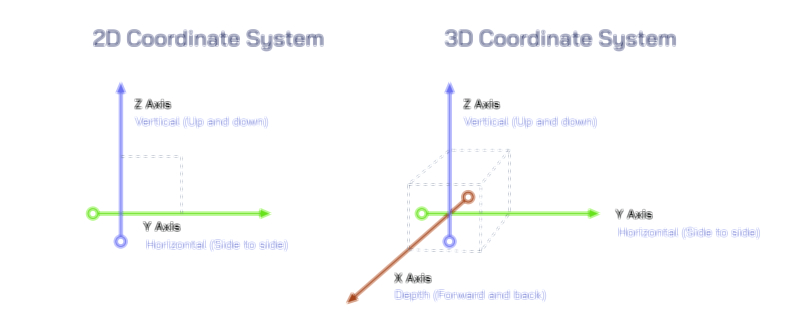
Beyond visual impact, the blocks form a coordinate system that maps the chessboard onto a logical framework. Every square carries a unique designation, marked by a combination of letter and number, creating a grid system that allows moves to be recorded, studied, taught, and communicated worldwide. Chess notation transforms the board into a language of its own, where human ideas are translated into precise coordinates. This mapping gives the game permanence beyond the moment of play, allowing analysis of historic matches, the teaching of beginners, and the communication of strategies across generations. Without the distinct squares of the chess blocks, such a system would not exist. The grid makes abstract ideas concrete, turning patterns of thought into shapes on a board that can be reconstructed, visualized, and understood universally.
The chess blocks also influence how players perceive time and progression during a match. Each move shifts control and presence across the board one square at a time, creating a rhythm in which the alternation of blocks serves as a grounding reference. Players calculate not only where pieces will land but how they will traverse the contrasting squares, a process that shapes timing, combinations, and long-term planning. The movement of pieces across this patterned grid becomes a metaphor for patience, timing, and strategic layering, where immediate tactics interact with long-term positional ideas.
Cognitively, the chess block pattern trains visual intelligence in profound ways. It strengthens the ability to recognize spatial relationships, anticipate movement patterns, visualize future scenarios, and break down complexity into manageable units. The contrast between blocks enhances memory of positions, helping players recall openings, study endgame positions, or replay famous matches. This pattern assists in chunking, a psychological technique where individuals group information into recognizable structures, allowing them to process complex positions quickly and efficiently. The uniformity of the squares provides stability, while the color alternation ensures that the eyes remain oriented regardless of how many pieces are on the board. This interplay between consistency and contrast contributes to the game’s cognitive benefits, from improving concentration and pattern recognition to strengthening problem-solving skills.
The chessboard pattern also interacts with culture and teaching traditions. In classrooms, instructors use the alternating squares to explain movement patterns, help students develop board vision, and teach fundamental concepts such as controlling key squares or identifying weaknesses in an opponent's structure. In competitive environments, players learn to see the board not as sixty-four separate units but as interconnected regions shaped by the geometry of the blocks. The perception of diagonals, ranks, and files becomes intuitive because the alternating blocks highlight the pathways along which pieces travel. Even grandmasters depend on this visual clarity during rapid or blindfold games, where internalizing the board’s structure becomes essential.
In design and craftsmanship, the chessboard pattern reflects the value placed on precision and beauty. Chessboards have been carved from marble, inlaid with exotic woods, crafted with metals, or painted with artistic motifs, yet the underlying pattern remains constant. Whether presented in luxurious materials or humble ones, the alternating blocks preserve the integrity of the game’s structure. This consistency reflects the universal respect given to the geometry of the board—a geometry that has remained virtually unchanged for centuries. Regardless of artistic variations, the block pattern continues to define the essential visual identity of the game.
Symbolically, chess blocks embody duality and order. The alternating light and dark squares represent contrast, opposition, and balance. They symbolize the interplay between opposing forces—themes central to human experience and reflected in strategy, conflict, cooperation, and decision-making. The pattern suggests that clarity emerges from contrast, that structure arises from alternating elements, and that balance is achieved when opposing sides coexist in symmetry. In the world of chess, these philosophical ideas play out on the board in every game, making the blocks more than visual units—they become symbols of structure, logic, and intellectual harmony.
Ultimately, chess blocks are not merely the components of a board but the framework that makes chess possible. They enable structure, guide movement, define identity, inspire cognition, and support the entire system of strategy that unfolds within the sixty-four squares. Through their alternating pattern, they transform an empty space into a world of possibilities, where every square becomes a stage for conflict, creativity, imagination, and mastery. The chessboard’s block pattern stands as a testament to the enduring power of geometry, symmetry, and design—an elegant grid that continues to shape minds, challenge intellects, and anchor one of the most influential games ever created.