Boric Acid — Understanding the Structure, Behavior, and Uses of an Inorganic Chemical Compound
The Fundamental Identity of Boric Acid in Chemistry and Nature
Boric acid is a widely recognized inorganic chemical compound known for its mild acidity, gentle antiseptic behavior, and versatile applications across medicine, industry, household products, and material science. Appearing typically as a white, powdery crystalline substance, boric acid forms naturally in certain volcanic regions and saltwater systems, while also being produced commercially through chemical refinement. Its structure centers around boron, oxygen, and hydrogen arranged in a stable configuration that dissolves smoothly in water. This combination of simplicity, stability, and low toxicity makes boric acid a uniquely approachable compound that supports both scientific processes and everyday practical needs. Whether used as a preservative, cleaning agent, flame retardant, or antiseptic, boric acid demonstrates how gentle inorganic chemicals can play significant roles in modern life.
How the Structure of Boric Acid Shapes Its Mild Chemical Behavior
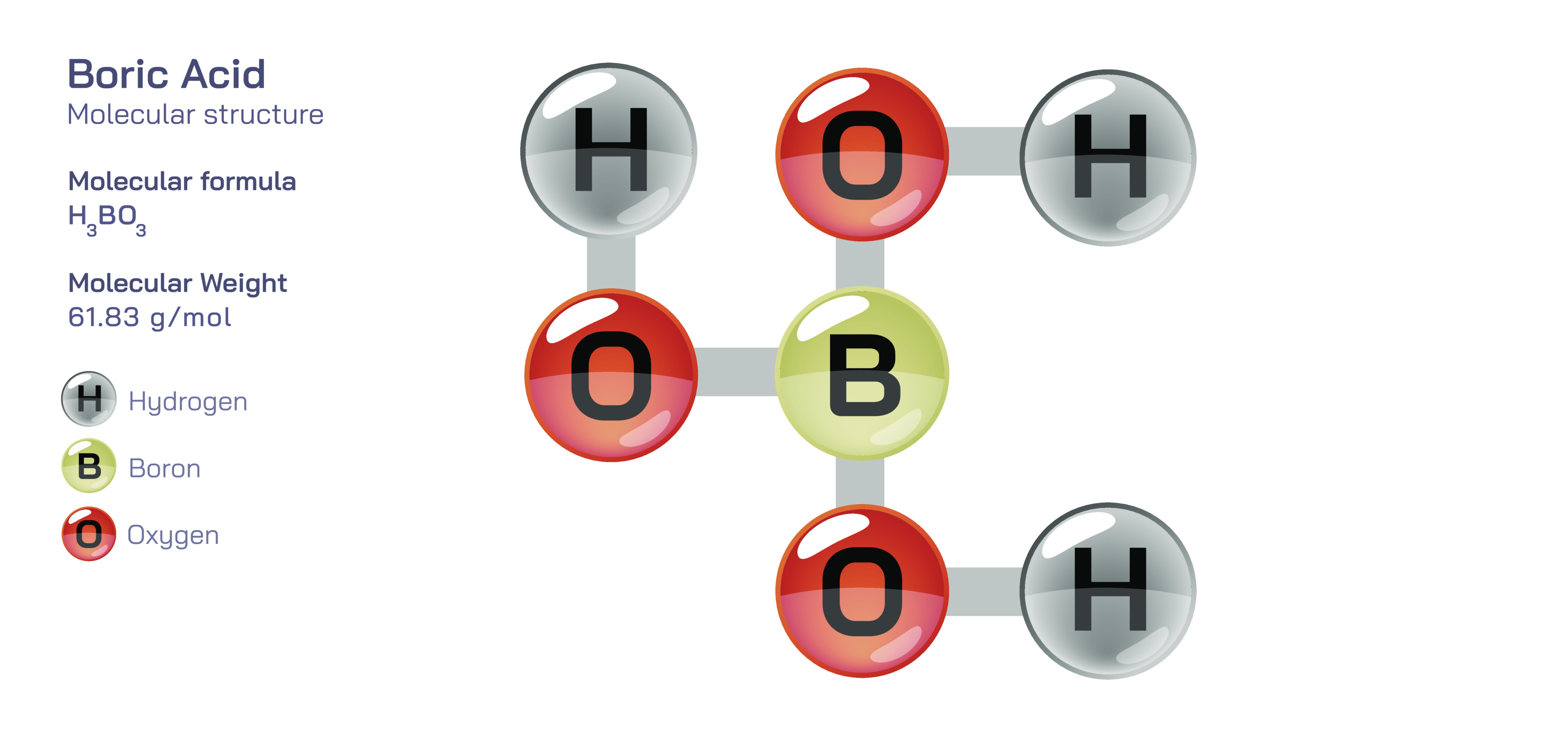
The arrangement of atoms within boric acid gives it properties that differ from stronger mineral acids. Although it behaves as an acid in solution, it does so gently, interacting slowly with water and creating a mild, non-corrosive solution suitable for delicate applications. Its molecular structure allows it to interact with other compounds in ways that stabilize materials or regulate pH without causing the harsh effects associated with more aggressive acids. This gentle nature makes boric acid suitable for antiseptic products used on skin, eyes, or household surfaces. The balance between stability and reactivity reflects the compound’s internal structure, where boron is surrounded by oxygen atoms that help distribute charges and maintain a calm chemical profile.
Physical Characteristics and Interaction With Water
In its pure form, boric acid appears as soft, white crystals or a fine powder that dissolves easily in hot water and moderately in cold water. When dissolved, it forms a smooth, clear solution that retains the compound’s mild acidity. Its solubility and physical stability support its use in ointments, solutions, and suspension-based products. Boric acid remains stable under normal temperatures and conditions, resisting decomposition unless exposed to intense heat. When heated strongly, it gradually transforms into other boron-containing materials with glass-like characteristics, a property that links it to glass and ceramics manufacturing. Its ability to dissolve, remain stable, and react gently with water makes it suitable for controlled chemical processes, medicinal applications, and industrial treatments.
Role as a Mild Antiseptic and Medical Ingredient
One of the most familiar uses of boric acid lies in its function as a gentle antiseptic. For generations, it has been used in diluted form to soothe minor skin irritations, reduce microbial growth, and support hygiene in delicate areas such as the eyes or ears. Its effectiveness comes from its ability to inhibit certain bacteria and fungi without causing harsh irritation. In medical formulations, boric acid appears in powders, solutions, eyewashes, and topical ointments. These applications take advantage of its low toxicity at regulated concentrations and its compatibility with sensitive tissues. While modern medicine offers stronger alternatives for serious infections, boric acid remains relevant for mild cleansing and protective purposes due to its calm but dependable chemical action.
Use as a Household Cleaner and Pest Control Agent
In everyday settings, boric acid is valued for its ability to clean, deodorize, and deter pests. As a mild abrasive, it helps remove stains and polish materials without scratching or damaging surfaces. Its slow-acting antimicrobial qualities support deodorizing and cleaning formulas for bathrooms, kitchens, and laundry applications. Boric acid is also well known as an effective insect control agent. When applied in dry, powdered form, it affects the outer surfaces and internal systems of insects such as ants, cockroaches, and termites. Because it acts mechanically rather than relying on toxic chemicals, it offers a safer alternative to harsh pesticides when used correctly and in appropriate amounts. This combination of cleaning power and pest control effectiveness has made it a common component of household maintenance.
Industrial Uses in Glass, Ceramics, and Flame Retardants
In industrial environments, boric acid helps create strong, heat-resistant materials. When incorporated into glass and ceramic production, it contributes to the formation of borosilicate glass—a durable material known for its exceptional resistance to thermal shock. This type of glass is used in laboratory equipment, cookware, optical systems, and high-performance industrial applications. In the textile and wood industries, boric acid supports flame-retardant treatments that help materials resist ignition and slow the spread of fire. These roles rely on the compound’s ability to alter the structure of materials under heat, creating protective layers or strengthening chemical networks. The importance of boric acid in these areas shows how a mild inorganic compound can influence advanced materials science and safety technologies.
Environmental Applications and Soil Conditioning
Boric acid also plays a role in environmental and agricultural contexts. Boron, the element at the heart of boric acid, is an essential micronutrient for plants, supporting cell wall formation, pollen development, and nutrient transport. In regulated amounts, boric acid helps correct boron deficiencies in soils, improving plant health and crop yields. However, because excessive amounts can harm vegetation, careful application is essential. Its presence in water treatment formulations helps manage microorganisms and adjust chemical balance, supporting cleaner and safer water systems. The compound’s mild reactivity and natural origins make it compatible with environmental processes when used responsibly.
Safety Considerations and Proper Handling
Although boric acid is mild compared to many chemical compounds, it must still be handled with care. In controlled amounts, it is safe for household, medical, and agricultural use, but overexposure or ingestion in large quantities can cause health issues. Proper storage, ventilation, and handling practices ensure that it maintains its beneficial properties without posing risks. When used as a pesticide or cleaning agent, it should be applied in accordance with guidelines to prevent overuse. Its long history of safe and effective use has contributed to its reputation as a trustworthy inorganic compound, but awareness of concentration and exposure remains essential.
Why Boric Acid Remains an Important Inorganic Compound
Boric acid continues to hold a valued place in chemistry, industry, and home use because of its unique blend of gentleness, stability, and effectiveness. It supports delicate medical treatments, strengthens heat-resistant glass, cleans surfaces without damage, and provides a safer alternative to many synthetic chemicals. Its compatibility with biological systems and its wide range of applications demonstrate how an inorganic compound can serve both scientific and practical needs with remarkable versatility. Through its presence in healthcare, manufacturing, environmental management, and daily living, boric acid remains a quiet yet powerful contributor to modern life.