Calcium Hydride — Understanding the Nature and Behavior of an Inorganic Reducing Agent
The Fundamental Identity of Calcium Hydride as a Reactive Inorganic Compound
Calcium hydride is a powerful inorganic compound known for its role as a reducing agent and its ability to release hydrogen gas when exposed to moisture. This white or grayish solid appears simple at first glance, yet it embodies significant chemical strength rooted in its internal structure. Formed from calcium and hydrogen, the compound reflects the strong bonding patterns seen between highly reactive metals and lightweight elements. Its behavior showcases how certain inorganic compounds can serve as storage forms for gases, agents of chemical transformation, and essential components in industrial processes. Calcium hydride is often used in environments where water removal or controlled hydrogen generation is required, demonstrating its broad utility in chemical engineering, laboratory synthesis, and material processing.
How the Internal Structure of Calcium Hydride Shapes Its Reactivity
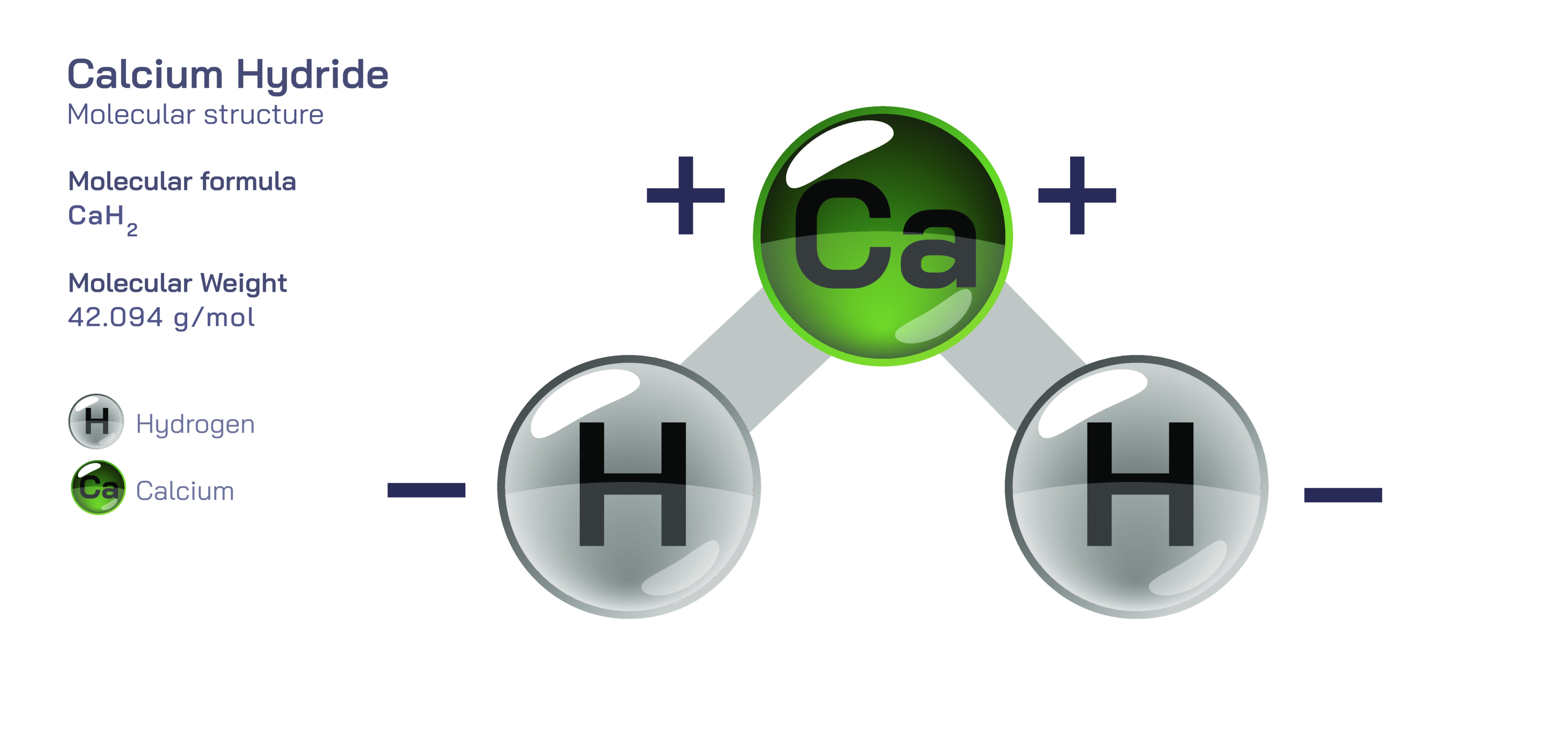
The structure of calcium hydride is defined by the strong attraction between calcium, a highly reactive metal capable of forming positively charged ions, and hydrogen in its negatively charged form. Within the solid, calcium ions and hydride ions arrange themselves into a closely packed lattice that remains stable under dry conditions. This lattice, however, holds considerable stored chemical potential. When moisture enters the system, the hydride ions interact with water molecules, releasing hydrogen gas and transforming the structure into a different compound. This powerful response reflects the readiness of calcium hydride to undergo chemical changes, making it one of the most efficient solid materials for generating hydrogen when needed. Its structure is therefore not just a static arrangement of particles but a reservoir of reactive energy that becomes active under the right conditions.
Reactivity with Water and Its Role as a Hydrogen Source
One of the most defining behaviors of calcium hydride is its reaction with water. Upon contact with moisture, the compound undergoes a vigorous transformation that releases hydrogen gas. This reaction makes calcium hydride a widely used hydrogen generator in controlled environments. Because the compound remains stable in its dry form, it allows hydrogen to be stored, transported, and generated in ways that avoid handling pressurized cylinders. This property is especially valuable in laboratory settings where hydrogen must be produced safely and on demand. The ability of calcium hydride to supply hydrogen also highlights its role in chemical reduction, where it provides a source of reactive hydrogen capable of altering or transforming other compounds during synthesis.
Its Function as a Reducing Agent in Chemical Reactions
Calcium hydride serves as a strong reducing agent because of the reactive nature of the hydride ions within its structure. In many chemical processes, reduction involves transferring hydrogen or altering the chemical environment to shift compounds to lower oxidation states. Calcium hydride achieves this by offering hydride ions that can actively participate in these transformations. This ability makes the compound valuable in the preparation of certain metals, the purification of chemical mixtures, and the synthesis of specialized organic and inorganic materials. It is particularly useful in situations where water or solvents must be avoided, because its solid form allows reduction reactions to proceed in dry conditions. Its performance as a reducing agent highlights the broader role of hydride compounds in shaping modern chemical synthesis.
Use in Drying Agents and Moisture-Sensitive Applications
Another important function of calcium hydride is its use as a drying agent. Because it reacts readily with water, it is capable of removing moisture from solvents, gases, and chemical mixtures that must remain dry. Industries and laboratories use calcium hydride to purify organic liquids by removing remaining traces of water that could interfere with delicate reactions. Its effectiveness comes from the strong attraction between hydride ions and water molecules, which drives the reaction forward until the moisture is consumed. This property makes calcium hydride an invaluable tool in processes requiring strict dryness, reinforcing how its reactivity supports precise chemical control.
Industrial and Practical Applications Beyond the Laboratory
Calcium hydride’s powerful reactivity ensures that it plays important roles in various industrial settings. It is used in metal refining processes to remove impurities, improve the quality of final products, and support reactions requiring hydrogen introduction. Its ability to generate hydrogen also finds applications in specialized fuel systems, emergency equipment, and remote environments where bottled hydrogen is impractical. Calcium hydride’s predictable behavior makes it suitable for controlled chemical production, especially in environments where safety and efficiency are essential. The compound’s straightforward composition, combined with its impressive performance, demonstrates how inorganic materials remain central to modern technological development.
Physical Characteristics Reflecting Its Chemical Strength
The appearance of calcium hydride—typically as a fine, granular, or powdery solid—belies the powerful reactivity within its structure. It is stable under dry conditions, non-volatile, and easy to store when moisture is strictly avoided. Its density, color, and texture reflect its ionic-lattice nature, but its true significance becomes clear only when it interacts with water or reactive chemicals. The strength of its internal bonds and its readiness to release hydrogen make it a substance that must be handled with respect and precision. Protecting it from moisture is essential, as even small amounts of humidity can initiate chemical changes.
Safety and Handling Considerations for a Highly Reactive Compound
Because calcium hydride reacts strongly with water and releases gas that can ignite under certain conditions, handling it requires careful attention. It must be stored in sealed, moisture-free containers and kept away from damp environments. When used as a drying agent, it cannot be casually exposed to air, as atmospheric humidity may reduce its effectiveness or trigger unwanted reactions. Protective equipment and controlled handling procedures ensure that its reactive potential is used safely and effectively. These precautions emphasize how chemically powerful materials demand respect, even when they appear inert in their stable form.
Why Calcium Hydride Remains a Vital Reducing Agent in Modern Chemistry
Calcium hydride illustrates the remarkable capabilities of simple inorganic compounds. Its ability to release hydrogen, reduce other substances, and remove moisture reflects a versatility that is invaluable in scientific and industrial practice. The compound bridges the gap between solid-state chemistry and gas-generation technology, allowing for efficient, controlled reactions across many fields. Its role as a reducing agent highlights how inorganic materials continue to shape chemical innovation, providing tools essential for synthesis, purification, and energy-related processes. Calcium hydride’s enduring value lies in its combination of stability, reactivity, and practical utility—qualities that keep it central to modern chemical science.