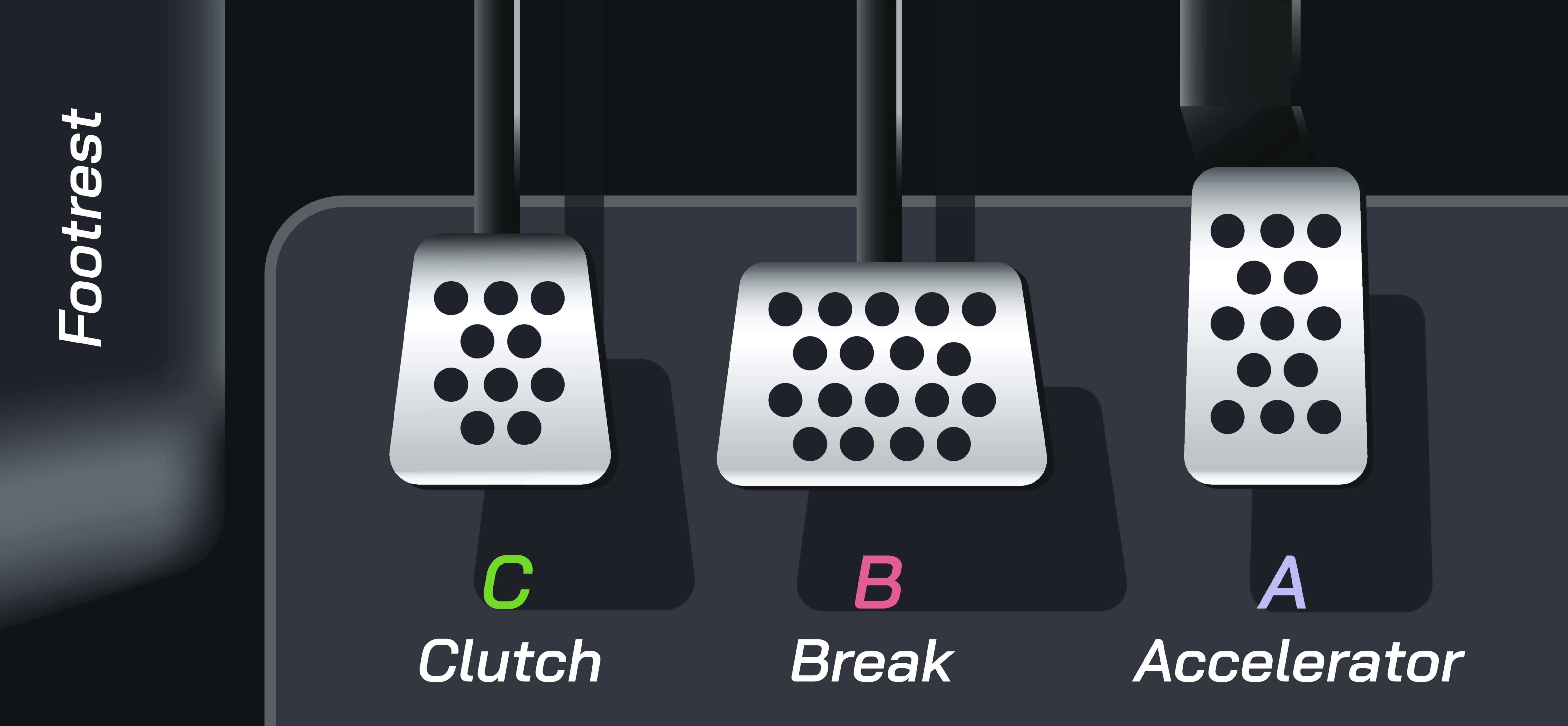
Driving ABC — Basic Vehicle Control Concept
Driving ABC represents the foundational concept behind basic vehicle control, describing the essential coordination of acceleration, braking, and steering that allows a driver to operate a vehicle safely, smoothly, and confidently. Although modern vehicles may include advanced technologies, sensors, automated systems, and driver-assistance features, the core principles of driving remain anchored in human understanding of motion, spatial awareness, and controlled response. At its heart, Driving ABC refers to the mastery of three fundamental elements: the ability to accelerate with intention and balance, the skill to brake with appropriate timing and sensitivity, and the capacity to steer with precision while maintaining full situational awareness. These three components work in synergy rather than isolation, enabling drivers to respond to road conditions, anticipate hazards, manage speed, maintain lane discipline, and interact fluidly with surrounding traffic. Understanding these principles as interconnected behaviors rather than separate actions allows beginners to build a strong foundation and experienced drivers to refine their techniques over time.
Acceleration forms the first pillar of Driving ABC, and it involves much more than pressing down on a pedal. Proper acceleration requires an understanding of how a vehicle responds to force, how traction behaves under different road conditions, and how the distribution of weight within a car shifts during motion. Smooth acceleration prevents sudden jerks that might startle passengers or destabilize the vehicle, especially in turns or slippery conditions. A disciplined approach helps avoid unnecessary fuel consumption and reduces wear on vehicle components. When a driver accelerates smoothly from a stop, merges into traffic, or overtakes another vehicle, the goal is always the same: maintain controlled forward momentum without compromising stability. This controlled application of power forms the baseline for all other driving actions, because improper acceleration often leads to oversteering, delayed braking, or reduced reaction time. In this way, acceleration becomes a controlled conversation between the driver and the machine, one that requires sensitivity to context and anticipation of what lies ahead.
Braking constitutes the second pillar, representing the essential counterbalance to acceleration. Effective braking is not simply a matter of stopping the car; it is the art of managing speed in a way that preserves safety, vehicle stability, and passenger comfort. Good braking technique begins with anticipation, since the safest and smoothest stops result from early recognition of obstacles, traffic signals, pedestrian movement, and changes in road conditions. A skilled driver gradually applies braking force rather than relying on sudden pressure, thereby maintaining better control over the vehicle. This principle becomes especially critical when driving in rain, snow, gravel, or other low-traction environments, where harsh braking can cause the wheels to lose grip, extending stopping distance and increasing the risk of skidding. The ability to modulate braking force also becomes vital during downhill driving, where overreliance on the brakes may cause overheating, and during emergency situations, where a balance of firmness and stability prevents the vehicle from slipping out of line. Thus, braking is not merely a response to danger but a proactive tool for maintaining rhythm, spacing, and safety on the road.
Steering forms the third essential component of Driving ABC, and it governs the direction of travel while simultaneously interacting with both acceleration and braking. Effective steering requires an understanding of vehicle dynamics, such as how weight shifts during turns and how the tires interact with the road surface. Smooth, deliberate steering movements ensure that the tires maintain adequate contact and grip, especially in curves or during evasive maneuvers. Good steering technique also incorporates visual scanning, as the direction of the driver’s gaze influences hand movement and overall positioning. By looking well ahead rather than directly in front of the vehicle, a driver can better anticipate the geometry of the road, upcoming curves, traffic patterns, and potential hazards. Steering also involves maintaining lane discipline, keeping the vehicle balanced, and positioning it correctly during turns, overtaking, and parking. Without proper steering methodology, even skilled acceleration and braking techniques become ineffective, because direction control forms the core of safe navigation.
Together, these three pillars intertwine to form a unified driving behavior. When a driver accelerates, brakes, and steers with coordination, the vehicle responds smoothly and predictably, providing greater stability and minimizing risk. For example, accelerating too aggressively while turning may cause the vehicle to lose traction, while braking too hard during a sharp curve can destabilize the balance between the wheels. Steering abruptly without adjusting speed can also lead to loss of control. This means that successful driving relies not only on performing each action well but on understanding the holistic relationship between them. The synergy of Driving ABC enables the driver to glide through traffic, navigate tight spaces, negotiate slopes, handle intersections, and adapt to rapidly changing environments with control and confidence.
Beyond the purely mechanical aspects, Driving ABC embodies the mental and perceptual skills necessary for safe driving. This includes anticipation, situational awareness, judgment, and the ability to read and interpret complex road environments. Drivers must observe road signs, understand traffic behavior, notice subtle movements of pedestrians, gauge vehicle spacing, and recognize weather effects. This cognitive dimension determines how quickly and accurately the driver decides to accelerate, brake, or steer. Even the most technically proficient driver becomes unsafe without awareness, attention, and good decision-making. Thus, the principles of Driving ABC extend deeply into the mental work behind driving, where the mind constantly evaluates conditions and makes micro-adjustments to maintain control.
In real-world scenarios, the importance of Driving ABC becomes evident in tasks such as overtaking, merging onto highways, navigating roundabouts, or maneuvering through crowded urban streets. When merging, for example, the driver must accelerate appropriately to match traffic speed, steer smoothly into the lane, and brake subtly if needed to adjust spacing. During overtaking, timing and acceleration are critical, and steering precision ensures the maneuver is completed safely. In emergency situations, having mastered these basics allows the driver to respond with calm efficiency—braking firmly without locking the wheels, steering away from danger without overcorrecting, and accelerating if needed to avoid collision. These skills are not developed instantly but grow through practice, awareness, and consistent application.
Driving ABC also plays a fundamental role in fuel efficiency, vehicle maintenance, and long-term cost reduction. Smooth acceleration prevents excessive engine strain, controlled braking reduces brake wear, and proper steering alignment decreases tire damage. Drivers who integrate ABC principles into daily practice often experience fewer mechanical issues, better fuel economy, and longer vehicle lifespan. This practical dimension reinforces that basic driving principles benefit not only safety but also efficiency and sustainability.
In teaching environments, Driving ABC forms the bedrock of instruction for learners. Driving instructors emphasize how each component affects the others, often starting with controlled acceleration in empty spaces, followed by gentle braking exercises, and eventually steering drills that blend all three elements. By mastering these skills in isolation and then integrating them, new drivers gain confidence and internalize the rhythm of vehicle control. This methodical approach lays the foundation for advanced driving techniques such as defensive driving, hazard anticipation, skid recovery, and high-speed maneuvering.
Ultimately, Driving ABC – the mastery of acceleration, braking, and steering – stands as the universal language of vehicle control that every driver must learn. It symbolizes the essential relationship between human judgment and mechanical response, highlighting that safe driving arises from harmony and coordination. These core principles empower drivers to navigate roads with awareness, precision, and confidence, ensuring that both the vehicle and its passengers reach their destination safely.