Calcium Acetate — Understanding the Structure and Behavior of an Organic Calcium Salt
The Fundamental Identity of Calcium Acetate as an Organic-Inorganic Hybrid Compound
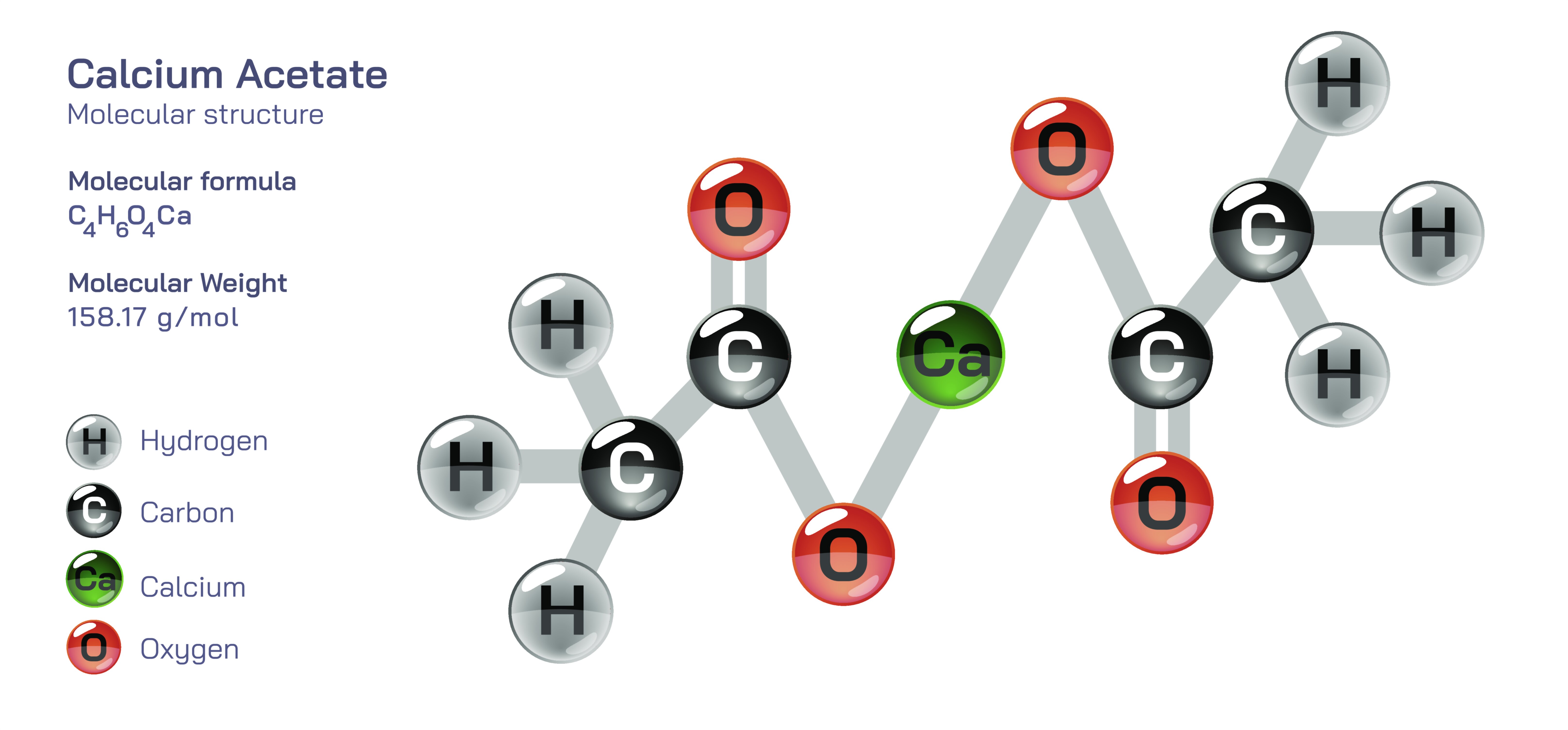
Calcium acetate is a distinctive compound that bridges organic and inorganic chemistry, formed when calcium ions combine with acetate groups derived from organic acids. Appearing as a white, crystalline, and highly soluble solid, it embodies a harmonious balance between the stability of a metal salt and the versatility of an organic component. This dual character gives calcium acetate unique physical and chemical properties that allow it to dissolve readily, interact smoothly with biological systems, and function effectively in both industrial and medical environments. As a compound that exists comfortably in both worlds, calcium acetate demonstrates how metal ions and organic structures can work together to create materials that are functional, adaptable, and essential to modern processes.
How Calcium Acetate Forms and Gains Its Stability
The formation of calcium acetate begins with the union between calcium—a reactive alkaline earth metal—and acetate, a group formed from the breakdown of acetic acid. When these two components meet, their charges attract strongly, forming a stable ionic salt with an internal arrangement that stays intact in dry conditions but dissolves freely in water. The acetate groups give the compound an organic identity, adding flexibility and compatibility with biological environments, while the calcium ion contributes strength and stability. This balanced structure allows calcium acetate to function predictably in chemical reactions and biological systems, making it valuable in medicine, industry, and food processing.
High Solubility and Behavior in Aqueous Environments
One of the most notable features of calcium acetate is its exceptional solubility in water. When placed in aqueous solutions, the compound readily separates into calcium ions and acetate ions, both of which remain active and available for chemical or biological interaction. This ease of dissolution is important for its medical uses, where it must interact quickly and effectively with physiological fluids. In industrial and food-related contexts, the high solubility ensures even distribution, ease of mixing, and consistent performance. The compound’s ability to dissolve so completely reflects the compatibility between the charged ions and the polar nature of water, illustrating how ionic salts derived from organic acids behave in solution.
Medical Uses and Biological Significance
Calcium acetate holds an important place in modern medicine, especially in the management of certain kidney-related conditions. When individuals experience impaired kidney function, their bodies may struggle to regulate the balance of minerals and nutrients, particularly phosphorus. Calcium acetate is used to help reduce phosphorus levels by binding with it inside the digestive system. Once bound, the phosphorus becomes less absorbable and is removed naturally, helping restore balance in the bloodstream. This behavior underscores the compound’s gentle yet effective interaction with biological systems, relying on its ionic nature and solubility to influence physiological processes. Because it dissolves smoothly and releases calcium into the body, it also contributes to maintaining healthy mineral levels when used carefully under medical guidance.
Role in Food Processing and Preservation
Calcium acetate is also widely used in the food industry as a stabilizer, acidity regulator, and preservative. Its organic component makes it compatible with food materials, while the calcium content provides additional nutritional value. In bakery products, it helps control yeast activity and regulates acidity, contributing to improved texture and consistency. In confectionery and certain dairy products, it stabilizes mixtures and prevents unwanted crystallization or spoilage. The compound’s predictable behavior in aqueous and organic environments makes it particularly valuable in food processing, where safety, consistency, and purity are essential.
Industrial Applications and Chemical Functions
Beyond food and medicine, calcium acetate finds use in a range of industrial settings. In the production of polymers and resins, it can act as a catalyst or stabilizing agent, influencing the way materials set or cure. In wastewater treatment, it supplies an organic carbon source that helps support beneficial bacterial activity, making the purification process more efficient. Its solubility and reactivity also allow it to participate in various synthesis pathways where organic salts are required for controlled reactions. These uses highlight how the compound’s unique structure supports chemical environments that demand both organic compatibility and ionic strength.
Physical Characteristics Reflecting Its Dual Nature
In its solid form, calcium acetate typically appears as small white granules, flakes, or powders that are easy to handle and measure. The compound absorbs moisture from the air, especially when left exposed, reflecting the interaction between the ions and the surrounding environment. Its organic component gives it a mild, slightly vinegar-like association due to its origin in acetic acid, while its ionic framework ensures that it remains stable and functional under a wide range of conditions. Because it dissolves so readily, even small quantities spread quickly in water, allowing for efficient use in both biological and industrial applications.
Safety, Handling, and Environmental Interactions
Calcium acetate is generally considered safe when handled correctly, though it must be used in appropriate quantities to avoid imbalances in biological or chemical systems. In medical use, dosing is monitored to prevent excessive mineral intake. In industrial environments, the compound is stored in dry, sealed containers to prevent clumping and maintain effectiveness. Its environmental impact is mild, as both calcium and acetate are naturally occurring components in many ecosystems. This compatibility makes calcium acetate an appealing choice for applications requiring minimal ecological disruption.
Why Calcium Acetate Remains an Important Organic Calcium Salt
Calcium acetate stands out among organic salts for its versatility, safety, and effectiveness across multiple fields. Its ability to dissolve quickly and interact smoothly with biological and chemical systems makes it indispensable in medicine, food processing, and industrial chemistry. It demonstrates how the combination of an organic group with a metal ion can create a compound that supports essential processes in health, manufacturing, and environmental management. As a material that blends stability with reactivity and natural compatibility with technological usefulness, calcium acetate remains a cornerstone compound in both scientific and practical domains.