Calcium Chloride — Understanding the Nature and Behavior of an Inorganic Ionic Salt
The Fundamental Identity of Calcium Chloride as a Highly Soluble Ionic Compound
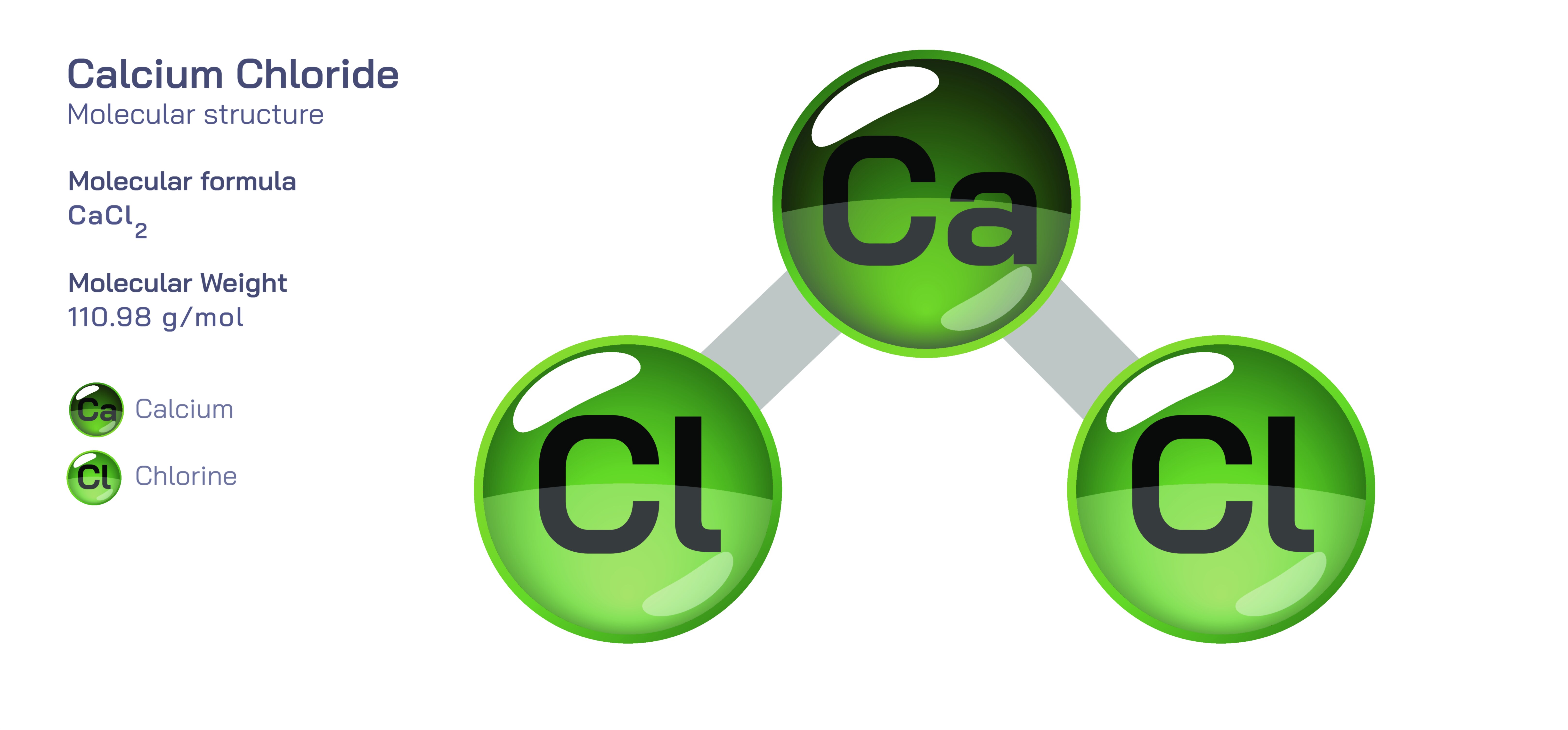
Calcium chloride is a widely recognized inorganic salt known for its strong ionic structure, remarkable solubility, and versatile applications across industrial, environmental, and everyday settings. Appearing as white, crystalline granules or flakes, the compound forms when calcium, an alkaline earth metal, bonds with chlorine, a reactive halogen. The resulting ionic structure is firm in its solid state yet easily disrupted by water, allowing calcium chloride to dissolve readily and release its ions into solution. Its ability to attract and absorb moisture from the surrounding environment makes it hygroscopic, allowing it to function as a drying agent, a de-icing substance, and a stabilizer in various chemical processes. Calcium chloride illustrates how simple ionic building blocks can produce a compound with broad usefulness and significant practical value.
How Ionic Forces Shape the Internal Structure of Calcium Chloride
The structure of calcium chloride reflects the strong attraction between oppositely charged ions. Calcium atoms willingly release electrons, becoming stable, positively charged ions, while chlorine atoms readily accept electrons, forming negatively charged ions. When these ions combine, they arrange themselves into a repeating three-dimensional lattice that remains stable under normal conditions. This lattice provides physical strength and gives solid calcium chloride its granular or crystalline appearance. Despite this internal rigidity, the compound breaks apart easily in water because the attraction between water molecules and the ions exceeds the forces holding the lattice together. This dual behavior—the strength of the solid and the ease of dissolution—defines many ionic salts and explains the widespread use of calcium chloride.
Exceptional Solubility and Moisture Attraction
One of the most striking features of calcium chloride is its extreme solubility in water. It dissolves rapidly and thoroughly, creating highly concentrated solutions that remain stable across a wide range of temperatures. Even when exposed to air, calcium chloride attracts moisture, absorbing water vapor from the atmosphere until it becomes damp, liquefied, or forms hydrated crystals. This hygroscopic nature makes it incredibly valuable as a drying agent in laboratories, storage areas, and industrial settings where moisture must be controlled. Its ability to absorb water so aggressively also explains why it generates heat when dissolving—a property that enhances its effectiveness in cold-weather applications.
Role in De-Icing, Snow Control, and Road Maintenance
Calcium chloride is widely used in cold climates because of its ability to melt ice and snow efficiently. When applied to icy surfaces, the compound dissolves into a brine that lowers the freezing point of water, causing ice to melt even at temperatures lower than those manageable by many other salts. This makes it especially effective for roads, walkways, and parking areas during winter, improving safety and mobility. Its moisture-attracting behavior helps it begin acting quickly, while its ability to generate heat when dissolving enhances melting efficiency. These combined properties explain why calcium chloride is a preferred material for winter maintenance in challenging weather conditions.
Agricultural and Soil Treatment Applications
Beyond winter use, calcium chloride plays a significant role in agriculture and soil management. When applied to dusty or unpaved roads, it helps control dust by absorbing moisture from the air and binding loose particles together. In farming, calcium chloride solutions can help address calcium deficiencies in soil and improve the structural stability of certain types of farmland. The compound’s calcium content supports plant growth, enhances cell-wall strength, and helps crops withstand stressful conditions. Its rapid solubility allows it to be applied through irrigation systems or as a foliar spray, making it a practical tool for addressing nutrient imbalances.
Industrial Uses Across Chemical and Manufacturing Sectors
Calcium chloride is employed in a wide variety of industrial processes due to its predictable behavior and strong ionic character. In the chemical industry, it is used to adjust moisture levels, regulate freezing points, and stabilize mixtures. In manufacturing, it supports processes such as concrete acceleration, where it helps construction materials set and strengthen more rapidly, especially in colder environments. In refrigeration systems, calcium chloride brines serve as heat-transfer fluids capable of functioning at low temperatures. The compound also assists in petroleum extraction, wastewater treatment, and food processing, where controlled moisture absorption or salt content is required.
Physical Characteristics That Reflect Its Ionic Nature
Calcium chloride’s appearance—typically granular, flaky, or pellet-like—is tied to the crystalline structure of its ionic lattice. Its firmness, tendency to clump when exposed to humidity, and ability to generate heat during dissolution all stem from the characteristics of its internal bonding. The compound often exists in hydrated forms, where water molecules become incorporated into the solid, creating stable structures that differ slightly in texture and handling properties. Despite these variations, the compound remains stable and functional, maintaining the same essential chemical behavior in each form.
Safety Considerations and Proper Handling Practices
Although calcium chloride is widely used, it requires thoughtful handling. Its ability to attract moisture can cause irritation if it comes into contact with skin or eyes, and its heat-releasing nature when dissolving can create discomfort or burns if not managed carefully. In industrial and laboratory environments, protective equipment is used to prevent exposure, and storage containers are kept tightly sealed to avoid unwanted moisture absorption. When applied outdoors, especially on vegetation or certain surfaces, excessive use should be avoided to prevent unintended effects. With proper precautions, calcium chloride remains a safe and effective material.
Why Calcium Chloride Is an Indispensable Inorganic Salt
Calcium chloride’s significance lies in its exceptional combination of chemical stability, high solubility, moisture absorption, and environmental adaptability. These qualities make it a cornerstone material in winter road maintenance, industrial processes, moisture control systems, and agricultural applications. Its ability to function as both a drying agent and a strong de-icing compound illustrates the versatility of ionic chemistry in real-world settings. As a substance derived from simple ionic interactions, calcium chloride demonstrates how fundamental chemical principles shape practical solutions that support modern life and industry.