Ammonium Acetate — Structure, Properties, and Chemical Applications
Fundamental Identity and Structural Characteristics of Ammonium Acetate
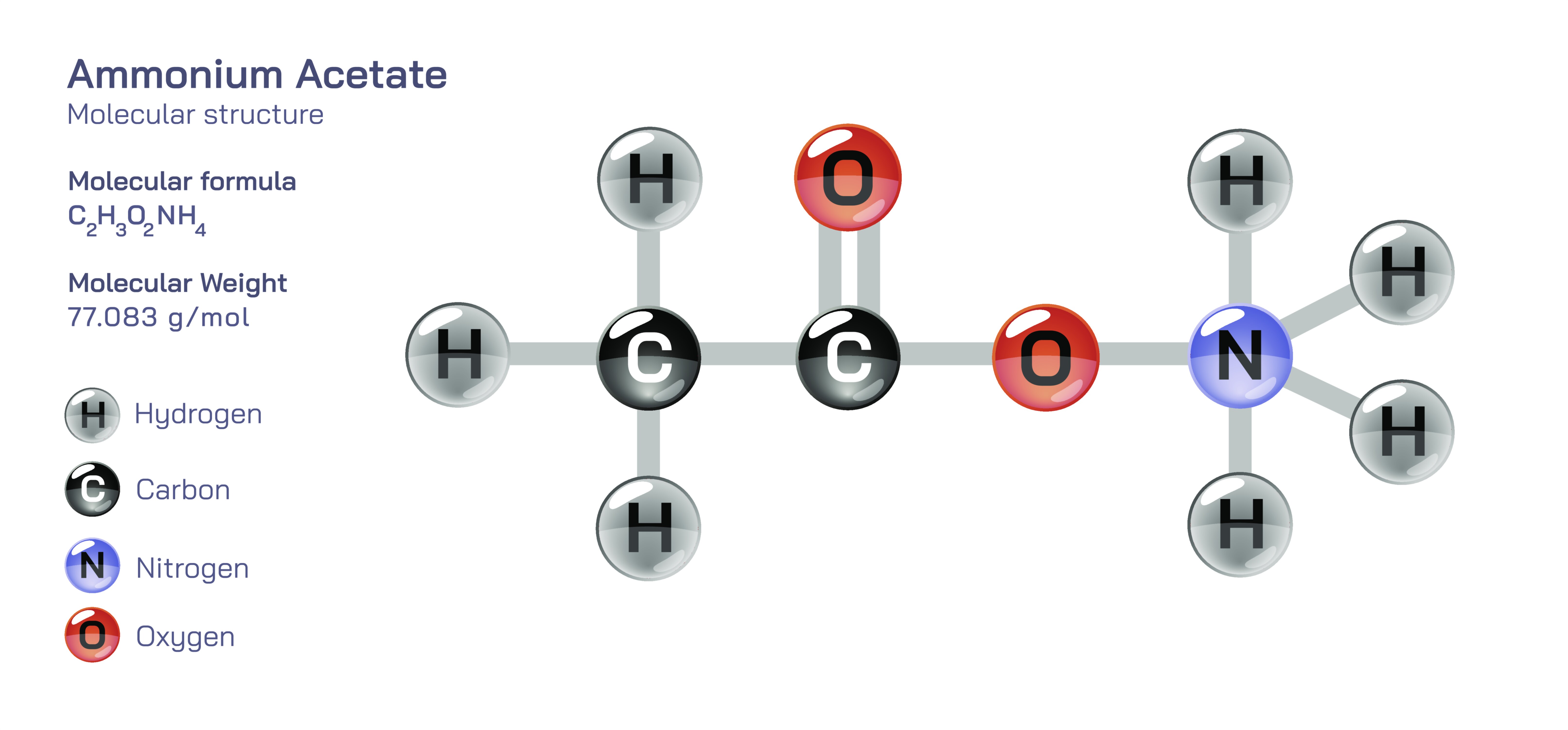
Ammonium acetate, represented chemically as NH₄CH₃COO, is an inorganic–organic salt formed from the reaction between ammonia (or ammonium ions) and acetic acid. It typically appears as a white, crystalline, hygroscopic solid with a faint vinegar-like odor arising from partial dissociation of acetate ions. Structurally, ammonium acetate is composed of two key ionic species: the ammonium cation (NH₄⁺) and the acetate anion (CH₃COO⁻). The ammonium ion features a tetrahedral arrangement of hydrogen atoms around a central nitrogen atom carrying a positive charge, reflecting its formation through protonation of ammonia. The acetate ion, on the other hand, consists of a carbonyl group (C=O) and a deprotonated hydroxyl oxygen, forming a resonance-stabilized, planar structure where electron density is shared between the two oxygen atoms. These ions are held together through electrostatic attraction, creating a crystalline lattice that is strongly influenced by hydrogen bonding. This combination of inorganic ammonium functionality and organic acetate composition gives ammonium acetate physical versatility and chemical adaptability that supports its diverse scientific, biological, and industrial uses.
Chemical Behavior, Dissociation, and Reactivity in Solutions
When ammonium acetate dissolves in water, it dissociates completely into its constituent ions, forming a solution that is nearly neutral in pH due to the balanced acid–base nature of its components. The ammonium ion, being a weak acid, can donate a proton, while the acetate ion, being a weak base, can accept one. This dynamic equilibrium provides buffering capacity under certain conditions, especially when the concentration is sufficiently high. The weak conjugate acid–base pairing makes ammonium acetate a particularly effective reagent in reactions requiring gentle pH stability. Upon heating, ammonium acetate decomposes into acetamide and water, and with stronger heating, further decomposition can produce acetic acid and ammonia. In the presence of strong acids or bases, it undergoes predictable reactions: acids convert the acetate ion into acetic acid, while bases release ammonia from the ammonium ion. These dual-reactive behaviors allow ammonium acetate to function as an intermediate in organic reactions, separation processes, and analytical techniques, where controlled ion release or mild buffering is required.
Physical Properties and Thermal Stability
Physically, ammonium acetate is a deliquescent solid capable of absorbing moisture from the atmosphere, which necessitates airtight storage to prevent clumping or degradation. It dissolves readily in water and alcohol, yielding clear solutions that remain relatively stable at room temperature. Unlike many inorganic salts, ammonium acetate does not possess a high melting point; instead, it decomposes when heated, making it unsuitable for high-temperature applications but ideal for processes that take advantage of its decomposition products. Its mild odor and relatively low toxicity support its use in biochemical, agricultural, and laboratory settings, where purity, solubility, and predictable thermal behavior are important. The interplay between its ionic nature and organic components gives ammonium acetate unique solubility and decomposition characteristics that distinguish it from purely inorganic salts.
Role in Biological and Biochemical Systems
In biology and biotechnology, ammonium acetate plays a crucial role as a volatile buffer that maintains pH without leaving non-volatile residues. This is particularly important in mass spectrometry, protein purification, and nucleic acid extraction, where non-volatile salts can interfere with instrumentation or downstream analysis. Because ammonium acetate readily evaporates upon heating or lyophilization, it allows samples to be desalted efficiently, leaving behind only volatile products like ammonia and acetic acid, both of which dissipate. In DNA and RNA precipitation protocols, ammonium acetate enhances nucleic acid aggregation by neutralizing negative phosphate charges while avoiding excessive salt contamination. In microbial cultivation, it may serve as a nitrogen or carbon source, depending on organism type, and can be used in metabolic studies that require an easily assimilated salt source. This versatility, combined with its biochemical compatibility, makes ammonium acetate a preferred reagent in molecular biology, enzymology, and proteomics.
Industrial and Analytical Chemistry Applications
Ammonium acetate is widely used in industrial chemistry, analytical laboratories, and environmental science. In chromatography, especially high-performance liquid chromatography (HPLC), ammonium acetate functions as a volatile mobile-phase buffer, enabling smooth separation of compounds while avoiding the residue buildup that non-volatile buffers typically produce. Its ability to control ionic strength and adjust pH without altering chromatographic behavior makes it essential in separations involving pharmaceuticals, metabolites, and natural products. In analytical chemistry, it is used in titrations, solvent extraction systems, and ion-pairing methods.
Industrial applications include textile processing, where ammonium acetate helps regulate dye uptake and improve fabric finishing. It is also used in metal treatments, certain fermentation processes, and as a precursor in producing acetamide or other organic derivatives. In agriculture, the compound may serve as a nitrogen supplement or as a reagent in soil testing, providing valuable information about nutrient availability and soil chemistry. Across these fields, ammonium acetate’s mild reactivity and solubility ensure reliable, controlled interactions that support a wide range of chemical tasks.
Importance in Environmental Science and Green Chemistry
Ammonium acetate is frequently employed in environmental testing and green chemistry due to its relatively low toxicity and biodegradability. It is used in soil extraction solutions to analyze exchangeable nutrients such as potassium, calcium, and magnesium, where its neutral salt characteristics promote accurate ion displacement without altering the soil’s chemical structure. In green chemistry applications, ammonium acetate acts as a catalyst or mild reagent in organic transformations that aim to reduce hazardous byproducts. Because it decomposes cleanly, it minimizes environmental contamination, making it suitable for sustainable chemical processes and eco-friendly formulations.
Illustrating the Structure and Applications of Ammonium Acetate
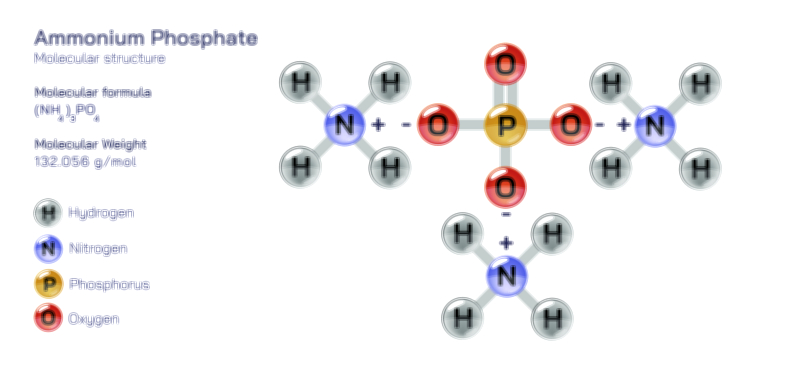
A vector illustration of ammonium acetate typically depicts the ammonium ion with its tetrahedral NH₄⁺ shape and the acetate ion with its carbonyl group and resonance-stabilized oxygen pair. Diagrams often highlight dissociation behavior, buffering action, or decomposition into ammonia and acetic acid. Biochemical illustrations may show its role in DNA precipitation or mass spectrometry preparation, while analytical diagrams depict its use in HPLC or ion exchange. These visuals help connect molecular structure to practical applications, demonstrating why ammonium acetate remains essential across science, industry, and environmental technology.