Wire size and load capacity are among the most critical factors in the design, installation, and safety of any electrical system. Every electrical conductor has a physical limit to how much current it can safely carry, and exceeding this limit can lead to overheating, insulation failure, energy loss, equipment damage, and serious fire hazards. Understanding how wire size relates to load capacity is essential for electricians, engineers, builders, and even homeowners who want to ensure reliable and safe electrical installations.
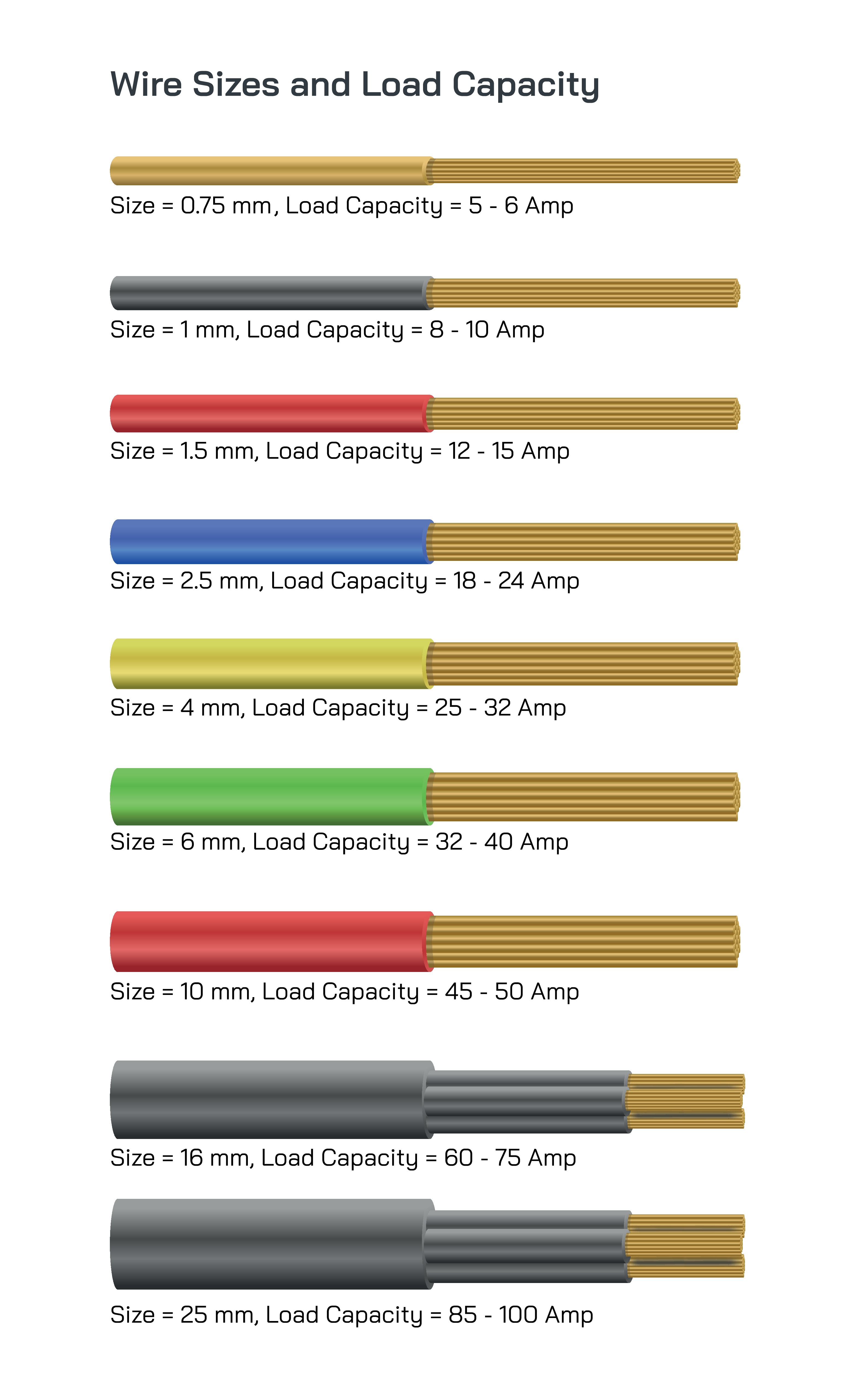
Wire size refers to the cross-sectional area of an electrical conductor. In many countries, including India and most of Europe, wire size is measured in square millimeters, which directly represents the conductor’s cross-sectional area. In other regions such as the United States, wire size is defined using the American Wire Gauge system, where a smaller gauge number indicates a thicker wire. Regardless of the measurement system, the fundamental principle remains the same: a thicker wire offers lower electrical resistance and can safely carry more current.
Load capacity, also known as current-carrying capacity or ampacity, is the maximum amount of electrical current a wire can conduct continuously without exceeding safe temperature limits. When current flows through a wire, resistance causes heat generation. If the wire is too thin for the amount of current flowing through it, the heat produced cannot dissipate efficiently, leading to insulation breakdown and potential fire risk. Proper wire sizing ensures that heat generation remains within safe limits.
The material of the wire plays a major role in determining load capacity. Copper is the most commonly used conductor because of its excellent electrical conductivity, mechanical strength, and corrosion resistance. Copper wires can carry higher current than aluminum wires of the same size. Aluminum, while lighter and less expensive, has higher resistance and therefore requires a larger cross-sectional area to carry the same load safely. This is why aluminum cables are often thicker than copper cables for equivalent applications.
Insulation type significantly affects load capacity as well. Different insulation materials are rated for different maximum temperatures. A wire with insulation designed to withstand higher temperatures can safely carry more current under the same conditions. However, even high-temperature insulation cannot compensate for an undersized conductor, which makes correct wire sizing essential regardless of insulation quality.
Installation conditions strongly influence wire load capacity. Wires installed in open air can dissipate heat more effectively than wires enclosed in conduits or buried inside walls. When multiple wires are bundled together, heat accumulates, reducing the safe current capacity of each wire. Electrical standards account for this by applying derating factors, which reduce allowable current when wires are grouped, enclosed, or exposed to high ambient temperatures.
Wire length is another important consideration. As current travels through a wire, voltage drop occurs due to resistance. Over long distances, even a wire that can safely carry the required current may cause excessive voltage drop, leading to poor appliance performance, increased energy consumption, and potential damage to sensitive equipment. To reduce voltage drop, larger wire sizes are used for longer cable runs, especially in power distribution and industrial installations.
In residential wiring, wire sizes are selected based on the type of circuit and expected load. Lighting circuits typically use smaller wires because the current demand is relatively low. Power socket circuits require thicker wires to handle appliances such as refrigerators, washing machines, and microwave ovens. High-power equipment such as air conditioners, electric water heaters, induction cooktops, and electric vehicle chargers demand even larger wire sizes due to their high current draw.
Circuit protection devices such as fuses and circuit breakers must always be matched to the wire size. The protective device is designed to interrupt current flow before the wire overheats. If a breaker with a higher rating is installed on a smaller wire, the wire may overheat before the breaker trips, creating a serious safety hazard. Proper coordination between wire size and protection devices is a fundamental rule of electrical safety.
Environmental factors also affect wire performance over time. High ambient temperatures, exposure to moisture, chemicals, or direct sunlight can degrade insulation and reduce the effective load capacity of a wire. Industrial and outdoor installations require careful selection of wire size, insulation type, and protective coverings to ensure long-term reliability.
In industrial and commercial environments, wire sizing becomes even more critical due to continuous high loads, heavy machinery, and three-phase power systems. Engineers calculate load capacity by considering not only current but also duty cycle, starting current, power factor, and future expansion. Oversizing cables slightly is often done to improve efficiency, reduce voltage drop, and extend service life.
Proper wire sizing contributes directly to energy efficiency. Undersized wires waste energy as heat, increasing electricity costs and reducing system efficiency. Correctly sized wires minimize resistive losses, improve voltage stability, and enhance the performance of electrical equipment. This becomes especially important in large installations where even small efficiency improvements can lead to significant cost savings.
From a safety perspective, wire size and load capacity are non-negotiable aspects of electrical design. Most electrical fires are caused by overloaded or improperly sized conductors. Adhering to wiring standards, following load calculations, and selecting appropriate wire sizes significantly reduce these risks. Electrical codes exist specifically to ensure that wires operate well within safe limits under normal and fault conditions.
Wire size and load capacity form the backbone of every safe and reliable electrical system, whether it is a small residential installation or a large industrial power network. At its core, the relationship between wire size and load capacity is governed by how electrical current behaves when it flows through a conductor. As current passes through a wire, resistance within the metal converts part of that electrical energy into heat. If the wire is appropriately sized, this heat is safely dissipated into the surrounding environment. If the wire is undersized, heat accumulates faster than it can escape, leading to insulation damage, conductor degradation, and a serious risk of electrical fire.
The cross-sectional area of a wire is the primary determinant of how much current it can carry. A larger cross-sectional area means lower electrical resistance, smoother current flow, and reduced heat generation. This is why thicker wires are always selected for higher electrical loads. In practical terms, wire size must be chosen not just for the present load but also with consideration for long-term reliability and possible future expansion. Electrical systems designed too close to their maximum capacity tend to age faster and are more prone to faults.
Material selection plays a decisive role in wire performance. Copper is widely regarded as the best general-purpose conductor due to its low resistivity, high mechanical strength, and excellent durability. It allows higher current flow with smaller cross-sectional area compared to most other metals. Aluminum, while lighter and more economical, has higher resistance and therefore requires larger diameters to carry the same load safely. This difference becomes especially important in long cable runs, where resistance and voltage drop increase with distance.
Load capacity is not a fixed number but a value influenced by real-world installation conditions. Ambient temperature significantly affects how well a wire can release heat. In hot environments, a wire’s ability to dissipate heat is reduced, meaning its safe current rating must be lowered. Similarly, wires installed inside conduits, walls, or underground face reduced airflow and heat dissipation, which lowers their effective ampacity. When multiple wires are grouped together, the heat from each conductor adds up, further reducing the safe current each wire can carry. Electrical standards address these issues through derating factors, which ensure safety under less-than-ideal conditions.
Voltage drop is another critical factor closely linked to wire size. As electricity travels along a conductor, some voltage is lost due to resistance. Excessive voltage drop can cause appliances to operate inefficiently, motors to overheat, lights to dim, and electronic equipment to malfunction. Even if a wire can safely handle the current, it may still be unsuitable if voltage drop exceeds acceptable limits. This is why larger wire sizes are often chosen for long-distance circuits, especially in distribution systems and industrial installations.
In residential wiring, correct wire sizing ensures both safety and convenience. Lighting circuits typically draw lower current and therefore use smaller wires, while power outlets require thicker wires to accommodate household appliances. High-load equipment such as air conditioners, electric water heaters, induction cooktops, and electric vehicle chargers demand significantly higher current and must be connected using larger conductors. The main supply cables feeding a house must be sized to handle the combined load of all circuits, including peak demand conditions.
Protection devices such as fuses and circuit breakers are inseparable from wire size considerations. These devices are designed to disconnect power when current exceeds safe levels. For protection to be effective, the breaker or fuse rating must always be lower than the maximum safe current of the wire. If a breaker is oversized relative to the conductor, the wire may overheat before the protective device reacts, defeating its purpose. Proper coordination between wire size and protective devices is one of the most important principles in electrical safety.
In commercial and industrial environments, wire sizing becomes more complex due to continuous operation, higher power levels, and three-phase systems. Motors, transformers, and heavy machinery often draw large starting currents that must be accounted for during design. Engineers consider not only normal operating current but also startup surges, duty cycles, power factor, and harmonic effects. In such environments, wires are often intentionally oversized to improve efficiency, reduce heat buildup, and extend service life.
Environmental exposure further influences long-term wire performance. Moisture, chemicals, vibration, and ultraviolet radiation can degrade insulation and conductor integrity over time. Outdoor and industrial installations therefore require careful selection of insulation materials and protective sheathing, along with appropriate wire sizing. A wire that is marginally adequate in ideal conditions may fail prematurely when exposed to harsh environments.
Energy efficiency is another important outcome of proper wire sizing. Undersized conductors waste energy in the form of heat, increasing electricity consumption and operating costs. Over time, these losses can be substantial, particularly in large-scale installations. Correctly sized wires reduce resistive losses, stabilize voltage levels, and improve overall system efficiency. In modern electrical design, energy efficiency and sustainability considerations increasingly influence wire selection decisions.
From a safety standpoint, the importance of correct wire size and load capacity cannot be overstated. Electrical fires caused by overloaded or improperly sized wiring remain a major hazard worldwide. Adhering to established electrical standards, accurately calculating loads, and selecting appropriate conductor sizes dramatically reduce these risks. Electrical codes are built around conservative safety margins to ensure that wires operate well within their thermal and electrical limits under normal and abnormal conditions.
In summary, wire size and load capacity are not merely technical details but fundamental elements of electrical system design. They determine how safely and efficiently electricity is delivered, how long an installation will last, and how well it can adapt to changing demands. Proper wire sizing protects property, equipment, and lives, while also improving performance and energy efficiency. Whether in a simple household circuit or a complex industrial network, the correct relationship between wire size and load capacity is essential for dependable and safe electrical operation.In conclusion, wire size and load capacity form the foundation of safe and efficient electrical systems. The correct choice of conductor size protects against overheating, ensures reliable power delivery, reduces energy loss, and extends the lifespan of electrical installations. Whether in homes, commercial buildings, or industrial facilities, proper wire sizing is essential for safety, performance, and long-term reliability.