Boom lift machines are specialized aerial access equipment designed to safely elevate workers, tools, and materials to significant heights. They are widely used across construction, maintenance, industrial, and utility sectors where direct vertical or angled access is required. Unlike traditional ladders or scaffolding, boom lifts provide controlled movement, extended reach, and enhanced safety, making them indispensable for modern height-related operations.
A defining characteristic of boom lift machines is their extendable arm structure, which supports a secure work platform at the end. This arm allows operators to reach elevated or hard-to-access areas with precision. Boom lifts are engineered to provide both vertical lift and horizontal outreach, enabling work over obstacles such as walls, machinery, or structural elements. This capability significantly improves efficiency while reducing physical risk to workers.
Boom lifts are broadly categorized into different types based on arm design and application. Telescopic boom lifts, also known as straight boom lifts, feature a linear extendable arm that provides maximum horizontal and vertical reach. These machines are ideal for tasks requiring access to distant or elevated points without obstruction. Articulating boom lifts, often called knuckle booms, consist of jointed arm sections that can bend and maneuver around obstacles. This flexibility makes them particularly suitable for complex job sites, indoor facilities, and congested environments where direct access is not possible.
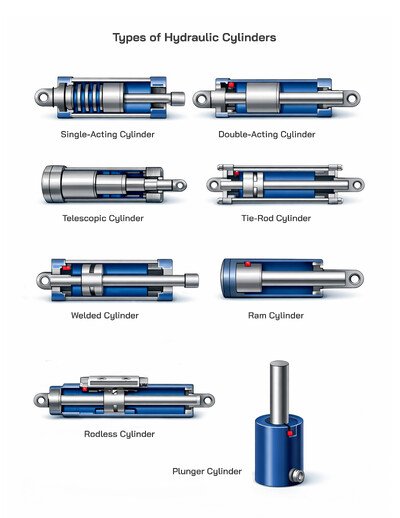
Specifications of boom lift machines vary depending on intended use and model. Key specifications include maximum working height, horizontal outreach, platform capacity, and overall machine weight. Working height determines how high the platform can safely elevate, while outreach defines how far the arm can extend sideways. Platform capacity specifies the allowable load, including personnel and tools, ensuring safe operation. Advanced boom lifts also feature precise hydraulic controls, stable chassis design, and safety interlocks that enhance operational reliability.
Engine types play a crucial role in determining where and how a boom lift can be used. Electric boom lifts are commonly employed in indoor or environmentally sensitive areas due to their quiet operation and zero emissions. They are ideal for warehouses, factories, and commercial buildings. Diesel-powered boom lifts are designed for outdoor and heavy-duty applications, offering higher power output and suitability for rough terrain. Hybrid boom lifts combine electric and fuel-based systems, providing flexibility, fuel efficiency, and reduced environmental impact across mixed-use environments.
Boom lift machines serve a wide range of applications across industries. In construction, they are used for steel erection, façade installation, roofing work, and structural inspections. In industrial facilities, boom lifts support equipment maintenance, overhead repairs, and plant servicing. Utility and infrastructure sectors rely on boom lifts for power line maintenance, lighting installation, bridge inspection, and telecommunications work. Their ability to position workers accurately at height makes them invaluable for precision tasks.
The importance of boom lift machines lies in their contribution to safety, productivity, and operational efficiency. By providing stable and controlled access to elevated areas, boom lifts reduce the risk of falls and workplace injuries. They allow tasks to be completed faster and with fewer personnel compared to traditional access methods. This efficiency translates into reduced project timelines and lower labor costs.
Boom lifts also support modern safety standards and regulatory compliance. Integrated safety features such as emergency descent systems, tilt sensors, load monitoring, and secure guardrails protect operators during use. These features help organizations meet occupational safety requirements while maintaining high productivity levels.
In addition to safety and efficiency, boom lifts enhance project versatility. Their adaptability to different environments, engine options, and arm configurations allows them to be used across diverse job sites. From compact indoor operations to large-scale outdoor construction, boom lifts provide a reliable solution for height access challenges.
To understand boom lift machines at a deeper level, it helps to move away from technical charts and think about how people actually experience them on the job. A boom lift is not just a machine that goes up and out; it becomes a temporary workspace in the air. When an operator steps into the platform, that small basket effectively replaces the ground. Tools are arranged, movements become more deliberate, and awareness increases. This shift in perspective is one of the most important yet rarely discussed aspects of boom lift use. The machine does not simply elevate workers physically; it changes how they think, move, and interact with their environment.
One of the most valuable qualities of a boom lift is predictability. At height, unpredictability creates stress and danger. A well-maintained boom lift responds smoothly and consistently to control inputs, allowing the operator to focus on the task rather than the machine. This reliability builds confidence over time. Experienced operators often describe a good boom lift as feeling “calm” or “steady,” even when fully extended. That sense of stability is not accidental; it comes from careful engineering, balanced weight distribution, and controlled hydraulic movement designed to minimize sway and sudden motion.
Another important dimension is how boom lifts reduce physical strain. Traditional access methods often require climbing, balancing, and repeated repositioning, which can be exhausting over long shifts. Boom lifts remove much of this physical burden. Workers can reach the task area with minimal climbing and maintain a more natural working posture. This reduction in fatigue has real consequences. Tired workers make more mistakes, while rested workers maintain accuracy and awareness. In this way, boom lifts quietly improve not just safety, but work quality.
Boom lifts also change how teams coordinate. When someone is working at height in a boom lift, communication becomes more intentional. Ground crews monitor surroundings, manage materials, and watch for hazards, while the operator focuses on precise positioning. This shared responsibility encourages teamwork and clear communication. Hand signals, radios, and predefined procedures become essential, reinforcing disciplined work habits that benefit the entire job site.
The adaptability of boom lifts becomes especially clear in unpredictable environments. Construction and maintenance sites are rarely static. Obstacles appear, weather changes, and schedules shift. Boom lifts can respond to these changes faster than fixed access systems. If a work point moves, the machine can reposition quickly without dismantling or rebuilding anything. This flexibility saves time and reduces frustration, especially on complex projects where delays can cascade into larger problems.
Weather interaction is another underappreciated factor. Wind, heat, and surface conditions all affect boom lift operation. Operators learn to read subtle signals, such as increased platform movement or changes in machine response, and adjust accordingly. This creates a feedback loop between human judgment and machine design. The boom lift provides the capability, but safe operation depends on awareness and restraint. In this sense, boom lifts reward professionalism and attentiveness rather than brute force.
From a training perspective, boom lifts encourage a different kind of skill development. Learning to operate one is not just about memorizing controls. It involves spatial awareness, depth perception, and anticipation. Operators must visualize where the platform will move before engaging the controls, especially when navigating around structures. Over time, this builds a strong sense of three-dimensional thinking. Skilled operators can position the platform with remarkable precision, often stopping exactly where needed without repeated adjustments.
Boom lifts also influence how projects are planned. Knowing that reliable aerial access is available allows engineers and supervisors to design workflows that assume safe, repeatable access to height. This can lead to better sequencing of tasks, reduced downtime, and fewer compromises in quality. Instead of designing around limitations, teams can design around capability. Boom lifts therefore shape decision-making long before they arrive on site.
There is also a psychological aspect to working from a boom lift. Being elevated can heighten focus. Many operators report feeling more alert and task-oriented when working at height because the environment demands respect. The enclosed platform, guardrails, and control layout create a defined workspace that separates the task from distractions below. This mental clarity can improve precision work such as installations, inspections, and repairs.
Maintenance culture is another area where boom lifts quietly influence outcomes. Because these machines are safety-critical, organizations that rely on them tend to develop stronger inspection and maintenance routines. Regular checks, documented servicing, and operator feedback loops become standard practice. This culture of care often spreads beyond the machines themselves, raising overall safety awareness across the workplace.
Boom lifts also represent a shift in how industries approach risk. Rather than accepting danger as inevitable, boom lifts embody the idea that risk can be engineered down through design. Guardrails, controlled movement, load sensors, and emergency systems all reflect a philosophy of prevention rather than reaction. When used correctly, boom lifts reduce exposure to falls, overreaching, and unstable footing, addressing some of the most common causes of serious workplace injuries.
In the broader picture, boom lifts support sustainability in subtle ways. By reducing the need for temporary structures and minimizing rework caused by access limitations, they help projects run more efficiently. Efficient projects consume fewer resources, generate less waste, and place less strain on workers. As electric and hybrid models become more common, boom lifts are also aligning with environmental goals without sacrificing performance.
Ultimately, boom lift machines are successful because they fit naturally into how people work. They do not demand extreme strength or risky behavior. Instead, they provide a stable extension of the worker, allowing human skill to be applied where it is needed most. Their value lies not only in height and reach, but in how they support concentration, cooperation, and control.
When boom lift machines become a regular part of a workplace, they begin to influence behavior in ways that go far beyond access and height. One of the most noticeable changes is how workers relate to risk. Before boom lifts were common, working at height often meant improvisation, temporary solutions, and a degree of accepted danger. Boom lifts introduced a different mindset: height is no longer something to “cope with,” but something to manage deliberately. This shift encourages workers to pause, assess, and position themselves correctly rather than rushing or overreaching. Over time, this mindset reshapes safety culture across entire teams.
Another deeply human aspect of boom lift use is trust. Operators place trust in the machine every time they elevate themselves above ground. That trust is built gradually through consistent performance. When a boom lift moves smoothly, stops exactly where expected, and remains stable even at full extension, it reinforces confidence. This confidence does not lead to recklessness; instead, it allows the operator to focus fully on the task. Mental energy is no longer spent worrying about balance or footing, freeing attention for precision and quality.
Boom lifts also influence how people perceive space. Working from the ground, height can feel abstract and intimidating. From a boom lift platform, height becomes measurable and controlled. Operators gain a clearer understanding of distances, clearances, and angles. This improved spatial awareness often carries over into other tasks, making workers more thoughtful about positioning equipment, materials, and even themselves in non-elevated situations. In this way, boom lifts quietly improve overall site awareness.
Fatigue management is another area where boom lifts make a significant difference. Physical exhaustion is one of the most underestimated contributors to workplace accidents. By reducing the need for climbing, balancing, and repeated repositioning, boom lifts conserve energy. Workers can perform tasks for longer periods without reaching the point of exhaustion where judgment begins to slip. This is especially important in industries where precision matters, such as electrical work, mechanical installation, and inspection tasks.
Boom lifts also change the emotional experience of working at height. Fear does not disappear, but it becomes manageable. Guardrails, stable platforms, and predictable controls create a sense of containment. This psychological security allows even less experienced workers to perform elevated tasks after proper training. As a result, responsibility is distributed more evenly across teams rather than concentrated among a few individuals willing to take risks. This democratization of access improves workflow and reduces dependence on specific personnel.
The machines also influence planning behavior in subtle ways. When boom lifts are available, tasks are often planned more realistically. Instead of designing work around what is barely possible, supervisors can plan around what is safe and repeatable. This leads to fewer last-minute changes, less improvisation, and clearer timelines. Projects become less stressful because uncertainty is reduced. Workers know they will be able to reach the task safely, and managers know the job can be completed without compromising standards.
Boom lifts also encourage better communication habits. Because the operator is elevated and often focused on controls, ground staff play a critical supporting role. This shared responsibility creates a natural need for clear signals, agreed procedures, and mutual awareness. Over time, teams become more disciplined in how they communicate, which benefits not only aerial work but all site operations. Clear communication becomes a habit rather than an exception.
Maintenance awareness is another human-driven outcome. Workers who rely on boom lifts daily become sensitive to changes in machine behavior. A slight delay in response, an unfamiliar sound, or unusual movement is often noticed quickly. This feedback loop between operator and maintenance team improves machine care and reduces breakdowns. It also reinforces a sense of ownership and responsibility among operators, who understand that their safety depends on machine condition.
Boom lifts also influence how organizations think about responsibility. Because these machines are designed with safety systems and clear operating limits, accountability becomes more transparent. Load limits, reach envelopes, and tilt warnings leave less room for ambiguity. When rules are clear and enforced by design, compliance becomes easier and conflicts are reduced. Workers are not forced to choose between getting the job done and staying safe; the machine itself supports both goals.
From a broader perspective, boom lifts reflect a shift in industrial values. They represent an investment in prevention rather than reaction. Instead of accepting injuries as inevitable, industries increasingly choose equipment that reduces exposure to risk. Boom lifts are a physical expression of that philosophy. They embody the idea that human well-being and productivity are not opposing goals, but complementary ones.
The evolution of boom lift technology also mirrors changes in workforce expectations. Modern workers are less willing to accept unnecessary danger, and rightly so. Boom lifts support this expectation by offering safer, more controlled working conditions. This alignment between technology and human values helps attract and retain skilled workers, particularly in industries facing labor shortages.
There is also a subtle dignity associated with using proper access equipment. Working from a stable platform with designed controls feels professional. It signals that the task is important enough to warrant the right tools. This sense of professionalism can improve morale and pride in work. When workers feel valued, they tend to take greater care in how they perform tasks.
In long-term infrastructure and maintenance work, boom lifts also support consistency. Tasks such as inspections, cleaning, and repairs can be performed the same way every time, reducing variability. This consistency leads to better data, more accurate assessments, and fewer surprises over the life of a structure or facility. In this way, boom lifts contribute to reliability not just on a single job, but across years of operation.
Ultimately, boom lift machines succeed because they align with how humans work best. They reduce strain, support focus, encourage planning, and reinforce safety without slowing progress. They do not replace human skill; they amplify it by providing a stable, predictable platform from which skill can be applied. Their impact is not loud or dramatic, but steady and cumulative.
By changing how people approach height, risk, and precision, boom lifts quietly reshape work culture. They turn elevated tasks from moments of tension into routine operations. They support confidence without complacency and efficiency without recklessness. In doing so, boom lift machines become more than equipment. They become partners in modern work, supporting both productivity and the human need for safety, control, and trust.
Seen this way, boom lifts are not just access equipment. They are productivity tools, safety systems, and workspaces combined into one. They allow people to perform complex tasks at height with confidence and consistency. By quietly reshaping how work is done above ground level, boom lifts have become an essential part of modern industry, supporting progress not through spectacle, but through reliability, precision, and trust.
In summary, boom lift machines are essential tools in contemporary construction and industrial operations. Their various types, robust specifications, flexible engine options, and wide-ranging uses make them critical for safe and efficient work at height. By improving access, reducing risk, and increasing productivity, boom lifts play a vital role in supporting infrastructure development and industrial progress worldwide.