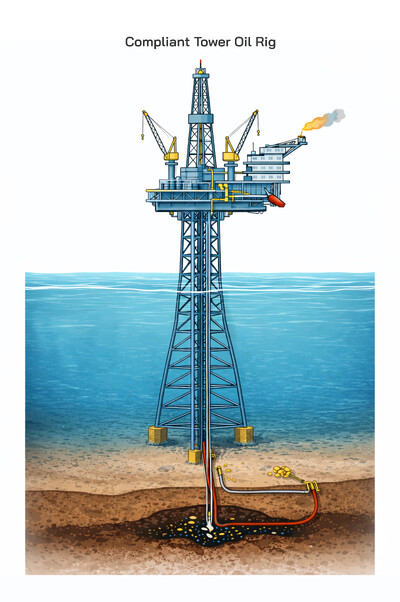
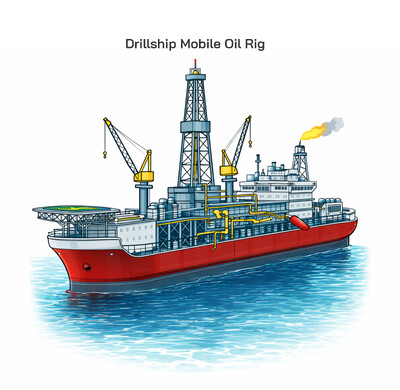
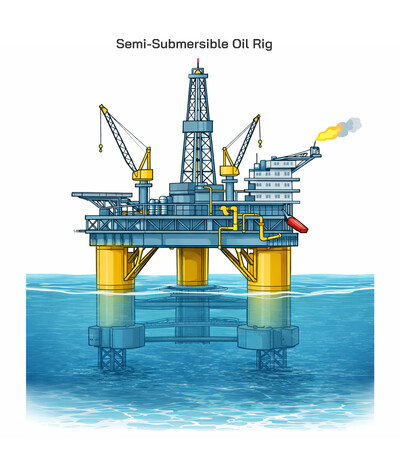
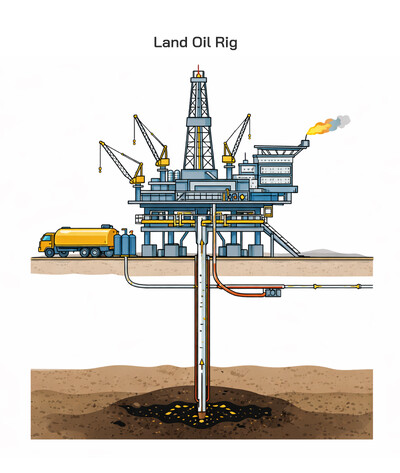
Tension-leg platforms, commonly known as TLPs, are advanced offshore oil and gas production systems specifically designed for deepwater and ultra-deepwater environments. These platforms represent a unique hybrid between fixed offshore structures and fully floating systems. By combining buoyancy with vertical restraint, TLPs achieve exceptional stability while operating in water depths that exceed the limits of conventional fixed platforms. Their innovative engineering makes them one of the most reliable solutions for long-term offshore hydrocarbon production in challenging marine conditions.
The defining feature of a tension-leg platform is its system of vertical tendons, also called tethers, which connect the floating platform to anchors embedded deep in the seabed. Unlike traditional mooring lines that allow significant horizontal and vertical movement, these tendons are kept under constant tension. This tension restricts vertical motion of the platform while still allowing limited horizontal movement. As a result, TLPs experience minimal heave, which is a critical advantage for drilling and production operations in deep water.
Structurally, a TLP consists of a buoyant hull that provides flotation and supports the topside facilities. The hull may be shaped as a pontoon-based structure or a large column-stabilized body, depending on design requirements. The topside deck sits above the hull and houses drilling equipment, production systems, power generation units, control rooms, and living quarters. This deck is engineered to support heavy loads while maintaining operational stability under variable environmental conditions.
The working principle of a tension-leg platform is based on buoyancy-induced tension. The hull is designed to be more buoyant than required to support its own weight and the weight of the topside facilities. When the tendons are attached and tensioned, the excess buoyancy creates an upward force that keeps the tendons taut. This continuous tension effectively anchors the platform vertically, preventing significant up-and-down movement caused by waves and swells.
Installation of a TLP is a carefully planned and highly complex offshore operation. The process begins with detailed seabed surveys and geotechnical analysis to determine suitable anchor locations. Anchors are installed on the ocean floor, often using suction piles or driven piles designed to withstand enormous tensile loads. The floating hull is then positioned above the anchors, and the tendons are connected and gradually tensioned. Once fully tensioned, the platform achieves its operational draft and stability.
After installation, drilling and production operations commence. Wells are typically drilled from the platform through subsea wellheads connected via rigid or flexible risers. Because TLPs have very limited vertical motion, they are particularly well-suited for dry-tree completions, where wellheads and valves are located on the platform rather than on the seabed. This configuration simplifies maintenance, inspection, and intervention activities, reducing long-term operational costs.
Hydrocarbons produced from the reservoir flow through riser systems to the topside processing facilities. Onboard systems separate oil, gas, and water before transporting the hydrocarbons to shore via subsea pipelines or export lines. The stability of the TLP allows for precise control of drilling and production processes, even in harsh ocean environments.
One of the major advantages of tension-leg platforms is their ability to operate in very deep water while maintaining near-fixed vertical stability. This makes them ideal for regions with strong wave action, where floating platforms with greater vertical motion would face operational challenges. TLPs also offer long-term reliability, making them suitable for large offshore fields with extended production lifespans.
Another key benefit is reduced fatigue loading on risers and well systems. Because vertical motion is minimized, mechanical stress on critical components is significantly lower compared to other floating systems. This improves safety, reduces maintenance requirements, and extends the service life of equipment.
Despite their advantages, TLPs also have limitations. Their design and installation involve high capital costs and require specialized engineering expertise. The tendon system must be precisely designed and installed, as failure of even a single tendon can compromise platform stability. Additionally, TLPs are not easily relocatable once installed, making them best suited for long-term production rather than short-term exploration.
Environmental and safety considerations are central to TLP operation. Advanced monitoring systems continuously track tendon tension, hull motion, and environmental conditions. Corrosion protection, redundancy, and strict inspection programs are implemented to ensure structural integrity throughout the platform’s operational life. Emergency systems are designed to protect personnel, equipment, and the marine environment in the event of unexpected conditions.
From an industry perspective, tension-leg platforms have played a crucial role in expanding offshore oil and gas production into deeper waters. They bridge the gap between fixed platforms, which are limited by water depth, and fully floating systems, which may experience greater motion. By offering a stable yet flexible solution, TLPs have enabled access to reservoirs that were previously considered technically or economically unfeasible.
Beyond their core structural concept, tension-leg platforms play a significant role in shaping offshore field architecture and long-term development strategies. These platforms are often selected when operators anticipate phased field development, where additional wells, processing capacity, or compression systems may be required years after initial installation. The inherent stability of TLPs allows future topside expansions without fundamentally altering station-keeping systems, making them attractive for reservoirs with uncertain production profiles or long depletion timelines.
A critical additional aspect of TLP design lies in tendon engineering and lifecycle management. Tendons are not only structural restraints but also highly monitored assets throughout the platform’s life. Each tendon is designed with multiple safety margins, incorporating fatigue-resistant materials and precise load distribution characteristics. Over time, tendon behavior provides valuable insight into environmental loading, hull performance, and seabed interaction. Continuous monitoring data is used to refine predictive models, improving the reliability of future TLP designs and offshore structural standards as a whole.
Another important dimension involves hull hydrodynamics and wave interaction. TLP hulls are engineered to minimize excitation from dominant wave frequencies. Designers carefully tune hull geometry, draft, and mass distribution to avoid resonance and reduce dynamic amplification. This optimization improves comfort for personnel, enhances equipment reliability, and minimizes structural fatigue. The lessons learned from TLP hydrodynamic behavior have influenced the design of other floating offshore structures, including next-generation production platforms and floating renewable energy systems.
Tension-leg platforms also provide unique advantages for integrated drilling and production workflows. Their near-fixed vertical position allows drilling operations to be conducted with greater precision compared to other floating systems. This precision supports complex well trajectories, multi-branch wells, and advanced completion strategies that maximize reservoir contact. Over the life of a field, such drilling accuracy can significantly improve recovery efficiency and overall project economics.
From an operational resilience perspective, TLPs demonstrate strong performance in harsh environments. Their restrained vertical motion reduces operational interruptions during adverse sea states, allowing drilling, maintenance, and production activities to continue when other floating platforms might need to suspend operations. This higher availability translates into more consistent production and improved financial performance over long project durations.
Another noteworthy aspect is the interaction between TLPs and subsea production networks. These platforms often serve as central processing hubs connected to numerous subsea wells spread across wide areas. Their stability simplifies riser design and supports rigid riser systems that offer superior flow assurance and mechanical reliability. This configuration reduces complexity in subsea architecture and improves long-term maintainability of deepwater developments.
TLPs also influence offshore safety philosophy by enabling enhanced well control and intervention capabilities. With critical well components located closer to the surface, operators can respond more rapidly to operational anomalies. This accessibility improves inspection frequency, reduces reliance on subsea intervention vessels, and strengthens overall risk management. As regulatory scrutiny increases, these advantages make TLPs appealing in regions with stringent safety and environmental requirements.
Another area of importance is asset integrity management. Because TLPs are designed for decades of service, they are equipped with comprehensive inspection and maintenance frameworks. Structural components, tendons, and hull systems are inspected using a combination of remotely operated vehicles, automated sensors, and periodic physical inspections. The fixed relationship between platform and seabed simplifies inspection planning and allows long-term trending of structural health indicators.
Economic considerations further distinguish TLPs within the offshore portfolio. While initial capital investment is substantial, life-cycle cost efficiency can be favorable when compared to alternative deepwater solutions. Reduced downtime, lower intervention costs, and the ability to support dry-tree completions often offset higher upfront expenditures. These economic dynamics make TLPs particularly suitable for large reserves where long-term production stability is a priority.
Tension-leg platforms have also contributed to advancements in offshore construction methodologies. Their installation requires precise coordination between heavy-lift vessels, subsea construction teams, and marine operations specialists. Innovations developed for tendon installation, hull positioning, and load transfer have enhanced the broader offshore construction industry, enabling safer and more efficient deployment of complex structures in deep water.
From a regulatory and classification standpoint, TLPs have influenced the development of performance-based design criteria. Their success has demonstrated that stability can be achieved through controlled restraint rather than mass and rigidity alone. This shift has encouraged regulators to adopt design frameworks that focus on behavior under real environmental conditions, allowing for more optimized and efficient offshore structures.
The adaptability of TLP technology is also becoming increasingly relevant in the context of evolving energy systems. While traditionally associated with oil and gas production, the engineering principles behind tension-leg restraint are being studied for alternative offshore applications. These include floating substations, deepwater renewable energy hubs, and offshore carbon storage facilities, where precise positioning and minimal vertical motion are equally critical.
Culturally and organizationally, TLP operations foster a high level of specialization. Personnel working on these platforms develop expertise in tendon monitoring, hull dynamics, and long-term structural performance. This specialized knowledge contributes to continuous improvement across offshore projects and strengthens the technical capability of the global offshore workforce.
In a broader engineering sense, tension-leg platforms embody a philosophy of balance between freedom and restraint. By allowing limited movement while controlling critical motions, TLPs achieve resilience rather than rigidity. This philosophy has influenced offshore design thinking, promoting solutions that adapt to environmental forces instead of attempting to eliminate them entirely.
An additional perspective on tension-leg platforms lies in their role in offshore project risk mitigation. Because TLPs are designed to remain vertically stable, they significantly reduce uncertainties associated with drilling accuracy and well integrity. This predictability allows operators to plan complex well programs with tighter tolerances, reducing the likelihood of costly sidetracks or remedial operations. Over long development cycles, this reduction in technical risk can have a substantial impact on overall project success and capital efficiency.
Another important dimension involves the long-term behavior of TLP systems under cumulative environmental loading. Over decades of exposure, waves, currents, and temperature variations impose cyclic stresses that evolve gradually. Engineers study these long-term trends using historical monitoring data to understand how materials age under constant tension. Insights gained from TLP performance have contributed to improved fatigue design methods not only for offshore platforms but also for other industries where long-duration cyclic loading is critical.
Tension-leg platforms also influence how offshore fields are phased and optimized over time. Because they can support multiple drilling campaigns from a single location, operators can adjust development strategies as reservoir knowledge improves. Early wells may target the most productive zones, while later wells are optimized using production data gathered over years of operation. This adaptive development approach enhances recovery efficiency and allows operators to respond to changing market conditions without relocating major infrastructure.
Another area of relevance is the integration of TLPs with advanced reservoir surveillance technologies. These platforms often host permanent downhole monitoring systems that track pressure, temperature, and flow behavior in real time. The stability of the platform improves the reliability of these measurements, supporting advanced reservoir modeling and predictive analytics. This capability enables proactive reservoir management, such as adjusting production rates or injection strategies before performance declines become significant.
From a structural engineering standpoint, TLPs have driven innovation in load path optimization. The way loads are transferred from the hull to the tendons and then into the seabed has inspired new approaches to structural efficiency. Engineers strive to minimize unnecessary mass while maintaining safety margins, leading to more refined designs that balance strength, flexibility, and material efficiency. These principles are increasingly applied in other offshore and marine structures.
TLPs also have implications for offshore logistics and operational continuity. Their stable decks support continuous crane operations, equipment handling, and helicopter movements even in moderately rough seas. This operational consistency reduces weather-related downtime and improves crew transfer safety. Over long production periods, such reliability enhances workforce efficiency and lowers operational disruption.
Another notable aspect is the interaction between TLPs and regional infrastructure planning. Because these platforms often become long-term fixtures in offshore basins, they influence how pipelines, export routes, and future developments are laid out. Infrastructure is frequently designed around existing TLPs, reinforcing their role as central nodes in offshore production networks. This interconnected planning reduces redundancy and improves overall field economics.
In terms of environmental stewardship, TLPs support controlled and predictable operations that simplify environmental monitoring. Stable production conditions allow for consistent measurement of discharges, emissions, and subsea impacts. Over time, this consistency improves environmental management practices and supports compliance with increasingly stringent offshore regulations. The ability to maintain steady operations also reduces the risk of accidental releases associated with excessive motion or equipment stress.
Another important contribution of TLP technology is its influence on offshore emergency response planning. The predictable behavior of these platforms under extreme conditions allows emergency scenarios to be modeled with greater accuracy. Evacuation procedures, shutdown sequences, and structural response plans can be tested against well-understood motion characteristics, improving preparedness and reducing uncertainty during critical events.
TLPs have also played a role in advancing offshore standardization. As more platforms of this type have been deployed, common design philosophies and best practices have emerged. This standardization simplifies regulatory review, accelerates project approval timelines, and improves knowledge transfer between projects. Over time, this has reduced development risk and enhanced confidence in deepwater projects.
From a financial perspective, TLPs support long-term investment strategies by offering predictable operational behavior and production profiles. Investors and stakeholders often view these platforms as lower-risk assets once installed, due to their stability and extended service life. This perception can improve access to financing and support large-scale offshore developments that require sustained capital commitment.
Another emerging consideration is the potential reuse or repurposing of TLP infrastructure. While originally designed for hydrocarbon production, the structural stability and seabed anchoring concepts behind TLPs are being evaluated for future offshore uses. These include serving as hubs for offshore energy integration, subsea processing centers, or monitoring stations for deep-ocean research. Such possibilities highlight the long-term strategic value embedded in TLP design.
Tension-leg platforms also contribute to the evolution of offshore workforce expertise. Engineers, operators, and technicians working on these platforms develop specialized knowledge in tensioned systems, structural monitoring, and long-term asset management. This expertise strengthens the offshore industry’s overall capability to design and operate complex systems in challenging environments.
In a broader technological context, TLPs represent a successful application of controlled constraint as a design principle. Rather than relying solely on mass or rigidity, they demonstrate how carefully applied restraint can deliver stability, efficiency, and resilience. This principle continues to influence offshore engineering, encouraging solutions that work with environmental forces rather than attempting to overpower them.
Collectively, these additional insights show that tension-leg platforms are far more than anchoring systems for floating decks. They are long-term offshore assets that shape field development strategies, influence engineering innovation, support environmental management, and contribute to the economic and operational resilience of deepwater projects. Their continued relevance reflects the adaptability and forward-thinking nature of their design philosophy, which remains essential as offshore operations move into ever more demanding environments.
Taken together, these additional insights highlight that tension-leg platforms are not merely offshore structures but integrated, long-term production systems with far-reaching technical, economic, and strategic implications. Their influence extends across reservoir development, structural engineering, operational safety, and future offshore innovation. As offshore activities continue to move into deeper and more complex environments, the principles demonstrated by TLPs remain central to the evolution of offshore energy infrastructure.
In conclusion, tension-leg platforms are highly specialized offshore oil rigs that rely on buoyancy and vertical tension to achieve exceptional stability in deepwater environments. Through their unique tendon-based anchoring system, robust structural design, and advanced engineering, TLPs provide a reliable and efficient solution for long-term offshore oil and gas production. Their ability to minimize vertical motion while operating in deep and dynamic marine settings makes them a cornerstone technology in modern offshore petroleum engineering.