A subsea system oil rig is a modern offshore petroleum production solution in which critical drilling and production equipment is installed directly on the seabed rather than on a surface platform. Unlike traditional offshore rigs that rely on large above-water structures, subsea systems place wellheads, control equipment, and flow management components on the ocean floor. This approach has transformed offshore energy production by enabling access to oil and gas reservoirs located in deepwater and ultra-deepwater environments where surface platforms are technically challenging or economically impractical.
The concept of subsea oil production emerged as offshore exploration moved into deeper waters. As water depths increased, building fixed platforms or maintaining floating rigs became increasingly complex and costly. Subsea systems offered an alternative by relocating much of the production infrastructure underwater, allowing hydrocarbons to be produced from remote reservoirs and transported to existing surface facilities or directly to shore. Today, subsea systems are a cornerstone of deepwater petroleum development worldwide.
At the heart of a subsea system is the subsea wellhead. The wellhead is installed on the seabed at the top of the wellbore and provides structural support and pressure containment for the well. It serves as the primary interface between the underground reservoir and the production system. Once drilling is completed, the wellhead supports additional equipment that controls the flow of oil and gas from the reservoir.
Mounted on the wellhead is the subsea production tree, often referred to as a Christmas tree due to its complex arrangement of valves and fittings. This assembly regulates the flow of hydrocarbons, controls pressure, and allows operators to shut in the well if necessary. Subsea trees are designed to operate reliably under extreme pressure, low temperatures, and corrosive seawater conditions for many years without direct human access.
Multiple subsea wells are often connected to a subsea manifold. The manifold acts as a gathering hub that combines production from several wells and directs it into flowlines for transport. This configuration reduces the number of pipelines required and simplifies field layout. Manifolds also allow operators to manage production from individual wells, balance flow rates, and isolate sections of the system for maintenance or safety purposes.
Flowlines are pipelines laid along the seabed that transport oil and gas from the wells or manifolds to risers or directly to shore. These flowlines are engineered to withstand high pressure, temperature variations, and mechanical stress from seabed movement. In deepwater environments, flow assurance becomes a critical consideration. Engineers must prevent the formation of hydrates, wax, or scale that could block flowlines. This is achieved through insulation, heating systems, chemical injection, and careful operational control.
Risers provide the vertical connection between subsea systems and surface facilities such as floating production units or onshore terminals. They carry produced fluids, injected fluids, and sometimes control lines. Risers are designed to accommodate motion from waves and currents while maintaining structural integrity. Their design varies depending on water depth, environmental conditions, and the type of surface facility used.
Control of subsea systems is achieved through umbilicals, which are bundled cables containing hydraulic lines, electrical conductors, and fiber-optic communication channels. Umbilicals transmit power, control signals, and chemicals between the surface control center and the subsea equipment. From a control room located on a floating vessel or onshore facility, operators can remotely open and close valves, monitor pressure and temperature, and respond to changing reservoir conditions in real time.
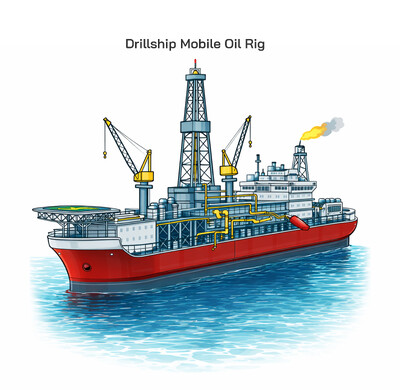
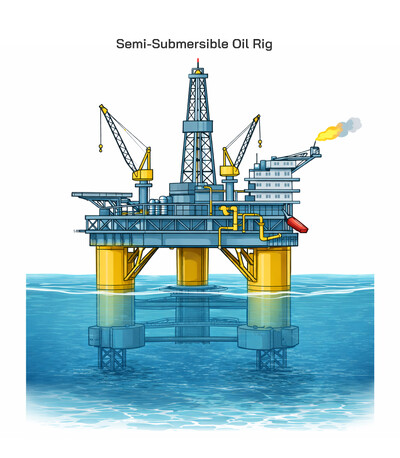
The operation of a subsea system begins with drilling, typically performed by a mobile offshore drilling unit such as a drillship or semi-submersible rig. Once the well is drilled and completed, subsea equipment is installed using specialized vessels equipped with cranes and remotely operated vehicles. These robotic vehicles play a vital role in installation, inspection, and maintenance, performing precise tasks in environments that are inaccessible to divers.
After installation, the subsea system enters the production phase. Hydrocarbons flow from the reservoir through the wellhead and production tree into the manifold and flowlines. Depending on the field design, the fluids may be transported to a surface facility for processing or sent directly to shore through long-distance pipelines. In some advanced systems, subsea separation units are used to partially process fluids on the seabed, reducing the load on surface facilities and improving efficiency.
Subsea pumping and boosting technologies are increasingly used to enhance production. These systems increase pressure and flow rates, allowing oil and gas to be transported over longer distances or from lower-pressure reservoirs. By placing pumps on the seabed, operators can extend field life and improve recovery without major modifications to surface infrastructure.
One of the major advantages of subsea systems is their flexibility. They can be tied back to existing platforms or floating facilities, reducing the need for new surface structures. This makes subsea development particularly attractive for marginal fields or satellite reservoirs located far from established infrastructure. Subsea systems also reduce visual impact and surface footprint, which can be beneficial in environmentally sensitive areas.
However, subsea systems also present significant engineering challenges. Equipment must be designed for long-term reliability, as maintenance and repair operations are complex and expensive. Components must withstand extreme pressure, cold temperatures, and corrosive seawater for decades. Redundancy, robust materials, and advanced monitoring systems are essential to ensure safe and continuous operation.
Environmental protection is a critical consideration in subsea oil production. Systems are designed with multiple safety barriers to prevent leaks and uncontrolled releases. Continuous monitoring allows early detection of anomalies, and emergency shutdown systems can isolate wells quickly if needed. Strict regulatory frameworks govern subsea operations to minimize environmental risks and protect marine ecosystems.
From an industry perspective, subsea systems have revolutionized offshore oil and gas production. They enable access to deepwater and ultra-deepwater resources that were once considered unreachable. By decoupling production from large surface platforms, subsea technology has expanded the geographical and technical boundaries of offshore energy development.
Beyond their fundamental configuration, subsea system oil rigs play a decisive role in redefining offshore field development strategies. One of their most important contributions is enabling modular field architecture. Instead of committing to a single, large surface facility from the outset, operators can develop fields incrementally by adding subsea wells, manifolds, or processing units over time. This modularity allows investment to be phased in alignment with reservoir performance, market conditions, and technological advancements, significantly reducing financial risk in complex offshore projects.
A critical additional aspect of subsea systems is their interaction with reservoir management over long production lifespans. Because subsea wells can be widely distributed across a field, operators gain greater flexibility in targeting different reservoir compartments. This distributed well placement improves drainage efficiency and allows selective production from zones with varying pressures or fluid compositions. Over time, this adaptability supports optimized recovery strategies, including pressure maintenance and advanced injection schemes, without requiring major surface modifications.
Subsea systems have also driven major advancements in materials science and component durability. Equipment deployed on the seabed must maintain performance for decades with minimal intervention. This requirement has accelerated the development of high-performance alloys, advanced elastomers, and specialized coatings that resist corrosion, erosion, and biofouling. These material innovations have not only improved subsea reliability but have also influenced design practices across the broader offshore and marine industries.
Another important dimension involves thermal and flow dynamics at extreme depths. In ultra-deepwater environments, near-freezing temperatures and high pressures create complex fluid behavior. Subsea engineers use advanced thermal modeling to manage heat loss along flowlines and prevent flow instability. Innovations such as electrically heated pipelines, insulated pipe-in-pipe systems, and controlled warm-up sequences have become essential tools for maintaining steady production in challenging conditions.
The integration of digital technologies represents a further evolution of subsea systems. Modern developments increasingly rely on digital twins—virtual models of subsea assets that replicate real-world behavior in real time. By combining sensor data with predictive analytics, operators can simulate future performance, anticipate equipment degradation, and plan interventions well in advance. This shift toward predictive operations enhances safety, reduces downtime, and maximizes asset value over the full life cycle of the field.
Subsea systems also influence offshore logistics and vessel operations. Because routine maintenance is minimized, vessel campaigns are carefully planned and highly specialized. Installation, inspection, and intervention activities are often grouped into optimized schedules to reduce vessel time and cost. This has led to the growth of specialized subsea service fleets and the refinement of remote intervention techniques that reduce dependence on heavy offshore construction assets.
Another key consideration is redundancy and fault tolerance within subsea architectures. Critical components are often designed with multiple independent barriers and backup systems to ensure continued operation even in the event of partial failure. This philosophy extends to power distribution, communication pathways, and control systems. Such redundancy is essential in deepwater settings where immediate physical access is impossible and system reliability directly impacts environmental and operational safety.
Subsea system oil rigs have also reshaped offshore environmental management practices. By concentrating infrastructure on the seabed and reducing surface installations, they lower exposure to extreme weather and surface spills. At the same time, continuous seabed monitoring programs have improved understanding of deep-ocean ecosystems. Data collected during subsea operations has contributed to broader scientific knowledge about seabed geology, marine habitats, and long-term environmental interactions.
From an economic standpoint, subsea systems enable development of resources that would otherwise remain stranded. Small or remote reservoirs that cannot justify standalone platforms can be economically produced through subsea tiebacks. This capability has extended the productive life of mature offshore basins and improved overall resource utilization. As exploration moves farther from shore, subsea systems remain one of the most cost-effective solutions for connecting distant reservoirs to existing infrastructure.
Subsea systems also play an increasingly important role in offshore safety culture. Because human presence on the seabed is impossible, system integrity and automation are paramount. This has driven the adoption of rigorous design verification, extensive testing, and conservative safety margins. The emphasis on remote operation has reinforced a proactive approach to safety, where potential failures are identified and mitigated long before they can escalate into incidents.
Another emerging area is the interface between subsea systems and energy transition initiatives. The same technologies used to manage pressure, flow, and monitoring in subsea oil production are being adapted for applications such as offshore carbon storage and subsea hydrogen transport. Experience gained from decades of subsea hydrocarbon operations provides a strong foundation for these future uses, positioning subsea systems as long-term assets beyond conventional oil and gas production.
Workforce specialization is another important outcome of subsea system development. Engineers, technicians, and operators working in this domain develop expertise in robotics, remote sensing, control systems, and deepwater geoscience. This highly specialized skill set supports continuous innovation and has elevated the technical sophistication of the offshore industry as a whole.
In a broader engineering context, subsea system oil rigs represent a shift toward distributed, resilient offshore infrastructure. Rather than relying on singular, highly visible platforms, production is spread across networks of interconnected subsea components. This distributed approach enhances reliability, reduces single-point failures, and allows offshore developments to scale efficiently as new technologies emerge.
An additional dimension of subsea system oil rigs lies in their influence on offshore asset longevity and abandonment planning. Because subsea developments are designed from the outset for extended service lives, engineers incorporate decommissioning considerations early in the design phase. Components are engineered for controlled retrieval or safe isolation at the end of production, reducing environmental impact and long-term liability. This forward-looking approach contrasts with older offshore developments where abandonment planning was often an afterthought, and it reflects a more holistic life-cycle philosophy in modern subsea engineering.
Subsea systems also play a critical role in minimizing surface exposure to extreme weather risks. By relocating critical infrastructure to the seabed, operations are less affected by storms, hurricanes, and high seas. Surface facilities connected to subsea systems can temporarily disconnect or reduce activity during severe weather while subsea equipment continues to operate in a relatively stable environment. This separation of functions improves operational resilience and reduces weather-related production losses over long periods.
Another important aspect is the evolution of subsea power distribution. As subsea systems become more complex, the demand for reliable electrical power on the seabed has increased. High-voltage subsea power transmission systems are now used to operate pumps, compressors, and control equipment over long distances. These systems require sophisticated insulation, pressure-resistant connectors, and fault detection mechanisms. The successful deployment of subsea power networks has expanded the functional capabilities of seabed installations far beyond simple flow control.
Subsea systems have also contributed to advances in offshore standardization and interoperability. Equipment from different manufacturers must function together seamlessly on the seabed, often across international projects. This has driven the development of standardized interfaces, communication protocols, and installation practices. Standardization reduces integration risk, shortens project schedules, and enables greater flexibility when expanding or modifying existing subsea fields.
Another area of growing importance is subsea metrology and positioning accuracy. Precise placement of equipment on the seabed is essential for reliable operation and future expansion. Advanced acoustic positioning systems, inertial navigation tools, and seabed mapping technologies are used to ensure accurate installation and alignment. These positioning capabilities are critical for connecting flowlines, manifolds, and intervention systems without excessive rework or operational delays.
The role of subsea systems in reducing offshore personnel exposure is also significant. By shifting operational complexity to automated seabed equipment, the number of personnel required offshore is reduced. This lowers safety risks associated with transportation, harsh weather, and high-risk offshore activities. The trend toward unmanned or minimally manned surface facilities is closely linked to the growing sophistication of subsea systems.
Subsea developments have also reshaped offshore project collaboration models. Because subsea projects require specialized expertise across multiple disciplines, collaboration between operators, equipment suppliers, installation contractors, and digital technology providers is essential. Integrated project teams work together from early design through installation and operation, fostering innovation and reducing interface risks. This collaborative approach has become a defining characteristic of successful subsea projects.
Another notable aspect is the role of subsea systems in extending the productive life of mature offshore fields. As reservoirs decline, subsea tiebacks and infill wells can be added to access remaining hydrocarbons that were previously uneconomic. These incremental developments maximize recovery from existing assets and reduce the need for new large-scale infrastructure. This approach supports more sustainable resource utilization within established offshore basins.
Subsea systems also contribute to improved offshore monitoring and regulatory compliance. Continuous data collection from seabed sensors supports transparent reporting of operational conditions and environmental performance. Regulators increasingly rely on this data to verify compliance with safety and environmental standards. The ability to provide real-time, high-resolution monitoring strengthens trust between operators and regulatory authorities.
Another emerging trend is the use of autonomous underwater vehicles in subsea operations. Unlike remotely operated vehicles, autonomous systems can perform preprogrammed inspection and monitoring tasks without continuous surface control. These vehicles can operate for extended periods, covering large areas of seabed infrastructure efficiently. Their use reduces operational costs and enhances inspection frequency, improving overall system reliability.
Subsea systems have also influenced offshore economics by enabling flexible commercial arrangements. Because infrastructure can be shared among multiple developments, operators can negotiate access agreements that reduce capital expenditure. Shared subsea networks allow smaller discoveries to be commercialized, supporting a more diverse and resilient offshore industry.
From a technological perspective, subsea systems are increasingly designed with upgradeability in mind. Modular components and standardized connections allow new technologies to be introduced as they mature. This adaptability ensures that subsea installations remain relevant even as operational requirements evolve over decades.
In a broader industrial context, subsea system oil rigs represent a shift toward invisible yet highly sophisticated offshore infrastructure. While surface platforms dominate visual perceptions of offshore energy, the true complexity and innovation increasingly reside on the seabed. This transformation reflects a deeper understanding of marine environments and a growing reliance on automation, data, and long-term system thinking.
Taken together, these additional insights emphasize that subsea system oil rigs are not merely engineering solutions for deepwater challenges. They are strategic, adaptable, and future-oriented production ecosystems that influence offshore safety, economics, environmental stewardship, and technological progress. As offshore energy development continues to evolve, subsea systems will remain central to unlocking resources responsibly while minimizing surface impact and maximizing long-term value. These additional insights show that subsea system oil rigs are far more than underwater equipment installations. They are comprehensive, long-term production ecosystems that integrate advanced materials, digital intelligence, environmental stewardship, and strategic flexibility. Their continued evolution reflects the offshore industry’s ability to adapt to deeper waters, harsher environments, and changing energy demands, ensuring that subsea systems remain central to the future of offshore resource development.
In conclusion, a subsea system oil rig represents a sophisticated approach to offshore petroleum production, placing critical equipment on the ocean floor and controlling it remotely from the surface or shore. Through advanced engineering, robotics, and digital control, subsea systems allow safe, efficient, and long-term extraction of oil and gas from deepwater reservoirs. Their continued evolution plays a vital role in meeting global energy needs while adapting to increasingly challenging offshore environments.