Solar energy has become one of the most accessible and dependable renewable power sources in the world, and at the heart of every solar energy system is the solar panel. Although a solar panel may appear to be a simple rectangular plate placed on a rooftop, it is actually a carefully engineered system containing multiple components working together to convert sunlight into usable electricity. Understanding solar panel parts and how a solar energy system works not only helps homeowners and installers make informed decisions, but also highlights the technology that drives clean energy adoption around the globe.
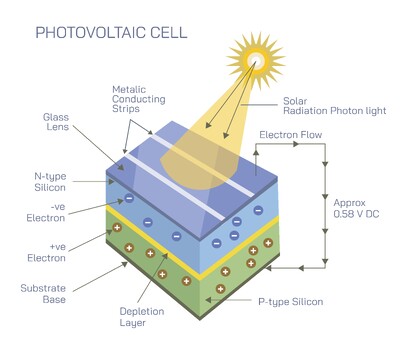
The foundation of a solar panel is built upon photovoltaic cells, often called PV cells. These microscopic yet powerful components perform the most critical task—converting sunlight into electrical energy. PV cells are usually made of silicon, a material capable of releasing electrons when exposed to light. Each cell contributes a small amount of voltage, but when many cells are connected together in a single panel, the voltage becomes strong enough to power household devices when routed through the right equipment. Layer upon layer of protective materials surround the PV cells to ensure durability. A sheet of tempered glass sits on the surface to protect the cells from weather, dust and impact. Beneath this is an encapsulant layer, traditionally EVA (ethylene-vinyl acetate), which locks the cells securely in place while allowing optimal light transmission.
The PV cells rest on a back sheet, a layer that shields the internal parts of the solar panel from heat, moisture and ultraviolet radiation. The edges of the panel are supported by an aluminum frame that gives rigidity and mounting strength. On the back of every panel is a junction box, which contains wiring terminals and bypass diodes that regulate the electrical flow and prevent power loss from shaded or damaged cells. Busbars and thin metal wires printed on the surface of the PV cells carry electric current, linking all the cells into a unified structure called a solar module.
When sunlight strikes a solar panel, the photovoltaic effect begins immediately. Photons from sunlight excite electrons inside each cell, creating a directional flow of electricity known as direct current (DC). At this stage, the solar panel has generated usable energy, but not in a form compatible with household outlets or electric grids, because modern appliances run on alternating current (AC). This is where the solar inverter plays its central role. The inverter takes DC power from the panel and converts it into AC power. Without this conversion step, solar energy could not power everyday devices, lighting systems or electrical equipment.
A solar system becomes even more intelligent and adaptable when a charge controller is included, especially in off-grid and hybrid setups. The charge controller regulates the voltage and current before it enters the battery bank, preventing overcharging and over-discharging. The most advanced type, the MPPT (Maximum Power Point Tracking) charge controller, continuously optimizes energy harvest by matching the electrical characteristics of the solar panels with battery requirements. This ensures that even on cloudy days or under variable sunlight conditions, the energy output remains efficient.
Many solar installations include battery storage, a component that allows energy to be used even when sunlight is unavailable. Deep-cycle batteries or lithium-ion batteries store the surplus power generated during peak sunlight hours. During the night, cloudy weather or power outages, the stored energy becomes the primary supply. In grid-tied solar systems without batteries, excess power instead flows into the local utility grid. When the home produces more electricity than it consumes, the surplus is exported, and homeowners can earn credit through net metering, reducing electricity bills further.
Supporting all these electrical parts is the mounting structure, which anchors the solar panels to rooftops or the ground. The mounting system ensures optimal panel orientation and tilt angle for maximum sunlight exposure throughout the year. Cables, grounding equipment, and combiner boxes tie the entire system together, ensuring power moves safely from panel to inverter and from inverter to appliances, batteries or the electrical grid.
When viewed step by step, the solar panel system demonstrates a seamless and controlled flow of energy. Sunlight reaches the PV cells, electrons shift and generate DC electricity, wiring transfers the charge to the inverter, the inverter turns DC into AC, and the home or battery receives ready-to-use power. Each component plays a defined role, and when one speaks about how a solar panel works, it is not only the panel that matters – it is the complete ecosystem behind it.
One of the most remarkable aspects of solar technology is how all these parts operate with minimal maintenance once installed. Solar panels contain no moving mechanical parts, allowing them to withstand decades of constant exposure to weather with minimal degradation. Battery technology continues to advance, providing higher energy density and longer life. Inverters now incorporate smart software and wireless monitoring so homeowners can observe real-time production from a smartphone. More recently, power optimizers have been added to some systems to fine-tune panel output when partial shading or module mismatching occurs.
The environmental importance of solar panels lies not only in generating renewable energy but also in reducing dependence on fossil fuels. Each kilowatt-hour generated from sunlight is a step toward lower carbon emissions, cleaner air and sustainable energy independence. Residential neighborhoods, commercial facilities and industrial sectors are rapidly adopting solar installations, demonstrating how essential solar energy has become to modern society.
Solar panel parts and the process by which they work highlight the ingenuity of green technology. Photovoltaic cells capture sunlight; inverters transform the raw electrical charge; charge controllers and batteries ensure stable storage and usage; cables and mounting structures complete the system. When all components work as a unified whole, the result is a reliable energy source that empowers homes and businesses while protecting the planet. Understanding how these parts function gives users confidence in solar energy and encourages the continued advancement of renewable technology worldwide.