A volcanic eruption is a powerful natural process through which molten rock, gases, and solid materials are released from the Earth’s interior onto its surface. This process plays a crucial role in shaping the Earth’s landscape, forming mountains, islands, and new land over geological time. Understanding the volcanic eruption process requires knowledge of volcano structure, magma formation, pressure buildup, and the sequence of events that lead to an eruption. Volcanic activity is a direct result of dynamic processes occurring deep within the Earth and is closely linked to plate tectonics and internal heat.
Internal Structure of a Volcano
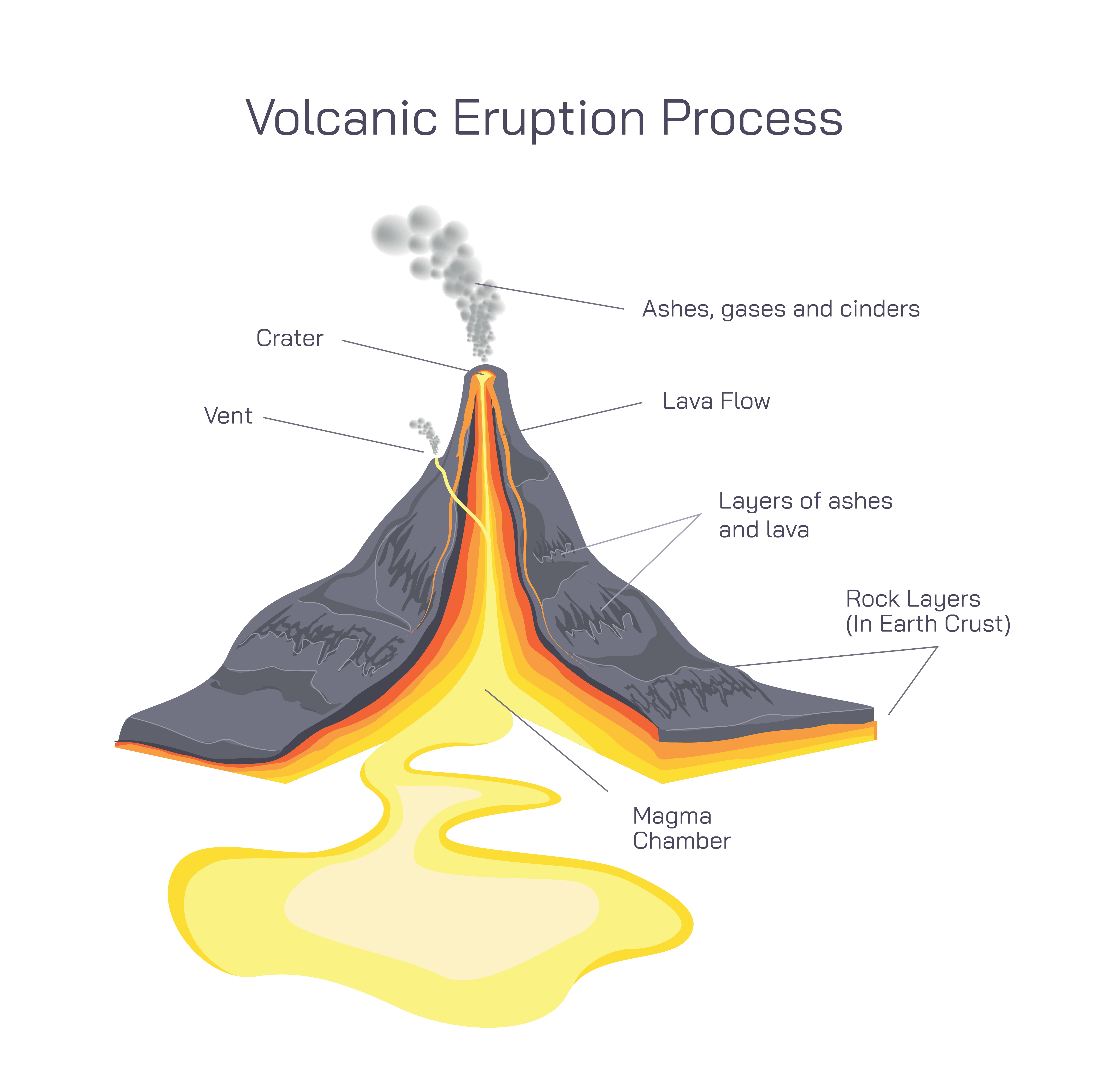
A volcano is a geological structure that forms when magma from beneath the Earth’s crust finds a pathway to the surface. At the base of the volcano lies the magma chamber, a large underground reservoir where molten rock accumulates. This magma originates in the mantle due to high temperatures and pressure, which cause rocks to melt partially or completely. The magma chamber acts as a storage zone where magma can remain for long periods, gradually increasing in volume and pressure.
From the magma chamber, magma travels upward through narrow channels called vents. These vents connect the chamber to the surface and serve as conduits for magma and volcanic gases. At the surface, the vent opens into a crater, which is the bowl-shaped depression at the top of the volcano. Over time, repeated eruptions deposit layers of lava, ash, and solid fragments around the vent, forming the volcanic cone.
Formation and Rise of Magma
Magma formation occurs deep within the Earth due to intense heat generated by radioactive decay and residual heat from the planet’s formation. When tectonic plates move apart, collide, or slide past each other, pressure conditions change, allowing rocks to melt and form magma. This molten material is less dense than the surrounding solid rock, causing it to rise slowly toward the surface.
As magma ascends, it collects in magma chambers and begins to cool slightly. During this process, dissolved gases such as water vapor, carbon dioxide, and sulfur compounds remain trapped within the magma due to high pressure. As more magma enters the chamber, pressure builds steadily, pushing the molten material upward through cracks and weaknesses in the Earth’s crust.
Pressure Buildup and Pre-Eruption Activity
Before a volcanic eruption occurs, pressure within the magma chamber increases significantly. This pressure comes from both the accumulation of magma and the expansion of trapped gases. As magma rises closer to the surface, the surrounding pressure decreases, allowing gases to expand rapidly. This expansion increases internal stress and can cause the surrounding rock to fracture.
Pre-eruption signs often include ground swelling, minor earthquakes, and the release of volcanic gases through small openings. These warning signals indicate that magma is moving upward and that an eruption may occur if pressure continues to rise. The nature of the eruption depends largely on magma composition and gas content.
Volcanic Eruption Process
When pressure inside the magma chamber exceeds the strength of the surrounding rock, an eruption occurs. Magma is forced upward through the vent and expelled onto the surface as lava, ash, and gases. In explosive eruptions, gas-rich magma shatters violently, producing towering ash clouds and ejecting rock fragments high into the atmosphere. These ash clouds can spread over vast areas, affecting air quality, climate, and aviation.
In less explosive eruptions, magma flows steadily out of the vent as lava. Lava flows down the slopes of the volcano, cooling and solidifying as it moves. Over time, repeated lava flows build thick layers that contribute to the volcano’s size and shape. The type of eruption, whether explosive or effusive, depends on magma viscosity, temperature, and gas concentration.
Types of Volcanic Materials Released
Volcanic eruptions release three main types of materials: lava, ash, and gases. Lava is molten rock that reaches the surface and solidifies to form igneous rocks. Ash consists of fine particles of fragmented rock and glass created during explosive eruptions. Volcanic gases include water vapor, carbon dioxide, sulfur dioxide, and other compounds that influence atmospheric conditions.
These materials play a significant role in shaping the environment. Lava creates new landforms, ash enriches soil fertility over time, and gases can influence weather and climate patterns. However, volcanic eruptions can also cause destruction, including loss of life, damage to infrastructure, and environmental disruption.
Post-Eruption Processes
After an eruption, volcanic activity may subside temporarily or continue with smaller eruptions. Lava cools and hardens, forming solid rock layers. Ash settles over the surrounding landscape, and gases gradually dissipate into the atmosphere. Over time, erosion and weathering reshape the volcanic structure, while vegetation may slowly return.
In some cases, new vents or parasitic cones form on the sides of the volcano, indicating ongoing internal activity. Even dormant volcanoes retain the potential to erupt again if magma pressure rebuilds beneath the surface.
Importance of Volcanic Eruptions in Earth Systems
Volcanic eruptions are essential to Earth’s geological and biological history. They contribute to the formation of continents, ocean basins, and mineral resources. Volcanic soils are among the most fertile on Earth, supporting agriculture in many regions. From a scientific perspective, studying volcanic eruptions helps researchers understand Earth’s interior, plate tectonics, and natural hazard management.
Conclusion
The volcanic eruption process is a complex sequence of events driven by internal heat, magma movement, and pressure buildup within the Earth. From magma formation deep in the mantle to explosive or gentle eruptions at the surface, each stage plays a vital role in shaping the planet. Understanding volcano structure and eruption mechanisms not only enhances geological knowledge but also aids in disaster preparedness and risk reduction. Volcanic eruptions, though destructive at times, are fundamental natural processes that continue to shape the Earth’s dynamic surface.