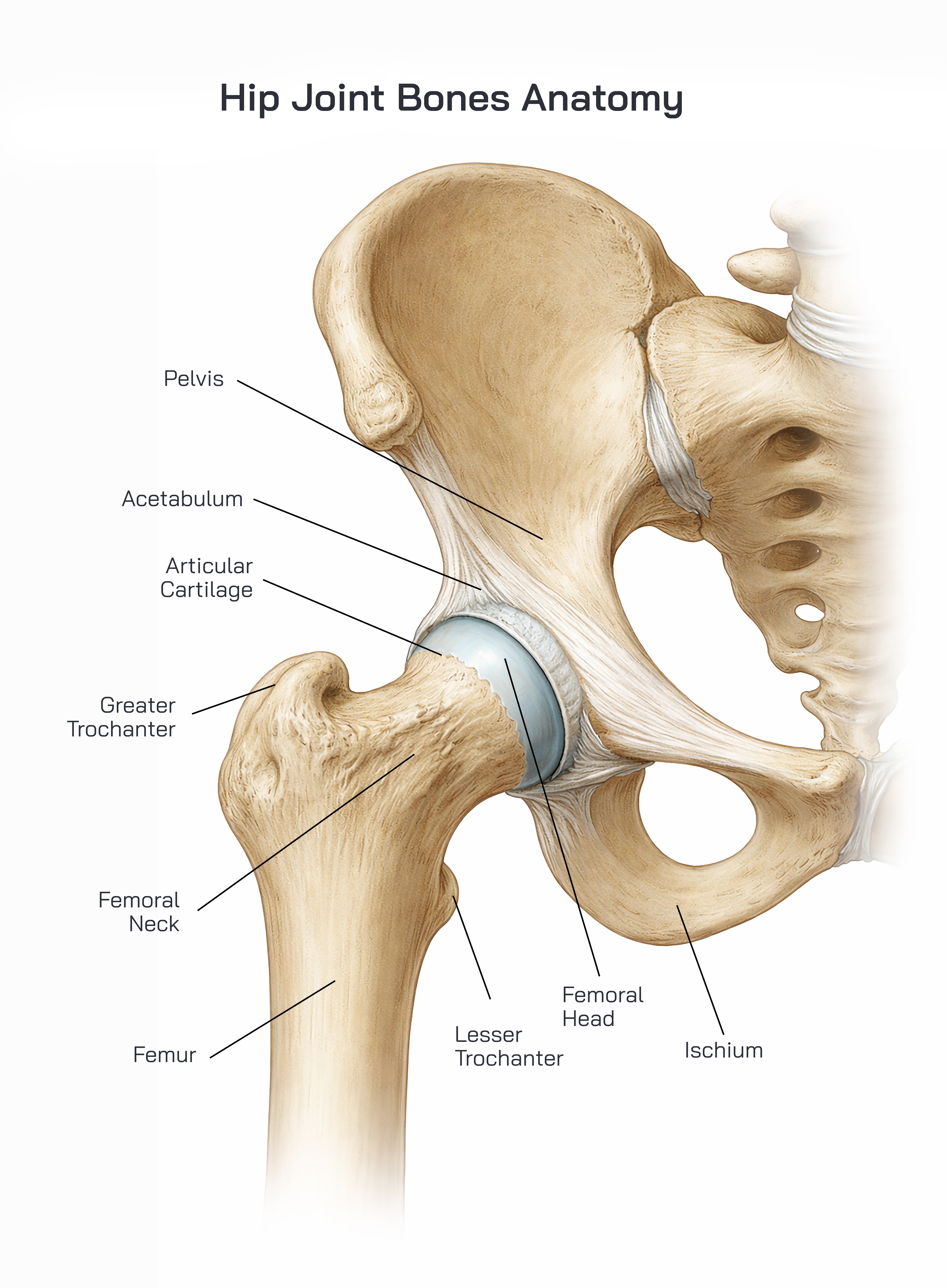
The hip joint bones anatomy represents one of the most important structural systems in the human body, as it is responsible for supporting body weight, enabling movement, and maintaining balance during standing and locomotion. The hip joint forms the connection between the trunk and the lower limb, allowing the transfer of forces generated by the body to the legs. Its anatomical design combines strength, stability, and mobility, making it essential for everyday activities such as walking, sitting, running, and climbing.
The hip joint is classified as a ball-and-socket joint, which allows movement in multiple directions while maintaining strong structural support. This joint is formed by the articulation between the pelvic bone and the femur. The precise alignment and shape of these bones create a stable yet flexible joint capable of bearing significant loads without compromising mobility.
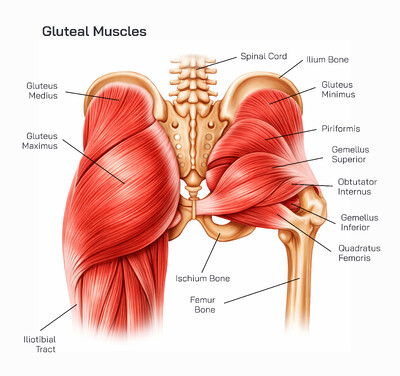
The pelvic bone, also known as the hip bone or coxal bone, plays a central role in hip joint anatomy. Each hip bone is formed by the fusion of three distinct regions: the ilium, ischium, and pubis. These regions meet at a central socket known as the acetabulum. The pelvis forms a protective basin for internal organs while also serving as the anchoring structure for the lower limbs. Its broad and sturdy design allows it to distribute body weight evenly across both hip joints.
The ilium is the largest and uppermost portion of the pelvic bone. It provides a wide surface area for muscle attachment and contributes to the overall shape of the pelvis. In hip joint anatomy, the ilium forms the upper part of the acetabulum, helping support the femoral head. The orientation of the ilium influences posture and the alignment of the lower limbs during standing and movement.
The ischium forms the lower and posterior portion of the pelvic bone. It is the region that bears weight when a person is sitting. In the hip joint, the ischium contributes to the lower section of the acetabulum, reinforcing the socket and enhancing joint stability. Its strong structure helps resist forces transmitted through the femur during activities such as walking and jumping.
The pubis is the anterior portion of the pelvic bone and completes the acetabular structure. It plays an important role in maintaining pelvic integrity and supporting the hip joint. The pubis contributes to the front of the acetabulum, ensuring that the socket fully encloses the femoral head. Together, the ilium, ischium, and pubis create a deep, cup-shaped acetabulum that securely holds the femoral head in place.
The acetabulum is a key feature of hip joint bones anatomy. It is a rounded, concave socket located on the lateral surface of the pelvic bone. The acetabulum is lined with smooth cartilage, which reduces friction and allows smooth movement of the femoral head. Its depth and shape provide a high degree of joint stability while still permitting a wide range of motion.
The femur, or thigh bone, is the longest and strongest bone in the human body. The upper end of the femur forms the ball component of the hip joint. The femoral head is spherical and smooth, fitting precisely into the acetabulum. This congruent fit allows efficient load transfer from the body to the lower limb while minimizing stress on the joint surfaces.
Connecting the femoral head to the shaft of the femur is the femoral neck. This narrow region positions the femoral head at an angle, allowing optimal movement and leverage during walking and running. The femoral neck also plays a role in shock absorption, helping distribute forces generated during movement. Its anatomical orientation is crucial for maintaining balance and efficient locomotion.
Located near the upper end of the femur are the greater and lesser trochanters. These bony projections serve as attachment points for muscles that move and stabilize the hip joint. Their position enhances muscle efficiency and contributes to the joint’s strength and control. The interaction between bone structure and muscle attachment is a defining feature of hip joint anatomy.
From a functional perspective, the hip joint bones work together to allow movement in multiple planes. Flexion, extension, abduction, adduction, and rotation are all possible due to the ball-and-socket design. At the same time, the joint must remain stable enough to support the body’s weight during prolonged standing and dynamic activities.
The hip joint also plays a crucial role in posture and balance. Proper alignment of the pelvic bones and femur ensures that body weight is evenly distributed across both legs. Any disruption in hip joint anatomy can affect gait, posture, and overall mobility, highlighting the importance of this joint in daily life.
Clinically, understanding hip joint bones anatomy is essential for diagnosing fractures, joint degeneration, and congenital abnormalities. Conditions affecting the acetabulum or femoral head can significantly impair movement and quality of life. Accurate anatomical knowledge supports effective treatment, rehabilitation, and surgical intervention when needed.
In educational and medical contexts, the hip joint serves as a prime example of how skeletal structure supports function. The integration of pelvic bones and femur demonstrates how form and function are closely linked in human anatomy. Studying this joint helps learners understand biomechanics, load distribution, and joint design principles.
The hip joint bones anatomy represents a remarkable example of how the human skeletal system balances strength, stability, and mobility within a single joint. As the primary connection between the axial skeleton and the lower limbs, the hip joint must withstand substantial mechanical stress while still permitting smooth and efficient movement. Every step taken, every shift in posture, and every transfer of body weight depends on the precise anatomical design of the bones forming this joint. Its structure reflects evolutionary adaptation for upright posture and bipedal locomotion.
At a structural level, the hip joint is designed to support the full weight of the upper body while distributing forces evenly to the lower limbs. Unlike joints that prioritize flexibility alone, the hip emphasizes load-bearing capacity without sacrificing range of motion. This dual requirement is achieved through the deep articulation between the femoral head and the acetabulum, which creates a secure yet mobile connection. The bony architecture ensures that the joint remains stable during standing and walking, even when subjected to dynamic forces such as running or jumping.
The pelvic bone forms the foundation of the hip joint and plays a central role in overall body mechanics. The fusion of the ilium, ischium, and pubis into a single bone creates a strong and continuous structure capable of resisting deformation under load. This fusion allows the pelvis to function as a rigid ring, transferring forces from the spine to the lower limbs. The symmetrical arrangement of the two hip bones ensures balanced weight distribution, which is essential for maintaining posture and preventing excessive strain on one side of the body.
The acetabulum is a defining feature of hip joint bones anatomy and is specifically shaped to enhance joint stability. Its cup-like form partially encloses the femoral head, increasing the surface area of contact between the bones. This design reduces stress on any single point and minimizes wear on joint surfaces. The orientation of the acetabulum also plays a key role in guiding movement, ensuring that the femoral head remains centered during motion while allowing freedom in multiple directions.
The femur contributes significantly to the strength and efficiency of the hip joint. As the longest bone in the body, it is designed to handle both compressive and bending forces. The femoral head’s spherical shape allows it to articulate smoothly within the acetabulum, enabling fluid movement without sharp edges or abrupt transitions. This smooth articulation is essential for reducing friction and preventing damage during repetitive activities such as walking.
The femoral neck serves as a critical transitional region between the femoral head and shaft. Its angled orientation positions the femoral head optimally within the acetabulum, improving leverage for movement and enhancing stride length. This angulation also helps absorb and distribute forces, reducing stress on the joint during impact. However, because of its narrow structure, the femoral neck is also a region of clinical importance, as it is more susceptible to injury, particularly in older individuals.
The greater and lesser trochanters are essential landmarks in hip joint bones anatomy because they reflect the close relationship between bone structure and muscle function. These prominences provide attachment sites for muscles that control hip movement and stabilize the joint. Their placement enhances the mechanical advantage of muscles, allowing efficient force generation during activities such as walking, climbing, and standing up from a seated position. The interaction between these bony projections and surrounding muscles contributes to both strength and coordination.
Biomechanically, the hip joint allows movement in three planes, making it one of the most versatile joints in the body. Flexion and extension enable forward and backward movement of the leg, while abduction and adduction allow lateral movement. Rotational movements enable the leg to turn inward and outward, supporting balance and directional changes. This versatility is essential for complex activities such as dancing, sports, and navigating uneven terrain.
Despite this wide range of motion, the hip joint remains inherently stable due to its bony configuration. The depth of the acetabulum, combined with the rounded femoral head, creates a strong structural fit that resists dislocation. This stability is particularly important during weight-bearing activities, where the joint must support forces several times greater than body weight. The bony anatomy ensures that these forces are transmitted efficiently without compromising joint integrity.
The hip joint bones also play a critical role in maintaining posture and alignment. Proper alignment of the pelvis and femur ensures that the body’s center of gravity remains balanced over the lower limbs. Any alteration in bone structure, such as changes in acetabular depth or femoral neck angle, can affect gait and posture. Over time, such changes may lead to uneven loading, discomfort, or reduced mobility, highlighting the importance of precise anatomical relationships.
From a developmental perspective, hip joint bones anatomy evolves from infancy through adulthood. The acetabulum deepens and the femoral head becomes more defined as weight-bearing activities increase. Proper alignment and movement during growth are essential for achieving a stable and functional joint. Abnormal development can compromise joint mechanics and affect mobility later in life.
In clinical practice, understanding hip joint bones anatomy is fundamental for managing injuries and degenerative conditions. Fractures involving the femur or acetabulum can disrupt the delicate balance between stability and mobility. Degenerative changes affecting joint surfaces can alter load distribution and impair movement. Detailed anatomical knowledge allows healthcare professionals to assess joint integrity accurately and plan appropriate interventions.
In educational contexts, the hip joint is often used to illustrate how skeletal design supports biomechanical function. Its structure demonstrates how bones are shaped and positioned to meet functional demands. Studying the hip joint helps learners appreciate the relationship between anatomy and movement, reinforcing the principle that form and function are inseparable in human biology.
The hip joint bones anatomy represents one of the most structurally sophisticated and biomechanically efficient systems in the human body. Its primary role is to support the weight of the upper body while enabling smooth, controlled movement of the lower limbs. Because humans rely on upright posture and bipedal locomotion, the hip joint must perform a dual function that is both demanding and precise: it must remain stable under heavy loads while allowing a wide range of motion. This balance between strength and mobility is achieved through the unique shape, alignment, and interaction of the pelvic bones and the femur.
At the center of hip joint anatomy is the integration of the pelvis with the femur. The pelvis functions as a rigid ring that distributes body weight from the spine to both lower limbs. Each hip bone contributes to this load-bearing framework, ensuring that forces are spread evenly rather than concentrated at a single point. This design reduces mechanical stress and allows the body to maintain balance during standing, walking, and dynamic activities such as running or jumping. The symmetrical nature of the pelvis further supports coordinated movement and efficient transfer of force.
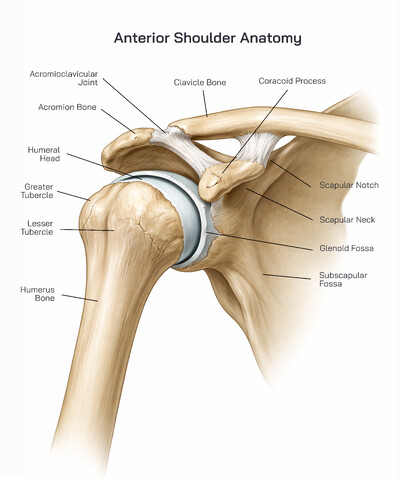
The acetabulum is the most critical bony feature of the hip joint because it forms the socket that receives the femoral head. Its depth, orientation, and curvature are essential for joint stability. Unlike shallow joints that rely heavily on soft tissues for support, the hip joint gains much of its stability from bone architecture alone. The acetabulum partially encloses the femoral head, limiting excessive movement while still allowing smooth articulation. This structural containment explains why the hip is far less prone to dislocation than more mobile joints such as the shoulder.
The shape of the acetabulum also plays a key role in guiding movement. Its orientation directs the femoral head along predictable paths during flexion, extension, and rotation. This guidance minimizes abnormal stress on joint surfaces and helps maintain even contact between the articulating bones. By maximizing surface contact, the joint reduces pressure at any single point, which is crucial for preserving joint integrity over decades of use.
The femur complements the acetabulum through its rounded head and angled neck. The spherical shape of the femoral head allows it to rotate smoothly within the acetabulum, supporting multidirectional movement. This shape also ensures that force transmission remains consistent regardless of limb position. The femoral neck positions the head away from the shaft, increasing leverage for movement and improving stride efficiency. This anatomical arrangement allows humans to walk with long, energy-efficient steps while maintaining balance.
The angle of the femoral neck is particularly important for biomechanical efficiency. It determines how body weight is transmitted from the pelvis to the femur and influences overall limb alignment. Proper angulation ensures that forces pass smoothly through the joint without creating excessive bending stress. Variations in this angle can significantly affect posture, gait, and joint loading, demonstrating how precise bone geometry is essential for normal function.
The greater and lesser trochanters serve as prominent bony landmarks that illustrate the close relationship between bone anatomy and muscle function. These projections provide attachment points for muscles responsible for hip movement and stabilization. Their position enhances the mechanical advantage of these muscles, allowing them to generate powerful movements with minimal energy expenditure. This efficient design supports activities ranging from simple walking to complex athletic movements.
The interaction between the hip joint bones and surrounding muscles allows for controlled movement and dynamic stability. During walking, the femoral head remains securely positioned within the acetabulum while the pelvis and femur move in coordination. This synchronization prevents joint instability and reduces wear on joint surfaces. The bones guide movement, while muscles fine-tune motion and absorb shock, creating a highly efficient locomotor system.
From a functional standpoint, the hip joint enables movement in multiple planes, which is essential for navigating varied environments. Flexion and extension allow forward and backward movement, abduction and adduction support side-to-side balance, and rotation enables directional changes. These movements occur seamlessly because the joint’s bony architecture supports continuous motion without compromising stability. This versatility is a defining feature of human locomotion.
The hip joint bones also play a vital role in maintaining posture. Proper alignment of the pelvis and femur ensures that the body’s center of gravity remains balanced over the lower limbs. This alignment reduces muscular effort during standing and minimizes strain on the spine. Any alteration in bone structure, such as asymmetry or deformity, can disrupt posture and increase the risk of pain or functional limitation.
Developmentally, the hip joint bones undergo significant changes from infancy to adulthood. Early in life, the acetabulum and femoral head are still forming, and proper alignment is essential for healthy joint development. As weight-bearing increases, the joint surfaces adapt and strengthen, achieving their adult shape and stability. This process highlights the importance of normal movement and loading during growth for long-term joint health.
In clinical practice, a detailed understanding of hip joint bones anatomy is essential for diagnosing and managing a wide range of conditions. Fractures involving the femur or acetabulum can disrupt the delicate balance of the joint, impairing mobility and stability. Degenerative changes can alter joint congruency, affecting movement efficiency and load distribution. Accurate anatomical knowledge allows clinicians to evaluate these changes and plan effective treatment strategies.
In educational contexts, the hip joint is often used as a model for understanding biomechanical principles. Its design demonstrates how bones are shaped and oriented to meet functional demands. Studying this joint helps learners grasp the relationship between anatomy, movement, and load-bearing, reinforcing foundational concepts in human biology and biomechanics.
Overall, the hip joint bones anatomy exemplifies the efficiency, durability, and adaptability of the human skeletal system. The precise integration of pelvic bones and femur creates a joint capable of supporting body weight, enabling complex movement, and maintaining balance throughout life. Its structure reflects a refined balance between stability and mobility, making it indispensable for human function and independence. The hip joint bones anatomy exemplifies the efficiency and resilience of the human skeletal system. The integration of pelvic bones and femur creates a joint capable of supporting body weight, enabling movement, and maintaining balance across a lifetime. Its design reflects a refined balance between strength and mobility, making it indispensable for human locomotion and everyday function.
In conclusion, the hip joint bones anatomy reveals a robust and finely tuned system designed for strength, stability, and movement. The pelvis and femur form a secure ball-and-socket joint that supports body weight while allowing a wide range of motion. Each anatomical component, from the acetabulum to the femoral head, plays a vital role in maintaining mobility and balance. Understanding this anatomy provides valuable insight into human movement, posture, and overall skeletal health.