Comprehensive Explanation of DNA Deoxyribonucleic Acid Using a 3D Rendered Illustration
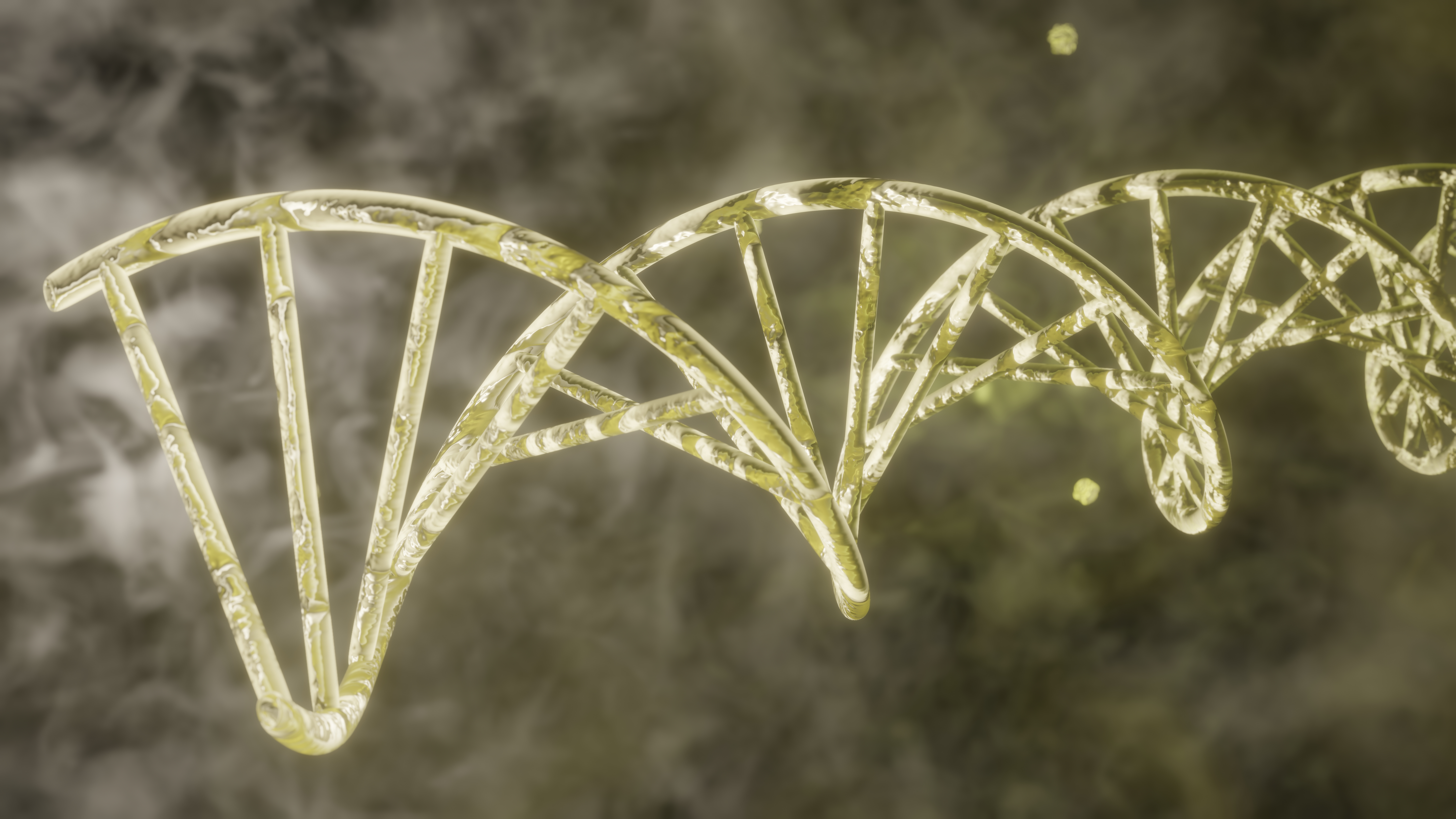
A three dimensional representation of DNA Deoxyribonucleic Acid offers one of the clearest and most visually engaging ways to understand how the fundamental structure of life operates. The double helix, often difficult to imagine on a microscopic scale, becomes far more accessible when translated into a polished 3D rendered form. This style of illustration turns abstract scientific ideas into tangible shapes, making it easier for learners, researchers, and educators to grasp the complexity and elegance of the molecular spiral that stores biological information. With smooth surfaces, balanced lighting, and realistic depth, the illustration showcases every curve, twist, and alignment of the intertwined strands.
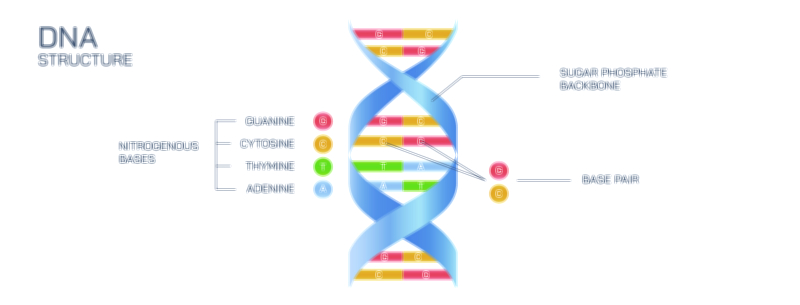
At the core of the helix is the concept of paired units arranged along two winding paths. A 3D rendered illustration displays these components with clear definition, offering a visual understanding of how information is organized and preserved within the structure. The precise spacing, consistent curvature, and organized sequence shown in the render help viewers see the underlying patterns that guide biological processes. This clarity is especially beneficial for learners encountering molecular biology concepts for the first time, as traditional flat diagrams often fail to show the true spatial relationships between structural elements.
In scientific and educational settings, such an illustration enhances communication. Educators can highlight regions of interest, explain how replication occurs, and show how specific sections interact with surrounding components. The render may reveal the gentle rise and fall of the spiral, the location of important connection points, or the repeating pattern that defines the molecular form. These visual cues support lessons on inheritance, cellular behavior, and biochemical interactions. When paired with verbal explanations or written guides, the 3D model helps students form a deeper understanding of how the structure works within living systems.
Medical and research professionals also benefit from the clarity provided by a detailed rendered helix. Presentations, conference material, scientific posters, and academic publications use such illustrations to communicate findings with precision. A clean, modern depiction of the helix conveys authority and credibility, making it ideal for discussions related to genetics, molecular behavior, or clinical research. It can help illustrate mutation points, functional regions, or interactions with other molecular structures. Because the illustration is both aesthetically appealing and scientifically accurate, it supports the communication of complex ideas to audiences that may include specialists, policymakers, or the general public.
The power of 3D rendering also lies in its ability to create depth and realism. Soft shadows, controlled highlights, and smooth gradients accentuate the curvature of the helix, giving it a dimensional presence that encourages closer examination. The viewer can sense the tightness of each twist and the consistency of spacing along the structure. This sense of realism enhances engagement and aids long-term comprehension, especially for students or viewers who benefit from spatial visualizations.
The illustration can also be adapted for dynamic presentations. When animated, the helix may rotate, expand, or adjust perspective to highlight different scientific details. This dynamic approach allows educators to explain how the structure behaves during replication, how specific regions are accessed during molecular processes, or how surrounding elements interact. Such transitions bring molecular science to life, integrating motion with detailed imagery to produce highly effective teaching tools.
Beyond its scientific purpose, the helix carries strong symbolic meaning. It is widely associated with discovery, innovation, and advanced understanding of life. For this reason, a polished 3D render is frequently used in branding for biotechnology companies, universities, laboratories, and medical organizations. It communicates sophistication, precision, and scientific credibility. When applied to brochures, websites, posters, or digital interfaces, the render enhances the identity of institutions focused on research and education.
In summary, explaining DNA Deoxyribonucleic Acid through a 3D rendered illustration provides unmatched visual clarity, educational strength, and communicative power. It transforms a microscopic and highly complex structure into something intuitive and visually compelling. Whether used in schools, laboratories, universities, medical centers, or public science platforms, this style of illustration serves as a bridge between advanced biological concepts and clear understanding. It remains one of the most effective ways to communicate the structure and significance of the molecule that defines life itself.