Detailed Overview of Exponential and Logarithmic Functions and Their Core Mathematical Behavior
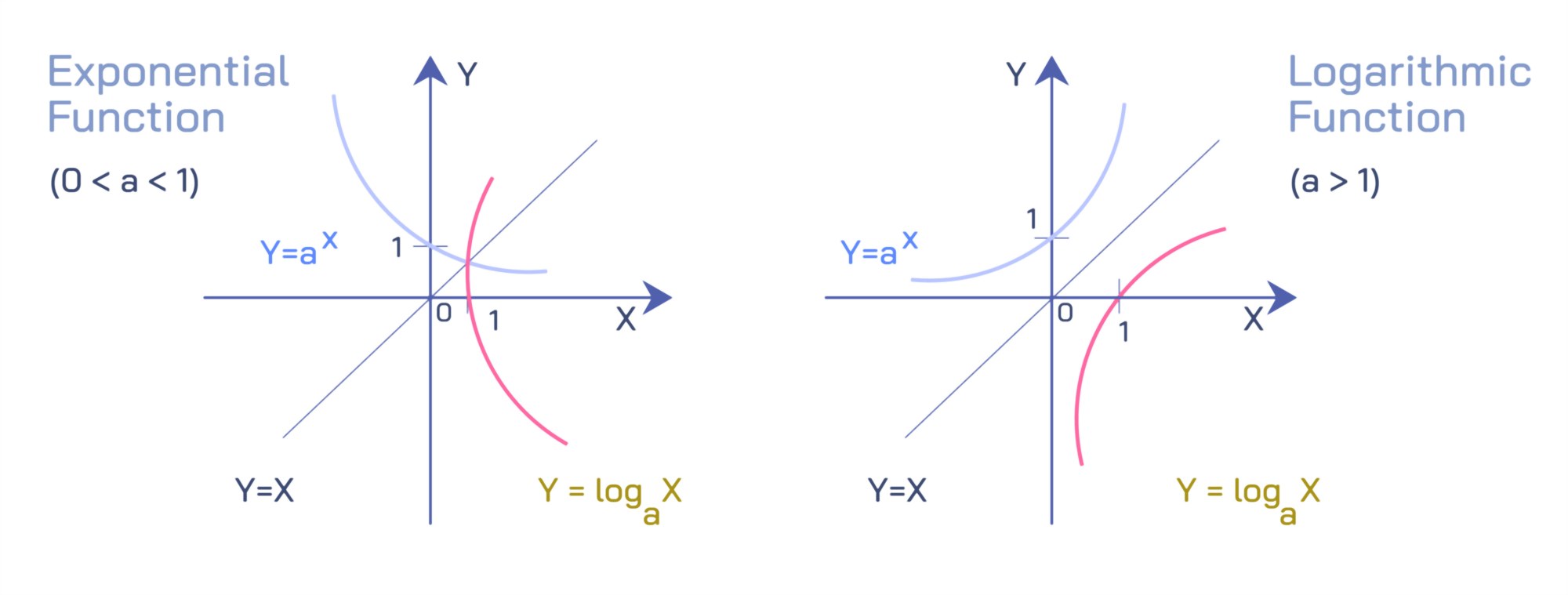
Exponential and logarithmic functions play a central role in understanding how values grow, shrink, and relate across different scales. These functions represent two connected ideas that mirror each other in structure and meaning. An exponential form begins with a base that repeatedly multiplies, creating a curve that increases or decreases depending on how the base behaves. This repeated action produces dramatic shifts that help explain growth in nature, finance, physics, and various real processes.
An exponential curve rises smoothly when the base is greater than one. Each step adds more than the previous one, creating a steep pattern that shows how small inputs can lead to significant outputs. When the base lies between zero and one, the curve falls in a controlled manner, showing gradual decline. This makes exponential forms useful for modeling population change, interest growth, and decay processes.
A logarithmic function represents the inverse idea. Instead of multiplying repeatedly, it asks how many steps are required to reach a particular value. This form grows slowly, providing a way to measure large ranges with gentle curves. It helps simplify complex scales, making it easier to study sound levels, acidity, brightness, and other systems where numbers can vary widely. The logarithmic path shows how growth becomes less dramatic as values increase, offering a calm contrast to the rapid rise of exponential curves.
Together, these functions build a powerful framework for interpreting real situations. Their connection helps learners see how repeated multiplication links directly to the counting of those repetitions. Studying them deepens understanding of curve structures, value movement, and the balance between growth and measurement. They provide essential tools for advanced topics across science, engineering, computing, and everyday problem solving.