Human Dental Anatomy — Structure and Function of Incisors, Canines, Premolars, and Molars Explained
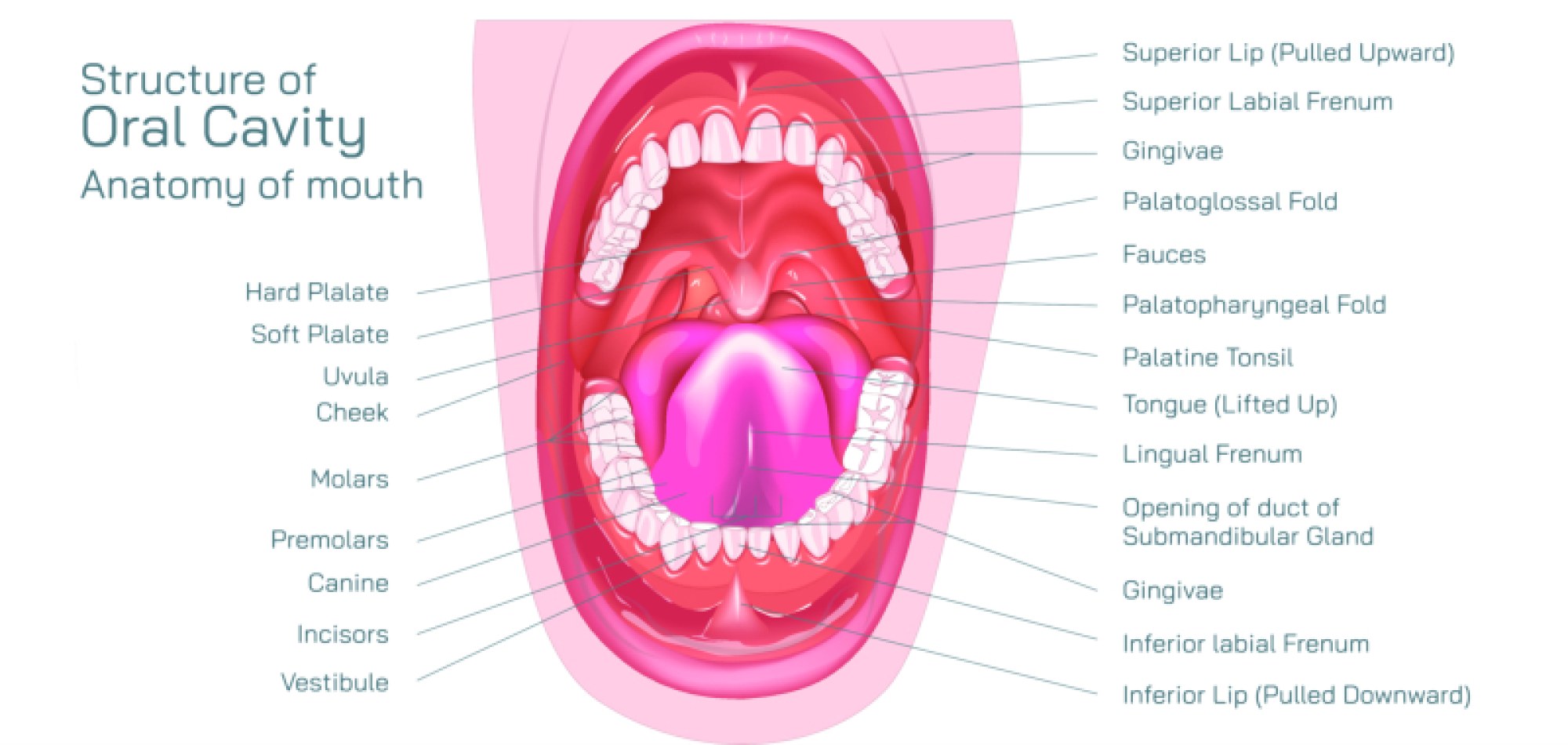
Human dental anatomy is a precise and highly organized system designed to support eating, speech, facial structure, and overall oral health throughout life. Although the mouth appears to contain a uniform row of teeth, each tooth belongs to one of four distinct types—incisors, canines, premolars, and molars—each with its own shape, structure, and functional purpose. Together, these teeth form a coordinated chewing mechanism capable of cutting, tearing, crushing, and grinding food so that it can be swallowed and digested safely and efficiently. Beyond chewing, teeth contribute to facial symmetry, pronunciation of sounds, confidence in expression, and protection of the jawbone by maintaining mechanical stimulation during eating. Understanding dental anatomy requires more than simply naming tooth types; it involves recognizing how each type participates in the larger system of the mouth, how their shapes relate to their roles, and why their preservation is essential to lifelong health. When examined closely, the dental arches reflect a biological design that evolved to balance strength, precision, and durability for daily use across decades of life.
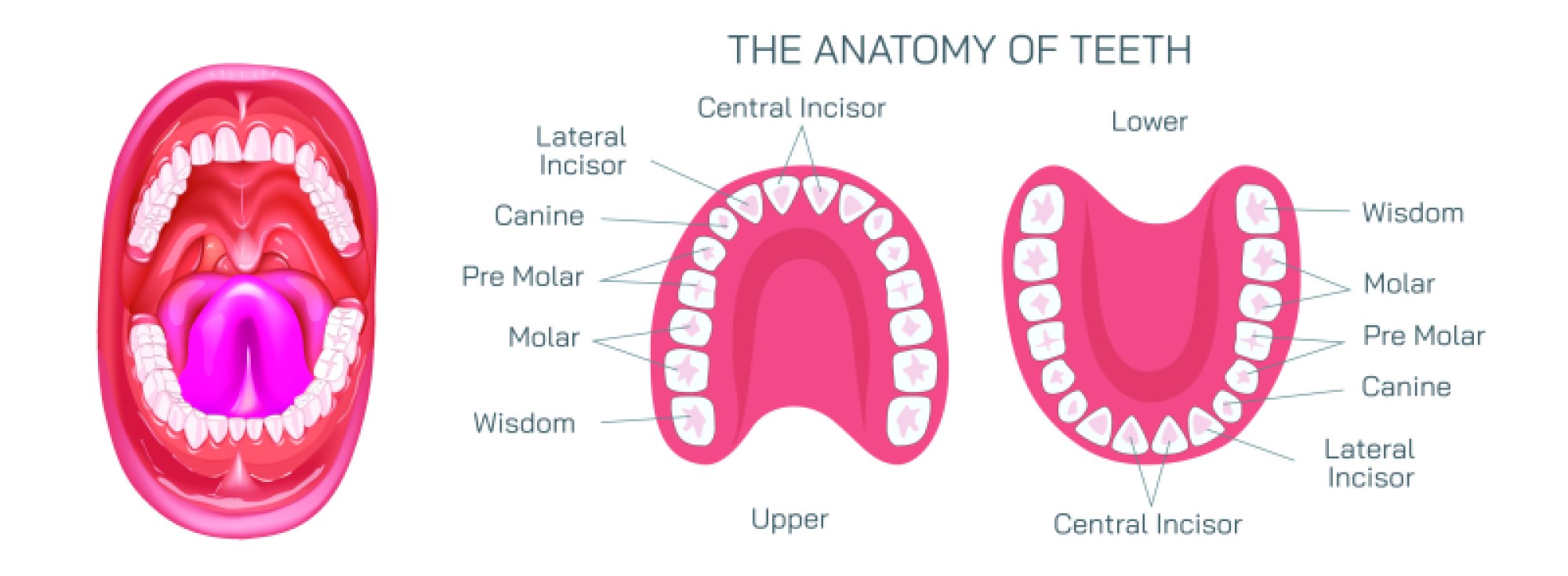
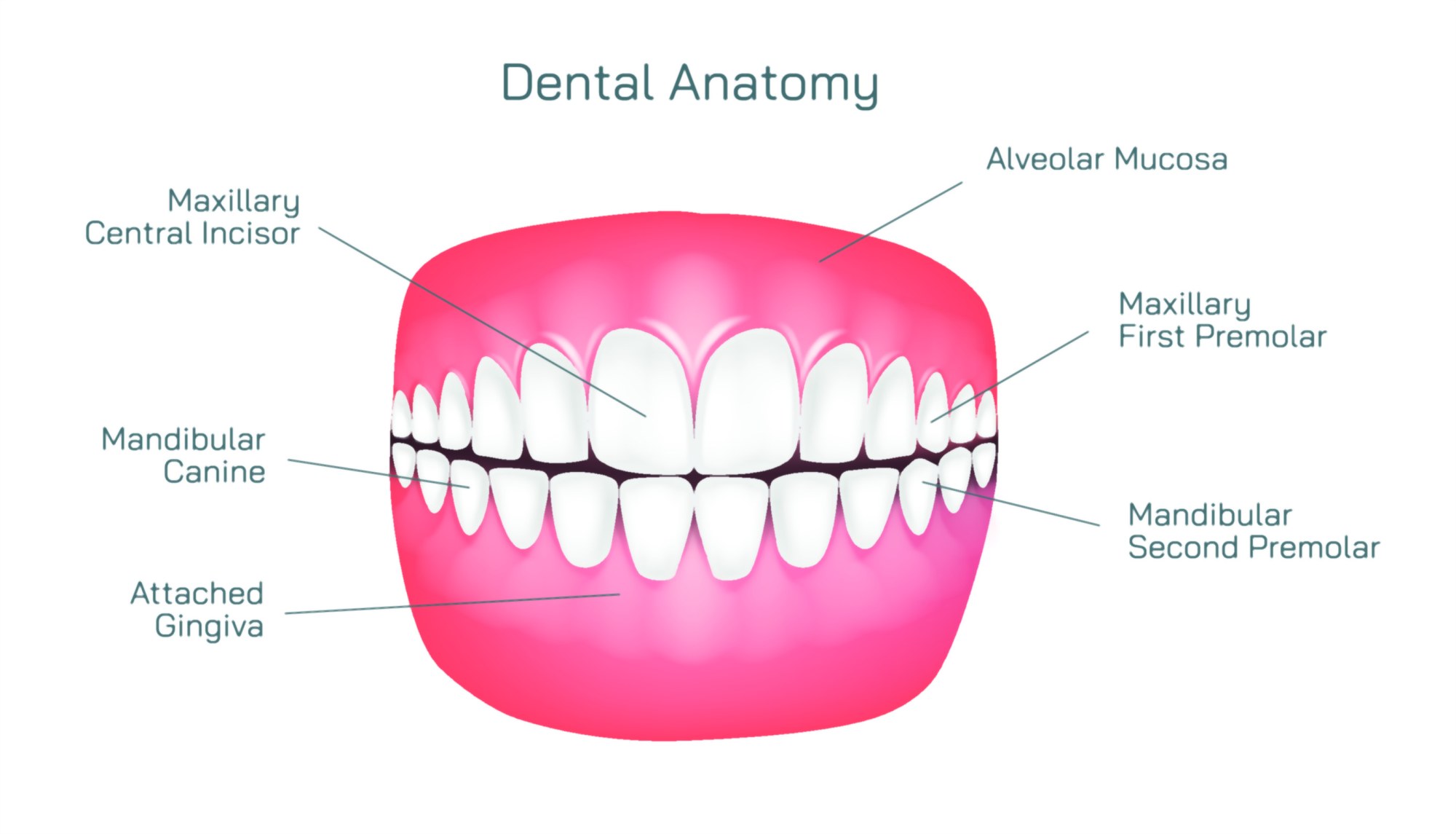
The first class of teeth visible when someone smiles are the incisors, located at the front of the mouth—four on the upper arch and four on the lower arch. Incisors have sharp, thin, chisel-shaped edges designed for cutting and slicing food into manageable pieces. Their broad, flat surfaces play a major role not only in biting but also in guiding jaw movement and shaping speech. Incisors are particularly prominent in producing certain consonants, and their spacing and alignment are critical for phonetics and esthetic appearance. Because they sit at the front, incisors are the first points of contact during biting and frequently face dietary staining, wear, and trauma. The enamel on incisors is thinner than on molars, making them more vulnerable to acid erosion from frequent exposure to sugary and acidic foods. Their roots are relatively straight and single-rooted, providing stability but also making them susceptible to mobility when gum disease affects supporting tissues. Incisors act as the gateway of chewing, positioning food for deeper processing by the rest of the dentition and setting the visual tone of the smile.
Next to the incisors lie the canines, also known as cuspids, one on each side of the upper and lower arch. Canines have a pointed, well-defined cusp that gives them exceptional tearing ability. Their shape and long root make them the strongest and most deeply anchored teeth in the mouth. Canines stabilize the dental arch and guide the jaw during lateral movement, a function known as “canine guidance,” which reduces strain on molars during side-to-side chewing. Evolutionarily, canines reflect the need to tear dense, fibrous food, complementing the slicing role of incisors and the crushing role of posterior teeth. Their thick enamel and long, single root contribute to impressive resilience, yet this same structural prominence makes them essential in orthodontics. When the canines drift or fail to erupt properly, they can affect overall alignment of the dental arch. Canines also play a significant esthetic role because they determine the curvature and depth of the smile, contributing to the natural transitions between front teeth and the posterior segments. They serve as architectural anchors for the bite, ensuring both function and symmetry.
Behind the canines lie the premolars, also called bicuspids, which are transitional teeth that combine the characteristics of canines and molars. Adults have eight premolars—two on each side of the upper and lower arches. Their crowns typically feature two pointed cusps, giving them the mechanical versatility to tear food like canines while also beginning the crushing and grinding process needed for digestion. Premolars possess broader chewing surfaces than canines and multiple roots in the upper jaw, allowing them to withstand significant pressure. They are especially important for maintaining the vertical height of the bite and for keeping cheek structures away from the chewing pathway. Premolars also play a key role in orthodontic planning, as their extraction may sometimes be recommended to reduce crowding and align the dental arch without structural compromise. Because they sit in a location where chewing pressure is high and cleaning access is challenging, premolars are at risk for decay in their deep grooves and for damage from bruxism, underscoring the need for dedicated oral hygiene in the mid-arch region.
At the back of the mouth are the molars, the powerhouse teeth responsible for grinding food into small, digestible particles. Adults have 12 molars—three per quadrant—including the wisdom teeth, also known as third molars. Molars are the largest teeth, with broad occlusal (chewing) surfaces featuring multiple deep grooves and usually four or more cusps. This complex surface anatomy allows them to grind and pulverize food efficiently, preparing it for swallowing and digestion. Their roots are wide and often multi-rooted, providing anchorage to withstand high masticatory forces. Because of their location, molars receive the bulk of chewing pressure and are typically the first teeth to show signs of wear in individuals who grind or clench their teeth. Their grooves, although functionally necessary, make molars particularly vulnerable to decay if bacterial plaque accumulates. First permanent molars erupt around age six and set the foundation for jaw alignment; losing them prematurely disrupts bite development and increases orthodontic complications. Wisdom teeth, often the last to emerge, may lack enough space in the jaw and can become impacted, requiring monitoring or extraction depending on alignment and symptoms.
Together, incisors, canines, premolars, and molars form a coordinated chewing system in which each tooth type complements the others. The front teeth cut, the canines tear and guide, the premolars transition between tearing and grinding, and the molars mechanically break food down for safe swallowing. Every tooth contributes to a chain of functional tasks that, when working harmoniously, support nutrition, speech, jaw alignment, and facial structure. When one tooth is lost or damaged, the system is disrupted: nearby teeth shift into the space, chewing becomes unbalanced, pressure increases on remaining teeth, and the jawbone can gradually shrink due to lack of stimulation from biting forces. These ripple effects reveal why preserving every tooth—regardless of type—is vital to long-term oral and systemic health.
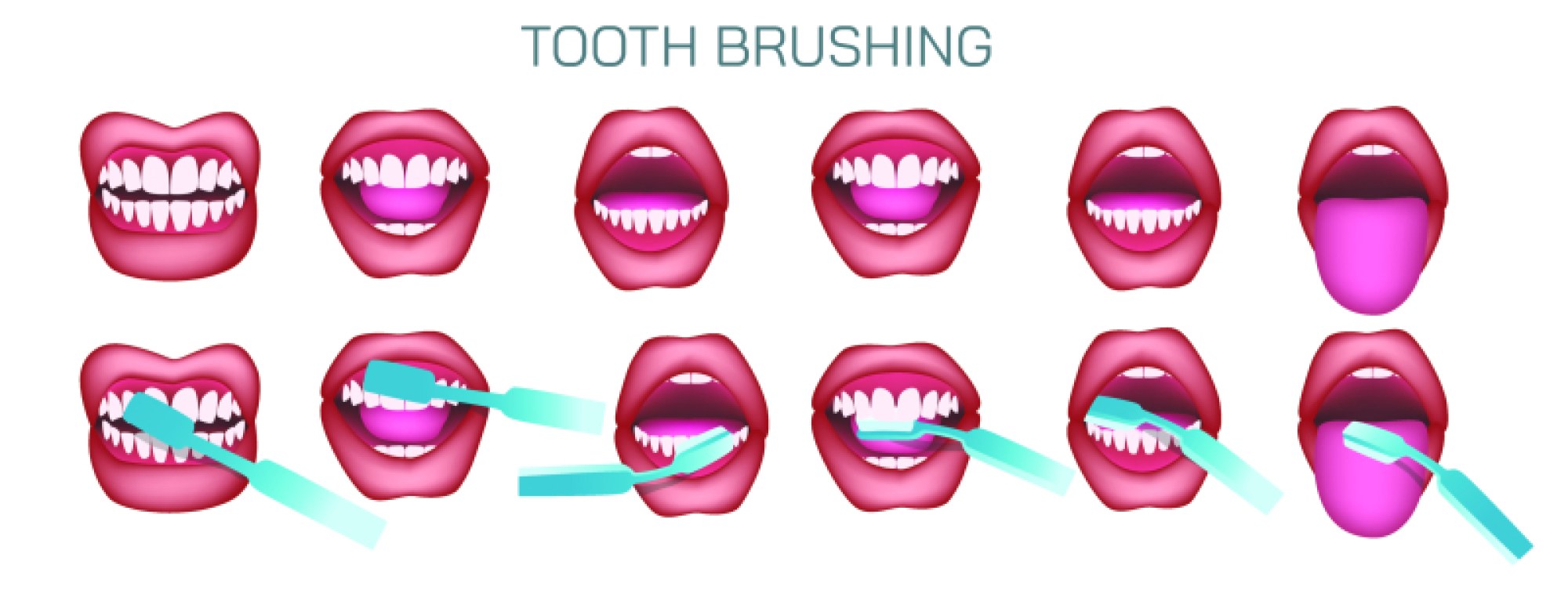
Understanding human dental anatomy also highlights the importance of preventive and restorative care. Because incisors are vulnerable to enamel erosion, protecting them requires avoiding excessive acidity and brushing gently. Because canines absorb high bite pressures, maintaining their root support through strong gums is critical. Premolars require careful flossing and sealing of deep grooves to prevent decay. Molars demand consistent brushing technique and regular dental check-ups to monitor wear and assess wisdom teeth alignment. Each tooth type has its own risk profile and maintenance priority, yet all depend on the same principles of daily hygiene, balanced diet, and professional monitoring.
Ultimately, the human dentition is a sophisticated biological system in which every tooth type contributes to physical health, oral function, esthetics, and personal confidence. Incisors define the smile and initiate biting, canines anchor the architecture of the arch and tear food efficiently, premolars bridge mechanical functions and maintain chewing harmony, and molars complete the grinding process that supports digestion and jaw strength. When these teeth work together, the result is not only efficient chewing but also clear speech, balanced facial form, and a confident smile. Caring for the dentition means preserving not just individual teeth but the entire interdependent system designed to serve a lifetime of functional and esthetic needs.