Sarcopenia – Causes, Symptoms, Age-Related Muscle Loss Progression, Risk Factors, and Evidence-Based Strategies for Prevention and Long-Term Muscular Health
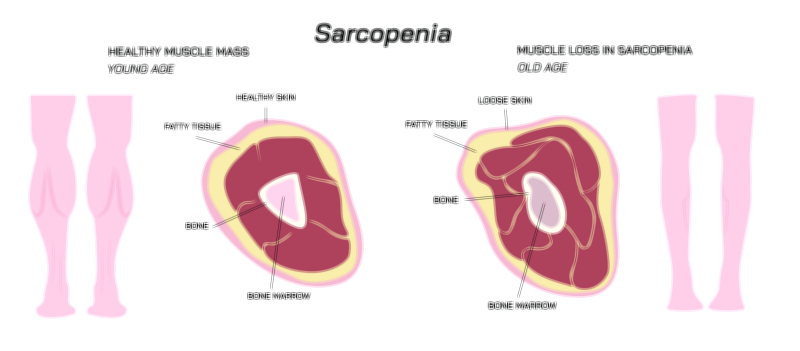
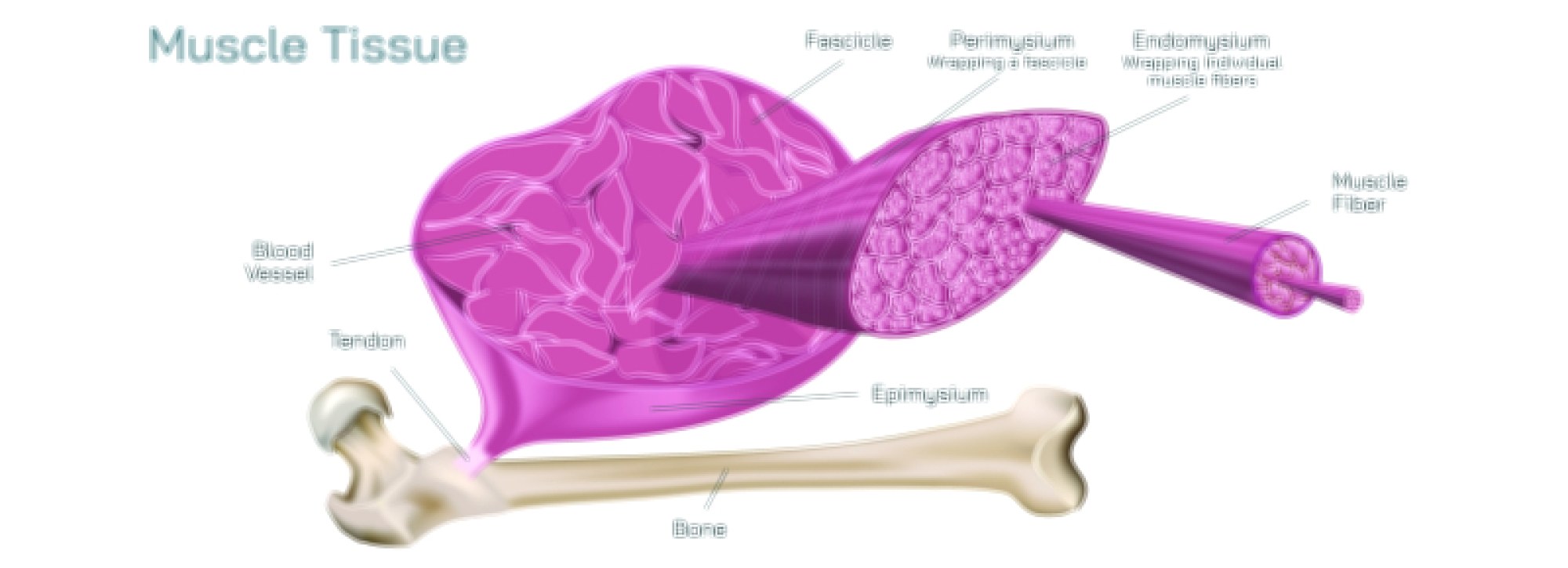
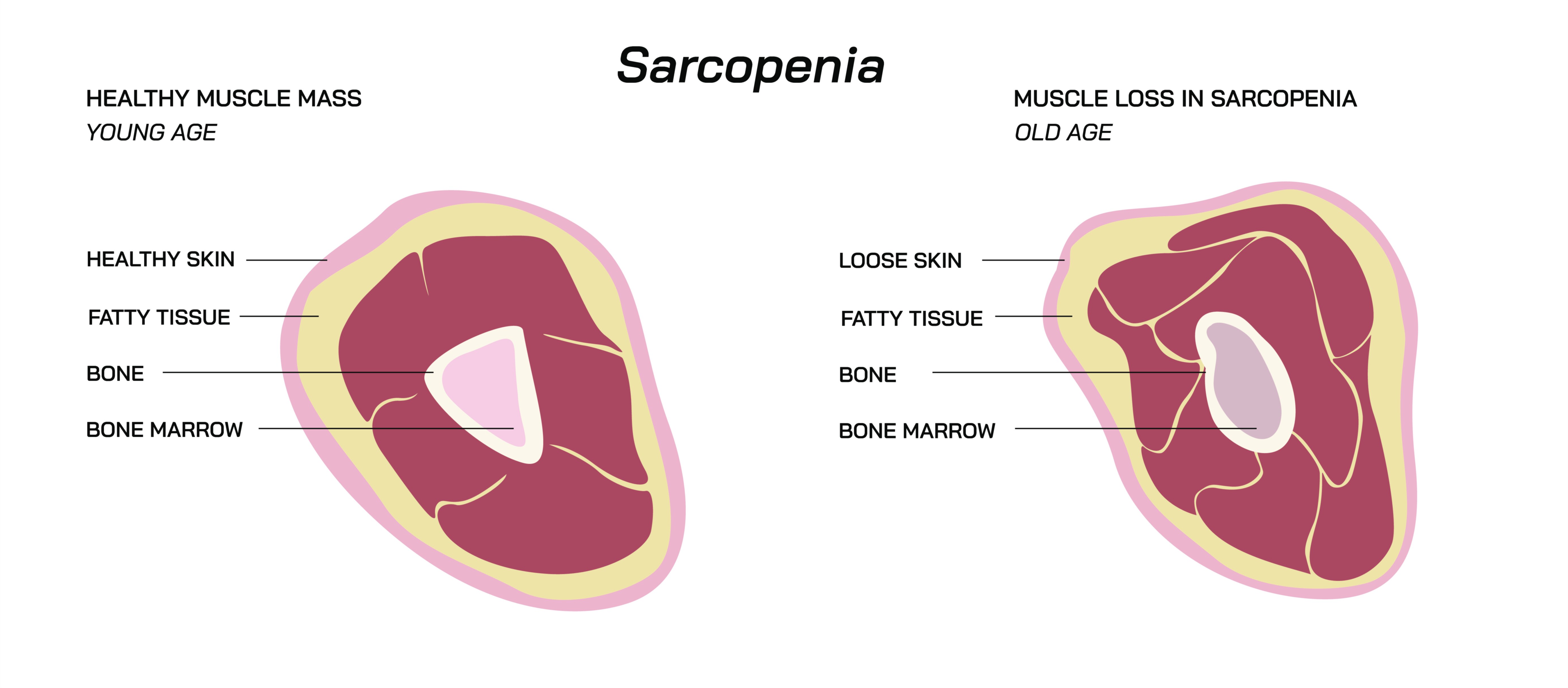
Sarcopenia is a progressive condition characterized by the gradual loss of muscle mass, muscle strength, and physical performance. Although it is most strongly associated with aging, it does not occur solely because the body gets older; rather, it develops through a complex interaction of biological changes, lifestyle patterns, hormonal shifts, inflammation, nutrition, and physical inactivity. Muscles reach their maximum strength around early adulthood, but beginning around the age of thirty, there is a subtle decline in muscle tissue that accelerates noticeably after fifty or sixty. The decline does not affect every individual equally; some people maintain strong muscles well into old age because their physical activity, nutrition, and metabolic health continue to support muscle protein synthesis. Others lose muscle mass early because of sedentary behavior, chronic disease, metabolic disorders, or prolonged periods without exercise. Sarcopenia is not only a physical condition — it influences mobility, independence, metabolic balance, bone health, fall risk, and overall quality of life. For this reason, recognizing the causes, symptoms, and prevention strategies of sarcopenia is essential for maintaining long-term muscular health.
The causes of sarcopenia include both biological and environmental factors. One major cause is age-related hormonal decline. Hormones such as testosterone, growth hormone, insulin-like growth factor-1 (IGF-1), and estrogen play critical roles in regulating muscle cell growth and repair. As these hormones naturally decrease with age, the rate of muscle protein synthesis declines, while protein breakdown increases. A second major cause is reduced physical activity, particularly the absence of strength-training or resistance-based exercise. Muscles maintain their strength when they are challenged; when mechanical stress on muscle fibers decreases, the body begins to reduce muscle tissue because it assumes the tissue is not needed. This inactivity may happen slowly over the years or suddenly after events such as injury, hospitalization, or prolonged bed rest. In older adults, even a few weeks in the hospital can lead to dramatic muscle loss. Another cause is chronic inflammation, which becomes more common with age through a process known as inflammaging. Elevated inflammatory markers interfere with muscle regeneration and increase muscle breakdown. Poor nutrition also contributes to sarcopenia, especially diets low in protein and diets deficient in vitamin D or omega-3 fatty acids. When the body does not receive sufficient building blocks for muscle repair, muscle tissue begins to diminish. Additionally, neuromuscular degeneration, which refers to weakening connections between the nervous system and muscle fibers, reduces muscle activation signals and contributes to shrinking muscle size. Chronic disease conditions — such as diabetes, kidney disease, heart failure, chronic obstructive pulmonary disease, cancer, and gastrointestinal disorders that affect nutrient absorption — increase the risk of sarcopenia as well.
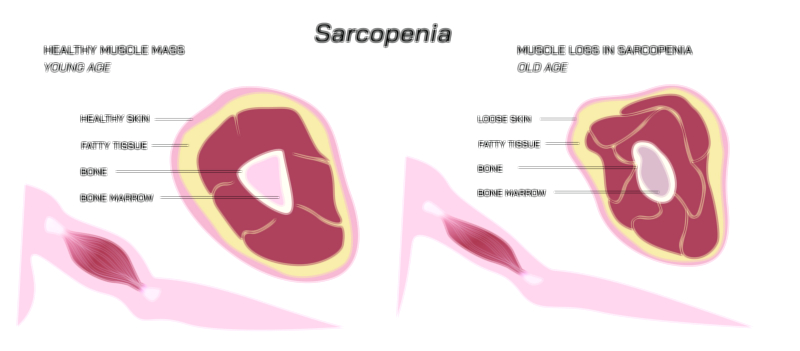
The symptoms of sarcopenia generally progress slowly, which makes early detection more difficult. One of the earliest warning signs is reduced muscle strength, often noticed as difficulty lifting objects that once felt easy, opening jars, or climbing stairs without strain. Alongside weakening grip strength, individuals may notice muscle loss in arms, thighs, calves, shoulders, and back, even if body weight has not changed. Because fat may increase while muscle decreases, the overall weight may remain stable despite significant physical changes. Another key symptom is slower walking speed, which reflects declines in both strength and coordination. Many people begin to experience fatigue during activities that once required little effort, such as standing up from a chair, carrying groceries, or walking long distances. Balance issues also become more common as stabilizing muscles weaken, leading to a higher risk of falls and fractures. Sarcopenia can also reduce endurance, making individuals feel tired sooner during physical work or recreational activities. Over time, the condition may contribute to reduced independence, limiting mobility and daily living activities. If left unaddressed, sarcopenia significantly increases vulnerability to frailty, disability, and metabolic complications because skeletal muscle plays a vital role in blood sugar regulation and immune support.
Preventing sarcopenia requires a multi-dimensional approach that focuses primarily on resistance training, functional movement, balanced nutrition, and healthy lifestyle patterns. Research consistently shows that strength-training and resistance exercises are the most powerful defenses against sarcopenia, regardless of age. When muscles are exposed to resistance — whether through bodyweight movements, free weights, resistance bands, weight machines, or functional movements — muscle fibers experience microscopic stress that stimulates repair and growth. Consistent strength-training increases both muscle mass and neuromuscular efficiency, even in individuals over eighty or ninety. Exercises like squats, lunges, push-ups, rows, deadlifts, step-ups, and arm presses are especially effective because they target large muscle groups and mimic natural daily movements. Combining strength-training with balance exercises and mobility training helps preserve stability and coordination, which reduces the risk of falls. Aerobic exercises such as brisk walking, swimming, or cycling do not directly build muscle mass, but they support cardiovascular health, improve blood flow to muscles, and boost metabolic function — making them valuable companions to resistance training.
Nutrition plays a crucial role in preventing sarcopenia because muscles require protein and micronutrients for repair and growth. Adequate high-quality protein intake distributed throughout the day ensures that muscle protein synthesis remains active. Foods such as eggs, dairy products, lean meats, fish, legumes, tofu, nuts, and seeds provide the amino acids required for muscle recovery. Among amino acids, leucine is particularly important because it triggers muscle-building pathways in the body. Vitamin D supports muscle contraction, coordination, and strength, and deficiency significantly increases the risk of muscle weakness. Omega-3 fatty acids, found in fatty fish, walnuts, and flaxseeds, support muscle repair through anti-inflammatory effects. Additionally, creatine supplementation, widely studied in sports science, has shown promising results in older adults for enhancing muscle strength and function when combined with resistance exercise. Hydration also supports muscle performance because dehydration contributes to fatigue and poor muscle contraction.
Lifestyle patterns beyond exercise and nutrition determine whether muscle growth can continue throughout adulthood. Sedentary behaviors — sitting for many hours without physical activity — promote insulin resistance, fat accumulation, and accelerated muscle breakdown. Regular movement throughout the day helps counter these effects by maintaining circulation and metabolic activity. Sleep is another critical factor in sarcopenia prevention because muscle repair occurs largely during deep sleep cycles, and chronic sleep deprivation impairs hormone regulation and inflammation control. Conversely, chronic stress can trigger hormone imbalances that reduce muscle protein synthesis, making stress management essential for long-term muscular health. Programs combining physical activity, nutrition support, sleep regulation, and stress reduction provide the strongest shield against sarcopenia.
Prevention strategies take on added importance because muscle loss affects much more than physical strength. Strong, healthy muscle tissue improves insulin sensitivity, stabilizes metabolism, protects bone health by supporting mechanical load on the skeleton, promotes immune system competence, and boosts cognitive well-being through enhanced circulation and hormonal balance. When muscles remain strong later in life, individuals tend to maintain independence, mobility, and the ability to enjoy social, recreational, and daily activities without limitation. In contrast, unchecked muscle deterioration contributes to frailty, vulnerability, and dependence. The encouraging reality is that sarcopenia is not a fixed or irreversible destiny; it is a condition that responds positively and measurably to lifestyle interventions.
In summary, sarcopenia results from a combination of aging-related biological changes and modifiable lifestyle factors. The decline in muscle mass and strength begins gradually but accelerates without intervention, leading to fatigue, reduced mobility, balance difficulties, and increased risk of falls. Prevention and management rely on comprehensive support of muscle physiology: regular resistance-training to stimulate muscle growth, adequate protein and nutrient intake to support tissue repair, active daily living patterns to discourage muscle breakdown, and sound sleep and stress regulation to facilitate hormonal and metabolic balance. Through consistent application of these strategies, muscle mass can be not only preserved but improved well into older age. Understanding the causes, symptoms, and prevention of sarcopenia empowers individuals to protect their strength and independence, demonstrating that muscle health is a lifelong commitment that shapes physical vitality, functional ability, and overall well-being.