Dollar and Franc Currency Comparison – Understanding Global Monetary Strength, Financial Stability, and International Investment Dynamics
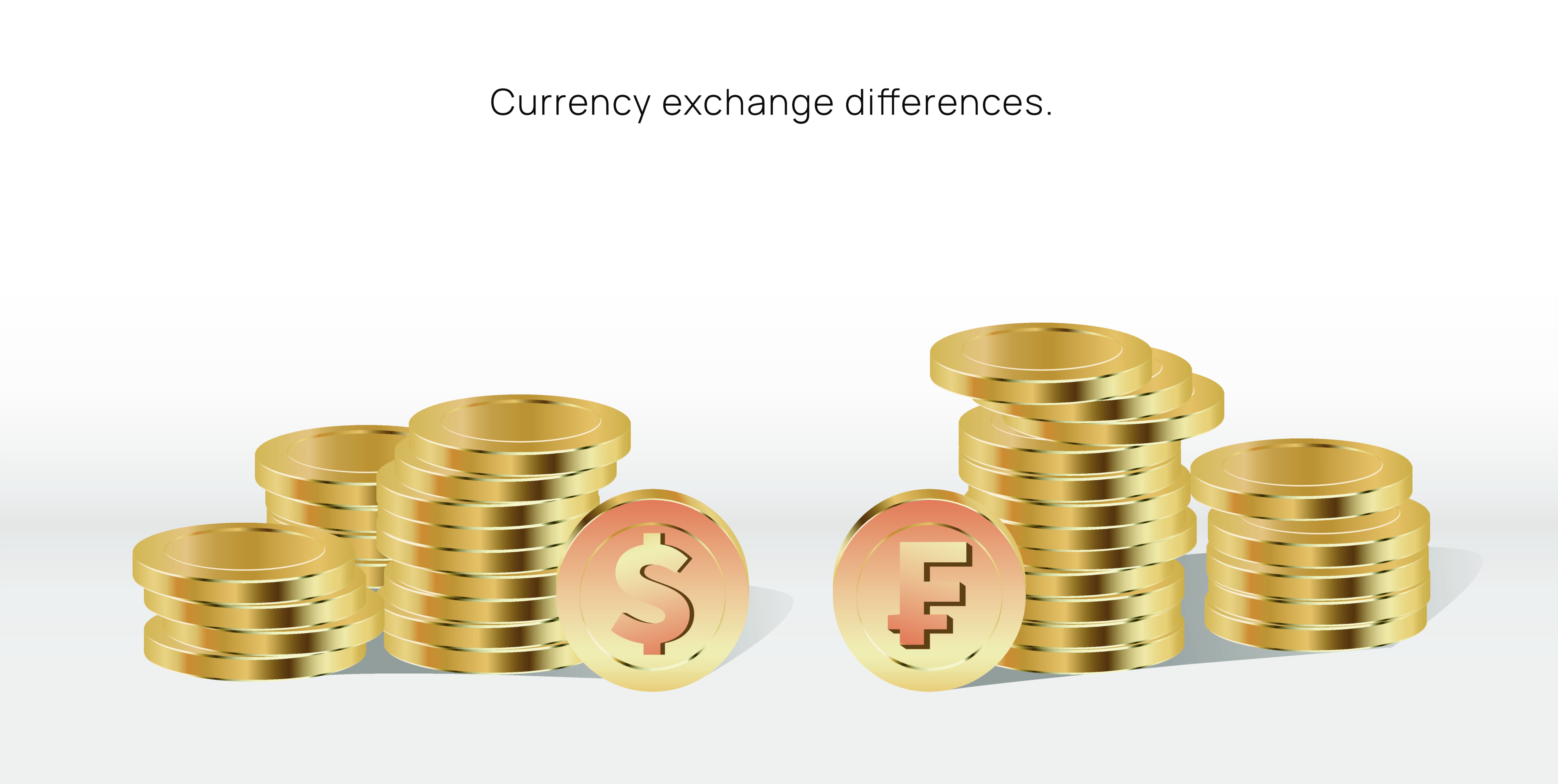
The comparison between the United States Dollar (USD) and the Swiss Franc (CHF) represents a uniquely important relationship in global finance because these two currencies symbolize not only economic power but two different philosophies of monetary stability and global financial behavior. When displayed together in a vector illustration, the bold shapes of the “$” sign and the stylized “Fr” or “CHF” currency markers are often accompanied by arrows, exchange curves, bar charts, and trading icons to visually express their relationship within the foreign exchange (forex) marketplace. The dollar typically appears as a symbol of large-scale global trade activity, industrial strength, and reserve currency leadership, while the Swiss franc stands for financial security, low-inflation reliability, and safe-haven protection during economic uncertainty. When these two symbols are paired in a graphic, they offer a visual summary of how investors across the world alternate between economic opportunity and monetary safety depending on global conditions. The illustration becomes a communication tool that compresses a complex macroeconomic story into a single scene: the dollar fuels global commerce while the franc protects global savings.
The origins of these two currencies already foreshadow their roles in modern markets. The United States Dollar emerged as the world’s reserve currency following World War II when the Bretton Woods system linked international currency valuation to the dollar, which at the time was exchangeable for gold. Even after the end of the gold standard, the USD maintained dominance because international commodities—including crude oil—continued to be priced in dollars and because the American economy remained the center of global manufacturing, innovation, and financial services. The Swiss Franc evolved differently. Switzerland’s strict commitment to price stability, conservative fiscal policies, political neutrality, and highly regulated banking system helped the CHF earn a reputation as one of the most secure and trusted currencies worldwide. During periods of crisis, war, inflation, or recession in other parts of the world, investors consistently moved capital into CHF-denominated assets because they believed the currency would preserve value more effectively than others. As a result, the USD symbolizes global participation and scale, while the CHF symbolizes security and preservation.
In everyday financial markets, the USD/CHF currency pair provides a crucial indicator of investor sentiment. When the dollar strengthens against the franc, it often reflects confidence in global economic expansion, stronger corporate performance in the United States, and higher interest rates implemented by the Federal Reserve to control inflation. During such periods, capital flows into U.S. assets like stocks, bonds, and treasury instruments because the strong dollar improves expected returns. When the franc strengthens against the dollar, it usually indicates global risk aversion or rising geopolitical uncertainty. Investors may retreat from volatile assets and move their funds into CHF-denominated holdings, signaling a desire to safeguard wealth. Unlike many other currencies, the Swiss franc does not strengthen primarily because of trade surges or industrial booms; it strengthens because of trust. That trust is created through Switzerland’s long-standing track record of neutrality, disciplined monetary policy, low inflation, independent central banking decisions, and financial privacy traditions. The USD-CHF exchange rate therefore becomes a window into global economic mood—when traders fear instability, the franc rises, and when optimism grows, the dollar often regains momentum.
The comparison becomes clearer through the role each currency plays in international investment strategies. The dollar is the most used currency in global transactions, representing the majority of international reserves, trade invoicing, and commodity pricing. Multinational corporations, central banks, and institutional investors hold large amounts of USD not only for business operations but also because the American bond market is the most liquid and powerful in the world. USD assets serve as engines of growth because they enable access to the world’s most influential companies, stock exchanges, and technological innovations. The franc has a different purpose in investment portfolios. It is used strategically as a hedge against uncertainty. Investors purchase CHF-based assets when inflation rises, when stock markets correct, when banking crises develop, or when currencies weaken elsewhere. Gold and the Swiss franc often climb together because both represent instruments of monetary safety. This is why financial analysts refer to CHF as a “safe-haven currency,” meaning it gains value not from expansion but from protection.
This inverse behavior explains why a vector illustration comparing the two currencies can be such a powerful educational tool. The dollar symbol rising vertically with an arrow often conveys global growth and economic acceleration, while the franc symbol rising can imply global caution and capital preservation. When both symbols appear side by side, the illustration reflects the balance between reward-seeking and risk-management that defines rational financial strategy. Investors do not choose one or the other permanently; rather, they transition between them depending on interest rates, inflation pressure, trade conditions, and global stability. The pairing shows that strong portfolios depend not on guessing the direction of markets but on positioning capital so that both growth and safety are present—exactly the concept that the dollar-franc comparison has represented for decades.
Beyond investment, the USD and CHF comparison carries deep geopolitical meaning as well. The dollar reflects the economic might of a federal superpower with strong influence over global politics, trade policies, and military presence. The Swiss franc reflects a small but highly developed nation whose neutrality, precision industry, and financial integrity make it disproportionately influential. Switzerland does not seek to exert power through political dominance; instead, it has built financial strength through consistency and stability. When a graphic displays the dollar and franc together, it expresses not only financial contrast but the coexistence of two worldviews—one rooted in scale and economic leadership, the other in neutrality and monetary discipline. This contrast has helped stabilize global finances because it creates options for capital allocation when uncertainty rises.
At the everyday level, USD and CHF value movements influence travel costs, import and export pricing, online shopping rates, payroll decisions in multinational corporations, and international education expenses. A tourist from the United States visiting Switzerland or a Swiss traveler visiting the United States experiences changes in purchasing power based on exchange fluctuations. A company importing machinery or selling consumer goods into either region adjusts its pricing depending on currency valuation. A bank issuing loans or savings products denominated in USD or CHF must consider how interest rates and strength of currency affect long-term payment value. Even individuals moving money through remittance channels feel the shifting balance of these currencies without realizing they are participating in global financial dynamics.
In this context, a vector illustration of the dollar and franc becomes an efficient visual translation of an otherwise complicated economic subject. In investment reports, forex platforms, educational infographics, and financial presentations, scalable vector graphics ensure that the symbols remain sharp, precise, and expressive across all media—from small mobile screens to large digital billboards. The composition of the artwork might use upward and downward arrows, intertwined exchange icons, or split-chart effects to show which currency is gaining strength relative to the other. Viewers instantly understand that the subject concerns foreign exchange movement and international value comparison without reading extensive text, because the symbols themselves communicate the meaning.
Ultimately, the Dollar and Franc Currency Comparison is a story of balance—between ambition and caution, between mass-scale economic activity and elite monetary discipline, between global growth cycles and the preservation of financial security. The dollar pushes the world forward through trade, innovation, and industrial productivity, while the franc anchors the world by protecting purchasing power when uncertainty rises. Together, they illustrate a central truth of the financial universe: markets do not move only toward optimism or only toward fear—they move constantly between the two. The vector illustration that places the USD and CHF together does not simply show two currencies; it visualizes the psychological and economic heartbeat of global finance, reminding viewers that the most resilient financial systems and portfolios are the ones that understand both the need for growth and the need for stability.