Dollar and Pound Currency Comparison – Global Trade, Economic Influence, and International Financial Strategy Illustrated Through Dual Currency Power
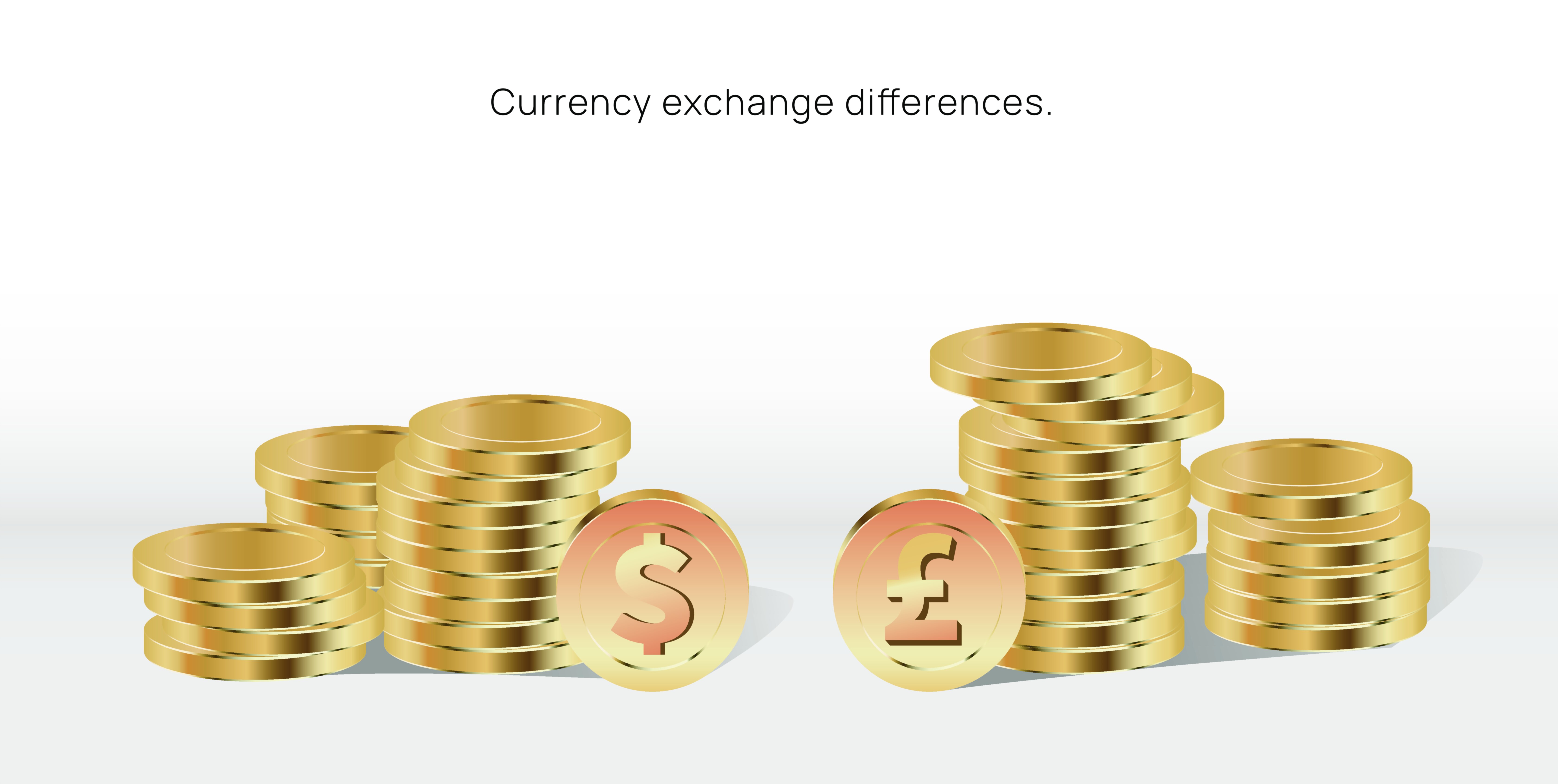
The comparison between the United States Dollar (USD) and the British Pound Sterling (GBP) reflects one of the oldest and most historically significant currency relationships in global finance. When expressed visually in a vector illustration, the iconic “$” symbol of the dollar is positioned beside the elegant “£” symbol of the pound, typically supported by upward and downward arrows, exchange charts, and rate comparison graphics. Although the artwork may appear simple at first glance, the pairing of these two symbols conveys a deep economic narrative: the dollar is the dominant reserve currency shaping global markets, while the pound represents one of the world’s oldest and most resilient financial identities, backed by centuries of trade influence and institutional stability. Combined in a single graphic, USD and GBP instantly evoke themes of foreign exchange, international investment, monetary policy, comparative economic performance, and the shifting balance of financial confidence between the United States and the United Kingdom.
The foundation of this comparison is rooted in history. The British Pound is the oldest continuously used currency in the world, originating from the United Kingdom’s role as the global economic superpower during the Industrial Revolution and the era of the British Empire. For over a century, the pound was the world’s dominant trade currency until the mid-20th century, when the United States rose to economic leadership and the dollar replaced the pound as the central global reserve currency. Since then, the currency relationship has evolved from rivalry to interdependence. The dollar built its position through the Bretton Woods system, global commodity pricing, military and technological leadership, and highly liquid financial markets. The pound retained influence through London’s continued status as a major international banking and investment hub. Thus, the comparison between USD and GBP reflects not a conflict of power, but two different types of financial prestige — one built on global reserve dominance, the other built on legacy, institutional strength, and the influence of the London financial district.
In modern foreign exchange markets, the GBP/USD currency pair remains one of the most actively traded pairs worldwide. When the dollar strengthens relative to the pound, it suggests that markets are favoring U.S. economic policy, strong GDP growth, higher Federal Reserve interest rates, or rising investor demand for U.S. assets. When the pound strengthens relative to the dollar, it typically indicates confidence in the United Kingdom’s economic forecasts, Bank of England monetary policy, export competitiveness, and structural resilience in British industry and services — especially the financial and professional services sectors centered in London. The fluctuations in this pair serve as a global sentiment indicator, not only for traders but for institutions, corporations, and governments whose decisions are shaped by exchange-rate movement.
For businesses, this comparison influences trade, pricing, and strategic planning. The United States and the United Kingdom are major trade partners, and companies operating between them adjust supply chains, import costs, export pricing, and consumer product values based on USD–GBP exchange rates. A stronger dollar makes American imports more expensive for British businesses, while a stronger pound increases purchasing power for UK companies sourcing products globally. For multinational corporations, this exchange-rate movement affects profit repatriation, investment flow, wage structure for overseas employees, and cross-border mergers or acquisitions. In a vector graphic, a rising arrow beneath “$” might reflect strengthened American purchasing power, while a rising arrow beneath “£” may symbolize increased British consumer and corporate confidence.
At the investment level, the relationship between USD and GBP carries far-reaching implications. U.S. markets — with their large technology, industrial, and financial sectors — attract investors seeking liquidity and diversification. UK markets, especially those connected to London’s global financial services network, attract investors seeking dividend stability, corporate governance transparency, and exposure to global banking and commodity trade. A change in exchange rates influences returns from these markets. For instance, a strengthening pound benefits UK-based international investors because foreign-denominated earnings convert into more valuable sterling. Conversely, a strengthening dollar makes U.S. assets more expensive for foreign investors but increases returns for those already holding dollar-based investments. A vector illustration combining both symbols therefore also represents a decision matrix — whether to allocate capital toward U.S. financial growth or U.K. financial yields, depending on market conditions.
The psychology of the USD–GBP comparison is equally powerful. The dollar symbolizes scale — massive consumer demand, military and technological leadership, and the largest equity markets in the world. The pound symbolizes resilience — the ability of the British economy to adapt across eras of political and economic change while maintaining strong banking credibility and high institutional quality. Investors often shift between these two currencies based on global sentiment: when the world prefers rapid economic expansion and high growth potential, capital gravitates toward USD assets; when the world seeks stability, long-term yield, and safe banking reputation, GBP assets become more attractive. A vector illustration of the two symbols together communicates this delicate balance of growth and security without requiring spoken explanation.
Beyond finance and investment, currency comparison affects everyday lives in both nations. Tourism, international education, global shopping, and cross-border employment respond immediately to exchange rates. A strong pound means British travelers enjoy greater purchasing power abroad, while a strong dollar benefits Americans traveling internationally. Students paying tuition overseas, families sending remittances, and professionals working in multinational companies feel the advantages and challenges of USD–GBP fluctuations even without consciously following forex markets. The illustration of dollar and pound symbols placed side by side silently represents these daily economic realities.
The vector format enhances the communication of this comparison because clarity is crucial in financial visualization. Scalable vector lines, polished gradients, and high-contrast shapes allow the symbols and charts to remain sharp whether they appear on a phone screen, a financial dashboard, a printed report, or a billboard-sized infographic. The viewer immediately identifies the two currencies — the dollar’s distinct “$” and the pound’s elegant “£” — and understands the subject matter before reading any details. This is why such illustrations are widely used in forex trading apps, banking interfaces, business presentations, investment courses, and global financial media.
Ultimately, the Dollar and Pound Currency Comparison is more than a simple exchange-rate measurement — it is a reflection of two monumental financial identities shaped by centuries of economic evolution. The dollar continues to lead global trade and investment as the world’s reserve currency, while the pound maintains its distinct prestige through institutional reliability, prosperous financial markets, and adaptive economic culture. When placed together in a vector illustration, these symbols do not merely depict money — they visually represent the dynamic between the world’s largest economic power and one of its most historically influential financial systems. The image becomes a reminder that global finance is defined not by isolation but by interaction — and that the strongest economies and portfolios recognize the importance of both American economic scale and British financial resilience in shaping the modern world.