Crude Oil and Gold Investing Plan – A Strategic Financial Blueprint for Long-Term Stability and Growth
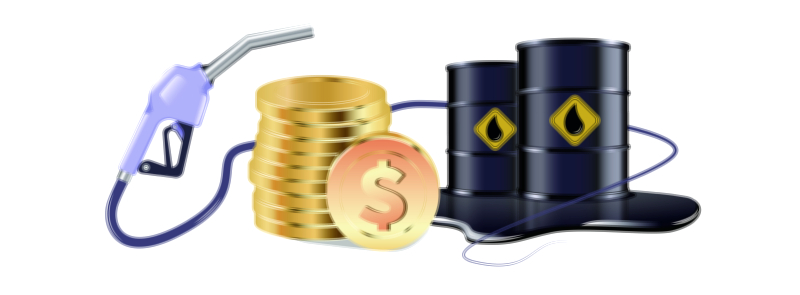
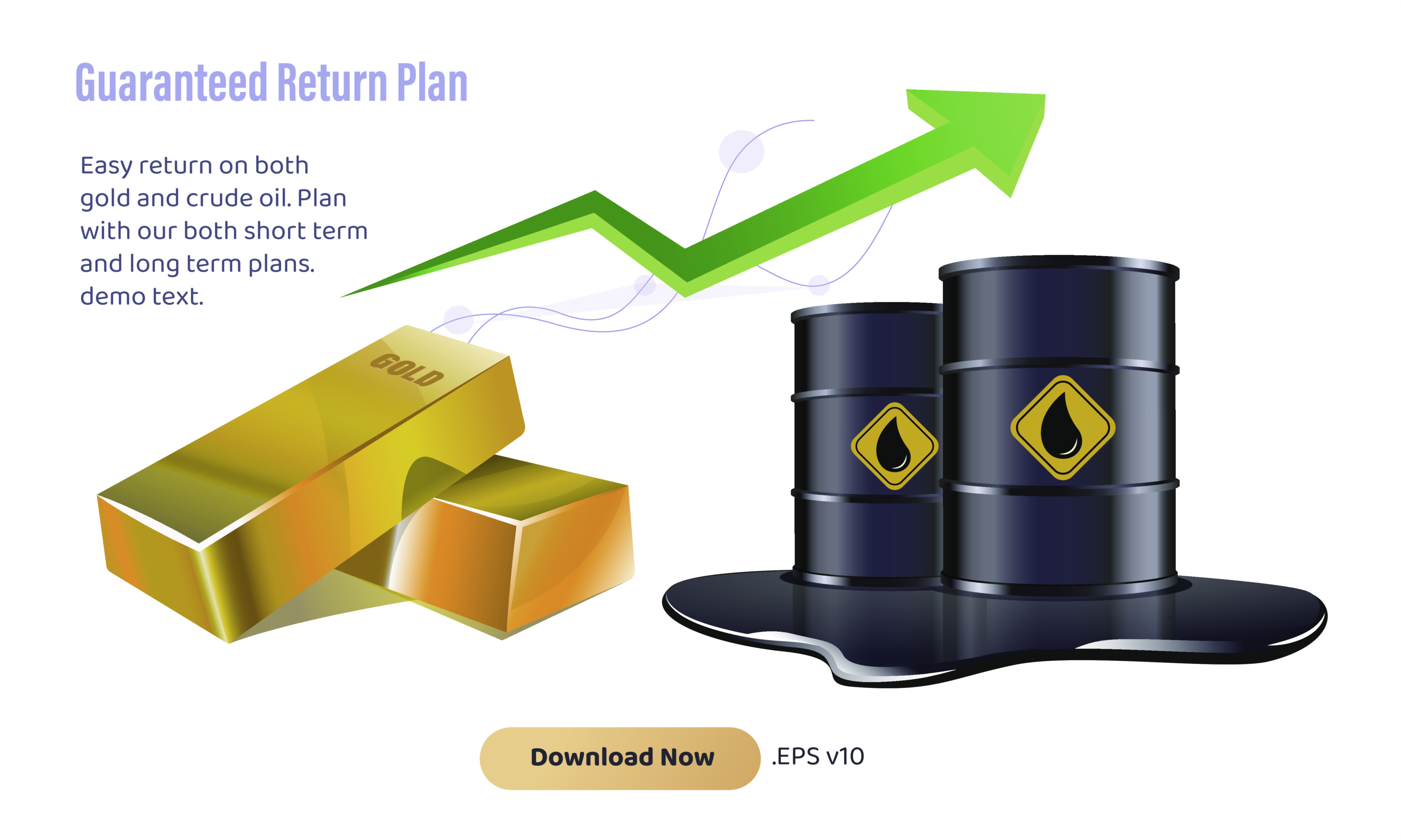
A comprehensive investing plan built around crude oil and gold is more than a simple choice of commodities; it represents a disciplined financial strategy that blends growth potential with crisis-proof protection to create a portfolio capable of surviving and thriving through different economic phases. When expressed visually in a vector illustration, crude oil is often symbolized by refinery towers, oil barrels, drilling rigs, and upward price arrows to represent industrial expansion and energy-driven wealth, while gold is portrayed through bullion bars, shimmering coins, and secure vault imagery that communicate monetary safety, wealth preservation, and inflation resistance. The coexistence of these two contrasting symbols in a single illustration mirrors the logic of an intelligent financial plan: crude oil embodies the performance side of wealth creation during economic expansion, while gold safeguards accumulated capital in times of volatility, recession, inflation, or geopolitical disruption. Together, they form a blueprint for strategic financial resilience rooted in diversification rather than speculation, and the illustration provides an intuitive visual summary of a sophisticated investment philosophy that would otherwise require extensive financial literacy to articulate.
Any crude oil and gold investing plan begins by acknowledging a fundamental truth about markets: economic conditions are cyclical and unpredictable, and no single asset performs exceptionally under all circumstances. Crude oil rises with industrial strength, increasing energy demand, global trade activity, aviation recovery, manufacturing expansion, and transportation growth. When the world economy moves, oil gains traction. But when economies slow, energy consumption weakens and oil tends to fall. Gold, on the other hand, reacts differently — it strengthens in the very moments when other markets weaken: during inflationary periods, stock-market downturns, crises of confidence, war-driven uncertainty, or declines in currency value. Investors who rely solely on growth assets suffer when uncertainty appears, and investors who rely only on safe-haven assets miss opportunities during bullish periods. A financial strategy built around both crude oil and gold is designed to capture opportunity without abandoning safety, creating intelligent balance rather than chasing extreme outcomes.
The role of crude oil in such a plan is tied to its status as one of the world’s most influential macroeconomic variables. Oil prices shape the cost of transportation, production, energy supply, logistics, petrochemical goods, agriculture, and consumer products. When oil prices rise, it often indicates economic acceleration, because strong demand forces markets upward. Investors who participate in oil markets — whether through exploration companies, drilling technology stocks, energy ETFs, futures contracts, or shares of integrated oil firms — position themselves to benefit from global development and industrial recovery trends. Oil investments act like growth engines for a portfolio, providing upward momentum when the world moves forward. However, investors using crude oil responsibly recognize that rapid price swings can occur due to geopolitical tension, OPEC production policy, sanctions, natural disasters, technological shifts, and sudden economic contraction. Oil rewards opportunity but also demands risk awareness — meaning it is best used not as a gamble but as a carefully measured growth component within a diversified plan.
Gold plays the opposite yet equally essential role in this strategy. For thousands of years, societies and economies have turned to gold during uncertain times because of its universal, non-political, non-depreciating nature. Unlike fiat currency, gold cannot be printed or reduced in value by governmental decisions. Unlike corporate earnings, gold does not depend on performance. And unlike speculative assets, gold retains intrinsic worth regardless of trends or hype. For this reason, gold acts as a financial seatbelt, protecting capital during inflation, recession, crisis, and currency weakening. Investors access gold through physical bullion holdings, exchange-traded gold funds, digital gold platforms, gold mining equities, sovereign gold bonds, or gold savings programs. Gold does not exist to beat stock markets in bullish times; it exists to preserve wealth when markets turn against investors. In a mature portfolio, gold is not an optional luxury — it is the stabilizer that ensures decades of savings are not erased by one period of financial instability.
The genius of combining crude oil and gold is that their value cycles are counter-balancing. When oil rises, gold may stagnate or soften because optimism spreads through markets. When oil weakens, gold frequently strengthens because fear and uncertainty replace confidence. The investor who owns both assets is therefore not forced to predict which direction global events will take. They do not need to panic sell at the bottom of a crisis or chase returns at the top of a boom. Their portfolio is designed to adjust automatically — oil drives growth during expansions, and gold protects capital during contractions. This relationship reflects a deeper principle: financial strength comes from adapting to uncertainty, not ignoring it.
A crude oil and gold investing plan becomes even stronger when integrated with disciplined strategy rather than emotional reaction. Long-term investors build allocation frameworks that determine how much of the portfolio belongs in oil and how much belongs in gold based on current goals and risk tolerance. During early wealth-building years, the allocation may favor oil heavily for growth, while later in life the balance may shift increasingly toward gold for capital protection. Dollar-cost averaging — investing steadily at regular intervals rather than guessing at market highs and lows — helps neutralize volatility while building long-term exposure. Rebalancing the portfolio periodically ensures that neither oil nor gold becomes disproportionately overweight due to market swings, preserving the intended growth-and-protection harmony. These practices reflect the maturity of a strategy designed not for fast excitement but for real, lasting financial independence.
When represented graphically through vector illustration, this financial strategy becomes easier to understand even for beginners. A rising market arrow aligned to oil imagery can symbolize economic opportunity, while gold bars positioned around shield- or vault-like icons can signify protection. Market graphs, percentage pie charts, and trending lines add context to demonstrate how crude oil and gold create a balanced investing cycle over time. Because vector graphics scale infinitely without losing clarity, they offer ideal adaptability for financial education platforms, investor onboarding visuals, wealth-management presentations, portfolio-strategy infographics, and economic blogs. The illustration bridges visual learning and financial literacy — it condenses complex investment ideas into a single conceptual message: a strong portfolio integrates both performance and protection.
It is essential to emphasize that investing in crude oil and gold should be rooted not in hype or fear but in awareness of how wealth behaves across changing environments. Oil rewards innovation, progress, and global consumption. Gold protects savings from inflation, collapse, and uncertainty. Neither asset alone is a complete solution — each fills the gap left by the other. Investors who embrace both learn to navigate cycles rather than fight them, and their portfolios gain durability across decades instead of fortunes or losses triggered by short-term speculation.
In the end, a Crude Oil and Gold Investing Plan for Financial Strategy is a philosophy disguised as an investment: it teaches that steady growth and consistent protection must coexist. It teaches that wealth is not built by guessing the future but by preparing for all outcomes. It teaches that financial freedom is not granted by luck, timing, or risk-taking, but by the patient alignment of opportunity and stability within the same system. The imagery of oil barrels and gold bars in a vector illustration is more than financial symbolism — it is an educational reminder that true financial strength mirrors nature itself: the world expands, contracts, rises, falls, builds, struggles, recovers, and evolves. And the investor who respects this rhythm builds not just wealth, but resilience.