Money Investment Growth Template — Financial Planning Chart Showing Wealth Increase and Profit Strategy Design
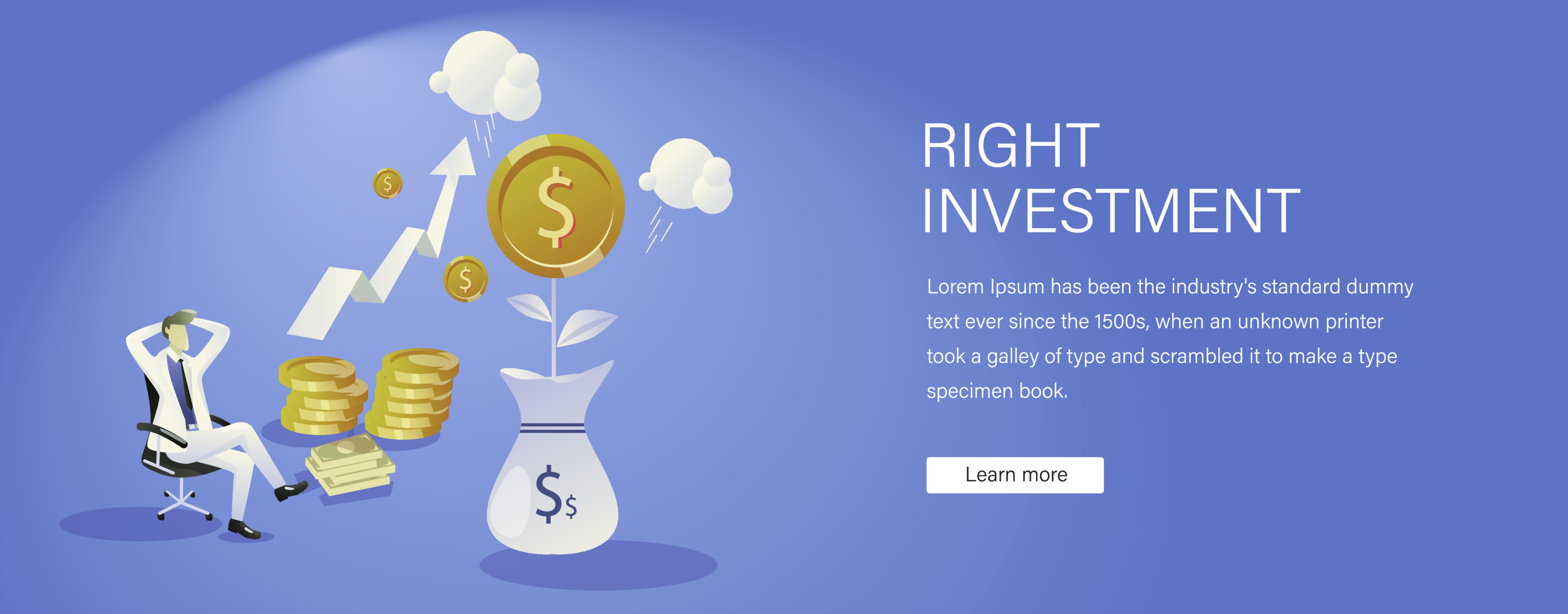
A money investment growth template presented as a vector illustration is designed to communicate the full journey of wealth creation in a single visual layout, showing how planned contributions, disciplined saving, strategic asset allocation, and time-driven compounding work together to transform present income into long-term financial security. Instead of treating investing as a complex or intimidating subject reserved for experts, the illustration translates financial planning into a clear and motivating step-by-step pathway, making it easier for individuals, entrepreneurs, and businesses to understand how wealth is built and how profits expand when decisions are structured rather than spontaneous. The symbolism of a rising financial chart — climbing arrows, stacked coins, growing bars, staged milestones, or upward curves — visually reinforces the idea that wealth increases gradually with commitment and patience rather than overnight. The template therefore becomes not just a graphic element but a philosophy of steady financial improvement where every saving and investment action contributes to a bigger picture.
In a typical investment growth chart, the bottom left of the illustration represents the starting point of financial planning: the initial contributions, the foundation of savings discipline, and the willingness to set money aside regularly. This area often includes smaller stacks of coins, flat bars, or short progress rows to signify the early stage where financial growth seems slow. This stage educates viewers about a psychological truth of investing — the beginning always looks modest, and the results may appear insignificant at first, not because the plan is weak but because compounding has not yet matured. The chart normalizes this quiet period by presenting early investments as seed-like, reminding users that wealth begins invisibly, below the surface, while habits and consistency are forming.
As the chart progresses toward the middle section, the illustration typically shows increasingly taller bars or thicker monetary stacks, marking the point at which long-term contributions begin to exert visible momentum. This phase corresponds to the period when investments have grown enough that dividends, interest, business returns, and capital gains start adding meaningfully to the principal. In a visual layout, this middle stage often includes portfolio categories, diversification icons, or segmented bars that show how multiple asset classes contribute to progress. This includes the balance between high-growth assets such as stocks, mutual funds, or business expansions and stable assets like bonds, savings, or real estate. By showing different sources of returns working together, the illustration reinforces the central investment lesson that strong portfolios are built on balance — not dependence on one speculative opportunity but synergy among diversified growth engines.
The upper right portion of the chart represents the maturity of compounding and the acceleration of wealth. Here, the vector illustration uses bold upward curves or arrows climbing steeply to show that over time, growth begins feeding on itself, making profits generate additional profits. This part of the graphic embodies the long-term reward of consistency — the moment when the accumulated value is far greater than the total contributions made directly by the investor. For individuals, this stage corresponds to high-value savings and retirement comfort; for businesses, it represents expansion capital, reinvestment returns, and financial resilience. The design communicates that this level of wealth does not appear instantly but develops naturally through time-aligned investing and the absence of premature withdrawals.
A well-designed money investment growth template also incorporates goal markers along the chart to show points of achievement — purchasing property, funding a child’s education, scaling a business, reaching retirement milestones, or hitting revenue expansion targets. These milestones serve a dual psychological purpose: they celebrate progress and provide motivation to continue investing rather than stopping early. When users see their financial roadmap visually broken into reachable checkpoints instead of one distant objective, long-term planning feels less overwhelming and more strategically achievable.
Many vector investment growth illustrations also include icons or labels that represent key pillars of financial strategy: savings, recurring contributions, portfolio rebalancing, risk tolerance, emergency funds, and profit reinvestment. Although these are conceptual ideas, the visual format makes them emotionally intuitive. A shield symbol next to savings communicates protection; a calendar symbol beside contribution frequency signals consistency; a pie chart icon beside portfolio allocation symbolizes diversification; and a rocket or trophy near the top of the chart signals reward and achievement. Each symbol carries meaning without requiring paragraphs of text, enabling even beginners to understand sophisticated financial concepts instinctively.
Another powerful element embedded in this type of layout is the representation of time, one of the most underrated components of wealth growth. A good visual template shows that the horizontal axis does not simply mark days, months, or years — it represents the patience that allows investments to fully mature. Even without numerical values, the gradual stretch of the timeline emphasizes that success belongs not to those who try to time the market, but to those who stay in the market long enough for compounding to deliver exponential benefits. Businesses reading the chart recognize that expansion capital grows when profit is reinvested consistently; individuals recognize that personal net worth grows when money is given time to multiply.
The graphic also suggests the reality of financial discipline: setbacks happen, markets fluctuate, and life circumstances change, yet the long-term trajectory can still rise as long as investment habits continue. Many templates illustrate this through small dips or plateaus within the upward path, showing that progress does not require perfection — only commitment. This visual realism prevents new investors from panicking during temporary downturns and encourages business owners to remain strategic during market cycles instead of reacting impulsively.
Ultimately, the aesthetic purpose of the investment growth vector illustration is to transform financial planning from an intimidating theoretical topic into a visual story of empowerment: a journey from modest beginnings to meaningful wealth. It tells users that money does not grow by accident — it grows by planning, consistency, diversification, time, and wise reinvestment. For personal finance, it encourages confidence and financial independence. For business finance, it reinforces long-term thinking, capital development, and sustainable profitability. Whether used on websites, investment brochures, financial apps, presentations, learning platforms, business proposals, or personal planners, the vector design acts as both a guide and a motivational anchor.
Beyond charts and arrows, the deeper message of such an illustration is that wealth is a process rather than an event. Every contribution matters. Every month counts. Every decision compounds. A money investment growth template visually embodies the philosophy that financial strength is built step by step — not through luck, but through clarity, patience, and intentional action.