Crude Oil and Gold Investing Plan for Financial Strategy
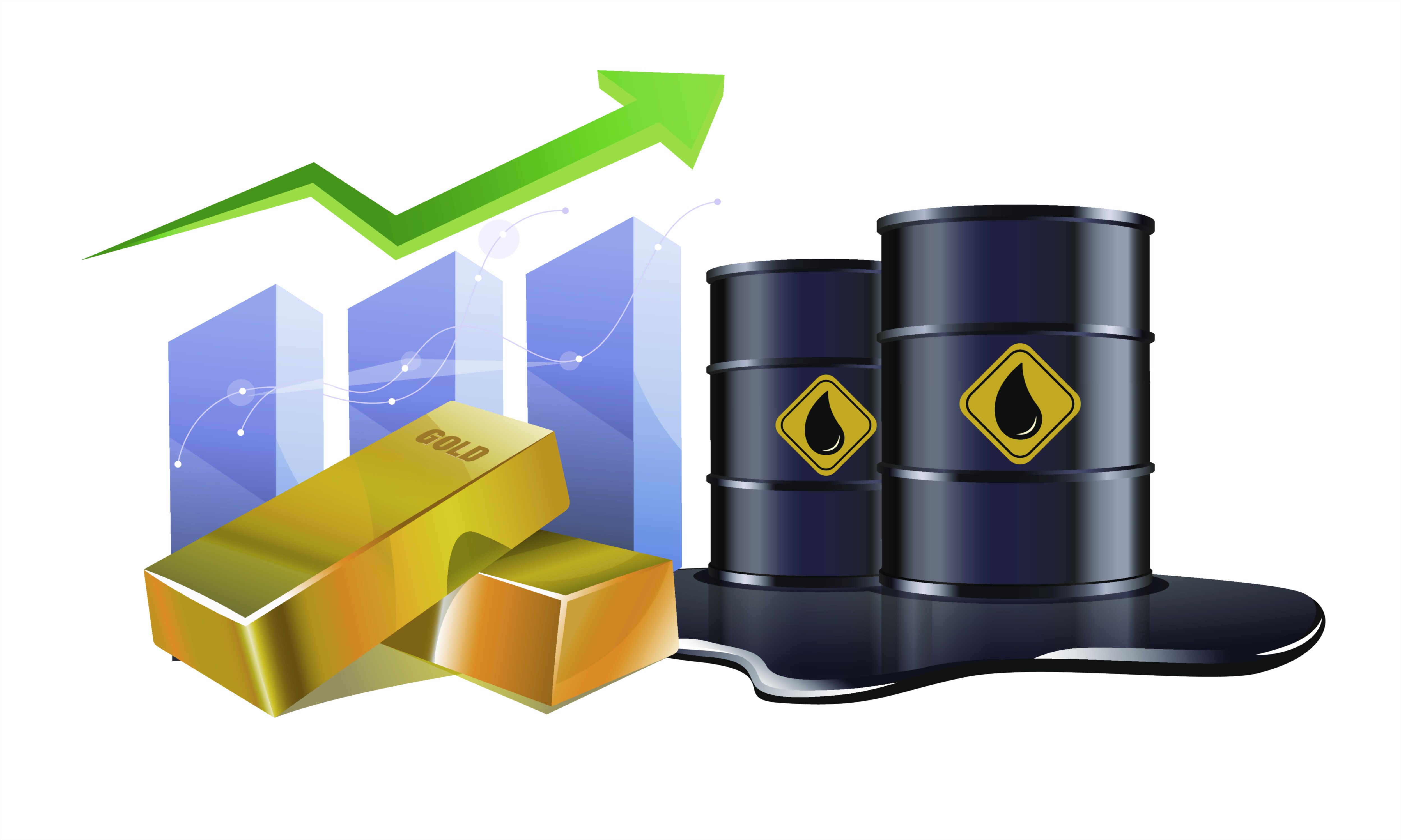
A crude oil and gold investing plan represents one of the most stable and intelligent approaches to long-term wealth building because it blends two commodities that behave differently in the global marketplace yet work together to create long-term financial balance. When expressed in a vector illustration, this strategy is typically depicted through the contrasting symbolism of oil barrels, drilling rigs, and rising market arrows alongside gold bars, shimmering coins, and vault-style security icons, showing visually that true financial strength is not rooted in one single opportunity but in the strategic combination of assets that protect wealth while simultaneously stimulating growth. Crude oil reflects the energy demand that powers global industry, transportation, manufacturing, and commerce, meaning that its price rises as economies expand, industrial activity increases, and consumption patterns intensify. Gold, in contrast, represents protection against uncertainty because it preserves purchasing power during inflation, recession, market collapses, financial crises, and periods of geopolitical tension. Together, these two commodities create a financial partnership in which oil fuels gains during prosperous times while gold shields wealth during turbulent cycles, allowing an investor to benefit regardless of external conditions and without the stress of attempting to predict future market behavior.
The foundation of an oil-and-gold financial strategy begins with understanding that economies move in cycles that cannot be controlled or forecasted with perfect precision. Periods of global growth give rise to high employment, accelerating trade, consumer spending, and industrial production, and in such conditions, crude oil tends to appreciate because it is consumed across almost every economic sector. Airlines expand operations, factories increase output, shipping activity strengthens, construction speeds up, and agriculture demands fuel and petrochemical products, all of which contribute to higher oil demand and rising energy prices. Investors who position themselves within the oil sector during these phases typically benefit from this upward economic momentum, whether through energy equities, drilling and exploration stocks, crude oil futures, oil-indexed funds, or energy-sector ETFs. However, economies inevitably shift toward periods of slowdown, recession, inflation, or policy tightening. In those moments, consumer spending declines, travel reduces, construction pauses, and manufacturing slows, causing oil prices to weaken. It is during these periods that gold takes the leading role in a well-constructed investing plan, because gold tends to increase in value when confidence in financial systems diminishes, when inflation erodes purchasing power, when currencies weaken, and when investors search for safe-haven assets to protect their capital. This complementary pattern means that one commodity accelerates growth and the other stabilizes it, allowing an investor to move forward steadily over long periods instead of losing momentum whenever the economy transitions from expansion to contraction or vice versa.
The purpose of combining crude oil and gold in a single investing plan is not to chase quick profits but to build resilience. Oil investments alone can produce high returns but expose a portfolio to heavy volatility during recessions, supply chain crises, or political disruptions. Gold investments alone provide excellent capital protection but may limit long-term financial growth because they do not generate the same performance during booming economic phases. When both assets coexist in the portfolio, the strengths of one offset the weaknesses of the other, and the investor is never fully vulnerable to any single category of risk. Growth and protection are deliberately engineered to coexist so that the investor does not have to time the market perfectly, panic during downturns, or rely entirely on speculation. Instead, financial strategy transforms into a consistent and disciplined process that adapts automatically to changing global conditions. A crude oil and gold plan therefore becomes not merely an asset allocation model but a lesson in financial psychology: markets always change, and portfolio design must embrace those changes rather than resisting them.
The emotional advantage of this dual-commodity strategy is just as valuable as its numerical benefit. Many investors experience anxiety when markets become volatile, when headlines predict economic decline, or when portfolios begin to fluctuate. A portfolio anchored in both crude oil and gold reduces emotional stress because it is built on the expectation that both good times and bad times will arrive. When markets rally, oil generates confidence and gain; when markets deteriorate, gold provides stability and reassurance. An investor who understands this balance is less likely to panic-sell during downturns or over-invest during euphoric phases. Patience becomes easier because the plan is inherently designed for uncertainty. Time becomes an ally rather than a threat, because the strategy recognizes that cycles, not moments, define long-term wealth.
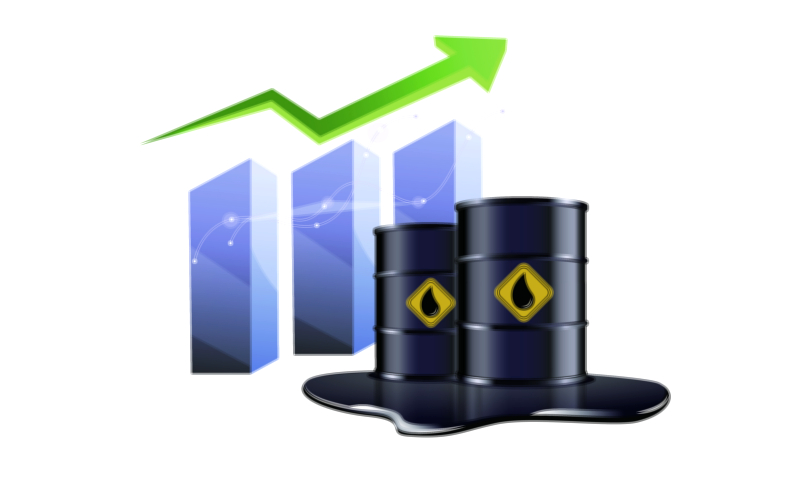
The value of a vector illustration for this financial concept lies in its ability to visually teach the structure of strategic investing in a single frame. The rising oil price arrow next to drilling rigs conveys that strategic energy exposure supports portfolio growth when economies expand. The secured gold vault imagery conveys that accumulated wealth remains protected regardless of external turbulence. When the two visuals appear together, the image communicates that a mature investor builds a financial future on both ambition and caution. The scalability of vector graphics ensures that every symbol remains crisp and meaningful whether used in mobile apps, presentations, investment courses, portfolio dashboards, fintech platforms, or financial blogs. The visual guidance becomes part of the investor’s thinking process, reinforcing the principle that both performance and safety belong in a properly designed financial plan.
The deeper significance of a crude oil and gold investing plan becomes clear when viewed through the lens of lifetime financial evolution. In younger wealth-building years when income is rising and risk tolerance is higher, crude oil may occupy a larger share of the portfolio to maximize growth opportunities. As an investor approaches long-term goals or seeks wealth preservation, gold increases in prominence to secure accumulated capital. Throughout life’s transitions — career shifts, business changes, economic turbulence, personal goals, or retirement planning — the balance between oil and gold adjusts accordingly without abandoning the original logical foundation. Financial independence eventually becomes not a matter of guessing markets but a matter of sustaining momentum while protecting what has already been built.
In its essence, a Crude Oil and Gold Investing Plan for Financial Strategy is not about predicting the next boom or crisis; it is about preparing for both. It acknowledges that human progress and human uncertainty are constant forces and that wealth is strongest when it benefits from both. Crude oil represents participation in global productivity, innovation, and development. Gold represents protection from economic fragility, systemic weakness, and instability. The investor who embraces both assets learns that real financial power comes from accepting that growth and risk coexist, and that the smartest strategy is not to rely on one or fear the other but to embrace their balance. A vector illustration of oil barrels and gold bars may appear simple at first glance, but behind that image lies a complete map for financial resilience — a lifelong plan rooted in discipline, diversification, and the wisdom to build wealth that grows, protects, adapts, and endures.