Crude Oil and Dollar — Global Market Correlation
The relationship between crude oil and the U.S. dollar represents one of the most deeply interconnected dynamics in global economics, shaping trade patterns, investment strategies, international relations, national budgets, and long-term financial stability. Although at first it may seem like the value of a currency and the price of a commodity operate independently, crude oil and the dollar are tied together through historical agreements, market behavior, geopolitical power structures, supply-chain dependencies, and investor expectations. The global economy consumes crude oil as a fundamental energy source, and the U.S. dollar functions as the dominant global currency; their interaction forms a feedback loop that influences virtually every nation. Understanding this correlation requires exploring how oil is priced, how currency values shift, how producers and consumers respond, and how economic shocks ripple across continents. Even without equations, the conceptual relationship between oil and the dollar reveals a network of causes and effects that showcase the interconnected nature of modern economic systems.
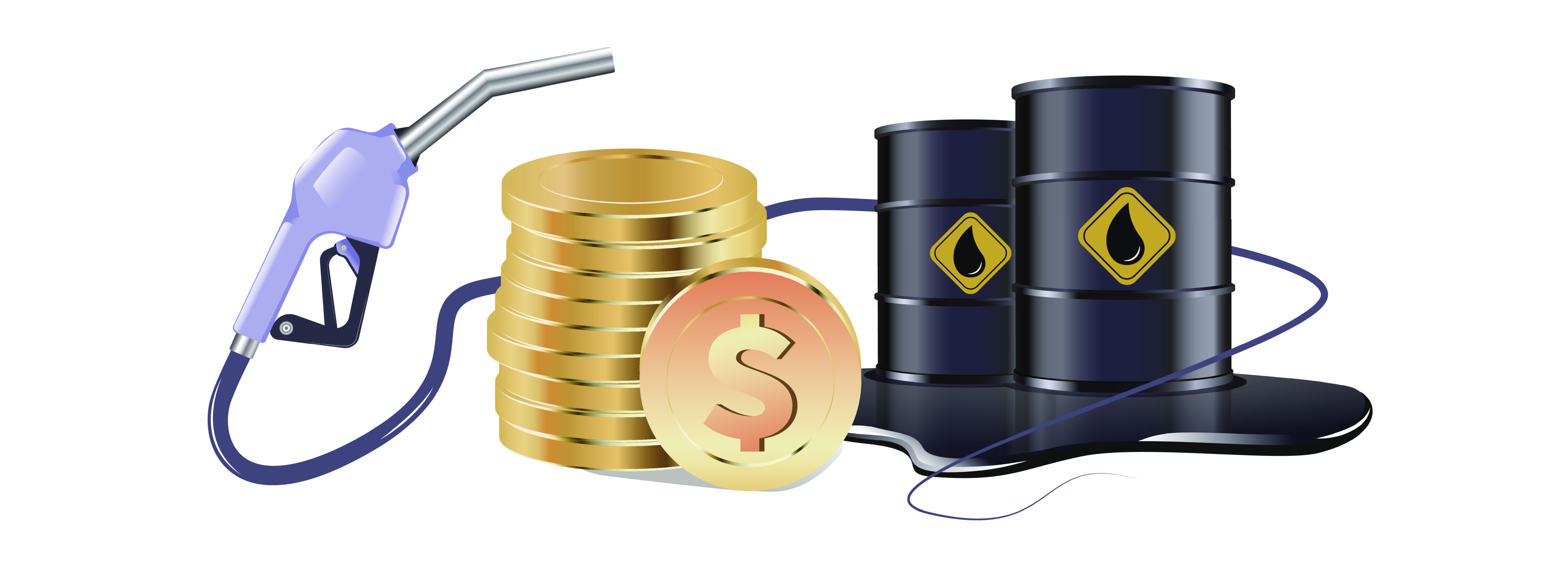
At the heart of this correlation lies the petrodollar system, which emerged in the 1970s when crude oil exports became formally priced in U.S. dollars globally. This arrangement meant that every country importing oil needed U.S. dollars to pay for it, regardless of its own currency. This system created a unique demand for dollars, strengthening the currency’s role as a global reserve. The pricing of crude oil in dollars also meant that fluctuations in the dollar’s value directly influenced oil prices. When the dollar strengthens against other currencies, it becomes more expensive for non-U.S. buyers to purchase oil because they must exchange more of their local currency to acquire the needed dollars. As demand from foreign buyers softens, oil prices tend to ease. Conversely, when the dollar weakens, international buyers find it cheaper to obtain dollars and purchase oil, increasing global demand and supporting higher oil prices. This inverse relationship forms the core of the oil-dollar correlation: strong dollar, lower oil prices; weak dollar, higher oil prices. Although this pattern is not absolute, it holds true often enough to guide international traders, investors, and policymakers.
Beyond pricing structure, crude oil and the dollar are linked through global trade behavior and investment flows. Crude oil is the world’s most traded commodity, and the dollar is the world’s most traded currency. Investors who participate in oil markets often adjust their positions based on expectations about inflation, interest rates, and currency strength. When U.S. interest rates rise, the dollar typically appreciates, drawing investment away from commodities like oil and into dollar-denominated assets such as bonds. Oil markets may then see reduced speculative demand, adding downward pressure on prices. When interest rates fall, the dollar weakens and commodities, including oil, often become more attractive as stores of value. This market cycle creates a recurring pattern of behavior where shifts in monetary policy influence the oil market through currency valuation. The oil-dollar relationship thus becomes a reflection not only of supply and demand fundamentals but also of investor psychology and financial policy decisions.
The oil-dollar correlation also extends into geopolitical strategy. Oil-exporting countries—especially those within OPEC—earn revenue almost exclusively in dollars. A strong dollar increases the value of their exports in local currency terms, helping stabilize national budgets. A weak dollar, however, reduces their real income, often pushing them to adjust production, change internal fiscal policies, or influence collective decisions within oil-producing alliances. This macroeconomic pressure has historically contributed to production cuts or increases depending on how exporting nations wish to balance their budgets and maintain domestic stability. At the same time, oil-importing countries face the opposite effect. A strong dollar makes oil imports more expensive, potentially increasing inflation, transport costs, and energy prices within their economies. A weaker dollar reduces import costs, easing inflationary pressure. Through this push and pull, the oil-dollar relationship becomes a geopolitical tool that affects commodity markets, trade balances, and national economic strategies across developed and developing nations.
Another layer of this relationship arises from global financial systems and reserve currency behavior. Central banks around the world hold reserves largely in U.S. dollars due to the stability and liquidity of the currency. Because oil transactions require dollars, countries that rely heavily on imported oil often maintain additional dollar reserves to cushion market volatility. This cycle reinforces the demand for dollars and strengthens the currency’s international footprint. In turn, periods of dollar volatility affect oil-price volatility as reserve adjustments, hedging behavior, and international capital flows shift in response. When currency markets fluctuate rapidly, oil-importing nations may stockpile oil or reduce imports depending on whether they expect future price increases or declines. This behavior adds another feedback loop to the oil-dollar dynamic, shaping inventories, supply chains, and long-term energy strategies.
Market sentiment also plays a significant role. Investors around the world interpret oil prices as signals of global economic health. Rising oil prices are often associated with strong industrial demand, active transportation networks, expanding economies, and heightened manufacturing activity. When global growth appears strong, investment tends to flow toward riskier assets, sometimes weakening the dollar as capital moves into emerging markets and non-dollar investments. When oil prices fall sharply, it may signal slowing economic growth, reducing investor risk appetite and causing capital to flow back into the dollar as a safe asset. This behavior, known as “flight to safety,” strengthens the dollar during downturns and reinforces the inverse relationship with oil prices. Even when no significant supply or demand imbalance exists in crude markets, investor interpretations and financial flows can strengthen or weaken the oil-dollar correlation purely through expectations.
Energy policy and technological shifts also influence this relationship. The United States, once heavily dependent on imported oil, has become one of the world’s largest producers due to advancements in shale extraction. Increased U.S. production affects global supply, reduces dependence on foreign oil, and alters the trade balance. A stronger domestic energy sector can support the dollar by reducing the nation’s vulnerability to price shocks and lowering import costs. At the same time, the shale industry responds quickly to global oil prices: high prices encourage increased drilling, while low prices reduce activity. These cyclical fluctuations contribute to the feedback loop between U.S. economic conditions, the dollar’s strength, and oil market balance. As renewable energy technologies expand and global energy strategies shift toward sustainability, the oil-dollar relationship may evolve further, but the underlying correlation remains grounded in economic fundamentals.
Crude oil’s central role in transportation, industry, manufacturing, and national development means that shifts in its price have broad ripple effects. When oil prices rise due to a weak dollar or supply concerns, transportation costs increase, consumer prices climb, and inflation spreads across economies. Central banks may respond by adjusting interest rates, which then influence the dollar’s value. These reactions feed back into oil prices, creating cycles of inflation, monetary tightening, dollar strengthening, and oil price cooling. Similar feedback cycles occur when oil prices fall, triggering deflationary concerns and altering monetary policy. This interconnected behavior shows that crude oil and the dollar do not merely move together or apart; they shape each other in an ongoing global dance of economics, policy, and market sentiment.
Ultimately, the correlation between crude oil and the U.S. dollar is not a simple or fixed relationship but a dynamic interplay shaped by pricing conventions, investor behavior, monetary policy, geopolitical strategy, supply and demand dynamics, and global economic health. Although the most common pattern is an inverse relationship—where a strong dollar pushes oil prices downward and a weak dollar lifts them upward—the real-world system is far more nuanced. Each shift reflects a broader story about energy dependence, financial power, economic cycles, and global interconnection. Understanding this correlation provides insight not only into commodity markets and currency behavior but into the deeper mechanisms that drive the world economy, revealing how energy and finance remain two sides of the same global structure.