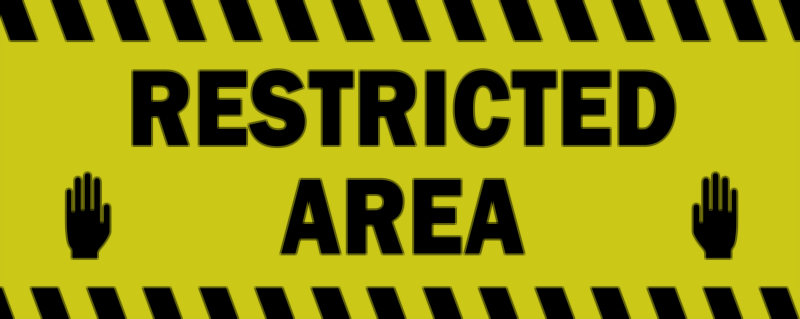
Authorized Personnel Only — No Entry: Restricted Access Safety Sign
A Authorized Personnel Only — No Entry sign, especially when illustrated as a clear and high-contrast vector graphic featuring a prohibition circle, a stop hand, a lock symbol, or a bold red barrier icon, represents one of the most important and non-negotiable forms of access regulation used in environments where safety, confidentiality, law, and operational control must function together without ambiguity. Even though the design appears simple, consisting only of a short message and a few instantly recognizable visual cues, the meaning it conveys is multilayered and deeply impactful because it prevents the presence of individuals who are not trained, cleared, or properly equipped to be inside the protected zone. The phrase Authorized Personnel Only restricts access by qualification and responsibility, while No Entry makes the prohibition absolute and unconditional. The combination of both instructions transforms the sign from a straightforward workplace notice into a serious institutional boundary, one that preserves life safety, legal accountability, workflow continuity, hazard control, privacy, and order by stopping unauthorized movement at the exact point where it would otherwise become dangerous, disruptive, or unlawful.
The role of the sign is shaped by the way human beings interpret space. When an area is open, unmarked, or unlocked, people tend to assume that entry is permitted. A hallway without a notice appears welcoming, a doorway without a label appears accessible, and an outdoor fenced area with an open side might appear to be just another passageway rather than a protected working zone. Most unauthorized entries are not driven by malice but by innocent misunderstanding — visitors taking a wrong turn, delivery workers following a GPS shortcut, students entering the wrong wing of a campus, hotel guests walking into back-of-house service corridors, or pedestrians crossing into restricted utility installations because it “looks like a pathway.” The Authorized Personnel Only — No Entry sign eliminates the risk caused by these harmless intentions by ensuring that the person approaching understands the boundary clearly before they cross it. It prevents the awkwardness, tension, and confusion that would otherwise arise when someone has to be confronted and told to leave after entering an area they never realized was off-limits. It protects the outsider from embarrassment and the insider from the stress of intervention, and it establishes the rules before action occurs rather than after the mistake has already been made.
Safety is one of the deepest reasons behind this signage. Many facilities contain hazards that cannot be recognized by the untrained or unprepared individual until it is too late. Industrial zones include high-speed conveyor systems, robotic assembly machinery, hydraulic presses, gas lines, and molten materials where a single step in the wrong direction could result in severe injury. Construction sites contain unstable surfaces, falling-object zones, power tools, heavy vehicles, and partially supported structures that require navigation discipline and specialized personal protective equipment. Scientific and medical laboratories may contain biohazards, radiation, chemical vapors, cryogens, or magnetic fields that pose permanent harm to a person who enters without proper shielding and training. Utility plants may hold high-voltage components, turbines, security-sensitive panels, and reservoirs where an unprepared visitor could be electrocuted or trapped. Even backstage or maintenance areas in public facilities present risks such as pinch points, sharp edges, steam systems, and automatic machinery hidden from general view. For this reason, No Entry becomes not a matter of authority but of survival: the sign protects human life by blocking access before the hazard causes injury. It reinforces that specialized knowledge is required not because the environment is private, but because it is dangerous to the uninformed.
The sign is also essential for operational continuity, especially in spaces where precision and timing define productivity. Manufacturing lines must continue without interruption to meet engineering tolerances and prevent machine downtime. Broadcast studios and film sets cannot accept noise or distraction from passersby. Sterile medical environments cannot risk contamination from clothing worn in uncontrolled spaces. Data centers rely on stabilized cooling and electrical balance that can be disrupted by unprotected entry. Transportation hubs — such as airports, seaports, rail yards, and loading docks — coordinate fast-moving logistics operations that are unsafe for pedestrians who do not understand traffic control patterns. When unauthorized people enter these environments, equipment must be stopped, productivity must pause, and trained workers must divert attention away from their tasks to ensure that the visitor does not become injured. The Authorized Personnel Only — No Entry sign prevents this disruption by limiting entry to those who contribute to the workflow rather than those who could unknowingly interrupt it. It maintains the rhythm and efficiency of critical work by making sure that only qualified individuals pass through the boundary.
The legal dimension of the sign is equally vital. Many regulated industries — including energy, chemical processing, medical operations, transportation infrastructure, information technology facilities, and government installations — are required by law to place visible warning signage at controlled access points. If an unauthorized individual is harmed in a restricted space where signage was absent or unclear, responsibility may fall on the organization rather than on the intruder. Conversely, when an Authorized Personnel Only — No Entry sign is clearly posted, the property owner demonstrates due diligence and compliance with safety communication standards. If the boundary is breached despite the warning, legal responsibility shifts to the violator, and the posted sign becomes evidence that the rule was stated unambiguously. It protects organizations from liability, simplifies insurance claims, supports occupational safety audits, and reduces dispute potential by documenting clearly that the restriction was disclosed ahead of time. In the event of workplace incident investigation, the presence of posted signage is often considered proof that safety protocols were active and communicated.
Security and privacy are also defended by the sign. Restricted zones often contain valuable tools, sensitive intellectual property, confidential documents, private information, prototype equipment, inventory subject to theft risk, or critical computer systems requiring uninterrupted operation. Unauthorized presence can lead not only to physical harm but also to data leakage, privacy violations, vandalism, espionage attempts, or equipment tampering. A No Entry message prevents opportunistic intruders and discourages anyone from entering under the assumption that “no one will notice.” By limiting the physical proximity of outsiders to sensitive operations or resources, the sign protects assets and organizational integrity without requiring constant surveillance intervention. It reinforces that privacy and security are not implied — they are declared.
The psychological effect of the sign is one of the reasons it is so effective. Human behavior changes profoundly when boundaries are explicit. Without signage, someone may justify entering a restricted area under curiosity or uncertainty. But when the restriction is visibly communicated through authoritative wording and strong visual language, the decision shifts from passive wandering to active violation. Most individuals will not choose to cross a boundary when they know clearly that doing so is wrong, unsafe, or punishable. The sign reduces conflict because it creates self-regulation; people stop themselves before security personnel ever need to do it for them. When someone ignores the warning anyway, there is no doubt about intention, making the response straightforward and justified. In this way, the sign reduces interpersonal friction, prevents escalation, and restores respect without heated exchanges.
The vector-illustrated format enhances the sign’s effectiveness under all viewing conditions. The graphics remain crisp whether the design is printed small on a laboratory door or enlarged across a construction fence or loading-dock barricade. High-contrast red, white, black, and yellow color combinations attract immediate attention because the brain associates them with urgency and risk. Simple and universally recognized icons ensure that even individuals who cannot read the written language understand the message instantly. The clean and intentional layout allows for split-second comprehension, which is critical in environments where fast-moving vehicles, hazardous machinery, or automated equipment are operating nearby.
Emotionally, the sign creates safety far beyond the physical dimension. Workers inside restricted zones know that outsiders will not appear unexpectedly, and they can focus on their tasks without constantly scanning for intrusion. Outsiders are spared the embarrassment, fear, or shock of accidentally entering a dangerous situation and then being yelled at, escorted out, or questioned by personnel. In this way, the sign protects dignity and professionalism as much as it protects life and property. It ensures that a rule is not personal, but environmental — the space itself communicates the limitation so that humans do not have to enforce it through conflict.
In its ultimate purpose, the Authorized Personnel Only — No Entry safety sign is a tool of prevention rather than reaction. It prevents an accident instead of responding after it happens. It prevents a legal conflict instead of arguing responsibility later. It prevents operational shutdowns instead of apologizing for delays. It prevents data leaks instead of dealing with the aftermath. It prevents emotional confrontations instead of attempting to defuse them after the mistake occurs. Its power lies not in how loudly it commands, but in how early it informs. By delivering knowledge exactly at the moment when it is needed most — just before someone takes the next step — the sign creates safety, order, clarity, and respect in environments where uncertainty would otherwise endanger people, property, or operations. Through a short yet authoritative message supported by smart visual communication, it ensures that restricted spaces remain safe, lawful, private, and efficient simply because the boundary is declared clearly before anyone has the chance to cross it.