Entry Restricted Sign — No Entry Warning Board
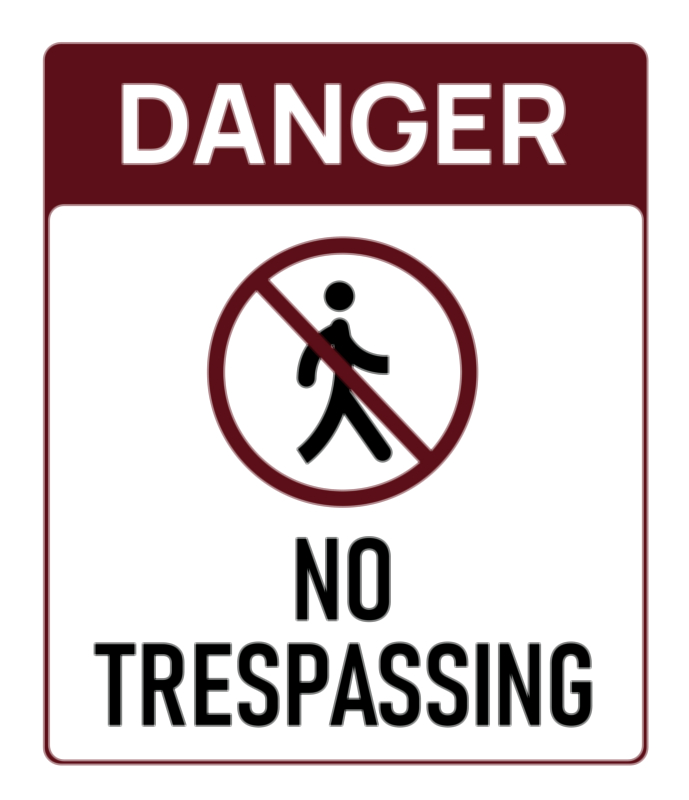
An Entry Restricted — No Entry warning board, especially when displayed as a sharply defined vector illustration with clear prohibition symbols and bold, high-contrast text, represents one of the most direct, urgent, and non-negotiable forms of access control used to protect people, property, and ongoing operations. Even though the design may appear simple at first glance, consisting of only a few words and recognizable icons, its communication power is immense because it tells every individual approaching that the space beyond the barrier is not accessible under any circumstance without explicit permission. The phrase Entry Restricted announces that the zone is tightly controlled, while No Entry reinforces the absolute nature of the restriction, leaving no room for assumption, curiosity, improvisation, or guesswork. When this sign is present, the boundary is not symbolic—it is final. It protects everyone on both sides of that boundary by preventing unintended exposure to danger, unauthorized access to protected areas, and operational disruption caused by individuals entering places they are not meant to be. More than a notice, this sign becomes a preventive safety tool, stopping mistakes before they unfold rather than correcting them afterward.
The need for the sign comes from the basic way humans navigate spaces. People often rely on visual cues to determine whether they are allowed to move through an area. A pathway without a gate, a hallway without a label, a side door that stands unlocked, or an open yard without a fence can easily lead someone to assume that entry is acceptable. This is why many unauthorized entries are not crimes or violations of intent but mistakes born from a lack of information. A delivery staff member searching for the correct entrance may walk into a mechanical room. A visitor in a public building might wander into service corridors. A pedestrian may take a shortcut across property that is not meant for walking. A photographer might step into an industrial zone because the space appears inactive. These events are not malicious—they are misunderstandings. Yet misunderstandings in the wrong environment can lead to injury, security breaches, delays in work, legal conflicts, and emotional discomfort for everyone involved. The Entry Restricted — No Entry sign eliminates ambiguity before it becomes a problem. It does not wait until a person crosses the line and must be stopped by staff or security personnel; instead, it communicates clearly at the threshold, providing the individual with the information needed to stop themselves in time.
Safety is one of the strongest reasons behind the existence of this sign. Many areas where access is restricted are dangerous not because of hostility, but because of environmental conditions that require specialized training, protective equipment, or procedural awareness to navigate safely. In industrial facilities, the hazards might include high-voltage panels, robotic machinery, welding operations, hydraulic presses, chemical storage, molten materials, or heavy equipment in motion. In construction sites, threats include unstable flooring, falling debris hazards, excavation pits, sharp tools, scaffolding collapse risk, and large vehicles that require visibility control. In laboratories and scientific environments, unnoticed hazards could include toxic vapors, biohazards, radiation-generating equipment, extreme cold or heat, and specialized atmospheric controls where unprotected individuals may become injured within seconds. Even in quieter facilities such as shopping complexes, airports, hotels, and hospitals, service and maintenance areas contain equipment and infrastructure that are not designed for general visitors—for example, elevator machine rooms, boiler rooms, HVAC zones, electrical control rooms, water pump stations, loading docks, and backstage equipment corridors. In all these cases, the Entry Restricted — No Entry sign protects outsiders from venturing into areas where they may have no idea how dangerous the environment actually is. Rather than enforcing exclusion through confrontation, the sign prevents an individual from entering harm’s way by letting them know that survival and safety rely on staying outside the boundary.
Another major motivation behind the sign is operational protection. Many workplaces depend on precision and uninterrupted workflow. When unauthorized individuals enter restricted areas, even with harmless intentions, the result can be damaging to efficiency. Machinery may need to halt for safety reasons, operations may have to pause to ensure that the intruder is escorted out, workers may be forced to divert focus from their task, laboratory experiments may become contaminated, sterile environments may become compromised, and logistics traffic patterns may become unpredictable. A small unintentional interruption can snowball into significant delays, damaged products, or compromised research. The Entry Restricted — No Entry sign prevents this disruption by ensuring that the only people who enter the space are individuals who belong there—those who are trained, properly equipped, authorized, and prepared to take responsibility for their actions inside the zone. The sign protects productivity by keeping the workflow uninterrupted and predictable.
Legal responsibility also makes the message of the sign extremely important. In many industries and jurisdictions, property owners and facility managers are required by law to mark dangerous or restricted areas clearly. If someone enters such an area without signage and becomes harmed, the fault may legally fall on the organization for failing to warn the individual. When a Entry Restricted — No Entry warning board is posted visibly, the property owner fulfills their duty to inform, and liability shifts to anyone who willfully ignores the warning. The sign becomes crucial evidence in safety audits, investigations, insurance claims, legal disputes, and compliance reviews. It demonstrates that the organization acted responsibly and communicated the boundary explicitly. With the sign in place, unauthorized entry is not a misunderstanding—it becomes a conscious violation. In this way, the sign protects both the individuals and the organization by making expectations, risk, and responsibility visible.
The psychological impact of the sign is equally meaningful. People behave differently depending on whether they perceive permission or prohibition. In an unmarked area, someone may feel free to explore or take initiative. But when a clear Entry Restricted — No Entry notice stands in front of them, the sense of curiosity turns into caution and restraint. The boundary becomes emotionally real. Most people regulate themselves when boundaries are communicated clearly because doing otherwise would feel intentionally wrong. This psychological response saves both outsiders and staff from uncomfortable confrontations. Without signage, a property owner or employee might have to tell a stranger to leave, which can lead to embarrassment, defensiveness, irritation, or fear. The sign replaces confrontation with information. It prevents misunderstandings from turning into interpersonal conflict and allows the boundary to be respected without the need for human enforcement.
The visual strength of the vector illustration is what makes this sign so effective in real-world conditions. Vector graphics maintain crisp clarity whether printed small on a door or large across a fence or wall. High-contrast colors—particularly red, white, black, and yellow—signal urgency to the human brain and demand attention even in the corner of a person’s vision. Universal pictograms allow the message to be understood even by those who do not speak the written language, such as international workers, tourists, delivery drivers, or children. The layout allows near-instant comprehension because the sign is designed not for decoration but for survival and clarity. Every element—the symbol, the color palette, the text style, the spacing—is engineered so that the brain interprets the warning immediately, without needing analysis or translation.
Emotionally and socially, the sign protects dignity as much as it protects property. Outsiders do not need to be confronted after making an honest mistake; they learn before the mistake happens. Workers do not need to stop their duties to tell someone to leave; they trust the environment to do the communication. Neighbors, visitors, and passersby do not need to wonder whether a pathway is public or private; the sign provides clear boundaries to reduce confusion. Respect is created without hostility, and privacy is preserved without aggression. The sign invites understanding rather than argument.
Ultimately, an Entry Restricted — No Entry Warning Board is a preventive instrument at its core. It keeps people safe not by rescuing them but by informing them. It prevents property disputes not by fighting them but by clarifying rights. It prevents workflow disruption not by repairing it afterward but by stopping interruptions before they happen. It prevents security problems not by catching bad behavior but by discouraging temptation before the thought materializes. It prevents emotional discomfort not by apologizing for conflicts but by ensuring that misunderstanding never appears in the first place. Through a brief message, elevated by authoritative visual communication, the sign transforms uncertainty into certainty, potential conflict into peace, and potential harm into protection. It stands at the precise location where a person’s next step matters most, providing the knowledge needed to make the right decision before that step is taken.