Private Property No Entry Sign Board — Restricted Access Warning Design
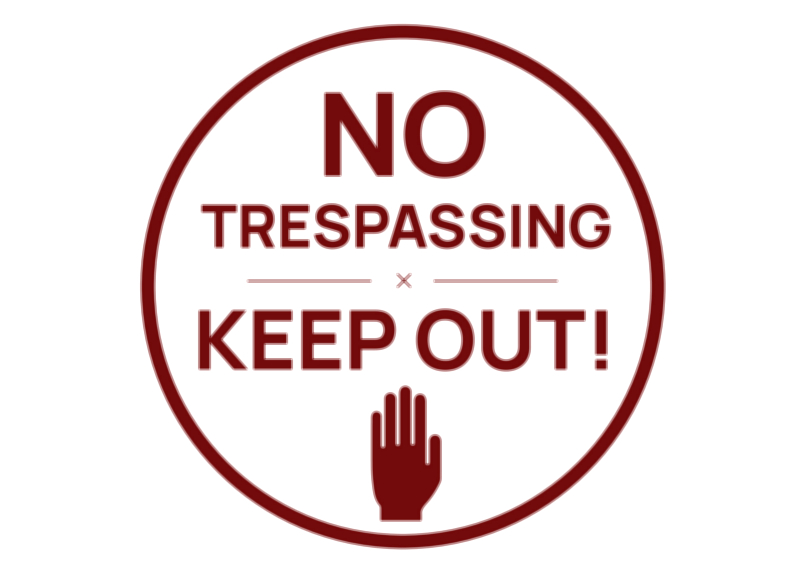
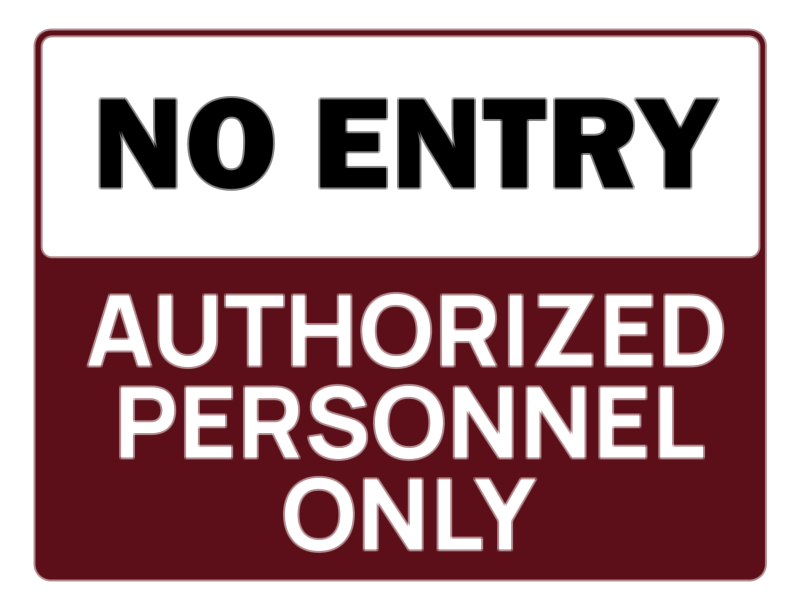
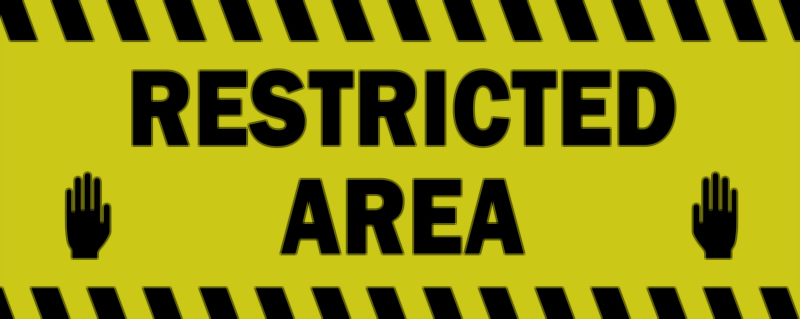
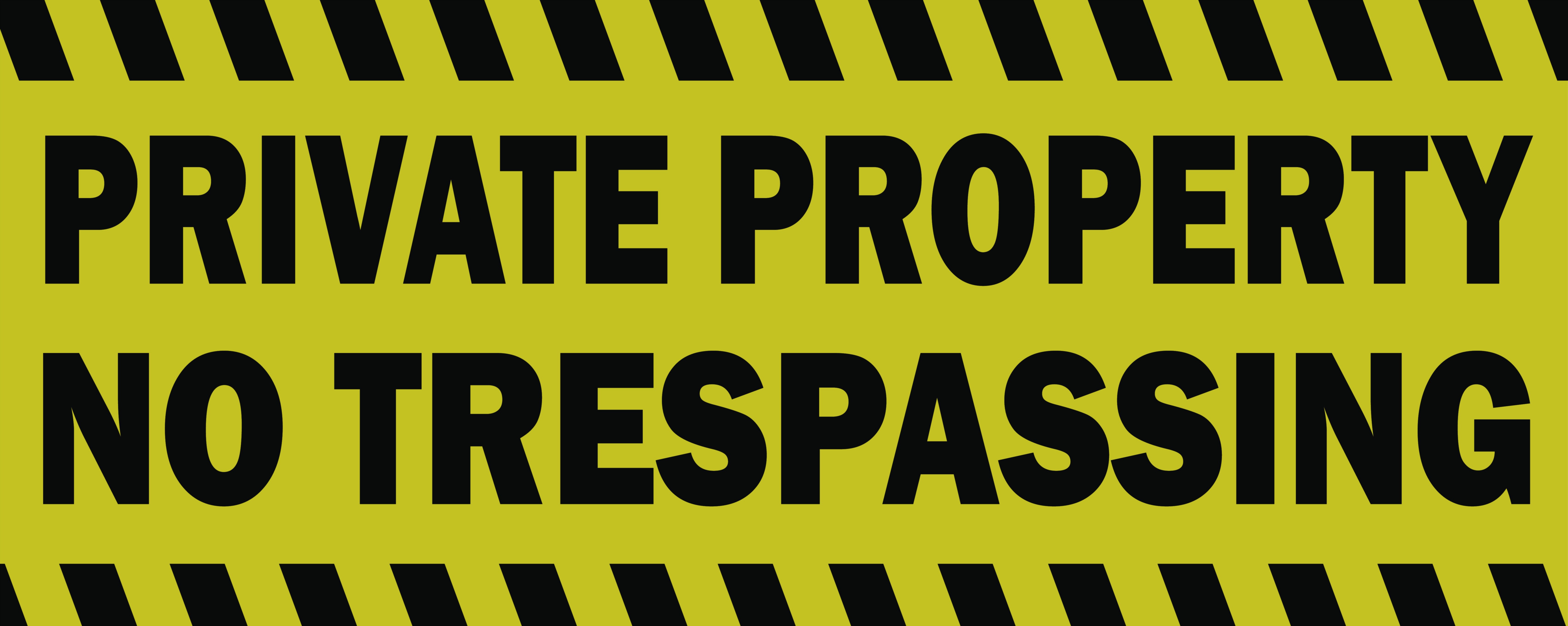
A Private Property No Entry sign board, particularly when presented as a polished vector illustration using bold high-contrast lettering and instantly recognizable warning symbols such as a stop icon, a blocked doorway silhouette, or a red circular prohibition mark, is one of the most direct and assertive forms of boundary communication in physical environments. Although its visual composition appears simple and concise, built from only a short message and a strong graphic marker, it performs the multifaceted role of protecting ownership, defining space, preventing intrusion, communicating legal boundaries, and safeguarding human safety. The phrase Private Property establishes that the space ahead is under specific ownership and not part of the public domain, while No Entry expresses a mandatory, non-negotiable instruction that access is prohibited to outsiders. Together, these two elements remove uncertainty and prevent misunderstanding by informing anyone approaching that the area beyond the sign is not accessible for exploration, curiosity, shortcuts, photography, parking, walking, or any other unauthorized activity. The sign becomes a visual frontier where public access ends and protected, controlled territory begins, and it does so through communication rather than confrontation.
The necessity of this sign emerges from how people intuitively navigate their surroundings. When boundaries are not visually reinforced, individuals often assume that a space is open if no obstacle physically blocks them. An unfenced yard can feel like a public path, an industrial driveway can resemble an open road, a farm boundary can look like part of a hiking trail, and an unmarked entrance of a warehouse, workshop, or research facility can appear approachable. In countless cases, trespassing happens not out of malice but out of uncertainty. A delivery person may look for a short route, a visitor may choose the wrong entry door while searching for reception, a child may follow a path unaware of its designation, and tourists or hikers may cross farmland or mine property accidentally. A Private Property No Entry — Restricted Access Warning Design sign stops such confusion long before it turns into intrusion. It ensures that both property owners and outsiders retain dignity by preventing the awkward or emotionally charged moment when someone must be told to leave verbally. The warning appears before the mistake, not afterward, and in this quiet repositioning of communication lies the sign’s greatest power.
Safety is another profound aspect embedded within the message. Many restricted private spaces are not off-limits because of exclusivity or secrecy, but because they contain dangers that are invisible to an outsider. Construction sites may house deep excavations, unstable structures, heavy machines, and scaffolding that can cause fatal accidents in seconds. Industrial spaces contain chemical storage, high-voltage systems, furnaces, conveyor belts, and moving equipment requiring professional safety training and protective gear. Waterfront areas, mines, quarries, and stormwater reservoirs on private land pose drowning hazards, sudden sinkholes, or loose ground. Rural properties sometimes include livestock that can become aggressive toward unfamiliar people, agricultural zones treated with pesticides, and irrigation structures unsafe for stepping into. Even aesthetically peaceful estates may have uneven ground, guard dogs, or steep drops near embankments. The No Entry notice is not a declaration of hostility; it is a device for protection. It prevents strangers from walking unknowingly into zones that were never intended to be accessed without supervision, risk awareness, permission, and protective measures. The sign shields outsiders from threats they cannot see while shielding landowners from the trauma, liability, and guilt that can follow an unintentional accident.
The legal dimension of the sign cannot be overstated. Signage functions as a tool of legal clarity in matters of property rights. When a Private Property No Entry warning is visible, the landowner has communicated unambiguously that access is restricted. If an individual chooses to ignore the warning and enters anyway, the act becomes a conscious violation rather than a misunderstanding. In many regions, this distinction determines liability, insurance eligibility, and law enforcement intervention. Without posted warnings, trespassers may later argue that they assumed the land was public or that no indication of prohibited entry was provided. This can result in unfair legal or financial burden on the property owner, even in cases where the owner did nothing wrong. A sign records intent in physical space — it states that the boundary exists and that its violation lies with those who ignore the warning. In investigations of vandalism, theft, property damage, personal injury, assault by guard animals, or disruption of agricultural or industrial operations, the presence of this signage often becomes evidence that the property owner fulfilled their responsibility to warn others.
The sign provides emotional security as much as physical security. Private property is not only a legal concept; it is also an emotional environment where families, residents, farmers, workers, and researchers should be able to feel safe. People relax differently when they know their surroundings are protected against outside presence. The anxiety of seeing unknown individuals approaching doors, windows, storage barns, equipment areas, or operational sections can erode the psychological sense of safety that private spaces are meant to guarantee. A Private Property No Entry sign eliminates that fear not by aggression but by information. It deters approach rather than reacting to approach, reducing the possibility of alarming encounters. It gives homeowners peace, enables employees to focus on their work, and prevents strangers from entering situations where their presence would surprise or frighten those inside.
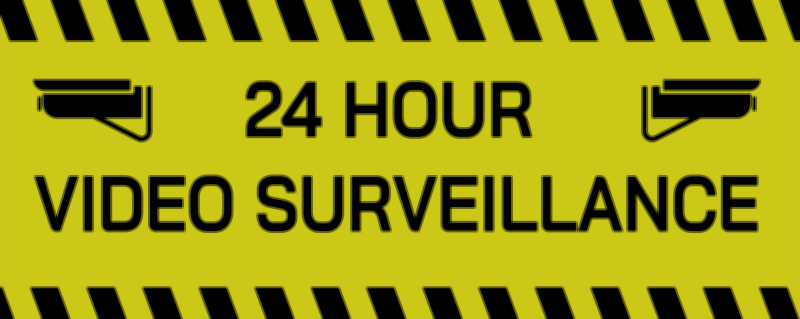
Security personnel benefit heavily from this type of signage. A restricted space with no warning creates inconsistent enforcement because it becomes unclear whether someone entering meant harm or simply misunderstood access. A sign shifts that uncertainty: if a person crosses beyond a clearly posted No Entry warning, their intention is no longer ambiguous. This allows security officers, automated surveillance systems, patrol teams, and property owners to respond predictably and confidently. The sign alone deters most opportunistic intrusion without the need to escalate. It converts a potential confrontation into a nonincident by stopping the violation before it occurs.
From a design perspective, the vector format plays a critical role. High-contrast colors such as red, white, black, and yellow are intentionally chosen to command immediate attention and to trigger instinctive caution. Large uppercase lettering ensures that the rule is readable instantly, even from a moving vehicle or in low-light conditions. Universal iconography transcends language and literacy barriers, ensuring that visitors, tourists, delivery personnel, or workers from any background understand that the area ahead must not be accessed. Vector illustrations retain clarity across all scale variations, whether the sign is mounted on a front gate, a warehouse roller door, a rural fenceline, a construction barricade, a perimeter wall, or a freestanding post. The clarity of design enhances the clarity of instruction, reinforcing that this is not a suggestion or a guideline but a boundary that must be respected.
Beyond the realms of law, security, and hazard prevention, the sign promotes social harmony by preventing conflict before it arises. Situations in which someone wanders unknowingly into private land and is then confronted by an upset owner can lead to anger, defensiveness, and resentment on both sides. A Private Property No Entry sign prevents this cycle by ensuring expectations are aligned before actions are taken. It communicates that entry is not allowed, giving outsiders the chance to turn away without embarrassment and giving property owners the assurance that their message has already been voiced clearly without needing to confront another person directly. This reduces emotional strain for all parties involved and maintains mutual respect in shared geography.
Ultimately, the Private Property No Entry Sign Board — Restricted Access Warning Design accomplishes something deeply valuable: it protects without violence, prevents accidents without rescue, clarifies law without courtroom conflict, defends privacy without hostility, and enables order without policing every inch of land. It draws the line where it matters — at the entrance — giving both the owner and the outsider certainty about what is permitted and what is not. By blending legal authority, safety protection, ownership rights, and psychological peace into one short message, the sign stands as one of the most essential components of structured physical space. It ensures that private areas remain private, that outsiders stay safe, and that every person interacting with built or natural environments understands their role in maintaining respect for property boundaries simply because the instruction is visible, unmistakable, and delivered before a mistake can happen.