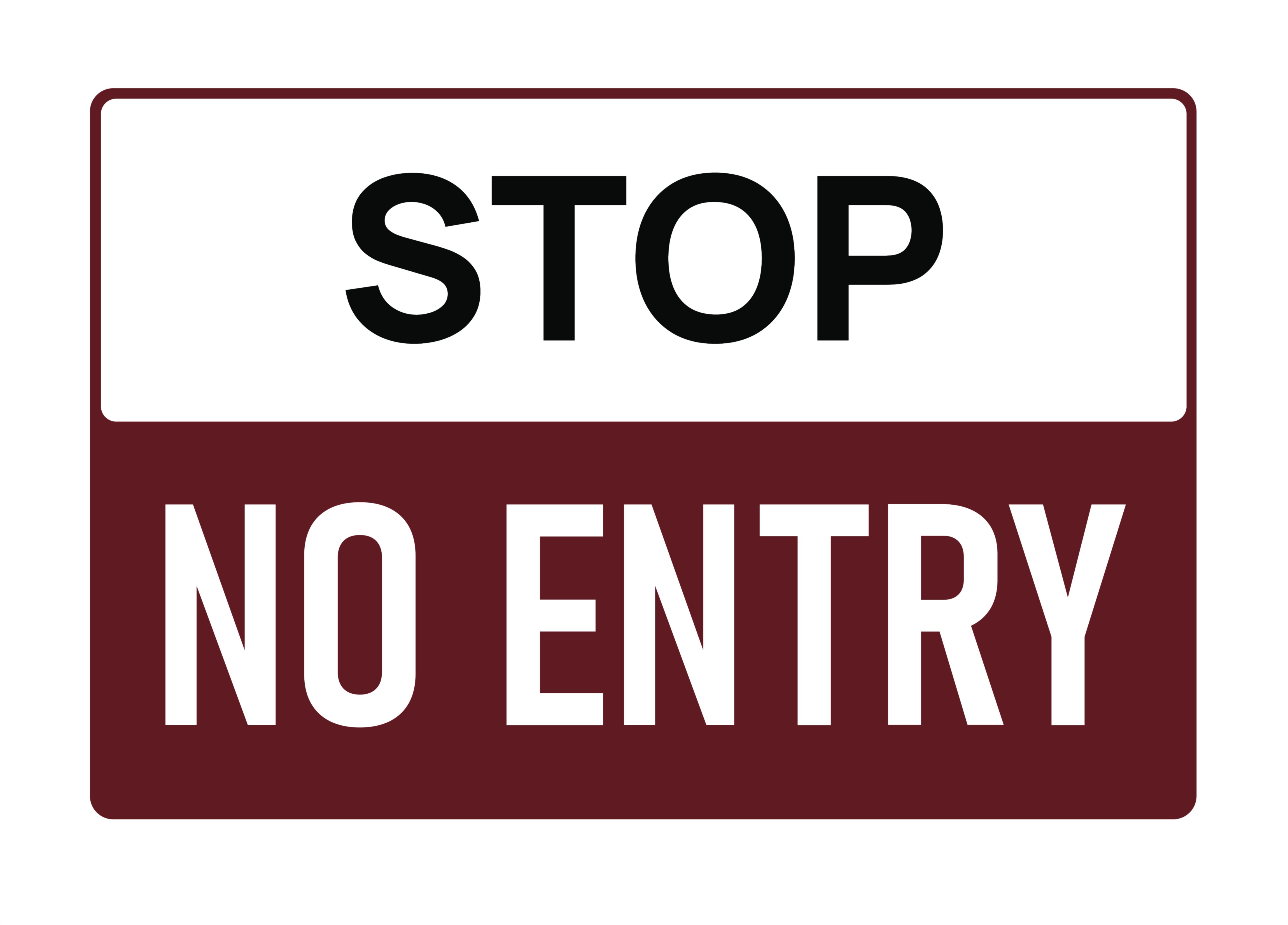
Stop — No Entry Vector Illustration: Restricted Area Warning Sign
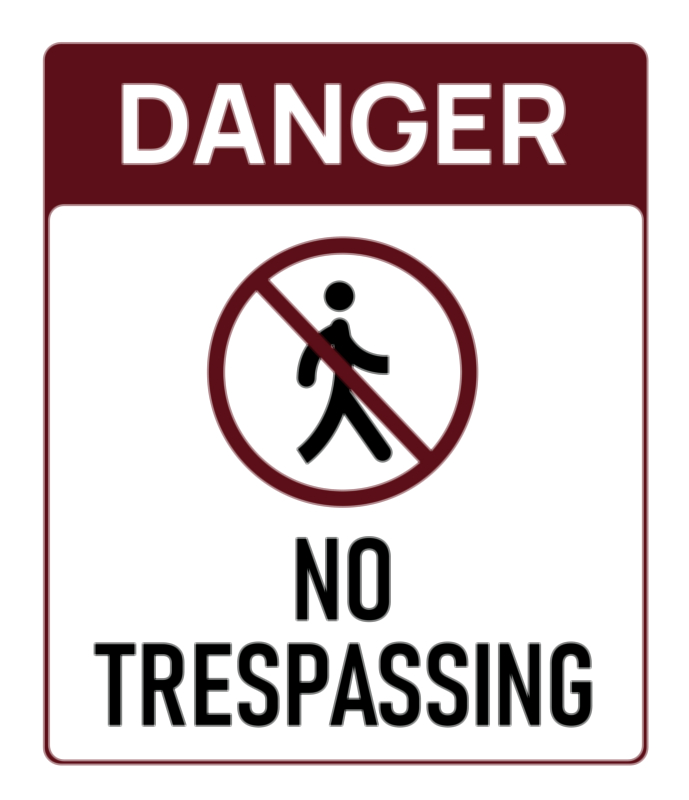
A Stop — No Entry warning sign, especially when designed as a bold and polished vector illustration displaying a large stop symbol, a red prohibition circle, or a firm raised-hand icon alongside unmistakable uppercase text, communicates one of the clearest boundary restrictions found in physical space management and safety control. Even though the design seems minimal, the power of the message is extraordinary because it marks a point beyond which passage is neither permitted nor negotiable. The sign does not suggest caution or request cooperation; it commands an immediate halt. It tells every person approaching that proceeding further leads into a zone where entry is explicitly denied for their own safety and for the protection of people, property, and operations inside. Where this sign stands, unauthorized movement stops not through physical barriers or confrontation, but through the strength of information delivered at the right moment. It communicates in advance that the space behind the line demands respect, clearance, and justification before access is allowed.
The clarity of the message emerges from how people navigate spaces in the absence of instructions. Most individuals do not intend to trespass or disrupt operations when they approach unfamiliar environments. Confusion arises when an open gate, an unobstructed hallway, a side door, or an unfenced property visually suggests public access even though it is not meant for general entry. A visitor looking for a restroom might turn into a utility zone, a delivery person might mistakenly walk toward a private entrance, or a passerby might enter a construction area because it appears open from the outside. These moments are not rooted in harmful intent but in uncertainty — the mind assumes access when nothing states otherwise. The Stop — No Entry vector sign eliminates this uncertainty before it becomes a problem. It tells outsiders they must not continue and removes the ambiguity that often leads to accidental intrusion. Rather than waiting for confusion to escalate into confrontation or safety danger, the sign prevents the mistake by summarizing the rule in two unmistakable words.
The deepest purpose of the sign lies in safety and accident prevention. Restricted areas typically contain hazards that are not visible or understood by those unfamiliar with the environment. In construction sites, there may be exposed wiring, unstable structures, open trenches, heavy machinery, and high surfaces that pose lethal risk to untrained individuals. In industrial plants, automated robotic arms, conveyor systems, welding arcs, molten metal workshops, pressurized tanks, and chemical storage zones demand strict control to prevent injury. Power stations, boiler rooms, battery storage units, laboratories, and testing facilities contain high-energy systems, toxic substances, or delicate operational environments that cannot tolerate unauthorized presence. Even in quieter facilities such as hotels, airports, theaters, or corporate buildings, backstage areas, mechanical rooms, and service corridors contain equipment and structures that are not safe for general visitors. A Stop — No Entry sign shields outsiders from entering a space that can cause harm in seconds, and shields organizations from facing the trauma, liability, and disruption that follow an accident. It ensures that safety is built on prevention rather than consequence.
Operational continuity is another powerful reason for this sign to exist. Many spaces function smoothly only when access is controlled. A manufacturing assembly line cannot pause every time a visitor crosses a walkway meant only for trained personnel. A theater performance breaks instantly if someone walks onstage or backstage without authorization. A broadcast studio loses recording integrity if a door opens during live production. A clean laboratory loses sterile calibration if an unprepared person enters. A high-security office risks data exposure if an uninformed individual wanders into a server room. In logistics and warehousing environments, the movement of forklifts and pallet trucks cannot safely coexist with untrained pedestrians who unknowingly enter the pathway. The Stop — No Entry sign ensures that only those who contribute to the workflow — not those who accidentally interrupt it — cross that boundary. It preserves structure and efficiency by preventing delays, contamination, interference, and costly shutdowns caused by unauthorized entry.
The sign also protects privacy, confidentiality, and organizational security. Many restricted zones exist not only to prevent injury but to protect sensitive information, equipment, products, and operations. Behind the sign may be prototype development labs, data centers, financial offices, research chambers, personnel archives, medical record rooms, or secure storage units that require limited access. Even if such spaces appear ordinary from the outside, unauthorized entry can result in intellectual property loss, document exposure, safety breaches, or privacy violations. A Stop — No Entry warning is therefore not simply a physical barrier but a guardian of confidentiality and professional integrity. It allows organizations to protect research, private information, and valuable resources without creating an atmosphere of secrecy or distrust — the rule is written clearly so expectations are aligned for everyone.
From a legal standpoint, the sign is essential to liability protection and regulatory compliance. Safety authorities and occupational standards often require that access restrictions be labeled visibly so individuals are warned before entering a potentially harmful area. If someone walks into a hazard zone without signage present and suffers injury, the organization may be held legally accountable. If the sign is posted and someone proceeds despite the warning, responsibility shifts to the person who ignored the instruction. In incident investigations, insurance disputes, and workplace audits, a clearly displayed Stop — No Entry sign demonstrates that the organization fulfilled its safety obligation. It becomes evidence that risk communication was provided, which can determine whether the outcome is managed as an accident or a violation. It reinforces a culture where safety is explicit rather than assumed.
The psychological effect of the sign ensures that enforcement becomes easier and smoother. People behave differently depending on whether they believe consequences are active. Without signage, an individual may justify exploring an unauthorized space based on curiosity or uncertainty. When confronted later, that misunderstanding creates embarrassment, defensiveness, and emotional strain on both sides. But when the warning is visible and unavoidable, the responsibility shifts internally — people choose not to cross because they recognize that doing so would be knowingly wrong. This reduces the need for security confrontation, angry exchanges, or verbal enforcement. Anyone who continues past such a sign does so intentionally, and their behavior becomes unmistakably identifiable to safety personnel, which supports clear and proportional security response. The sign makes rule enforcement predictable, fair, and respectful rather than reactive and emotional.
In a visual and technical sense, the vector format is precisely what makes the sign effective. Vector drawings allow text and imagery to maintain sharpness at any scale — from small door decals to large outdoor warning boards — without losing clarity. High-contrast color schemes are chosen not for aesthetics but because the human brain recognizes them as danger cues instantly. Universal symbols such as the stop octagon or the crossed prohibition circle communicate meaning even when visitors do not speak the language written on the sign. The minimalist layout enables comprehension within a split second, which matters in environments where heavy machinery, emergency exits, or high-traffic service zones give people very little time to process information. Every feature of the design exists for recognition, safety, and compliance.
Ultimately, a Stop — No Entry Vector Illustration — Restricted Area Warning Sign is not simply a sign; it is a silent safety system, an extension of organizational responsibility, and a structure that protects both those inside and those outside the restricted boundary. It prevents accidents instead of responding to them, prevents disputes instead of resolving them, prevents trespass instead of policing it, and prevents emotional stress instead of letting it escalate. It ensures that restricted zones remain safe, orderly, and respectful by making boundaries visible at the precise place where they matter most — the threshold. Through a short but commanding message supported by a visually authoritative design, the sign delivers clarity, safety, dignity, legal protection, and peace to environments where access must not be taken for granted.