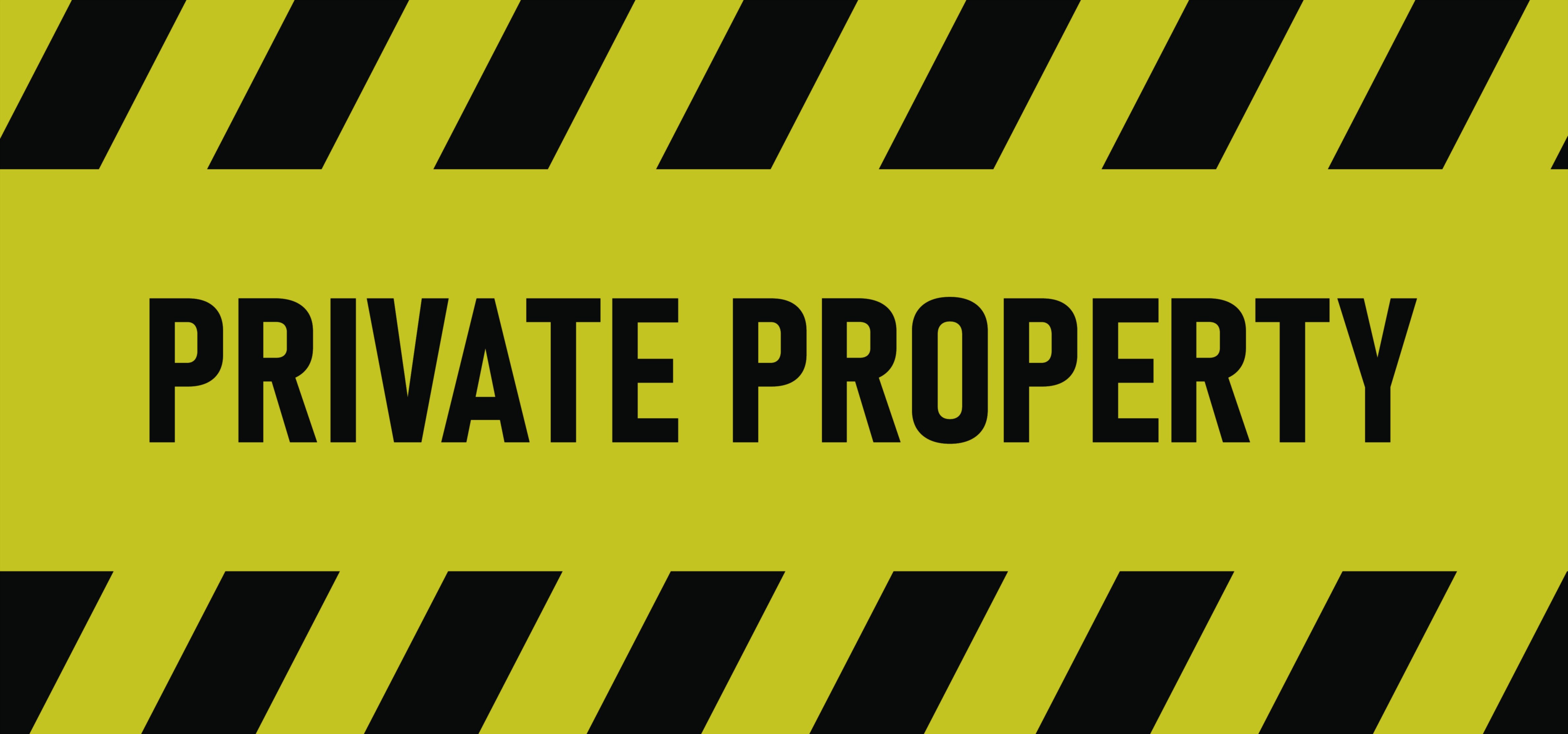
Private Property Entry Restricted — No Trespassing Warning Sign
A Private Property Entry Restricted — No Trespassing warning sign, especially when designed as a clean and sharply detailed vector illustration with clear prohibition symbols and bold uppercase text, stands as one of the most powerful forms of boundary communication used to protect land, safety, privacy, and legal ownership all at the same time. Even though the sign consists of very few words, it conveys an immense message because every part of it performs a different duty: Private Property establishes ownership, ensuring that the land ahead is not public or open for general movement; Entry Restricted clarifies that crossing beyond the point is not permitted under any circumstance unless explicit authorization has been granted; and No Trespassing reinforces the legal weight of the boundary, making it clear that unauthorized presence is not only unwelcome but also unlawful. Through this short, highly concentrated language supported by immediately recognizable visual cues, the sign takes on the responsibility of stopping movement before it becomes intrusion, preventing confusion before it becomes confrontation, and protecting people before they unknowingly expose themselves to risk. Where it is installed, the sign expresses a boundary that should not be tested, crossed, or questioned, and it provides the information necessary for every person approaching the space to make a safe and respectful decision.
The necessity of this sign emerges from the way people move through and interpret physical spaces in everyday life. When a property does not include a physical fence, a locked gate, or a guard at the entrance, outsiders may assume that crossing into the space is harmless or even allowed. A driveway without a chain, an open yard, a field without a visible barrier, or a structure that looks abandoned may easily be misjudged as accessible territory. These misunderstandings often arise not from ill intention but from lack of information, and the consequences can range from awkward to dangerous. Someone might walk across farmland as a shortcut, step onto a commercial plot for a photograph, enter a private driveway thinking it leads to a public road, or explore a seemingly empty building out of curiosity. Many owners become frustrated not because people intentionally violate their space, but because people enter without realizing that their presence is inappropriate or unwanted. A Private Property Entry Restricted — No Trespassing sign eliminates this misunderstanding before it develops. It gives outsiders the opportunity to make the right decision without being scolded, threatened, or chased away. Instead of relying on instinct or guesswork, individuals receive undeniable clarity at the exact moment it matters — the moment before they step over the boundary.
Safety is another deeply significant purpose behind the sign. Private properties can hold environments that are not safe for unfamiliar visitors even if they look harmless on the surface. Agricultural land may contain deep pits, chemical-treated crops, irrigation channels, sharp farming tools, or freely roaming livestock that behave aggressively toward strangers. Industrial property may hold equipment that starts automatically, pits and trenches left during construction, or electrical and mechanical systems that pose immediate danger to someone who is not trained to navigate the site. Residential properties can include dogs trained to protect the grounds, outdoor equipment, slippery surfaces, swimming pools, security traps, and children whose safety may be compromised if strangers enter their play space. The sign protects outsiders from entering an unsafe zone unknowingly and prevents the property owner from carrying the emotional burden or legal risk of someone getting hurt on their land. In this way, the message is not hostile or exclusionary — it is protective and responsible, ensuring that the invisible risks of the space are communicated clearly enough to stop accidents before they happen.
Legal protection plays a powerful role in the meaning of the sign as well. In many regions, property owners are responsible for clearly marking their land to indicate that it is private and not open to the public. Without signage, a trespasser who enters unintentionally can claim that they did not know the area was private, and courts or insurance providers may hold the owner partially responsible for the incident. A posted Private Property Entry Restricted — No Trespassing sign establishes that the boundary was communicated without ambiguity, and therefore shifts responsibility and liability away from the owner if a person chooses to ignore the warning. It also provides legal grounds for enforcing removal, reporting trespassing incidents, or pressing charges if necessary. The sign becomes an important tool in supporting ownership rights, preventing disputes, and documenting that the property owner acted responsibly in communicating boundaries. Even without direct confrontation, the sign reinforces the owner’s legal authority over the space and ensures that the right to exclude is clearly exercised.
The message also sustains psychological comfort and emotional safety for the property owner and occupants. Strangers appearing unannounced can cause anxiety, disruption, and even fear, especially in residential spaces. Families want to feel safe in their homes without the concern of unknown individuals walking across driveways, lawns, or private paths. Children need clear boundaries in outdoor areas to ensure that the environment remains controlled and predictable. Elderly residents, who may already feel vulnerable, rely heavily on visible deterrents to prevent intrusion. The sign tells outsiders in advance that they are approaching a space where their presence will not be appropriate, and it shields residents from the stress of having to confront or defend their privacy. It also protects visitors who might otherwise accidentally walk into a place where they feel unwelcome and embarrassed when confronted. The sign prevents emotional discomfort for both sides by allowing communication to replace conflict.
Security is another crucial purpose of the warning. Private property often contains items that are vulnerable to theft, damage, vandalism, tampering, or unauthorized use. This may include construction materials, agricultural harvests, machinery, valuable tools, vehicles, storage facilities, research equipment, or high-value structures. When a boundary appears unprotected, opportunistic trespassers may see it as an easy target, especially during nighttime or low-visibility hours. A No Trespassing notice supported by the authority of Entry Restricted communicates that the property is not only private but actively protected, monitored, and legally defended. Even if surveillance cameras, alarms, or security patrols are not visible, the sign signals that trespassing will not go unnoticed or without consequence. It dissuades malicious intent in the same way it prevents accidental intrusion, reducing the chances of theft or vandalism simply by communicating that the boundary is actively enforced.
The vector format of the design amplifies the power of the message through precision in visual communication. Crisp lines allow the sign to maintain sharp detail whether printed small for a house gate or large for a wide agricultural or industrial perimeter. High-contrast colors, especially red, black, and white, catch the eye instantly and generate a sense of alertness and urgency. The use of universal icons such as a stop hand, a prohibition circle, a warning triangle, or a security barrier ensures that the message is understood irrespective of language, literacy, or cultural background. The design is not decorative — it is engineered for fast comprehension even at a distance, while driving, in dim lighting, or through environmental elements like dust or rain. The speed at which the brain recognizes the warning is essential, because the sign is intended to deliver its message before someone steps into a place where they are not meant to be.
Emotionally, socially, and practically, the sign prevents negative interactions by offering clarity where ambiguity would cause discomfort. Without warning signage, a property owner is placed in the stressful position of personally enforcing boundaries and confronting strangers. Outsiders, when corrected, often feel humiliated, surprised, or defensive because they did not realize they were violating a rule. With the sign in place, interactions become unnecessary because the boundary is defined by the environment itself. People walk away confidently instead of fumbling into the wrong place, and property owners retain a sense of privacy and peace without resorting to confrontation. In this way, the sign protects dignity, respect, and comfort as much as it protects land and safety.
Ultimately, the Private Property Entry Restricted — No Trespassing Warning Sign is a preventive tool rather than a reactive measure. It protects lives without needing rescue, protects owners without needing arguments, protects property without needing guards, and protects social harmony without requiring confrontation. It transforms uncertainty into understanding, assumption into awareness, and potential conflict into peace. By delivering a clear message at the most critical moment — just before someone crosses a boundary they should not cross — the sign maintains safety, security, privacy, legality, and respect in the simplest and most effective way a visual communication can achieve.