No Access Sign Board — Restricted Entry Safety Warning Design
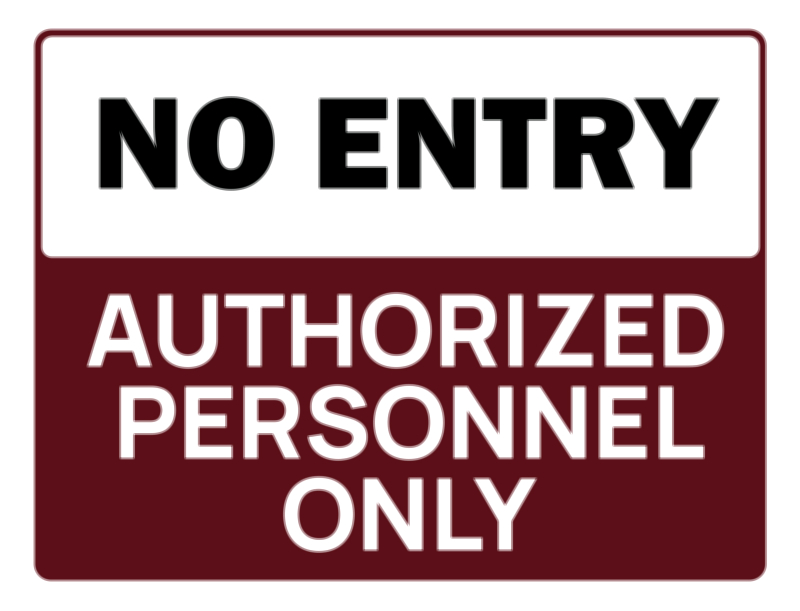
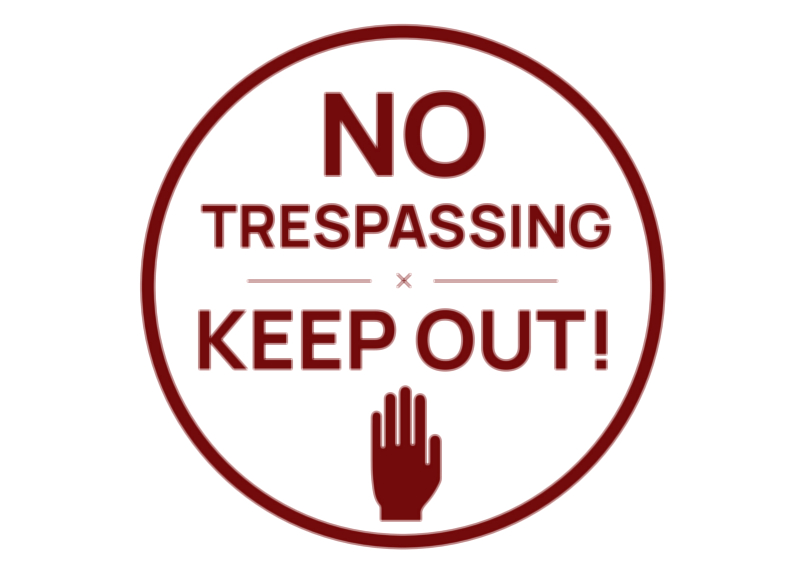
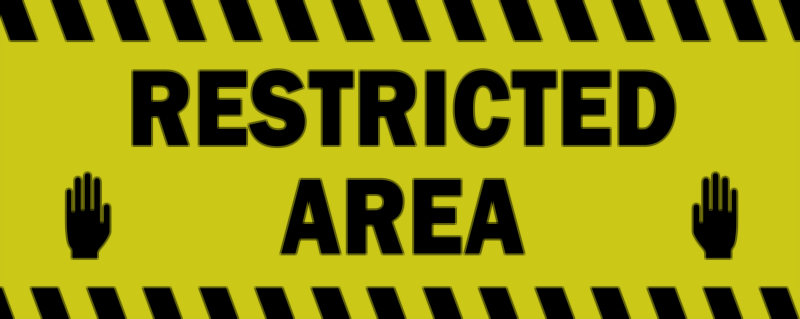
A No Access sign board, especially when displayed as a clean and sharply defined vector illustration featuring bold uppercase text, a universal prohibition icon, and high-contrast warning colors such as red, black, white, or yellow, appears at first glance to be nothing more than a simple safety label. Yet behind its minimal visual design lies a deep structure of communication intended to protect people, property, operations, privacy, and legal security. It represents one of the clearest and most direct forms of boundary signaling in public and private environments. The phrase No Access stands as a decisive declaration that movement beyond the point of signage is not permitted, and the addition of a Restricted Entry Safety Warning turns the sign into a proactive safety system — preventing unauthorized crossing rather than reacting to it. Without anyone uttering a word or placing a physical obstacle, the sign delivers instant awareness that the area ahead is out of bounds, either permanently or under specific operational circumstances. It informs, deters, protects, and organizes by telling individuals that proceeding further is unsafe, unlawful, or disruptive. What may seem like a simple graphic announces the threshold where safety protocols, privacy rights, and access regulations must be respected.
The need for this sign comes from the way people naturally navigate spaces. When paths appear open, doors are unlocked, stairways are unobstructed, or walkways continue without markers, the human mind instinctively assumes that entry is allowed. Many cases of accidental intrusion — into industrial plants, warehouses, technical rooms, construction areas, backstage zones, laboratories, or utility sites — happen not because people intend to break rules, but because no communication tells them not to continue. The No Access — Restricted Entry Safety Warning Design sign eliminates such uncertainty before a person finds themselves where they should not be. Instead of waiting for confusion to create confrontation, the sign allows boundaries to defend themselves through information. It makes sure that someone who does not belong in the zone does not enter unintentionally, and that someone who approaches the restricted area has the opportunity to avoid trespass, embarrassment, workplace disruption, or danger long before they cross the line.
Safety is a foundational component of the warning’s purpose. Areas where access is restricted often contain hazards that are not obvious from the outside. Industrial areas may contain high-voltage equipment, conveyor belts, robotic machines, overhead loads, welding arcs, molten metals, pressurized containers, or chemical storage zones that pose severe risks to untrained individuals. Construction sites include deep pits, unstable floors, exposed wiring, heavy machinery, and scaffolding that may collapse or swing without warning. Scientific laboratories and research spaces house substances, radiation zones, biological materials, or highly sensitive experiments that must not be approached by unprepared visitors. Mechanical workshops, boiler rooms, server farms, water treatment plants, and power stations can all become life-threatening environments for someone entering without safety knowledge and personal protective equipment. The No Access sign is not a message of hostility, but of protection. It prevents curious, lost, or uninformed individuals from stepping into harm’s way, and in doing so protects both outsiders and those responsible for the site. Rather than rescuing someone after an accident, the sign prevents the accident from happening in the first place.
The sign also protects operational continuity and workflow control. Many restricted environments cannot tolerate unintended interruptions. A clean-room laboratory will lose sterility if someone walks inside without the proper attire. A manufacturing line will halt and lose productivity if an unauthorized person enters a moving machinery zone. A recording studio will ruin a session if a visitor opens the door during production. A stage backstage zone will break performance coordination if an outsider appears among performers and crew. An airport tarmac, a logistics hub, or a shipping dock cannot operate safely when untrained pedestrians walk near transport equipment. A No Access warning ensures that the only people who enter the space are those whose presence supports the work rather than disrupts it. That seemingly small difference — who is allowed inside and who is not — determines whether a workplace remains organized or turns chaotic.
Legal and regulatory responsibility adds another vital dimension to the sign’s meaning. Many industries are obligated by safety authorities, occupational health regulators, environmental agencies, and insurance providers to display clear access-control signage. If an unauthorized person enters a dangerous area that lacks explanatory warnings, the property owner or organization may face legal responsibility — even when the outsider entered on their own initiative. A posted No Access sign becomes proof that the organization fulfilled its duty to communicate risk. If a person proceeds despite the warning, any injury or damage becomes the responsibility of the violator rather than the owner. In audits, safety evaluations, workplace accident investigations, and insurance cases, the presence of a clearly visible sign is often treated as evidence that proper preventive measures were taken. Thus, the sign serves not only as a barrier to physical entry but also as a safeguard for legal protection, ethical accountability, and due-diligence compliance.
Privacy and confidentiality also find reinforcement through this sign. Some spaces must remain private not only for safety but for security of information and process. Areas housing confidential documents, computer server rooms, prototype development labs, high-value inventory storage, HR or payroll offices, medical record rooms, backstage entertainment zones, or intellectual property development sites cannot permit general access. Unauthorized entry threatens corporate secrecy, professional integrity, and personal privacy. A No Access sign, therefore, prevents strangers, visitors, or even unrelated staff members from inadvertently entering confidential environments where privacy is integral to the function of the space. It preserves order without hostility and ensures that sensitive domains remain secure not through secrecy, but through clarity.
The psychological impact of the sign is equally significant. Human behavior changes depending on whether boundaries are visible. When no sign exists, individuals may rationalize crossing into unfamiliar territory — “there was no warning, so it must be fine.” But when a clear visual message states No Access, the responsibility of crossing becomes conscious and deliberate rather than accidental. Most people choose cooperation rather than violation when the rule is displayed openly and confidently. This prevents uncomfortable confrontations where staff must tell someone to leave, and prevents the outsider from feeling blamed or humiliated for a mistake they did not know they were making. The sign protects dignity on both sides: the viewer avoids accidental intrusion, and the organization avoids conflict.
Security teams also benefit from signage because it removes ambiguity from enforcement. If an unauthorized person is found in an area with no access warnings, suspicion and confusion surround the event. When a No Access sign is visible and someone crosses it, action becomes clear and proportional because intention becomes unambiguous. Security personnel can intervene with confidence, knowing that the rule was visible and that the violation was deliberate. This reduces hesitation in enforcement and prevents escalation caused by emotional misinterpretation.
The visual strength of the vector format makes the sign effective under all conditions. Vector design ensures sharpness whether the sign is printed small on a laboratory door or large on a perimeter fence. High-contrast colors guarantee visibility even in low light, fog, rain, or long-distance viewing. Universal icons communicate across language barriers. The simplicity of the design allows comprehension in a fraction of a second, which is crucial in environments where someone may be approaching without conscious attention — such as in industrial logistics traffic, emergency zones, or airport grounds. The design is not decorative: it is engineered to make the message impossible to overlook.
Ultimately, the No Access Sign Board — Restricted Entry Safety Warning Design serves as a preventive tool rather than a corrective one. It protects human life without confrontation. It protects organizations without conflict. It protects operations without interruption. It protects privacy without secrecy. It protects legal standing without courtroom dispute. It provides every individual who encounters it with clarity before consequences arise. Through a short but powerful message supported by visual authority, it preserves safety, respect, structure, and peace in environments where even a moment of unauthorized entry can result in danger, loss, confusion, or irreversible harm. The sign marks the boundary where order must remain intact — not after the boundary is crossed, but before — ensuring that all movement and behavior stay aligned with the safety and purpose of the space that lies beyond.