Stop — No Trespassing Sign Board: Restricted Entry Warning Design
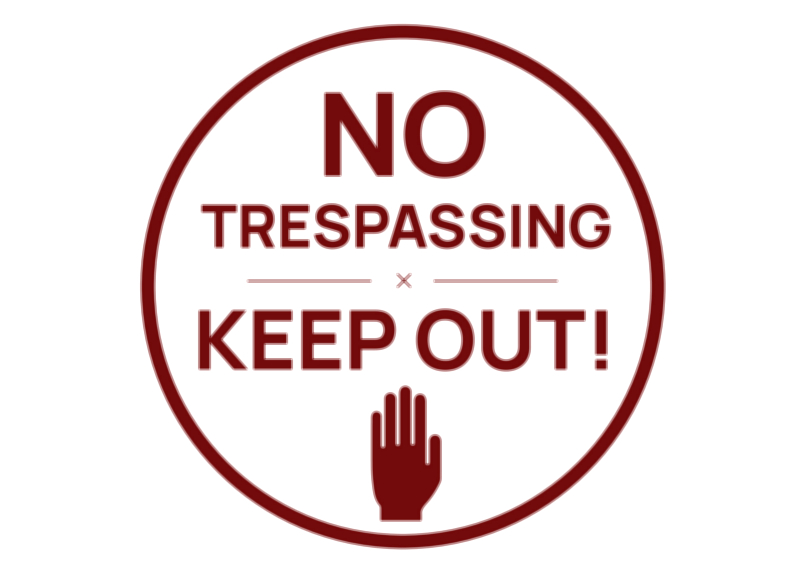
A Stop — No Trespassing sign board, especially when rendered as a sharp, high-contrast vector illustration with assertive typography and a universally understood stop symbol, functions as one of the most definitive forms of access communication in the physical world. Its message does not operate through politeness or suggestion — it communicates prohibition clearly, immediately, and without ambiguity. While many signs are designed to guide, inform, or caution, this specific sign stands as a territorial boundary marker, a legal statement, and a safety shield. The purpose is not to intimidate but to protect both sides of the boundary: the property owner or authority responsible for the restricted zone and the individual approaching the area. The simple combination of the word STOP, the phrase NO TRESPASSING, and a warning icon creates a barrier that requires no guard, gate, or verbal intervention. Even though it is displayed through concise wording and minimal graphics, its meaning resonates deeply with law, security, privacy, and controlled access. The sign becomes a visible frontier between spaces that are private or hazardous and those that are publicly accessible, ensuring that the line between the two remains understood and respected.
The necessity for such a sign arises from the reality that boundaries are not always visually obvious in the physical landscape. A property may have no fence; a research facility may have multiple buildings connected by open pathways; a construction site may appear accessible from more than one direction; a quiet farm may be surrounded by natural land that passes lookers might mistakenly assume is public; an unused industrial building may attract curious individuals unaware of the dangers inside. In all these situations, the absence of signage creates risk, not through malice but through misunderstanding. The Stop — No Trespassing sign removes doubt and ensures that crossing the threshold is never accidental. It tells a passerby that this is not an area that can be explored based on intuition or convenience. Before the first step into private or high-risk territory occurs, the warning interrupts movement and demands a conscious decision — one that prevents accidents, confusion, and conflict.
The sign also reflects a profound aspect of legal communication. Trespassing is not simply a social mistake; in most regions, it is a legal violation. When a sign stating Stop — No Trespassing is posted in a visible location, it signals that unauthorized entry is a breach of law, not merely a breach of etiquette. It serves as formal notice that the owners or administrators of the land have clearly marked the access restriction. If someone proceeds beyond the sign, they do so with full awareness and legal accountability. Without the sign, intruders — whether intentional or unintentional — may claim ignorance of property boundaries, making disputes complicated or shifting liability unfairly onto property owners. The placement of the sign builds a barrier of legal clarity: once the message is communicated, responsibility for crossing the boundary shifts entirely to the individual who chooses to ignore the warning. This protects not only assets and privacy but also the property owners from wrongful claims in cases of injury, damage, or criminal intrusion.
The safety dimension of this warning board is equally significant. Many restricted zones are off-limits not because of secrecy but because they contain real hazards. Construction areas include unstable surfaces, power tools, scaffolding, falling-object risk, and chemically treated materials. Industrial facilities may contain heavy equipment, moving machinery, toxic substances, clamps, furnaces, or electrical systems that pose immediate harm to untrained individuals. Military or research compounds often manage sensitive environments, high-voltage energy sources, explosive materials, or experimental zones that must be protected at all costs — not only for confidentiality but for human safety. Wildlife protection zones and farmland contain unpredictable animals, contamination zones, or pesticide-treated soil dangerous to people who step into them unknowingly. Lakes, mines, quarries, and unfinished buildings have hidden fall risks and drowning hazards that are not obvious to a visitor from the outside. In all such settings, the Stop — No Trespassing sign is not a power statement but a safety mechanism, shielding uninformed individuals from entering spaces they are not equipped to handle.
Privacy and emotional security are also embedded within the message of the sign. A private property — whether a home, farm, residence, storage area, workplace campus, or gated land — is meant to be a sanctuary where those who occupy it can exist without anxiety about strangers approaching unexpectedly. Uninvited presence, even if harmless, disrupts that sense of security. When a stranger walks across a yard, stands near a private entrance, or approaches a secluded building, the psychological impact on occupants can be profound. The Stop — No Trespassing sign prevents that scenario by stopping approach before discomfort arises. Rather than forcing residents, staff members, or security personnel to confront outsiders directly — which can escalate emotionally or dangerously — the sign communicates the boundary in neutral, impersonal form. It prevents intrusion without requiring confrontation or anger, preserving dignity for both sides of the interaction.
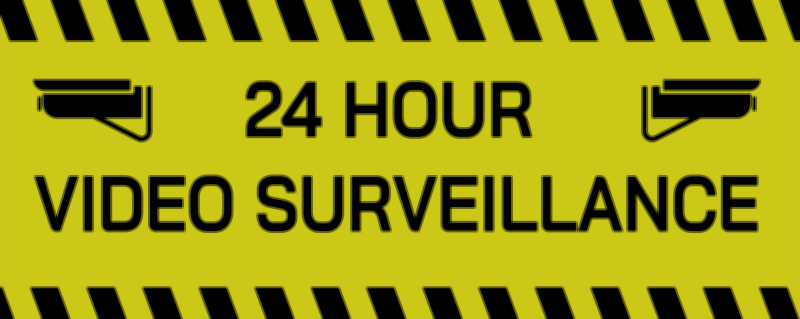
Security teams rely heavily on visible boundary signage to assess intent. When someone passes a gate or fence without warning signage, it may be unclear whether they simply misinterpreted access pathways. But if someone crosses a clearly posted Stop — No Trespassing warning, the behavior is immediately understood as deliberate violation rather than confusion. This clarity simplifies security decisions, reduces negotiation, and prevents escalation. In many cases, the existence of the sign alone deters intrusion before security personnel ever need to intervene. Criminal trespass is often opportunistic and thrives in ambiguity — the sign removes ambiguity, communicates consequences, and signals that access is monitored. It is one of the simplest deterrents available, yet one of the most psychologically effective.
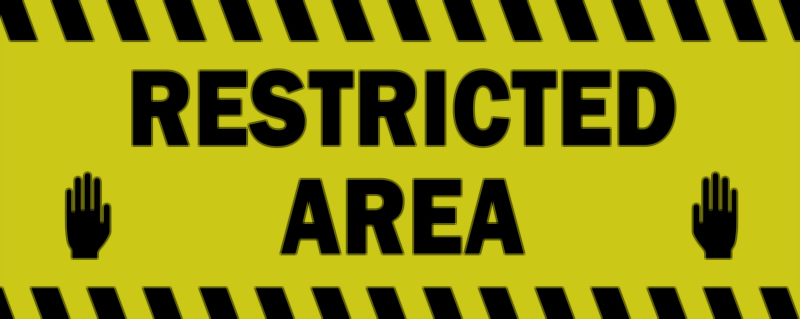
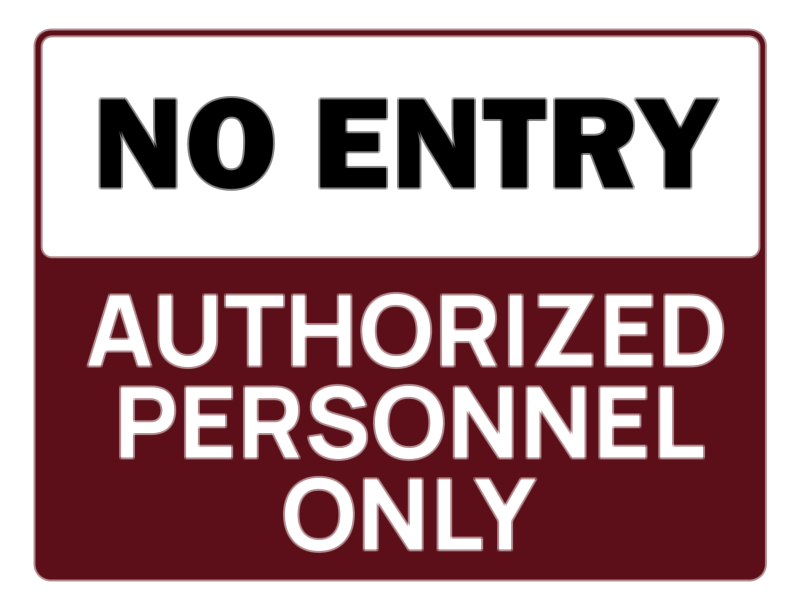
The vector illustration format contributes significantly to the sign’s function. Red, white, black, and yellow are used deliberately because human attention responds to contrast and urgency in these colors. A stop symbol — whether a hand, an octagon, or a crossing bar — is instantly recognized even from moving vehicles or at long distances. Minimal wording ensures comprehension even when individuals speak different languages or when drivers have only a moment to glance at the board. The sharp lines and scalable properties of vector design allow the sign to be printed at large scale for exterior walls or fences without loss of definition, and also at smaller scale for gates, window panels, terminals, or construction barricades. The visual impact is purposeful — not for decoration but for unmistakable recognition.
Even socially, the sign prevents unnecessary conflict. Without signage, an outsider who accidentally enters restricted property may later feel unfairly disciplined or spoken to harshly, while the property owner may feel disrespected or unsafe. This misalignment leads to resentment on both sides. A Stop — No Trespassing sign prevents emotion from driving the encounter by establishing rules ahead of time. Outsiders can comply without embarrassment, and owners do not need to defend their boundaries verbally. The warning allows mutual respect to replace confrontation.
At its deepest level, the Stop — No Trespassing Sign Board — Restricted Entry Warning Design embodies the idea that property rights, safety, and human boundaries can be enforced not through force or hostility, but through information. It represents the silent contract between the person who owns or manages a space and the person passing by: the boundary is here, and it must be respected. It protects people from danger they cannot see and protects owners from intrusion they cannot constantly guard against. It stabilizes legal expectations, minimizes liability disputes, deters opportunistic intrusion, maintains privacy and peace of mind, and nurtures a predictable and respectful environment where public and private spaces can coexist without confusion or emotional friction. Although simple to look at, the sign carries a depth of responsibility, authority, and care — making it one of the foundational tools in ensuring that physical boundaries remain safe, lawful, and clearly respected.