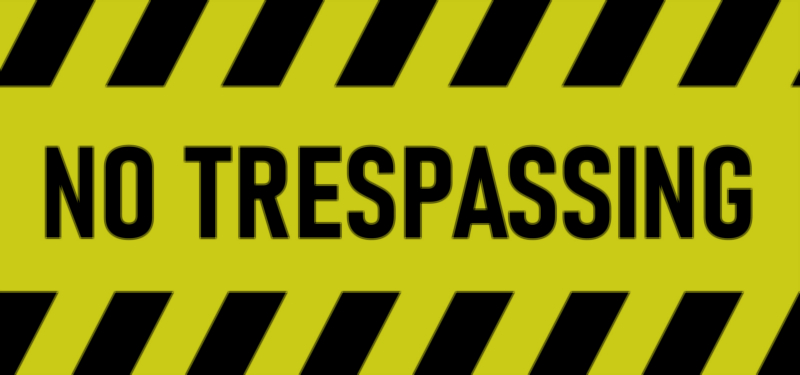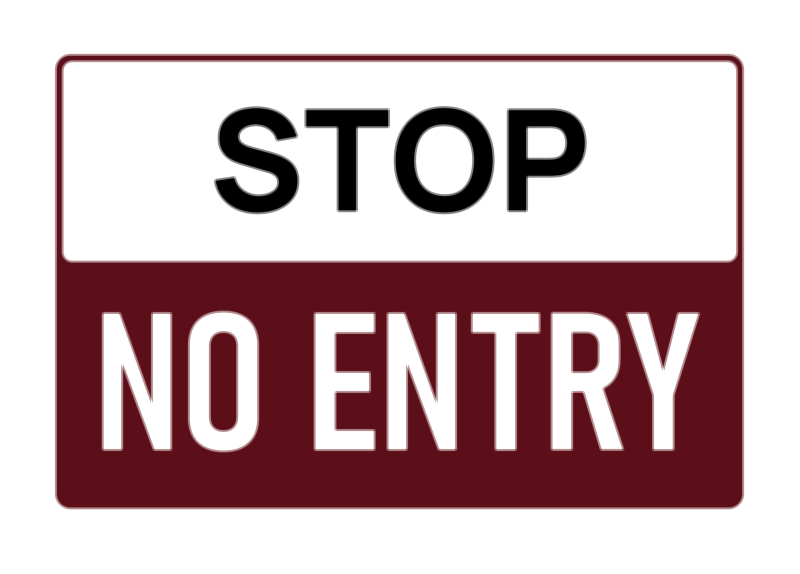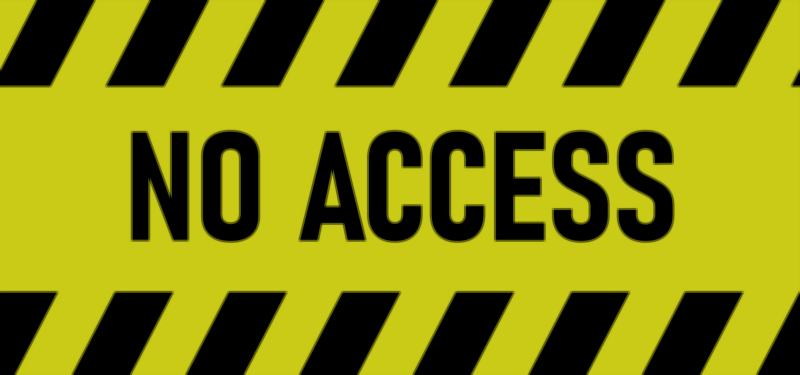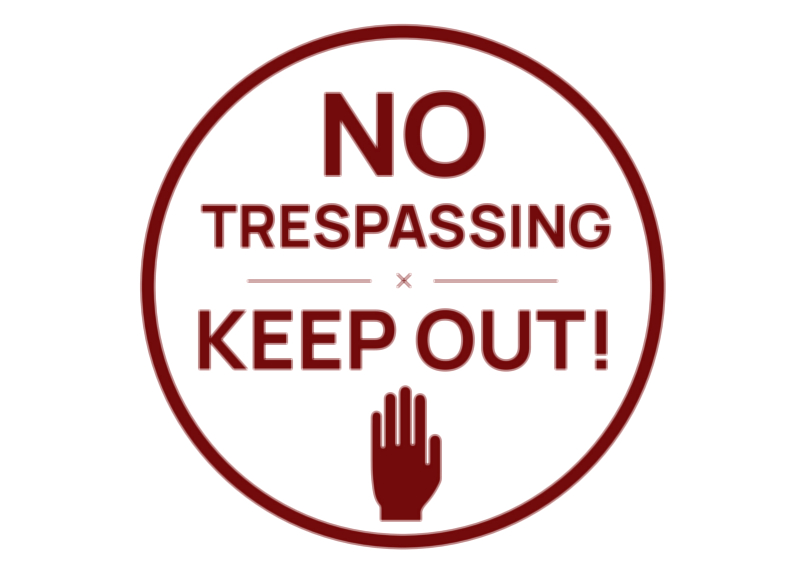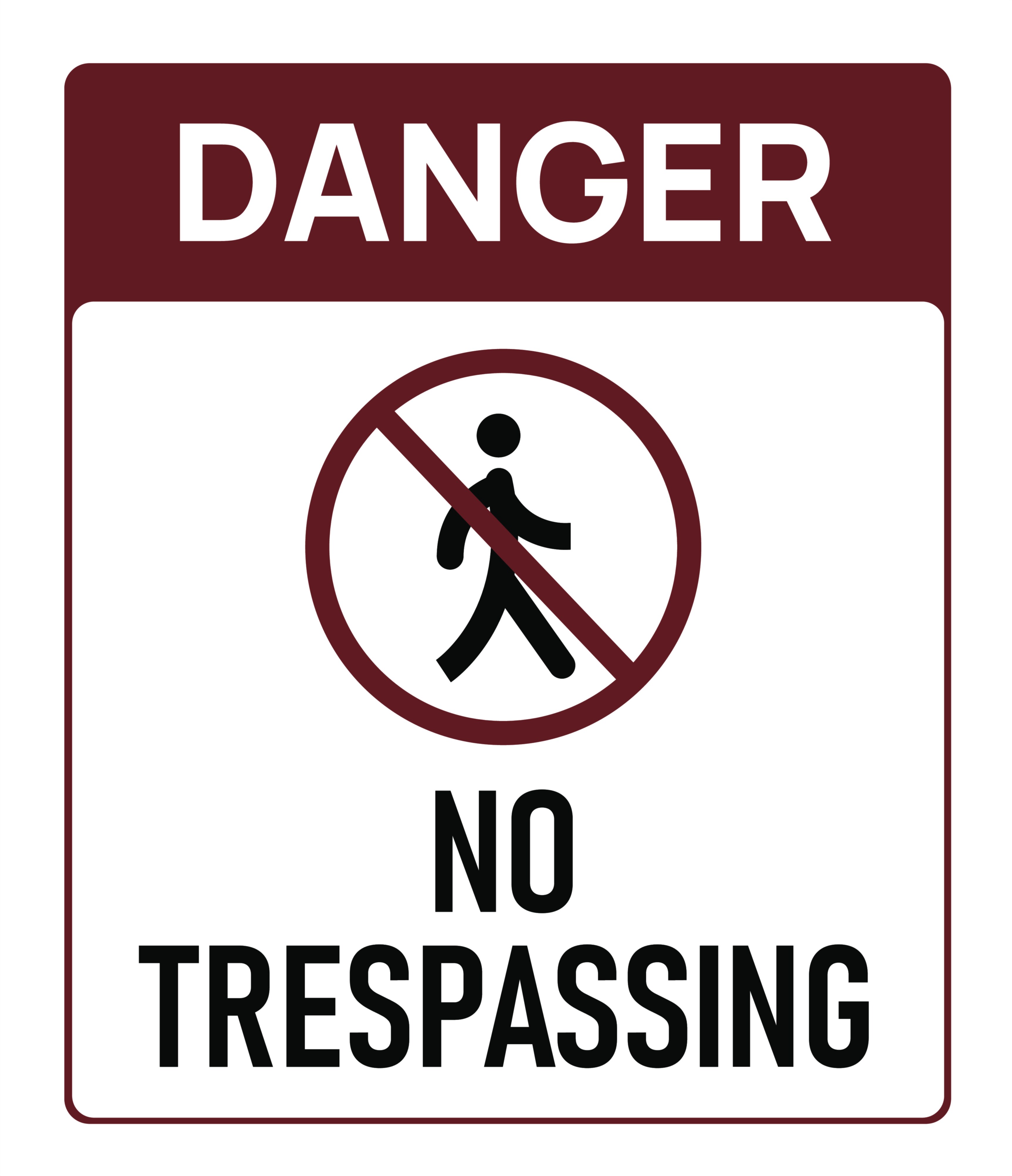
Danger — No Trespassing No Entry: Restricted Access Warning Sign
A Danger — No Trespassing No Entry warning sign, especially when rendered in a bold and sharply defined vector illustration with high-contrast colors and universally recognized prohibition symbols, communicates one of the most uncompromising instructions found in environments where physical safety, legal enforcement, and security protection must operate together without room for misunderstanding. Although the sign contains only a few words, its meaning is immense, because it simultaneously warns of immediate danger, strict prohibition of entry, and legal consequences of trespassing. The pairing of the words Danger, No Trespassing, and No Entry ensures that there is no ambiguity about the level of risk or the seriousness of the boundary being protected. The sign does not merely suggest caution or discourage entry; it establishes a decisive and non-negotiable barrier in which crossing the line poses serious hazards to life, violates property rights, disrupts operational activities, and triggers legal liability. It stops movement not through physical force, fences, or personnel intervention, but through the power of information delivered precisely at the threshold where a mistake would become irreversible.
The need for such a sign arises because many highly hazardous areas do not visually advertise their danger. Human instinct tends to judge safety by what is visible, yet countless high-risk zones appear silent, inactive, or harmless despite containing threats that could injure or kill without warning. A vacant-looking industrial lot may conceal energized equipment, chemical vapors, or automated machinery that can activate remotely. A construction site may look still after work hours even though unstable materials, partially demolished structures, or unsupported trenches can collapse under light pressure. An empty research building may appear unused although radiation, toxic laboratory residues, or secured biological agents are present inside. Quarries, mines, and remote infrastructures can look peaceful from outside while holding deadly drops, sudden ground shifts, or unmarked water pits. In such places, assumptions are dangerous because danger is invisible. Without immediate and forceful warning, a passerby who intends no harm may endanger their life within seconds. The Danger — No Trespassing No Entry sign prevents this fatal misunderstanding by allowing the environment to express its hidden hazards clearly and early, giving anyone approaching the boundary knowledge that intuition alone is not enough to stay safe.
Safety is the central purpose of the sign, and its instruction protects both the outsider and those executing high-risk work inside the restricted area. Construction workers, laboratory technicians, heavy-machinery operators, energy-sector personnel, and industrial specialists operate within an environment where risk is controlled through training, protective equipment, procedural awareness, communication systems, supervision, and emergency planning. A person entering without preparation not only exposes themselves to harm but can also distract workers, interfere with safety routines, or force operational shutdowns for emergency response. This is why the sign must communicate in absolute clarity that entry is not an option under any circumstance, not due to exclusivity, secrecy, or inconvenience but because life-threatening danger is real and present beyond the boundary. The sign prevents accidental entry by informing individuals before they step into an area where they would not understand how to protect themselves.
Legal responsibility is another deep layer behind the warning. Organizations that control hazardous areas — such as power plants, chemical facilities, large industrial projects, transportation hubs, energy infrastructures, mining operations, research institutions, and construction sites — are required by regulation to communicate danger and access limitations clearly to the public. When someone enters an unmarked hazardous area and suffers injury or causes disruption, the property owner may face legal action for failing to provide adequate warning. With a Danger — No Trespassing No Entry sign placed visibly, the organization fulfills its legal obligation to notify outsiders that the area is unsafe and strictly off-limits. If someone advances despite the warning, responsibility for the violation and any resulting harm shifts to the trespasser rather than the property owner or operator. This sign therefore protects not only physical safety but also legal boundaries by documenting that the danger was communicated in advance.
Beyond law and safety, the sign also plays a critical role in maintaining operational stability and workflow continuity. In restricted zones, even a moment of interruption from an unauthorized person can cause severe consequences. Heavy machinery cannot pause every time a curious passerby steps inside, cranes cannot modify lifting paths for unfamiliar pedestrians, and laboratories cannot risk contamination because someone walked in unaware of sterile conditions. Energy infrastructures cannot expose untrained individuals to high-voltage switchyards or turbine regions, and railway or shipping terminals cannot delay schedules because someone wandered into an area where vehicle and freight movement must remain synchronized. The Danger — No Trespassing No Entry sign ensures that only trained and authorized individuals enter, not merely to protect them, but to preserve the efficiency, concentration, precision, and rhythm required to manage high-risk operations safely.
Psychologically, the sign influences behavior even before rational thought takes place. The word Danger activates instinctive safety responses — a person stops and assesses risk rather than assuming routine access. The No Trespassing component appeals to legal awareness and discourages boundary-testing behavior. The No Entry wording communicates that permission cannot be assumed under any condition. Together, these three messages create a cognitive framework in which violating the rule feels dangerous, unlawful, and unreasonable simultaneously. Someone who might ignore a softer sign such as Restricted Area or Private Property is far less likely to test a sign that warns of both danger and trespassing consequences. This behavior-shaping effect dramatically reduces both accidental and intentional entry, preventing conflict before human enforcement becomes necessary and sparing workers from confrontational or stressful interactions.
The power of the sign also lies in its visual structure, and vector illustration enhances its effectiveness in every setting. Sharp, scalable graphics maintain full clarity whether the sign is printed small for a door label or enlarged for perimeter fencing, security gates, warehouse barriers, industrial scaffolding, or roadside construction hoardings. High-contrast safety colors — red, black, white, and yellow — trigger extremely fast visual recognition, even at night or in poor weather. Warning icons transcend language barriers, allowing domestic workers, international staff, tourists, delivery drivers, and passersby to understand instantly that entry is dangerous and not permitted. The design is not decorative; every line weight, symbol, and text hierarchy is engineered to maximize visibility and comprehension in the shortest possible timeframe, because danger zones do not allow for delayed interpretation.
Emotionally and socially, the sign protects relationships as much as it protects physical safety. When boundaries are unclear, people may enter a restricted area innocently, and workers or security personnel may feel forced to confront them urgently or aggressively to prevent danger. This can create tension, embarrassment, defensiveness, or fear for both parties. But when the warning is displayed clearly in advance, the boundary is understood without confrontation. Individuals avoid entering not because they are stopped by another human being, but because the sign communicated the risk before action occurred. Workers inside the zone gain mental reassurance knowing outsiders will not unexpectedly endanger themselves or the workplace, and the public retains dignity by choosing safety without being questioned or reprimanded.
Ultimately, the Danger — No Trespassing No Entry Vector Illustration: Restricted Access Warning Sign represents one of the highest forms of safety communication. It does not defend boundaries through physical barriers or intimidation, but through decisive information that prevents disaster before it forms. It protects life without needing to rescue, prevents legal conflict before evidence is required, preserves security without surveillance confrontation, and maintains operational stability without interruption. Behind its short and authoritative message is an entire structure of responsibility, precaution, and care — ensuring that the moment just before someone takes the next step is the moment when they receive the knowledge needed to stay safe, remain lawful, and respect the boundary that exists for the protection of everyone involved.