Lead (II) Acetate — Chemical Structure, Properties, Uses, and Industrial Significance
Lead (II) acetate, commonly written as Pb(C₂H₃O₂)₂ or Pb(CH₃COO)₂, is a widely known inorganic compound that features a distinctive combination of metallic and organic chemical components. Historically called “sugar of lead” because of its sweet taste, this material has played an important role in chemistry, industry, medicine, toxicology, and even the history of human civilization. Although it is a hazardous substance due to the toxic nature of lead, the chemical structure and properties of lead (II) acetate make it an influential compound that has been heavily used and studied for centuries. Understanding its structure provides insights into how a heavy metal becomes incorporated into organic ligands, while examining its uses reveals both technological benefits and serious safety concerns that accompany lead-based compounds.
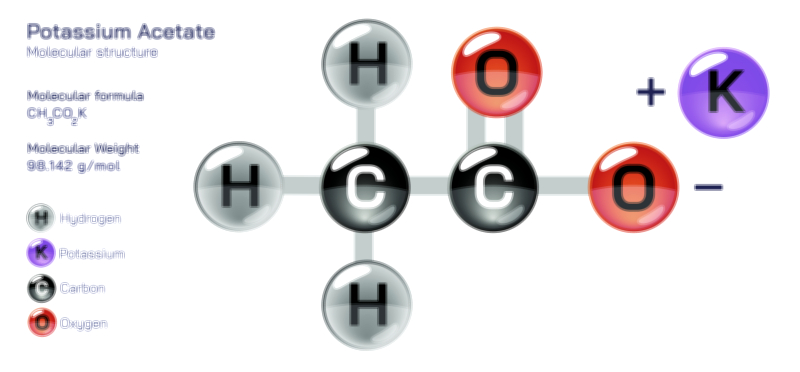
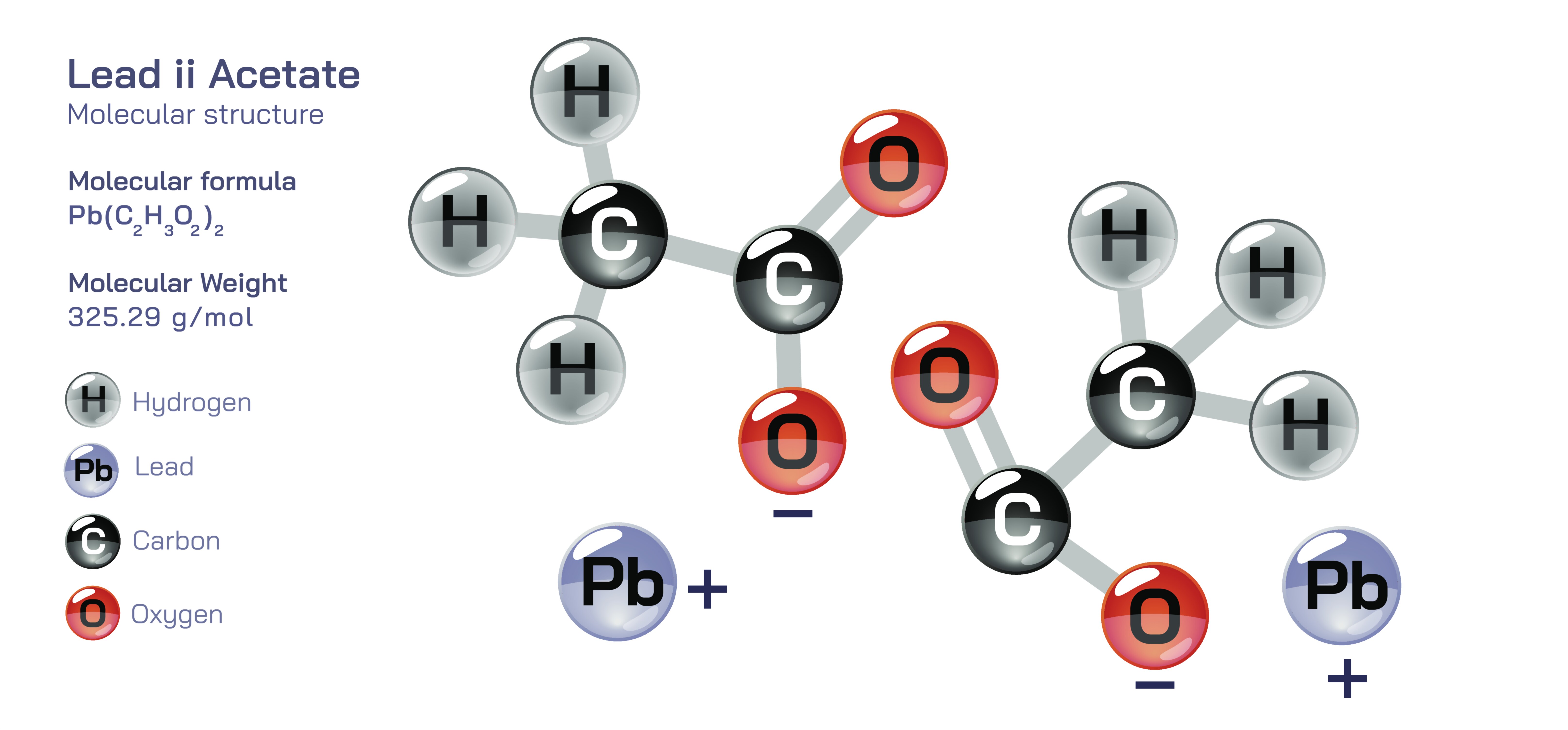
1. In lead (II) acetate, two acetate anions bond to a central Pb²⁺ cation, resulting in an electrically neutral compound. In its most common solid form, known as lead (II) acetate trihydrate (Pb(C₂H₃O₂)₂·3H₂O), the compound includes coordinated water molecules that integrate into the crystal lattice. These water molecules influence the geometry around the lead atom, producing an expanded coordination sphere that stabilizes the structure. The tendency of Pb²⁺ to form bonds with multiple oxygen atoms at different orientations reflects the stereochemical activity of the 6s² electron pair, a feature well known in the coordination chemistry of lead. This electron arrangement gives rise to molecular geometries that can appear irregular, which is characteristic of many lead compounds.
In terms of physical appearance and properties, lead (II) acetate is typically encountered as a white crystalline solid that dissolves readily in water, forming a clear solution. It also dissolves in alcohol and glycerol, and it possesses a mild sweet taste that historically contributed to accidental misuse before the toxicity of lead became widely recognized. The melting point of the trihydrate form is relatively low compared to many inorganic salts, and when heated strongly, it decomposes rather than vaporizing cleanly. In water, the dissolved lead ions may complex with additional acetate ions, forming a variety of solution species depending on temperature, concentration, and pH. Because the Pb²⁺ ion is relatively soft in the Lewis acid classification, it interacts strongly with sulfur-, nitrogen-, and oxygen-containing ligands, meaning that lead (II) acetate becomes an important reagent for laboratory precipitation reactions and coordination chemistry.
Lead (II) acetate exhibits a range of chemical reactions associated with the Pb²⁺ state. With sulfide ions, it produces black lead(II) sulfide (PbS), a reaction often used in qualitative detection of hydrogen sulfide gas. With chromate or sulfate ions, it generates brightly coloured or insoluble precipitates. Lead (II) acetate also serves as a precursor compound in synthesizing other lead-based materials because the acetate ligands can be displaced easily via ionic exchange or thermal decomposition, allowing the lead ion to enter new molecular structures. These behaviours make lead (II) acetate a chemically versatile salt, well suited for controlled reactions where lead must be introduced in an ionic form that dissolves readily.
The uses of lead (II) acetate have evolved dramatically from ancient applications to modern industrial practices. Historically, it was infamously used by the Romans as a sweetener and preservative in wine and fruit syrups because of its pleasant taste. The compound formed naturally in wine boiled in lead pots, contributing to widespread exposure to lead poisoning in antiquity. In later centuries, it was used in cosmetic products such as hair darkeners and skin preparations, again exposing people to harmful levels of lead unknowingly. It was also employed as a medical treatment in historical periods, used externally in poultices or lotions to reduce inflammation before the toxic effects of lead were understood. Today, these uses are prohibited due to the strict modern understanding of lead toxicity and its irreversible effects on the nervous system, kidneys, blood production, and cognitive development.
Despite its hazards, lead (II) acetate continues to play important roles in controlled industrial and laboratory settings. One of its major applications is in the production of other lead-based compounds and materials, since its solubility makes it an ideal starting reagent for preparing pigments, stabilizers, and specialized coatings. In analytical chemistry, lead (II) acetate paper is used to detect hydrogen sulfide gas because the paper turns black when PbS forms on its surface. The compound is also used in manufacturing waterproofing agents, mordants for dyeing textiles, and certain specialized paints, particularly in industrial environments requiring corrosion protection or high-density coatings. Lead (II) acetate has also been used to modify the drying properties of oils and varnishes, accelerating polymerization and hardening in traditional coatings and wood finishes.
Another important use of lead (II) acetate is found in the laboratory formation of metal–organic frameworks and coordination complexes, where Pb²⁺ ions serve as central nodes capable of connecting to multidentate organic ligands. Research applications include development of lead-based glass technologies, high-density ceramics, and specialty optical materials. In the manufacture of certain electronic components and radiation shielding composites, the acetate salt functions as a precursor for the creation of lead oxides and lead-based phases used for insulation or shielding against electromagnetic or nuclear radiation. Even though modern technology increasingly prefers safer substitutes wherever possible, some applications still rely on lead chemistry for properties that are not easily replicated using other metals.
Because of the toxicity of lead, contemporary use of lead (II) acetate is tightly regulated. Exposure can occur through inhalation of dust, ingestion, or absorption through damaged skin, and it accumulates gradually within the body. For this reason, industries using the compound enforce strict guidelines on handling, storage, disposal, and environmental containment. Materials containing lead, including lead–acid batteries and lead-based pigments, are now subject to controlled recycling systems to reduce environmental impact and human exposure. Although lead (II) acetate once contributed to widespread accidental poisoning through its incorporation in food, cosmetics, and domestic goods, modern chemical safety standards and awareness have drastically reduced human contact with the material outside professional settings.
What makes lead (II) acetate scientifically notable is the interplay between its structural features and its rich history of applications. The compound demonstrates how a heavy metal can form stable and soluble salts with organic anions, how coordination geometry governs chemical properties, and how oxidations states determine both reactivity and potential toxicity. It also illustrates how industrial necessity and public health can intersect, driving both innovation and regulation. In modern research, lead (II) acetate remains a material of interest because it occupies a unique position between inorganic salt chemistry and metal–organic reactivity, contributing to the development of new materials while reminding scientists that chemical progress must be balanced with safety and environmental responsibility.
In summary, lead (II) acetate stands as a compound with powerful structural and functional characteristics that have influenced science, industry, and history. Its solubility, coordination chemistry, and adaptability to synthesis continue to make it valuable in controlled laboratory and technological settings. At the same time, its role in past public health tragedies underscores the importance of responsible chemical use and regulation. Through its structural identity and diverse industrial relevance, lead (II) acetate demonstrates how a single inorganic compound can simultaneously drive technological capability and shape modern awareness of chemical safety.