𝐏𝐫𝐢𝐧𝐜𝐢𝐩𝐥𝐞 𝐨𝐟 𝐒𝐮𝐩𝐞𝐫𝐩𝐨𝐬𝐢𝐭𝐢𝐨𝐧 — 𝐃𝐞𝐞𝐩 𝐄𝐱𝐩𝐥𝐚𝐧𝐚𝐭𝐨𝐫𝐲.
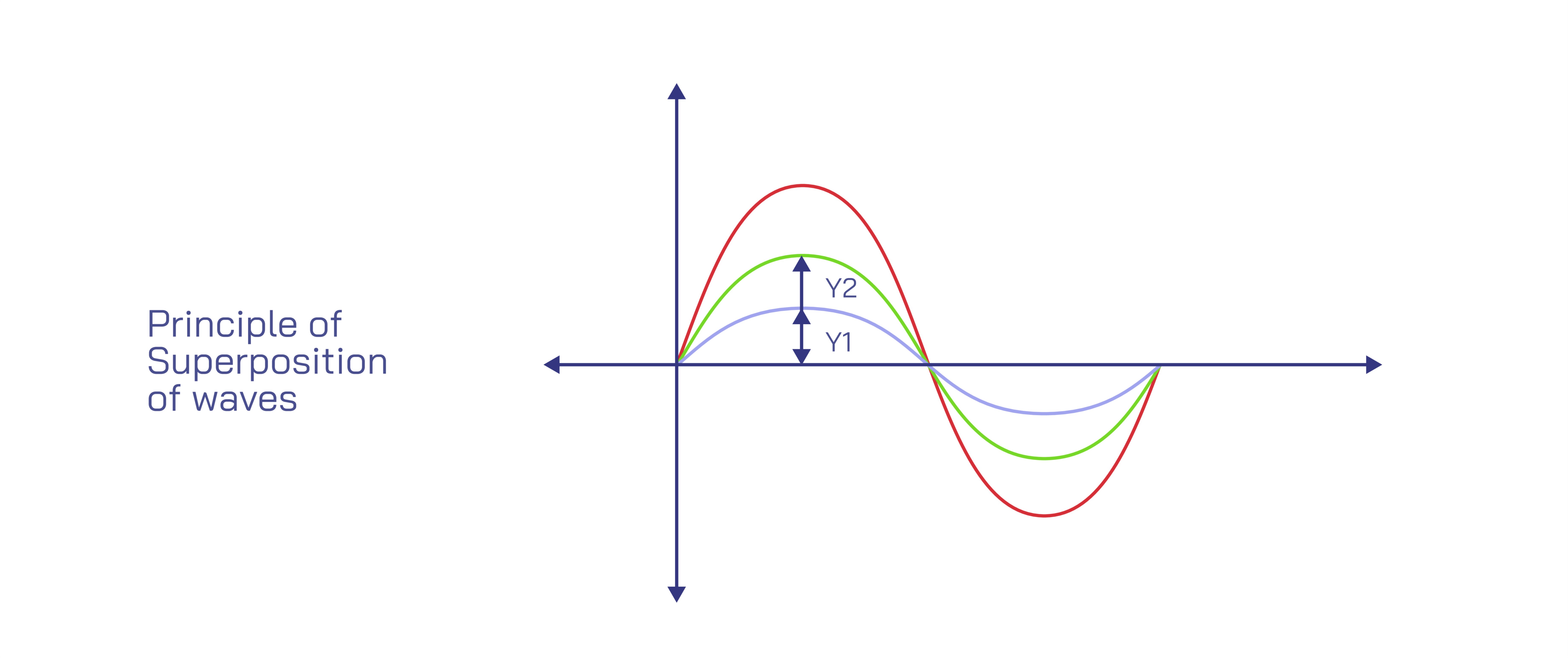
The principle of superposition is one of the most fundamental and far-reaching concepts in physics, forming the foundation for understanding wave behaviour, fields, and many advanced theories of motion and interaction. At its core, the principle of superposition states that when two or more physical influences act on a system at the same time, the combined effect is simply the sum of the individual effects produced by each influence separately, assuming the system is linear and the interactions do not alter each other’s expression. Rather than cancelling or merging into a completely new form automatically, the individual contributions coexist and create a composite outcome. This idea appears simple on the surface, yet it enables scientists to explain the formation of complex patterns, the behaviour of waves, the distribution of forces, the propagation of electric and magnetic fields, the interference of light, the structure of quantum mechanics and the collective behaviour of particles in many-body systems. Because the superposition principle applies across multiple branches of physics, it acts almost like a universal language that describes how nature handles simultaneous influences—not by replacing individual causes with a single dominant effect, but by layering effects on top of one another.
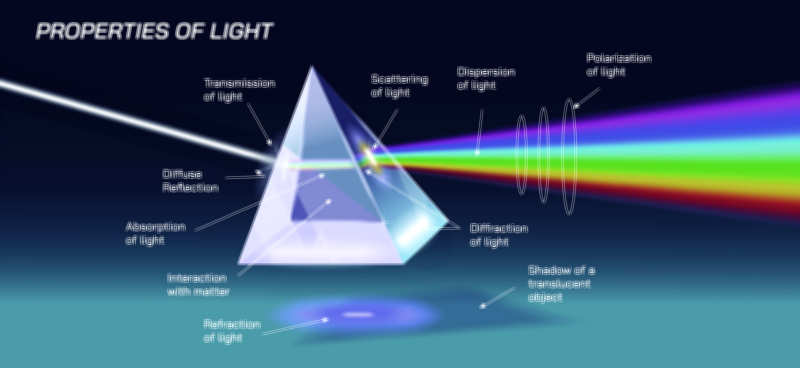
The principle becomes particularly clear when examining wave phenomena, where superposition governs the interaction of sound waves, water waves, light waves and electromagnetic radiation. If two water waves meet, they do not collide in the destructive way solid objects do. Instead, at the moment of meeting, the surface of the water rises or falls to a height equal to the algebraic sum of the displacements caused by each wave independently. Afterward, the waves continue travelling as if nothing happened. This simple but elegant demonstration represents the essence of superposition: waves can exist together in the same space without permanently altering one another. If the crests of two waves overlap, the combined displacement becomes larger; if a crest meets a trough of equal magnitude, the two momentarily cancel each other, creating what appears to be a still surface. But even cancellation is only temporary; once the waves separate again, they return to their original shapes, highlighting that superposition is a reversible and non-destructive process. In sound, this effect gives rise to musical harmony and dissonance because the overlapping compression waves add together to form rich acoustic patterns. In optics, superposition produces interference and diffraction, generating the striking rainbow fringes, holographic patterns and ripple-like distributions of light intensity visible in countless natural and engineered phenomena.
Superposition also explains the behaviour of fields, especially in classical electromagnetism. Electric and magnetic fields generated by multiple charges or currents add together independently. If many point charges are present in a region of space, the electric field at any given point is not defined by any single charge alone but by the vector sum of the fields from all charges acting simultaneously. This allows complex charge arrangements to be analysed systematically by calculating the effect of each individual charge and adding them together. The same is true for gravitational fields, which add linearly when multiple masses are present. The reason planets, moons and satellites follow predictable orbital paths is that the gravitational pull on them can be treated as the sum of contributions from all nearby celestial bodies. Without superposition, such motion would be impossible to calculate using Newton’s laws, and predictive astrophysics would collapse. Field superposition simplifies the complex into the manageable by allowing multiple influences to be mathematically combined without losing their uniqueness. A single point in space can therefore be influenced simultaneously by many electric, magnetic or gravitational interactions, and the total effect remains predictable and unambiguous because superposition applies.
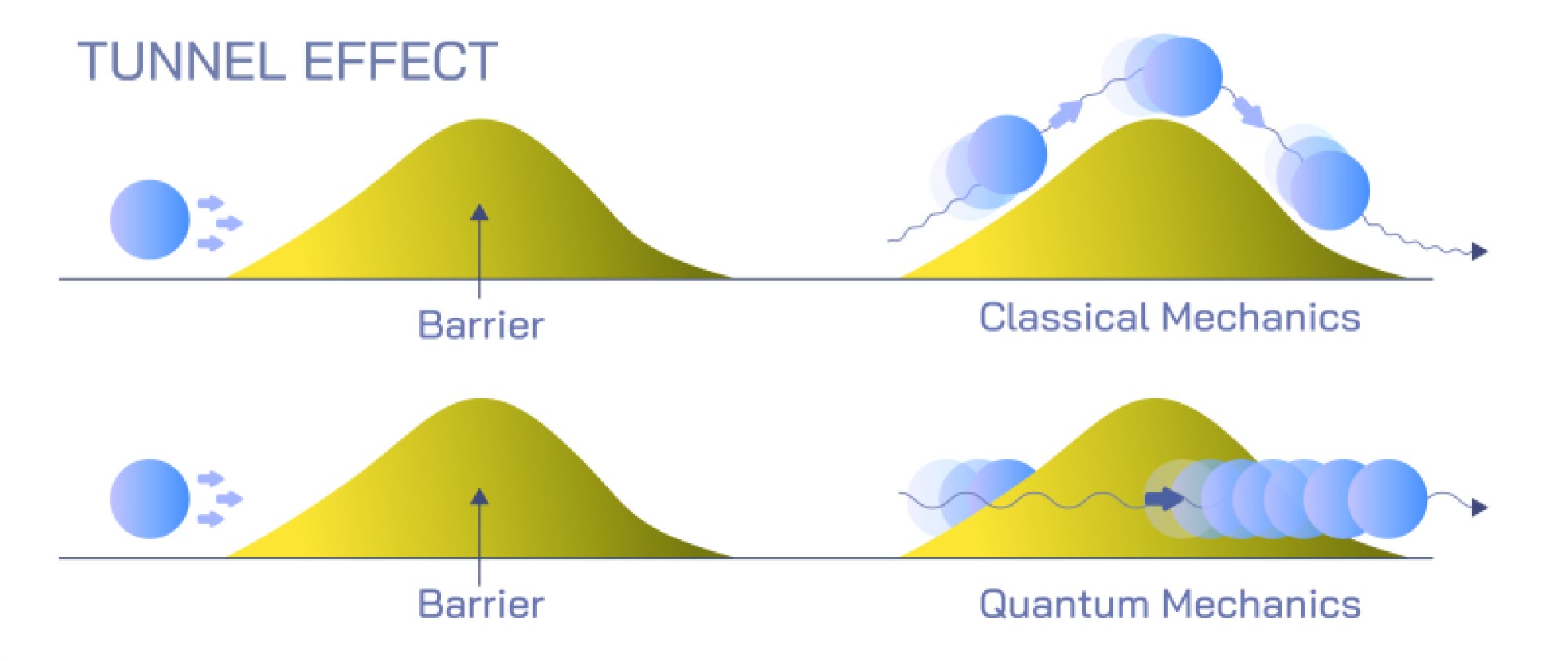
One of the most profound expansions of the superposition principle occurs in quantum mechanics, where it transforms from a principle of wave interference into a principle of probability and state coexistence. Quantum superposition states that until a measurement is made, a system such as an electron, photon or atom does not occupy a single definite state but simultaneously exists in multiple possible states, each with a certain probability amplitude. The measurable result emerges only when observation takes place. Before measurement, the electron’s position, spin or energy level cannot be described by a single value but rather by a combination—or superposition—of all possible values. This is not a symbolic convenience but an experimentally supported characteristic that explains why electrons behave like waves and particles at the same time and why interference patterns form even when particles pass through a double-slit one at a time. Each particle interferes not with other particles but with itself, because its multiple possible states superpose until interaction forces the system to resolve into a single observable outcome. The wave function, which encodes quantum information, is therefore built upon superposition. The collapse of superposition during measurement gives rise to many conceptual debates in quantum theory, but there is no debate about its reality because technologies such as lasers, magnetic resonance imaging, quantum tunnelling and quantum computing rely directly on the phenomenon.
Superposition plays a crucial role in materials science and mechanical physics as well. In structural analysis, forces acting on a beam or bridge are treated individually and then summed to predict stress distribution. Engineers are able to design massive constructions such as skyscrapers and aircraft wings because they can break down load influences into simpler components, calculate their individual contributions, and add them up to forecast deformation and safety thresholds. In acoustics, multiple sound waves inside a concert hall superpose to build a three-dimensional field of reverberation, and architects create acoustically refined structures by modelling how sound reflections add or cancel at different frequencies. Even in fluid dynamics, although turbulent systems eventually become too nonlinear to obey superposition perfectly, early stages of flow and controlled laminar motion still depend on linear superposition to predict pressure and velocity structure. Across physics and engineering, superposition offers a mathematical framework for decomposing complexity into manageable pieces without losing physical realism.
Despite its broad applicability, the principle of superposition has natural limits and cannot be used when systems become nonlinear. When intensity becomes too high, or when the medium cannot maintain proportionality, waves may distort, fields may no longer add independently and matter may undergo permanent change. For example, very high sound intensities damage air’s elastic behaviour and cause shock waves rather than linear acoustic waves. Extremely intense electromagnetic fields can alter the properties of materials and even the vacuum in extreme astrophysical environments. Plastic deformation in solids occurs when stresses become strong enough to move atoms permanently rather than elastically. These examples do not contradict the principle of superposition but demonstrate that it applies as long as the system remains linear. In linear conditions, influences add; in nonlinear conditions, influences modify one another. Recognizing when superposition holds and when it breaks down is a core skill in advanced science because the transition often marks the boundary between predictable physical behaviour and chaotic or irreversible phenomena.
The power of the superposition principle lies in its ability to unify seemingly unrelated fields of physics. Whether describing ocean waves, sound vibrations, magnetic fields, gravitational forces or quantum probability amplitudes, superposition provides a common conceptual foundation: the total effect of multiple influences is the sum of their individual effects. This idea enables physicists to construct increasingly advanced models of reality—linear algebra in quantum mechanics, Fourier analysis in signal processing, vector calculus in electromagnetism and Green’s function solutions in differential equation systems all rely on superposition. Without this principle, the natural world would be mathematically intractable; every interaction would have to be studied as a completely new event rather than as a linear combination of known patterns.
The principle of superposition therefore represents much more than a rule for waves or forces; it expresses a deep organizational pattern of nature. It teaches that complexity is built from simplicity, that multiple influences coexist rather than overwrite each other and that the behaviour of systems under many simultaneous effects can be predicted by understanding how each effect behaves alone. It is one of the clearest examples of how the laws of physics transform overwhelming complexity into elegant and calculable reality.