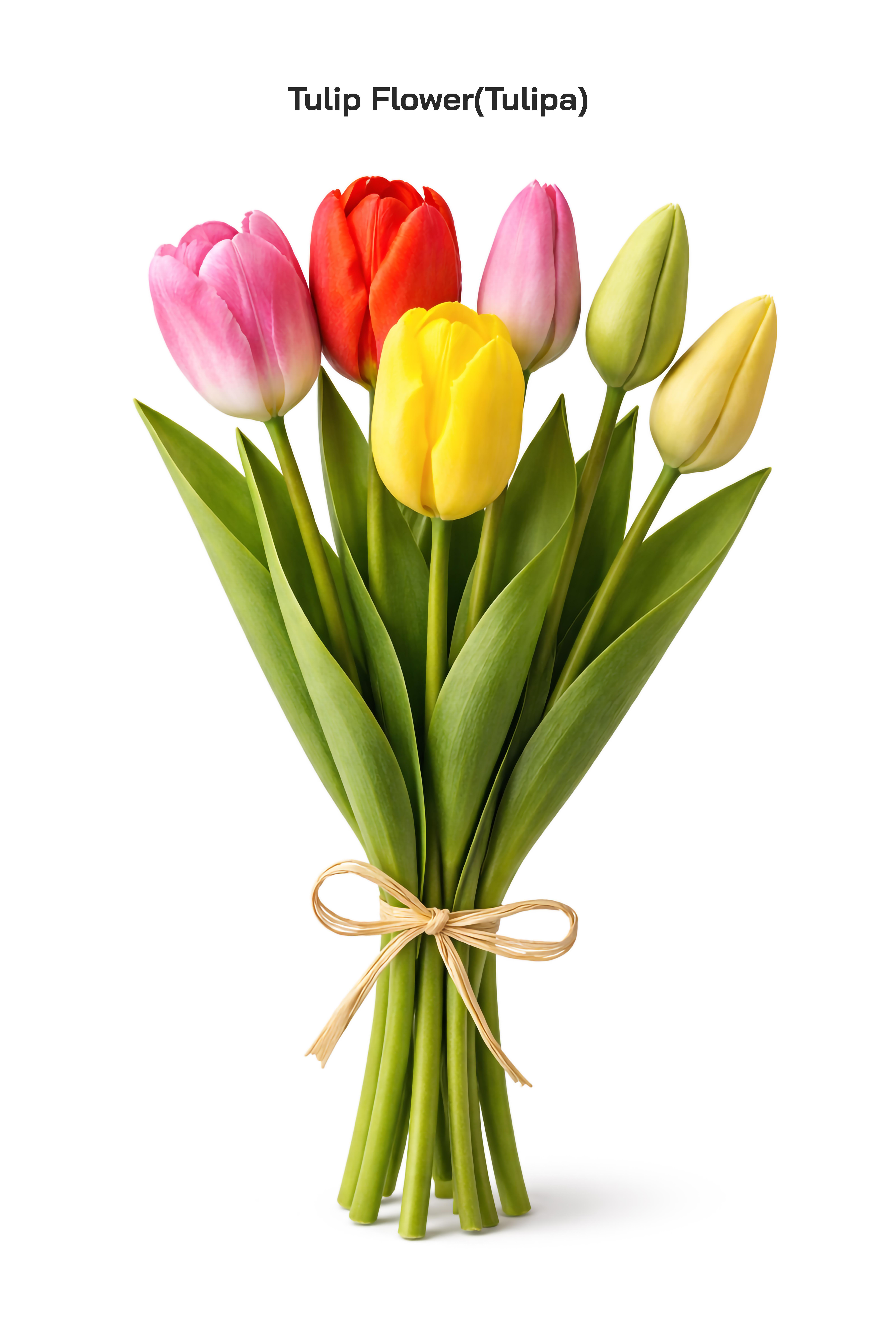
Tulip flowers are among the most admired and recognizable flowering plants in the world, celebrated for their clean lines, vibrant colors, and timeless elegance. Their characteristics reflect a perfect balance of simplicity and sophistication, making tulips a universal symbol of beauty and renewal. The tulip plant grows from a bulb and produces a single, upright stem topped with a cup-shaped bloom. This refined structure gives tulips a graceful appearance that stands out in gardens, floral arrangements, and natural landscapes alike.
The physical characteristics of tulip flowers are defined by smooth, elongated leaves and symmetrical petals that form a distinctive bowl or oval shape. The petals are soft yet resilient, allowing the flower to maintain its form throughout the blooming period. Tulips typically bloom in spring, marking the transition from winter dormancy to seasonal growth. Their short but striking flowering cycle adds to their charm, creating a sense of anticipation and visual impact wherever they are planted.
The origin of tulip flowers can be traced back to Central Asia, where wild tulips thrived in mountainous regions with cold winters and dry summers. From these native habitats, tulips gradually spread through trade routes to the Middle East and later into Europe. Over time, selective cultivation transformed wild tulips into the refined ornamental flowers known today. Their historical journey has made tulips deeply connected to cultural traditions, art, and horticultural development across continents.
Tulips are naturally adapted to temperate environments where cool winters and mild springs support healthy bulb development. They require a period of cold dormancy to trigger flowering, which makes them particularly suited to regions with distinct seasonal changes. Well-drained soil is essential, as excessive moisture can damage the bulbs. Tulips thrive in open environments with ample sunlight, which enhances color intensity and promotes strong, upright growth.
One of the most remarkable characteristics of tulip flowers is their extraordinary range of colors. Tulips are available in shades of red, yellow, white, pink, purple, orange, and many bi-color or multi-toned variations. This wide color spectrum allows tulips to be used creatively in garden design and floral decoration. Each color often carries symbolic meaning, contributing to the emotional and cultural significance of the flower in different societies.
Tulips are widely used for ornamental purposes due to their visual clarity and elegant form. They are popular in home gardens, public parks, and landscaped spaces where seasonal color is desired. As cut flowers, tulips are highly valued for bouquets and floral arrangements because of their clean stems and striking blooms. Their ability to complement both minimalist and elaborate designs makes them a favorite among florists and event decorators.
Elegance is one of the defining qualities of tulip flowers. Unlike heavily layered or highly fragrant blooms, tulips convey beauty through simplicity and proportion. Their upright posture, smooth petals, and balanced form create a sense of refinement that appeals across cultures. This understated elegance has made tulips a symbol of grace, harmony, and renewal in art, literature, and garden aesthetics.
In addition to their decorative value, tulip flowers have been associated with traditional medicinal uses in certain cultures. Historically, extracts from tulip petals and bulbs were used in folk remedies for skin soothing and minor inflammations. While tulips are not a primary medicinal plant in modern medicine, their historical use reflects the broader relationship between flowering plants and traditional healing practices. Care is required, as some parts of the tulip plant can be irritating if misused.
The popularity of tulip flowers is truly global. They are celebrated in seasonal festivals, admired in botanical gardens, and cultivated on a large commercial scale for the floral industry. Their widespread appeal lies in their adaptability, visual impact, and cultural symbolism. Tulips are often associated with spring celebrations and new beginnings, reinforcing their emotional connection with people worldwide.
Tulip flowers also display fascinating biological behavior that becomes apparent during their growth and blooming phases. One notable trait is their phototropic response, meaning tulips subtly adjust their orientation in response to light. As daylight shifts, tulip stems can gently bend toward brighter areas, optimizing exposure and enhancing photosynthetic efficiency. This responsiveness contributes to their upright yet dynamic appearance and explains why tulips in gardens or indoor arrangements may appear to lean slightly over time.
The internal structure of tulip bulbs plays a critical role in the plant’s life cycle. Each bulb functions as a self-contained storage unit, holding nutrients and energy accumulated during the previous growing season. These reserves fuel early spring growth before leaves are fully developed. This self-sufficiency allows tulips to emerge rapidly once conditions are favorable, giving them a competitive advantage in early spring environments when other plants are still dormant.
Tulips also exhibit a unique flowering behavior influenced by temperature fluctuations. Their blooms are sensitive to warmth and coolness, opening wider in warmer conditions and closing slightly during cooler periods or at night. This thermonastic movement helps protect reproductive structures from cold stress while also extending the visual lifespan of the flower. The opening and closing motion adds a subtle sense of life and responsiveness that enhances their appeal.
From a genetic perspective, tulips are remarkably diverse. Centuries of cultivation and hybridization have produced thousands of cultivars with variations in petal shape, bloom size, stem height, and flowering time. This genetic richness allows tulips to be categorized into distinct groups, each adapted to specific garden uses or aesthetic preferences. Such diversity ensures that tulips remain relevant to both traditional and modern horticultural styles.
Tulip flowers also have an interesting relationship with soil chemistry. They perform best in soils with balanced nutrient levels and neutral to slightly acidic pH. Excessive nitrogen can encourage leaf growth at the expense of flowers, while deficiencies can limit bloom development. This sensitivity makes tulips a useful indicator plant for gardeners, as their performance often reflects underlying soil conditions and overall garden health.
In pollination ecology, tulips play a modest but meaningful role. While they are not heavily scented, their bright colors attract early-season pollinators such as bees and certain insects emerging after winter. These pollinators benefit from the nectar and pollen provided by tulips at a time when few other flowers are available. This interaction supports early pollinator activity and contributes to broader ecosystem stability during seasonal transitions.
Tulips also hold a distinctive place in economic history beyond horticulture. Their cultivation and trade once influenced financial systems, social behavior, and artistic expression. While modern tulip production is stable and regulated, this historical context continues to shape how tulips are perceived—as symbols of value, desire, and aesthetic refinement. This layered meaning adds depth to their continued popularity.
In landscape design, tulips are often used strategically to create visual rhythm and contrast. Their uniform height and clear color blocks allow designers to guide the viewer’s eye across a space. When planted in groups, tulips can create striking patterns that emphasize symmetry or intentional asymmetry. Their predictable growth habit makes them ideal for structured designs, while mixed plantings can produce more naturalistic effects.
Tulips also respond strongly to post-bloom care, which influences future performance. After flowering, allowing the leaves to remain until they naturally fade is essential for replenishing bulb energy stores. This process directly affects bloom quality in subsequent seasons. Proper aftercare highlights the long-term relationship between gardener and plant, emphasizing patience and understanding of plant physiology.
In cut-flower use, tulips continue to grow even after being harvested. Their stems can elongate and bend toward light sources while in water, creating dynamic arrangements that change over time. This characteristic sets tulips apart from many other cut flowers and requires thoughtful placement and design. Florists often embrace this movement, using it to create organic, flowing compositions.
Tulips also carry symbolic meanings that evolve across cultures and contexts. While often associated with love and renewal, they can also represent balance, elegance, and resilience due to their ability to emerge after harsh winters. This symbolic flexibility allows tulips to be used in a wide range of ceremonial and emotional settings, from celebrations to quiet personal expressions.
From an environmental standpoint, tulip cultivation highlights the importance of sustainable bulb farming. Responsible practices focus on soil health, crop rotation, and reduced chemical inputs to preserve land quality over time. As consumer awareness grows, sustainably grown tulips are increasingly valued, aligning beauty with environmental responsibility.
Tulip flowers also exhibit a refined adaptation strategy that allows them to survive and thrive in regions with unpredictable seasonal transitions. Their bulbs are naturally insulated by layered outer skins that protect the inner tissues from temperature extremes, soil-borne pathogens, and moisture loss. This protective structure enables tulips to endure freezing winters underground while remaining dormant and physiologically stable. Once environmental cues align, the bulb activates growth with remarkable efficiency, demonstrating a survival strategy shaped by harsh native conditions.
Another important aspect of tulip biology lies in their energy allocation system. Unlike perennial plants that spread resources across multiple flowering points, tulips concentrate their stored energy into a single dominant bloom. This focused investment results in strong stems, well-defined petals, and vivid coloration. While this strategy limits the number of flowers per bulb, it maximizes visual impact and reproductive success during a short blooming window. This evolutionary trade-off explains the tulip’s bold yet minimalist floral presentation.
Tulips also respond noticeably to microenvironmental changes within the soil. Slight variations in soil compaction, moisture distribution, or temperature can influence stem height and bloom uniformity. Because of this sensitivity, tulips often serve as early indicators of soil imbalance in ornamental plantings. Gardeners and horticulturists frequently observe tulip performance to assess planting depth consistency, drainage effectiveness, and localized soil conditions.
The vascular system of tulips contributes significantly to their clean, upright growth. Water and nutrients are transported efficiently through strong, unbranched stems, supporting the flower head without excessive structural complexity. This streamlined internal system reduces energy loss and supports the flower’s iconic vertical posture. The simplicity of this structure reinforces the tulip’s visual clarity and architectural appeal in both natural and designed spaces.
Tulip petals also possess a subtle surface texture that enhances light interaction. Their slightly waxy coating reflects sunlight in a soft, diffused manner rather than harsh glare. This quality intensifies color saturation while preserving a smooth, velvety appearance. The way tulip petals interact with light is a key reason they photograph so well and maintain visual impact even under varying lighting conditions.
In terms of lifecycle timing, tulips follow a tightly regulated seasonal rhythm. Their growth, flowering, and dormancy phases are synchronized with environmental cues such as soil temperature and day length. This precise timing minimizes competition with other plants and ensures efficient use of resources. Once flowering is complete, the plant shifts its focus entirely to energy recovery rather than continued growth, demonstrating a highly disciplined biological cycle.
Tulips also show a unique response to planting density. When planted too closely, they may compete for nutrients and produce shorter stems or smaller blooms. When given adequate spacing, however, they exhibit full structural expression and color clarity. This sensitivity makes tulips valuable in studying plant competition and spacing dynamics in ornamental horticulture.
The leaves of tulip plants play a more critical role than their simple appearance suggests. Their broad, smooth surfaces are optimized for efficient photosynthesis during a relatively brief period. These leaves act as energy collectors, replenishing the bulb after flowering. Their gradual yellowing is a visible sign of nutrient transfer back into the bulb, illustrating a complete and efficient internal recycling process.
Tulips have also influenced botanical classification and breeding science. Their genetic responsiveness to selective breeding has made them a model plant for studying flower color variation, petal symmetry, and growth regulation. Breeders have long observed how minor genetic changes can produce dramatic visual differences, making tulips an important subject in ornamental plant genetics.
From a psychological and aesthetic perspective, tulips evoke a sense of order and calm. Their symmetry, limited petal count, and upright stance create visual balance that is often associated with clarity and composure. This effect explains why tulips are frequently used in minimalist design settings, meditation spaces, and formal garden layouts where visual harmony is desired.
Tulips also demonstrate resilience in cultivated landscapes when managed thoughtfully. While they are seasonal, their predictable performance and low maintenance requirements during dormancy make them efficient ornamental plants. Once planted correctly, they require minimal intervention, aligning well with sustainable gardening practices that prioritize long-term planning over constant upkeep.
In urban environments, tulips contribute to seasonal biodiversity by supporting early insect activity and adding temporary color to otherwise dormant landscapes. Their presence in public green spaces improves visual well-being and signals seasonal change to urban populations, reinforcing the psychological connection between people and natural cycles.
Culturally, tulips continue to evolve as symbols. Beyond traditional associations, they are increasingly linked with concepts of intentional living, simplicity, and appreciation of fleeting beauty. Their brief bloom period serves as a reminder of impermanence and renewal, themes that resonate strongly in modern lifestyle philosophies.
Tulips also maintain relevance in contemporary floristry due to their ability to adapt to new design trends. Whether arranged in tightly bound bunches or loose, organic compositions, tulips retain their identity without overwhelming surrounding elements. This adaptability allows them to remain fashionable across changing aesthetic preferences.
Ultimately, tulip flowers embody an intricate balance of biological efficiency, visual restraint, and cultural meaning. Their success as one of the world’s most beloved flowers is not the result of extravagance, but of precision, timing, and harmony. Through their bulb structure, growth discipline, light interaction, and symbolic resonance, tulips continue to demonstrate how nature achieves lasting impact through thoughtful simplicity. Tulip flowers represent more than seasonal decoration. Their biological precision, genetic diversity, environmental sensitivity, and cultural depth combine to create a plant that resonates on multiple levels. Tulips demonstrate how a seemingly simple flower can embody complex natural processes and human meanings simultaneously. Through their growth, movement, and enduring presence in human history, tulips continue to captivate as living expressions of harmony between nature, culture, and time.
In summary, tulip flowers combine distinctive physical characteristics, rich historical origins, and remarkable environmental adaptability. Their wide range of colors, ornamental versatility, elegant form, and enduring popularity make them one of the most cherished flowers in horticulture. Whether admired in natural landscapes or carefully arranged in floral designs, tulips continue to represent timeless beauty, cultural heritage, and the enduring appeal of nature’s artistry.