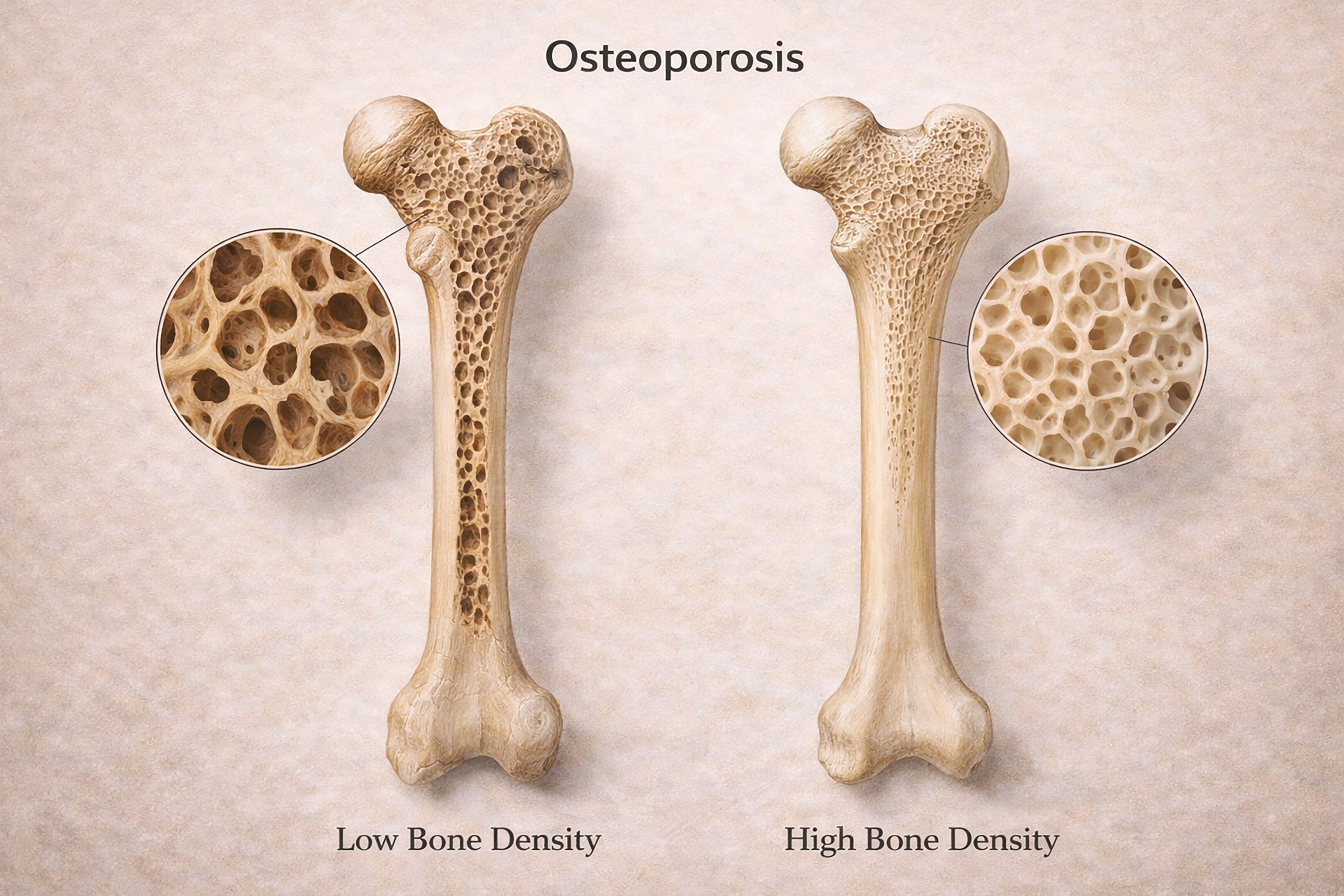
Osteoporosis is a condition characterised by a significant reduction in bone density and deterioration of bone structure, leading to fragile bones and an increased risk of fractures. To fully understand osteoporosis, it is essential to compare low bone density with high bone density, as this contrast clearly illustrates how bone strength, structure, and function change over time or due to disease. The difference between low and high bone density is not merely a matter of thickness but involves deep structural changes within the bone itself.
Bone is a living tissue that constantly undergoes remodeling. Old bone is broken down and replaced with new bone through a balanced process that maintains strength and integrity. High bone density represents a healthy state in which bone formation and bone breakdown are well balanced. In contrast, low bone density occurs when bone breakdown exceeds bone formation, resulting in gradual bone loss and weakening. Osteoporosis represents the advanced stage of this imbalance.
High bone density is characterized by a strong and compact bone structure. In healthy bones, the outer layer known as cortical bone is thick and dense, providing solid protection and support. Inside the bone, the trabecular bone forms a tightly connected network of small struts that distribute mechanical stress efficiently. This dense internal architecture allows bones to withstand daily physical forces such as walking, lifting, and minor impacts without breaking.
In individuals with high bone density, bones are resilient and resistant to fractures. The spaces within the trabecular bone are small, and the connections between bone structures are numerous and well organized. This internal strength allows bones to absorb energy and maintain stability even under pressure. As a result, the risk of fractures is low, and bones recover more easily from minor stress.
Low bone density, on the other hand, reflects a weakening of both the outer and inner bone structure. In osteoporosis, cortical bone becomes thinner, reducing the bone’s protective shell. At the same time, trabecular bone loses its dense network, with struts becoming thinner, fewer, and more widely spaced. This creates a porous and fragile internal structure that cannot distribute stress effectively.
The visual difference between high and low bone density is striking when viewed under magnification or through imaging techniques. Healthy bone appears compact and uniform, while osteoporotic bone looks porous, with large gaps and reduced connectivity. These structural changes greatly reduce bone strength, even if the overall size of the bone appears unchanged.
One of the most important consequences of low bone density is an increased risk of fractures. In healthy bones, a fall or sudden movement may cause only minor injury or none at all. In osteoporotic bones, even low-impact events such as bending, coughing, or a minor fall can lead to fractures. Common fracture sites include the hip, spine, and wrist, which can significantly affect mobility and quality of life.
Bone density also plays a crucial role in posture and body structure. High bone density helps maintain the normal shape and alignment of the skeleton. Low bone density, particularly in the spine, can lead to compression fractures of the vertebrae. Over time, these fractures may cause loss of height, stooped posture, and chronic back pain. These changes are common signs of advanced osteoporosis.
The difference between low and high bone density is influenced by several factors. Age is one of the most significant factors, as bone density naturally decreases with aging. However, nutrition, physical activity, hormonal balance, and lifestyle choices also play major roles. Adequate intake of minerals supports high bone density, while sedentary lifestyle and poor nutrition accelerate bone loss.
From a functional perspective, high bone density supports an active and independent lifestyle. Strong bones provide a stable framework for muscles and joints, enabling smooth movement and physical performance. Low bone density compromises this framework, increasing vulnerability to injury and limiting physical activity due to fear of fractures or pain.
Bone density differences are also important in medical assessment. High bone density indicates lower fracture risk and better skeletal health, while low bone density signals the need for preventive or corrective measures. Early identification of bone density reduction allows individuals to take steps to protect bone health before osteoporosis becomes severe.
The progression from high to low bone density is usually slow and silent. In many cases, individuals are unaware of bone loss until a fracture occurs. This makes understanding the difference between healthy and osteoporotic bone especially important for awareness and prevention. Visual diagrams comparing bone density help illustrate how bone strength is lost gradually and why early care matters.
In educational and clinical settings, the comparison between low and high bone density is used to explain osteoporosis in a clear and relatable way. Seeing the contrast between strong, dense bone and weak, porous bone helps learners understand why osteoporosis is sometimes called a silent disease and why it has serious consequences if left unmanaged.
In conclusion, the difference between low and high bone density lies in bone structure, strength, and resilience. High bone density represents healthy, compact bones with strong internal architecture and low fracture risk. Low bone density, as seen in osteoporosis, involves thinning of bone tissue, loss of internal connectivity, and increased fragility. Understanding this difference is essential for recognizing the impact of osteoporosis, promoting bone health awareness, and encouraging preventive measures to maintain strong and healthy bones throughout life.