Infection Prevention with Ultraviolet Light: A Detailed Description
Understanding Why Ultraviolet Light Is a Powerful Infection-Control Tool
Ultraviolet light has emerged as one of the most effective non-chemical methods for reducing the spread of infections in environments where eliminating harmful microorganisms is essential. The UV spectrum contains a specific band known as UV-C, which possesses strong germicidal properties capable of inactivating viruses, bacteria, and fungi before they have the opportunity to infect a host. As modern living continuously exposes people to multiple layers of microbial risk in shared spaces, hospitals, public transport, office buildings, and even homes, ultraviolet disinfection offers a layer of protection that does not rely on physical contact or chemical cleaning. It creates an invisible barrier where harmful pathogens lose their ability to replicate, drastically lowering the chances of disease transmission. This technology has become widely adopted in institutional settings, but its relevance in personal and commercial environments has grown rapidly due to increasing awareness of airborne and surface-based infections.
How UV-C Light Interacts with Microorganisms
UV-C light prevents infection by disrupting the inner structures of microbes at a molecular level. When viruses or bacteria are exposed to UV-C wavelengths, the energy from the light damages their genetic material by altering the arrangement of their internal components. This interference prevents the microbe from multiplying or performing the biological functions required to cause infection. Even though the pathogen may not be physically destroyed, once its genetic code is altered, it becomes harmless because it cannot reproduce or invade living cells. This mechanism allows UV-C to neutralize a wide range of microorganisms, including those that are resistant to chemical disinfectants or capable of surviving harsh environmental conditions. By keeping microbes from functioning, UV-C breaks the cycle of infection before it begins.
Types of Ultraviolet Light Used for Infection Prevention
The ultraviolet spectrum is divided into UV-A, UV-B, and UV-C, but only UV-C is used for germicidal purposes because of its unique wavelength range. UV-C, particularly around the 254-nanometer region, has the highest germ-killing efficiency because its energy is absorbed directly by microbial genetic material. Some modern devices also utilize far-UV-C, a slightly shorter wavelength band believed to be effective against pathogens while remaining safer for use in occupied rooms. Because UV-C does not rely on chemical reactions, its disinfecting effects remain consistent across different microbial species. This versatility has made UV-C one of the most important tools in environments where infection prevention cannot rely solely on manual cleaning.
UV-C Disinfection of Air and Airborne Pathogens
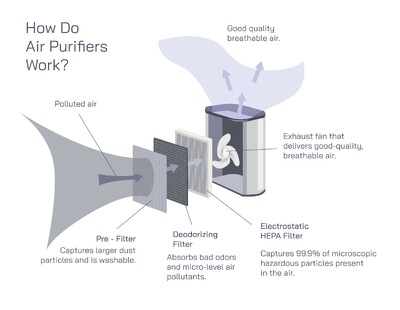
One of the greatest strengths of ultraviolet disinfection lies in its ability to sanitize air as it moves through a room. Airborne infections spread easily through droplets that linger after coughing, speaking, or even normal breathing. UV-C air purification systems draw air past germicidal lamps, exposing microscopic particles to light that neutralizes pathogens floating through the environment. Once processed, the cleaned air reenters the room free from viable microbes. Upper-room UV-C systems also allow light to remain concentrated near ceilings while natural air circulation carries pathogens upward, gradually reducing airborne contamination. This continuous cycle creates a safer breathing environment and reduces the spread of respiratory infections.
UV-C Surface Disinfection and Object Sterilization
Surfaces often serve as silent carriers of infection because microbes can survive for hours or even days on commonly touched objects. UV-C devices designed for surface disinfection emit controlled pulses or waves of ultraviolet light that eliminate these microorganisms without requiring chemical sprays. Hospitals widely use UV-C robots that move through rooms after manual cleaning, delivering concentrated bursts of germicidal light to high-risk zones such as bed rails, medical equipment, and flooring. Smaller UV-C devices are used to disinfect tools, electronics, personal items, and sensitive equipment that should not be exposed to moisture or corrosive chemicals. By targeting surfaces where pathogens accumulate, UV-C acts as an important layer of defense in environments where contact transmission is a serious concern.
Water Disinfection Using Ultraviolet Systems
Ultraviolet purification is also a trusted method for disinfecting water because UV-C inactivates viruses and bacteria without leaving chemical residues. Municipal treatment systems often use UV-C to ensure water remains safe for consumption, while home systems rely on compact UV modules to purify drinking water at the point of use. The UV-C energy affects pathogens suspended in water in the same way it affects airborne or surface microbes, ensuring they cannot reproduce or cause disease. This method maintains water purity without altering taste, smell, or natural mineral content, making UV-C one of the most environmentally friendly water-treatment strategies.
Why UV-C Is Used in Medical and Healthcare Settings
In hospitals and clinics where infection control is vital, ultraviolet light offers consistent results that complement manual cleaning and chemical disinfection. Healthcare environments contain patients with weakened immune systems, making them more vulnerable to microbial threats. UV-C helps maintain sterile operating rooms, disinfect equipment, control hospital-acquired infections, and reduce microbial spread in waiting areas, hallways, and intensive care units. Because UV-C acts quickly and leaves no residue, it allows continuous protection without interrupting essential medical processes. Its adoption in healthcare has grown in response to the increasing need for robust, non-chemical methods capable of keeping complex environments safe.
Advantages of Using Ultraviolet Light for Infection Prevention
UV-C technology offers several important benefits. It does not rely on harsh chemicals, making it safe for many materials and objects that cannot tolerate liquid disinfectants. It leaves no odor, residue, or harmful by-products. It works quickly, reaching microscopic particles that may hide in crevices or surfaces overlooked during manual cleaning. Because microorganisms cannot build resistance to ultraviolet radiation, UV-C remains effective even against hard-to-kill species. By integrating UV-C into everyday environments, individuals and institutions gain a powerful layer of protection that enhances cleanliness, reduces infection risk, and increases overall safety.
Limitations and Precautions in UV-C Use
Although UV-C is a valuable infection-prevention method, it must be used with care. Direct exposure to UV-C can harm skin and eyes, so devices are designed with shielding, timers, or motion sensors to prevent accidental contact. UV-C systems must be properly maintained, aligned, and cleaned to ensure maximum effectiveness. Users must also recognize that UV-C should complement, not replace, traditional cleaning practices because physical debris can block UV-C rays and reduce their efficiency. When used thoughtfully and correctly, UV-C systems deliver exceptional disinfection power while ensuring safety for occupants and operators.
A Modern Solution for a Healthier and Safer Environment
Ultraviolet light has become one of the most reliable and forward-thinking tools for infection prevention in both personal and professional settings. Its ability to neutralize pathogens in air, water, and on surfaces makes it indispensable for maintaining health in crowded urban spaces, healthcare environments, homes, and workplaces. By incorporating UV-C into everyday hygiene strategies, individuals and organizations create cleaner surroundings and significantly reduce the risk of disease transmission. Ultraviolet prevention technology represents a science-driven approach that supports long-term well-being and contributes to building safer environments for everyone.