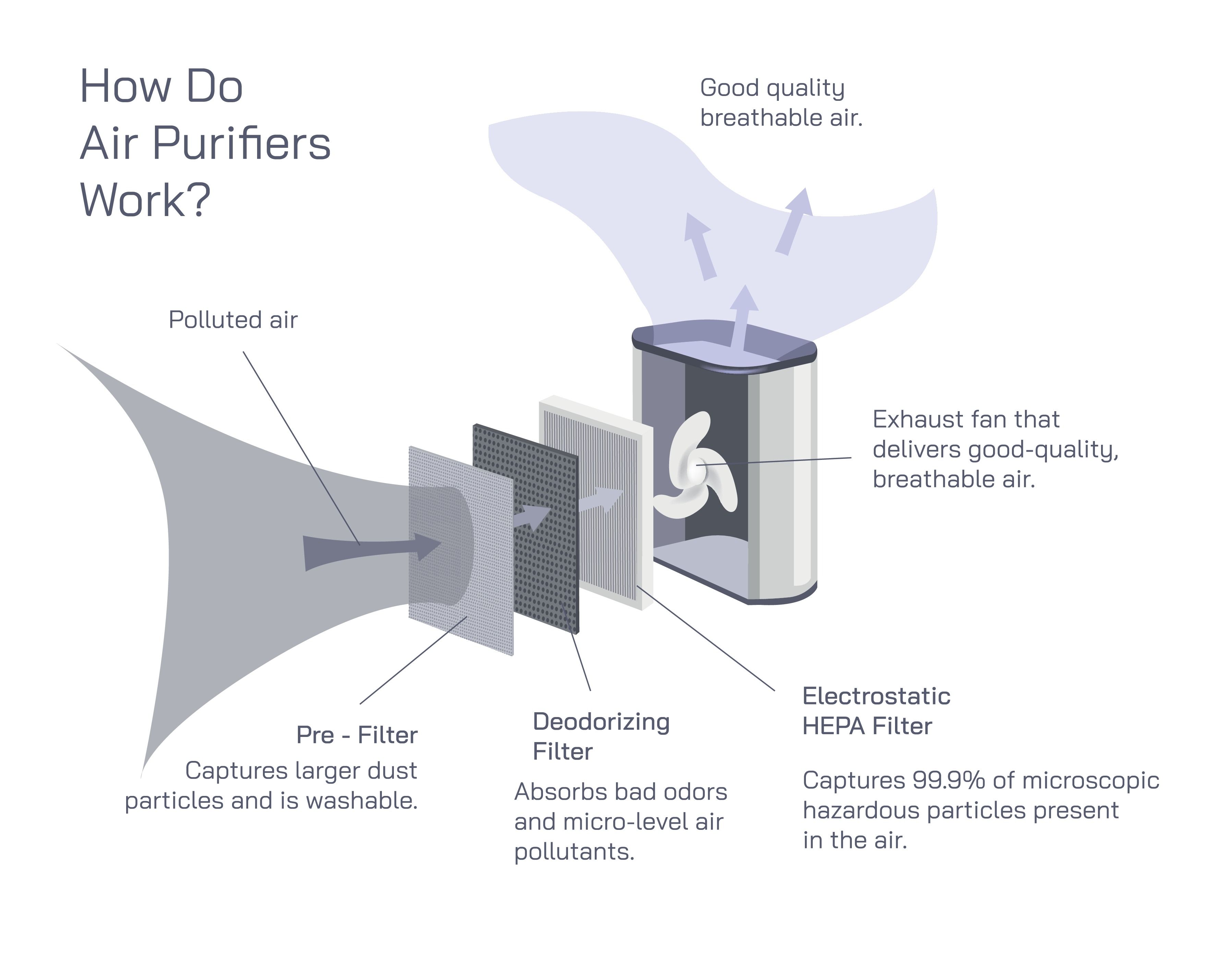
How Do Air Purifiers Work? A Detailed Description
Understanding the Purpose and Importance of Air Purifiers
Air purifiers have become essential devices in homes, offices, and many indoor environments because modern living exposes people to increasing levels of airborne pollutants. Dust, smoke, allergens, microbes, pet dander, chemical vapors, and microscopic particles constantly circulate in enclosed spaces. These irritants can contribute to breathing discomfort, allergies, and long-term health concerns when left unmanaged. An air purifier works by removing or neutralizing these harmful particles before they can be inhaled, resulting in cleaner, fresher, and healthier air. The technology inside these devices is designed to create a controlled airflow system where polluted air is processed, filtered, and returned in a purified form. Understanding how these machines operate provides deeper insight into why they are so effective and why they have become a trusted solution for improving indoor air quality.
The Journey of Air Through the Purifier
Every air purifier begins its operation by drawing in surrounding air through an intake system powered by a fan or motor. This airflow mechanism ensures that pollutants suspended in the room air enter the device rather than remaining free in the environment. Once inside, the air travels through a series of internal components specifically engineered to trap, capture, or destroy airborne irritants. Because these devices must continuously process air to maintain results, the airflow cycle repeats many times per hour, creating a steady purification effect. The rate at which a purifier can clean the air is often indicated by its clean air delivery rate, demonstrating how efficiently it moves and filters the air.
HEPA Filtration: Capturing Microscopic Particles
One of the most widely recognized features in air purifiers is the HEPA filter, known for its ability to trap an extremely high percentage of microscopic particles. These filters are constructed from tightly woven fibers arranged in multiple layers, forming a dense maze through which air must pass. As air moves across these layers, particles such as dust, pollen, spores, and pet dander become trapped along the fibers. This filtration method does not rely on chemicals but instead on a mechanical barrier that captures particles too small to be seen with the naked eye. The ability of HEPA filters to remove such small contaminants makes them especially valuable in homes with allergy sufferers or individuals sensitive to airborne irritants.
Activated Carbon: Removing Odors and Chemical Vapors
In addition to particulate filtration, many air purifiers incorporate activated carbon layers designed to absorb chemical pollutants, odors, and volatile organic compounds released from household materials. The surface of activated carbon contains countless microscopic pores that pull in gases and trap them through adsorption. This capability makes carbon filters particularly useful for eliminating smoke odors, cooking smells, chemical fumes from cleaning supplies, and pollutants emitted by furniture or paints. Unlike mechanical filters, which capture solid particles, activated carbon works on a molecular level, addressing pollutants that can affect comfort and long-term health.
UV-C Light Purification and Microbial Control
Some air purifiers include ultraviolet (UV-C) light components that neutralize microbes such as bacteria, viruses, and mold spores. When microorganisms are exposed to UV-C radiation, their internal structures are disrupted, preventing them from multiplying or remaining active. While UV-C does not filter particles out of the air, it enhances the purification process by reducing biological contaminants that may pose health risks. This type of purification is often used in combination with other filtration systems to create a more comprehensive air-cleaning effect.
Ionization and Electrostatic Systems
Other air purifiers use ionization technology to clean the air. These devices release charged ions that attach to airborne particles, causing them to become heavier and fall out of the air or cling to surfaces or internal plates. Electrostatic purifiers operate on a similar principle by capturing charged particles on oppositely charged plates inside the device. While these systems can reduce particulate matter, they require regular cleaning to maintain efficiency and prevent excess buildup. Ionization systems may also help remove extremely fine particles that traditional filters can miss, contributing an additional layer of purification.
Multi-Stage Filtration for Comprehensive Cleaning
Most air purifiers do not rely on a single method but instead use multi-stage filtration systems combining HEPA filters, activated carbon, pre-filters, UV light, and ionization. The pre-filter catches larger particles like hair and dust, protecting the more delicate internal filters from clogging. The HEPA component captures the bulk of smaller particles, while the carbon layer handles odors and gas pollutants. Additional technologies may target microbes or ultrafine particles. This layered approach ensures that many different types of contaminants are addressed simultaneously, improving overall air quality and extending the lifespan of the primary filters.
Airflow Design and Continuous Circulation
A critical part of purifier effectiveness lies in its airflow engineering. The device must move large volumes of air through the filters while maintaining enough pressure to remove contaminants. The fan speed, intake design, and outlet direction work together to distribute clean air evenly throughout the room. Some purifiers monitor air quality with internal sensors, adjusting speed and filtration strength automatically when higher pollution levels are detected. This continuous circulation allows the purifier to respond dynamically to changes in indoor air, ensuring a consistently clean environment.
How Air Purifiers Improve Health and Comfort
By eliminating airborne irritants, air purifiers contribute to easier breathing, fewer allergy flare-ups, and improved respiratory comfort. Cleaner air also supports better sleep, reduces odors, and lowers exposure to harmful chemicals or particles that may accumulate indoors. In environments with smoke, pets, or high urban pollution, the presence of an air purifier can noticeably improve overall well-being. People with asthma, allergies, or sensitivity to pollutants often experience significant benefits when using a purifier consistently, as the device reduces triggers that can cause irritation or discomfort.
Why Understanding Air Purifiers Matters
Comprehending how air purifiers work helps individuals make informed decisions when selecting one for their space. Recognizing the role of various filters, technologies, and purification stages provides clarity on what each model can achieve. Whether the air is affected by allergens, smoke, household odors, microbial contaminants, or urban pollution, understanding the science behind these devices reveals why they remain an important tool for creating a cleaner, healthier indoor environment. Through continuous filtration, airflow optimization, and advanced technology, air purifiers play a vital role in supporting comfort, wellness, and long-term respiratory health.