Types of Jeans — Styles, Cuts, and Fits in Fashion Explained
Jeans are one of the most iconic and adaptable garments in modern fashion, evolving from rugged workwear into a universal wardrobe essential worn by every age group, gender, and culture. What makes jeans endlessly interesting is the diversity of their styles, cuts, and fits, each shaping the appearance and silhouette in a unique way. This variety allows jeans to serve different purposes—comfort, practicality, style expression, body contouring, nostalgia, streetwear identity, or elegance. Understanding the types of jeans helps individuals select designs that match their personal comfort, aesthetic goals, and body proportions rather than viewing denim as a one-style-fits-all garment. Jeans evolve constantly with trends, yet the core categories remain foundational; new trends typically build upon classic cuts such as skinny, straight, bootcut, wide-leg, mom, boyfriend, flare, and tapered jeans. Today’s denim styles reflect not only fashion creativity but the dramatic shift in how people dress—balancing self-expression with function, preserving heritage while embracing new technology in fabrics and comfort.
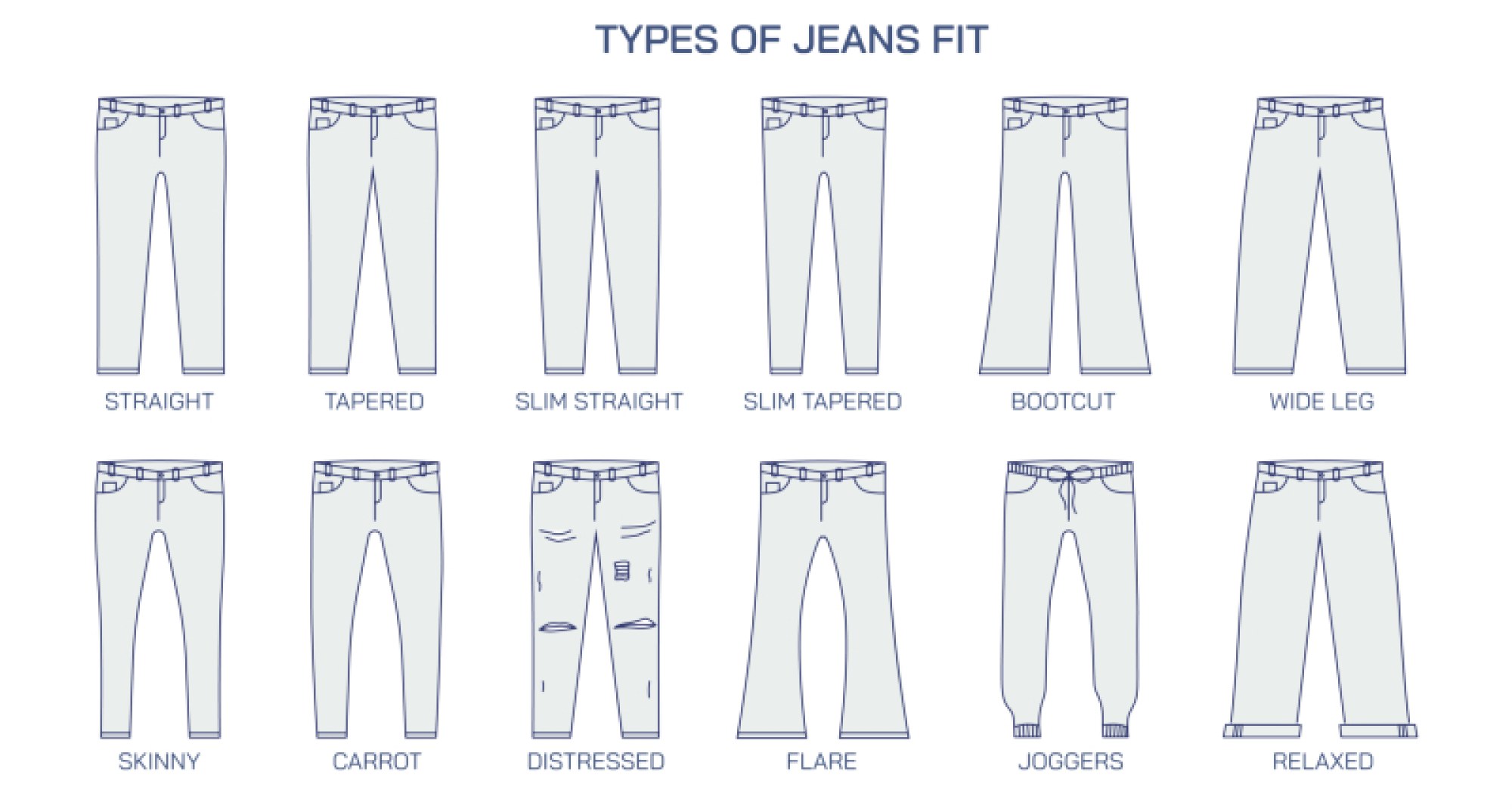
The concept of fit plays the most influential role in defining jeans because it describes how denim follows the body’s shape from waist to ankle. One of the most enduring fits is the straight fit, favored for its balanced proportions. Straight jeans maintain the same width from thigh to hem, neither clinging nor loosening excessively, creating a timeless look suitable for both professional and casual environments. They offer a neutral silhouette that works with every body type and can pair effortlessly with everything from T-shirts to blazers. In contrast, skinny jeans are form-fitting from waist to ankle, hugging every contour of the leg. They rose to dominance because their sleekness emphasizes leg shape, creating a streamlined appearance ideal for tucking into boots or pairing with oversized tops. Although trends shift, skinny jeans remain a staple because they flatter many individuals and adapt well to stretch fabrics that offer freedom of movement despite close fitting.
Opposite in personality and comfort are loose and relaxed fits, celebrated in streetwear and everyday fashion for their easy movement and casual aesthetic. Boyfriend jeans, designed to appear intentionally oversized as though borrowed from a partner’s wardrobe, offer a slouchy hip fit with relaxed legs and slightly tapered hems. They balance effortlessness with structure and allow breathability for all-day comfort. Baggy jeans go further, providing wide thigh and leg space, often worn low on the waist for a laid-back urban vibe. Unlike tailored fits, loose jeans create an aesthetic centered on comfort, youth culture, skate fashion, and effortless individuality. Somewhere between skinny and loose sits the modern hybrid slim fit, which shapes the body without clinging tightly. Slim jeans taper along the legs and ankles while maintaining ease around the thighs, making them a versatile option that mixes form and comfort.
While fit describes closeness to the body, cut describes the silhouette — especially below the knee. For decades, bootcut jeans have been loved for their slight flare from knee to hem, wide enough to accommodate boots yet subtle enough to maintain balance. Bootcut styles remain popular because they visually elongate the legs and balance hip proportions, creating a flattering shape for many body types. A bolder variation is the flare cut or bell-bottom, which dramatically widens toward the hem, inspired by 1970s fashion. The exaggerated flare creates strong retro personality and transforms the wearer’s movement into part of the fashion statement. Recently, flare silhouettes returned to popularity because they contrast sharply against years dominated by narrow fits, offering a playful and feminine revival in contemporary fashion.
Another widely recognized category is wide-leg jeans, which maintain generous width consistently from thigh downward rather than flaring only below the knee. Unlike baggy jeans, which often sit loosely at the waist, wide-leg jeans may have structured waistbands while offering a sculptural, flowing lower silhouette. The fit evokes elegance and comfort, often worn high-waisted to lengthen the legs visually. Wide-leg denim intersects function and style — equally suitable for runway fashion and daily wear, depending on wash and styling. In contrast, tapered jeans narrow steadily from thigh to ankle without hugging tightly. This geometry creates room at the top while preventing a heavy silhouette at the bottom, appealing especially to people who prefer comfort around the hips with a neat ankle fit. Many jogger-jeans and modern chinos use tapered legs to merge athletic ease with denim texture.
One of the most enduring denim trends built around nostalgia is the mom jean, characterized by a high rise, roomy hips, and a straight or tapered leg. Originally popular in the late 1980s and early 1990s, mom jeans have reemerged as a retro staple because their high waist defines the torso while their loose hip area enhances comfort. They form a structured silhouette that accentuates curves without requiring stretch fabrics or body-hugging fits. Another nostalgic style is the dad jean, which shares similarities but with a more relaxed waistline, straight legs, and a core emphasis on practicality rather than shaping. Meanwhile, cargo jeans incorporate large utility pockets inspired by military and workwear functionality, blending denim with utility fashion. These practical-minded styles reflect cultural shifts toward comfort and versatility, especially as fashion expands beyond purely aesthetic values.
A major visual difference between jeans arises from the rise — the distance from waistband to crotch. High-rise jeans rest above the natural waist, elongating the legs and providing a secure midsection feel. They complement cropped tops or tucked-in blouses and have become popular because they support posture and offer a vintage yet polished appearance. Mid-rise jeans, sitting just below the waist, remain the most traditionally balanced option, comfortable for many situations and body proportions. Low-rise jeans, sitting on the hips, became the signature of early 2000s fashion and emphasize the torso rather than the waist, producing a youthful and bold silhouette. The cyclical nature of fashion means all rises appear and disappear from trend cycles, yet the diversity ensures all preferences are accommodated.
Beyond silhouette, denim fashion evolves through length variations and hem styles. Cropped jeans end above the ankle, highlighting footwear and adding a breezy look to warm-weather outfits. Ankle-length jeans stop right at the ankle and remain wardrobe staples because they flatter whether worn with sneakers, heels, or boots. Full-length jeans with stacked hems allow extra fabric to bunch casually around the shoe for a streetwear-driven style. Hem finishes — raw, frayed, folded, or distressed — add personality, shifting jeans from polished to rugged without changing their fit.
Fabric composition also dramatically shapes how jeans feel and present themselves. Traditional rigid denim has no stretch and molds naturally to the wearer’s body over time, appealing to denim purists and vintage enthusiasts. Stretch denim, blended with elastane or spandex, enables flexible movement while appearing tailored — crucial for skinny and slim fits. Comfort-stretch denim maintains structure while providing mild elasticity, striking a balance that suits everyday wear. As sustainability gains importance, organic denim, recycled fibers, and water-saving indigo processes are influencing modern jeans construction, proving that the jeans industry evolves not only in style but also in ethics and environmental responsibility.
Jeans also serve cultural identity and personal expression. Distressed jeans with rips, abrasions, and faded washes embody rebellious youth aesthetics and urban fashion. Dark-wash denim conveys a sophisticated, polished tone suitable for dressier occasions, while light-wash denim evokes relaxation, summer style, and casual comfort. Black jeans deliver sleekness for nightlife, rock-influenced style, or minimalist wardrobes. Patterned and embellished denim — embroidery, patchwork, studs, paint splatter — transforms jeans into creative self-expression pieces that communicate individuality rather than conformity.
Choosing the right jeans becomes easier when the relationship between cut, fit, and rise is understood. Individuals with long torsos may balance proportions using high-rise jeans, while those who want ease around hips may prefer relaxed or tapered fits. Skinny and straight jeans create lengthening silhouettes for compact body frames, while wide-leg and flared jeans balance fuller hips with dramatic movement. Comfort-first wearers gravitate toward boyfriend, relaxed, or baggy jeans, while structure-seekers choose tailored silhouettes. Every cut and fit contributes something different — support, breathability, minimalism, drama, nostalgia, athletic ease, or confidence.
The enduring popularity of jeans lies not simply in their material durability but in their adaptability to personality, lifestyle, and changing fashion cycles. As decades move forward, jeans embrace trend reinvention while never abandoning their core identity as reliable, expressive, and versatile clothing. Whether one prefers polished fits, dramatic silhouettes, practical cuts, or oversized comfort, denim delivers a deeply personal wardrobe experience that evolves alongside cultural shifts and individual self-expression. Jeans remain timeless because they do more than clothe the body — they reflect the wearer’s identity, lifestyle, and attitude, making them one of the most successful fashion garments in history.