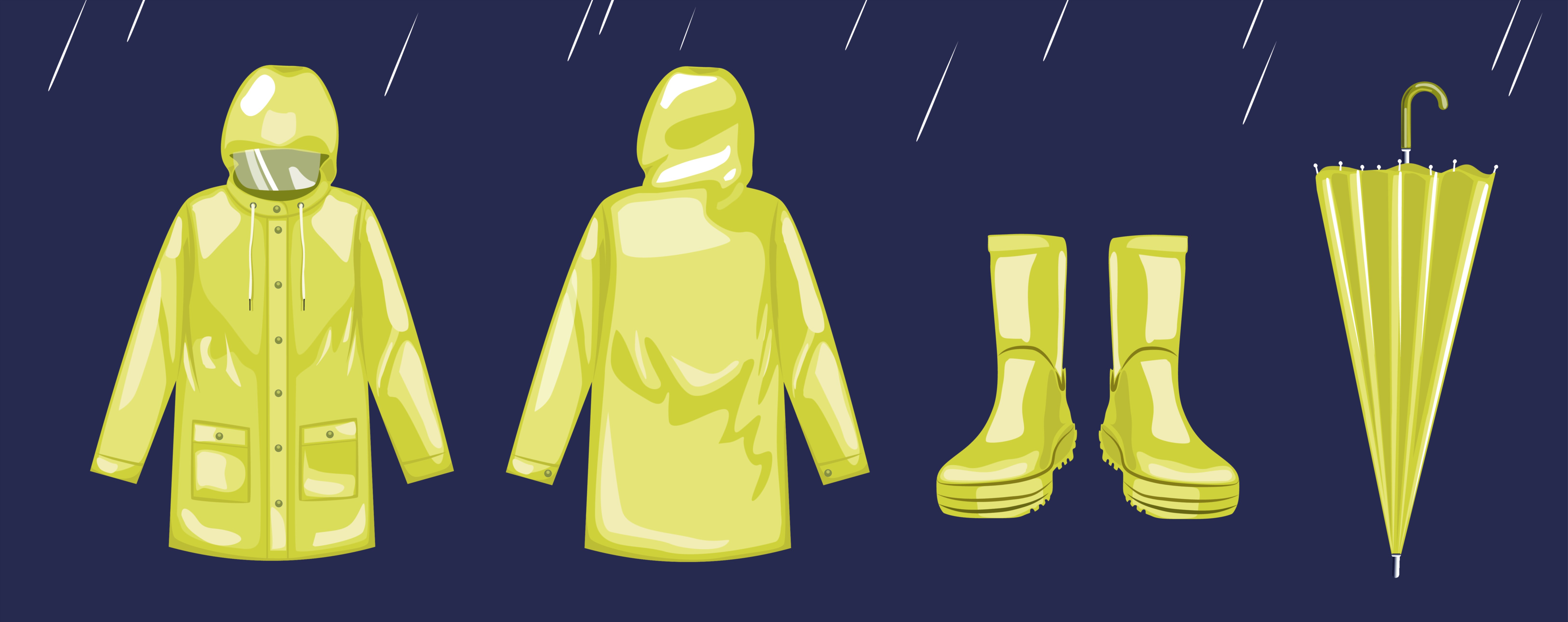
Rain Coat, Boots, and Umbrella Vector Illustration for Weather and Fashion Design – A Visual Fusion of Practicality, Seasonal Comfort, and Personal Style in Everyday Rain Protection
A vector illustration that brings together a rain coat, boots, and an umbrella for weather and fashion design is more than simply a graphic depiction of rain accessories. It represents the intersection of human protection, practicality, and aesthetic identity in rainy environments. Rain has always been a natural condition that people must adapt to, but over generations, clothing and accessories designed for wet climates have evolved from basic waterproof layers into expressive fashion symbols. In modern visual communication, a rain-themed vector illustration does not merely depict a shield from the weather; it conveys mood, comfort, personal elegance, and preparedness. As weather becomes a visual design theme in digital media, educational graphics, lifestyle advertisements, and product catalogs, the depiction of rainwear transforms into an emotional narrative of care, resilience, and style.
When a viewer encounters an illustration of a rain coat, boots, and an umbrella arranged together, they instinctively understand a story: someone is stepping into rain by choice, not in defeat. There is a quiet confidence implied in being ready for a storm. The rain coat symbolizes protection of the body, wrapping warmth and dryness around the wearer while still allowing free movement. The boots protect the feet from puddles and slippery streets, emphasizing stability and grounded movement. The umbrella becomes a personal shield, a kind of mobile shelter that moves with the person rather than replacing outdoor freedom with confinement. When these three elements coexist in a single vector illustration, they communicate a complete preparation — not avoidance of rain but coexistence with it.
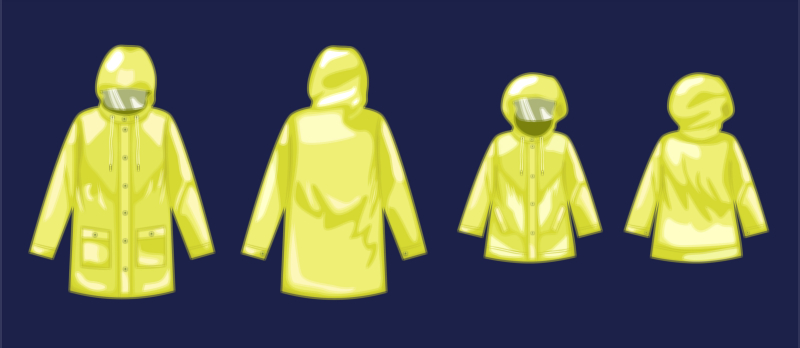
The rain coat in vector design often becomes the centerpiece of the illustration because of its shape and the emotional cues it carries. Practically, it represents waterproof shielding, but visually it expresses softness, fluid motion, protection, and warmth. Its length can suggest personal style — a long coat for dramatic elegance or a short coat for playful activity. The hood introduces another emotional dimension: anonymity, introspection, or a sense of meditative privacy while walking in the rain. Color choices change the mood dramatically: a cheerful yellow rain coat evokes optimism and joyful play, while navy blue expresses calmness and maturity. A transparent coat pushes the design into fashion-modern territory, suggesting trend awareness rather than childhood nostalgia. Through lines, smooth curves, and gradient techniques, the vector image captures fabric texture even without literal detailing, making it possible for the viewer to sense material and comfort.
Rain boots, meanwhile, anchor the composition and speak to functionality and personality. They are bold by nature — with simple, block-like shapes and decorative accents that reflect individuality. Children’s boots often evoke imagination with bright patterns and energetic tones, while adult boots shift toward sleek matte elegances or rugged outdoor reliability. In vector form, boots add visual weight to the bottom of the illustration, balancing the height of the umbrella and structure of the rain coat. They tell the viewer that the wearer can move freely through puddles, mud, wet pathways, and slippery sidewalks without fear. The boots become a symbol of courage rather than inconvenience — a small but meaningful psychological shift that illustrates how fashion and weather gear can empower rather than restrict.
The umbrella is the final touch in the triad, a poetic symbol that carries both practical and emotional weight. Visually, it arches above the other elements, acting as a protective roof and forming a natural frame around the composition. An umbrella introduces curves that soften the rigidity of a coat and boots and introduces symmetry or intentional asymmetry that carries motion. The supporting shaft and the open canopy together communicate readiness, while the folded umbrella from a stylistic perspective conveys elegance, restraint, and minimalist precision. Colors and patterns add personality. A polka-dot umbrella may evoke playfulness, a red umbrella may suggest romantic cinema nostalgia, while a striped umbrella may imply timeless fashion sensibility. The umbrella often becomes the emotional anchor of the illustration because it embodies the idea of staying safe while still enjoying the beauty and rhythm of rain.
Taken together in vector illustration form, these rain accessories become an expression of seasonal lifestyle rather than just weather preparedness. The intersecting relationships between the coat, boots, and umbrella build a narrative about comfort in unfavorable conditions. A viewer subconsciously reads the illustration as reassurance: rain does not stop life; rain enhances it when we are prepared. Designers working with weather-themed graphics understand this relationship deeply. They intentionally balance color harmony, shape proportion, and playful curves to create an illustration that feels delightful rather than gloomy. Rain becomes a mood instead of a warning — a gentle environment to inhabit rather than something to freeze or run from.
This artistic representation becomes a versatile communication tool across many fields. In fashion design, the illustration highlights seasonal collections, rainwear launches, and lifestyle branding campaigns. In retail product catalogs and online marketplaces, the trio of items communicates product completeness and encourages consumers to assemble matching outfits rather than purchase single items. Children’s educational materials use such visuals to teach weather patterns and appropriate clothing with warm, friendly shapes. Weather forecast apps and travel platforms use versions of these symbols to soften the emotional impact of rainy day notifications. Even in mental health spaces, imagery of comfort in rain is used to evoke calmness, coziness, and mindfulness.
The vector format plays a major role in the usefulness of this illustration style. Scalable vector graphics allow the rain coat, boots, and umbrella to retain crisp clarity at any size — on tiny mobile screens, large classroom posters, printable labels, or billboard displays. Designers can isolate or rearrange components to focus on products individually, animate them for interactive learning, or integrate them with weather icons such as raindrops, clouds, or wind swirls. Vector curves offer control over the softness of fabric shapes, gloss of umbrella panels, and rubber sheen of boots without sacrificing the minimalist simplicity needed for modern digital design. A well-crafted vector illustration becomes easily adaptable: it can be recolored for branding, transformed for seasonal promotions, or simplified for iconography.
The emotional mission of this illustration goes far deeper than fashion aesthetics. It carries a philosophy of embracing nature rather than resisting it. Rain is often associated with gloom, coldness, or inconvenience, but the right visual treatment reframes rain into something warm, rhythmic, and cinematic. A person with a rain coat, boots, and umbrella is not suffering through weather; they are participating in it with confidence and creativity. This subtle storytelling influences culture: it encourages outdoor play in children, promotes walks and mindfulness during seasonal shifts, and inspires adults to find style rather than inconvenience in wet weather.
Ultimately, a rain coat, boots, and umbrella vector illustration for weather and fashion design becomes a reminder of how clothing can connect humans and climate in a graceful, expressive, and comforting way. The viewer learns — consciously or subconsciously — that we do not simply protect ourselves from rain, we experience it. Rain becomes a companion rather than an interruption. And in that quiet transformation of perception, the illustration offers a message about resilience and beauty:
Rain does not stop life — it changes the atmosphere of it.
With the right gear, rain becomes an environment full of color, warmth, and movement.
Preparedness becomes freedom, and style becomes confidence even under the clouds.
In this way, the vector artwork serves its dual purpose: an educational representation of weather awareness and a fashionable celebration of personal style woven directly into the rhythm of a rainy day.